Showing posts with label Dennis Palumbo. Show all posts

Friday, October 14, 2016

HOW DOES THAT MAKE YOU FEEL?


LUCY BURDETTE: I jumped with excitement when I saw an email from Dennis Palumbo several weeks ago about a collection of essays from both shrinks and patients about the experience of psychotherapy, called HOW DOES THAT MAKE YOU FEEL? I ordered it instantly and asked Dennis if he would come to Jungle Red to talk about his essay.


Welcome Dennis! The therapy world seems to have changed so much since I worked as a psychologist in private practice. As the editor of this collection mentioned, we didn't have to deal with the minefield of social media and worrying about what our patients might think if (or when) they came across some personal data. When you were approached to write an essay, did you have concerns about telling so much about yourself?


DENNIS PALUMBO: Not really, because I felt (and feel) that it's important for patients in therapy to see that therapists have the same kinds of struggles that they do. Of course, all therapists need to be cautious in terms of personal disclosures, but having a patient know that you can relate to their issues has enormous therapeutic benefit. In the case of this essay, which details my career transition from Hollywood screenwriter to licensed psychotherapist, I believed it was important to let readers know the emotional ups and downs of any major life transition. And that while it may not be an easy journey, it's one worth taking if it's what your heart demands.

Lucy: I love the line in your essay when you announce to your new therapist that you intend only to be there for a few sessions, which stretches into eight years. For folks who are not familiar with long-term psychotherapy, could you explain how a person who is relatively sane might end up in therapy over a period like that? (I should say that I was going to put my psychologist character Dr. Rebecca Butterman (DEADLY ADVICE) in psychoanalysis, but a dear friend advised me that she would look like a nut-so I opted for therapy instead!)

Dennis: The length of time anyone stays in treatment varies from person to person. In my case, not only did I have some significant issues to look at, but I also found myself intrigued and moved by the therapy process itself. Moreover, since my private practice specializes in treating creative people, I'm fortunate in that such patients are usually interested in and intellectually engaged by the process of therapy. They enjoy both the introspection and the emotional support that therapy provides. (BTW, I found your comment about your own fictional psychologist interesting. As you know, my series of crime thrillers also features a psychologist, Dr. Daniel Rinaldi, and he mentions often how helpful being a patient in therapy has been for him. If some readers think that makes him look like a nut, there's nothing I can do about it. Thankfully, the vast majority of readers I hear from think otherwise. For many, being inside Daniel's head (the novels are told in first-person) as both a therapist and a former patient, are the most compelling parts of the story. Except for the murders, of course!)

Lucy: will you tell us a bit about how you use your experience as a therapist and a patient in your novels?

Dennis: While I don't use any of my patients' personal experiences as the basis of a novel, I do use what I've learned as a therapist for the past 27 years to inform the writing. How the therapist/patient dynamic often plays out, what might go on in the therapist's head during sessions, the relationship between the current state of the mental health profession and society, etc. More importantly, as in the novels NIGHT TERRORS and PHANTOM LIMB, how certain psychological conditions make a character's personality and actions more vivid and intriguing. Also, since Daniel Rinaldi is a trauma specialist, treating the victims of violent crime, I get to explore issues and symptoms associated with PTSD. I'm fortunate in that I spent five years studying trauma with Dr. Robert Stolorow, one of the nation's premiere trauma experts. I think, on the whole, this experience has been of enormous help in making what my characters go through moving, suspenseful  and true-to-life.   

LUCY: Finally, can you tell us a little more about working with creative people? We have lots of them here at Jungle Red!

Dennis: I work primarily with writers, but also see directors, composers, journalists, and musicians. Regardless of field of interest, most creative people struggle with the same issues: blocks, procrastination, fear of failure, anxiety and depression. Not to mention how these issues can impact the creative person's relationships. Though the issues may be consistent across any genre or occupation, how we deal with them in therapy is case-specific. In other words, there's no one-size-fits-all approach to dealing with these issues, primarily because a person's creative struggles are inexorably connected with his or her personal issues. Childhood experiences, career path, relationship history, substance use concerns, etc. I also try to help patients see that it doesn't mean anything negative about them if they're struggling with some creative project. Creative work of any kind is hard, and every artist of real worth struggles. If you think your creative difficulties mean there's something wrong with you, it will only make things worse. As I like to say to patients, "Work the problem. Don't make yourself the problem."

LUCY: Questions or comments for Dennis? (Tomorrow, we'll talk about our favorite fictional therapists...)

And here's a link to a review of the collection in the Washington Post.

Formerly a Hollywood screenwriter (My Favorite Year; Welcome Back, Kotter, etc.), Dennis Palumbo is a licensed psychotherapist and author. His acclaimed series of crime novels (including the latest, Phantom Limb) feature psychologist and police consultant Daniel Rinaldi. More info at www.dennispalumbo.com

Wednesday, September 15, 2010

There's No Cure for the Writer's Life


ROBERTA: A while back we welcomed former screenwriter and psychotherapist Dennis Palumbo to Jungle Red Writers to talk about the psychology of writing, writing blocks, and getting creative. When I realized his first novel, MIRROR IMAGE, had just been published, I had to know whether he'd faced some of the same issues he helps his clients--and how he handled them of course. And he graciously agreed to spill everything....I mean, er, join us for a discussion!

DENNIS: Okay, here's the good news, at least from my perspective: my first crime novel, Mirror Image, has just been published by Poisoned Pen Press. Moreover, a number of well-respected mystery writers have been gracious enough to say nice things about it.

So much for the good stuff.

But there's another side to the book's publication. As some of you may know, after a career as a screenwriter (My Favorite Year; Welcome Back, Kotter, etc.), I became a licensed psychotherapist specializing in creative issues. For over twenty years now

I've counseled writers through the turmoil of early drafts, the terrors of manuscript submission, the perils of publication. I've helped them struggle with writer's block, procrastination and fear. I've consoled them in the face of an agent's neglect, a publisher's rejection, an editor's disrespect and an industry's indifference.

I mean, let's face it: I know the drill.


So how has it been for me, now just another author with a product hitting the marketplace? If anyone should be able to handle the expected pragmatic and emotional challenges, it's me. Right?


Guess again. In the months leading up to Mirror Image's release, I have obsessed about the book's title; fantasized one minute about getting on the best-seller's list and then in the next was absolutely convinced that no one would buy it at all; yearned for my agent to be completely devoted to my personal and professional well-being to the exclusion of all else in his life; already mentally answered potential bad reviews with pithy, scathing rejoinders; and felt unloved and unappreciated when a friend even looked like he was anything less than totally thrilled or profoundly moved at the thought of my novel coming out.

Believe me, I could go on, but space doesn't permit. The point is, despite the knowledge and insight gained from long-time careers as both a writer and a therapist, I found myself wrestling with the same dilemmas as every other author.


Why? Because, like it or not, if you're a writer, there's no escaping the writer's life.


As I've learned with the publication of this new novel, when it comes to the feelings, obsessions and just plain worries that accompany any writer's efforts, there's no "Get out of jail free" card. Even when, like me, you've already published a novel previously, as well as a collection of mystery short stories, and even a nonfiction book about---what else?---how to deal with the up's and down's of the writer's life!


Which means that regardless of career experience, advancing age and sizeable amounts of therapy, there's no "cure" for the writer's life. As soon as a writer commits to the writing of a thing, he or she embarks on a journey through both an external world of crises and triumphs, and an internal world of feelings and belief systems.

And this is true for all writers, no matter their level of success, no matter how large and loyal their readership. After many years in the literary trenches, on both sides of the battlefield, I can posit with great assurance two simple facts: first, that all successful writers used to be struggling writers; and, second, that the successful ones still struggle.


This is not merely philosophical ruminating on my part. As my recent experience with Mirror Image attests, this is the straight dope. One of those hard truths of the creative life. Bedrock.


On the other hand, I've negotiated the psychological rigors of publication about as well as can be expected. As both writer and therapist, I've learned---and changed---a lot over the years, and it's definitely made a difference.


The biggest change? Probably this: In many ways, I'm as neurotic and insecure as I ever was. I just don't hassle myself about it anymore. And although that might not be a cure, it's the next best thing.


(Formerly a Hollywood screenwriter (My Favorite Year; Welcome Back, Kotter, etc.), Dennis Palumbo is a licensed psychotherapist and author of Writing From the Inside Out (John Wiley). His mystery fiction has appeared in Ellery Queen's Mystery Magazine, The Strand, Written By and elsewhere, and is collected in From Crime to Crime (Tallfellow Press). His latest book, Mirror Image (Poisoned Pen Press), is the first in a new mystery series featuring psychologist Daniel Rinaldi, a trauma expert who consults with the Pittsburgh Police.)


ROBERTA: Thanks for coming to talk to us Dennis! Can't wait to read the book. Now the floor is open to questions and comments...

Tuesday, July 29, 2008

On Dennis Palumbo

"I assumed the burden of the profession, which is to write even when you don't want to, don't much like what you are writing, and aren't writing particularly well."—Agatha Christie

ROBERTA: Jungle Red Writers and readers, do we have a special guest for you today!

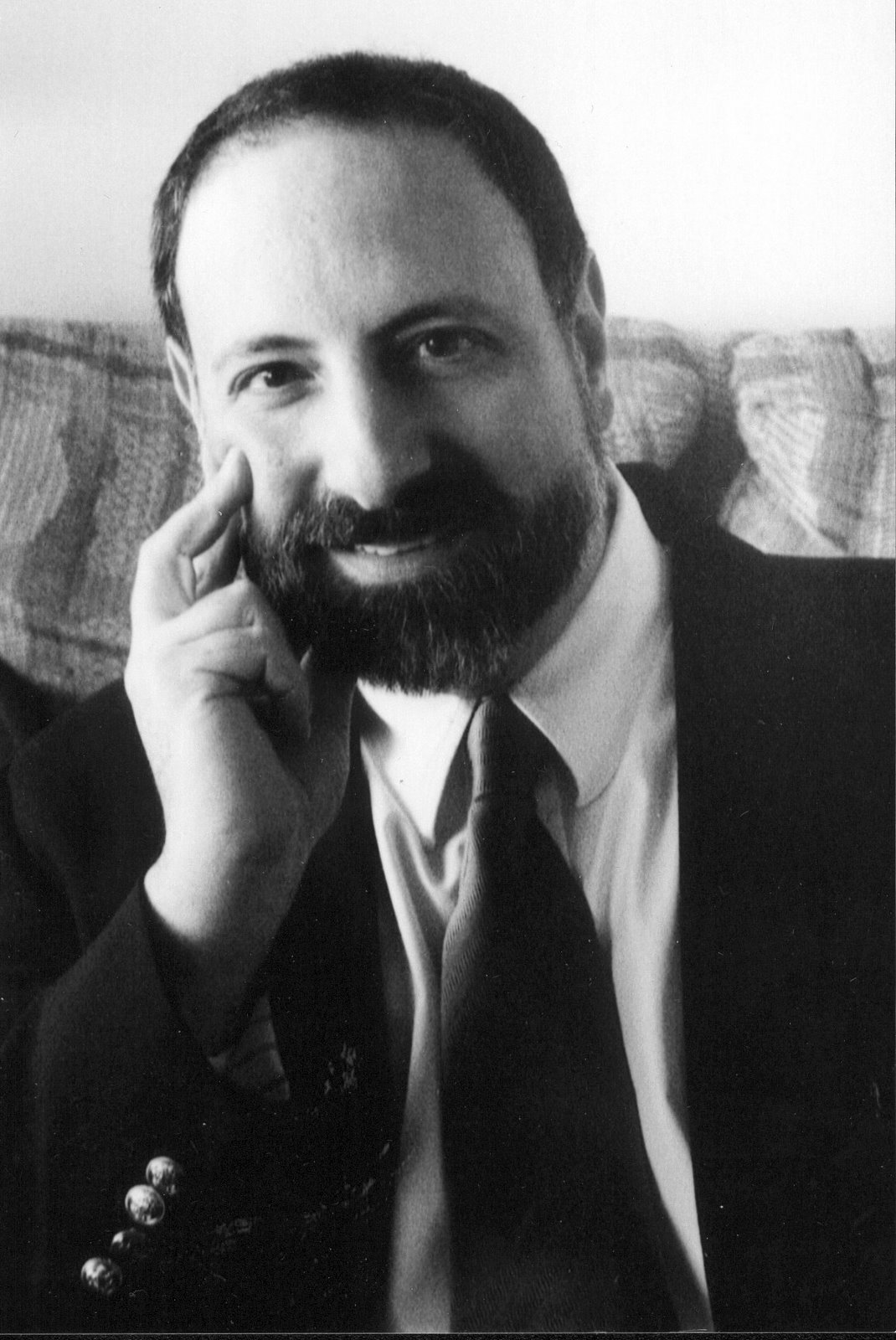
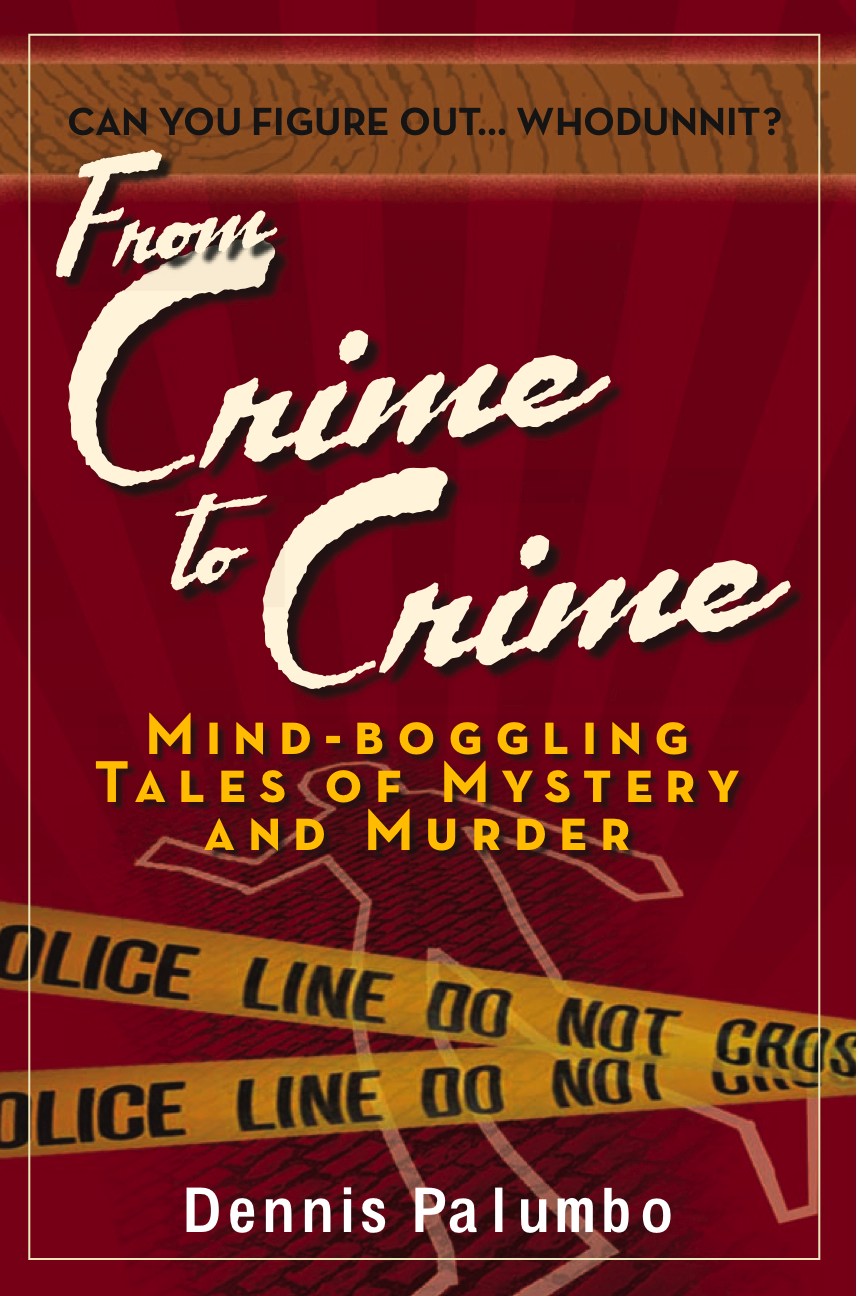
Dennis Palumbo is a writer and licensed psychotherapist in private practice, specializing in creative issues. He’s the author of Writing From the Inside Out (John Wiley), as well as a new collection of mystery short stories, From Crime to Crime (Tallfellow Press).

Formerly a Hollywood screenwriter, his credits include the feature film My Favorite Year, for which he was nominated for a WGA Award for Best Screenplay. He was also a staff writer for the ABC-TV series Welcome Back, Kotter, and has written numerous series episodes and pilots.

His short fiction and articles have appeared in Ellery Queen’s Mystery Magazine, The Strand, the New York Times, the Los Angeles Times, EMMY Magazine, and many others. His column, “The Writer’s Life,” appeared monthly for six years in Written By, the magazine of the Writers Guild of America. Currently, he’s a contributing writer to The Lancet, Britain’s leading medical journal, and does commentary for NPR’s “All Things Considered.”

I’m especially interested in Dennis’s career path, as it’s the opposite of mine—he started out as a writer and now works as a psychotherapist. Welcome Dennis! Since we have a lot of writers who visit the blog, could you start out by talking about writers’ block? Who gets it and why, and what can we do about it?

DENNIS: What does it mean if you get writer’s block? It means you’re a writer...and that’s all it means.

Unlike most people who talk about writer’s block, I happen to think it’s good news for writers! Why? Well, let’s look at the conventional view of a block...it’s a wall, or some other kind of unpassable space or obstacle. That’s why writers feel like they’re banging their heads against it.

However, I conceptualize writer’s block differently. If you look at the biographies of writers (and other artists) you admire, you’ll notice at least four or five major “blocked” periods, in which they either didn’t work, or else their work became stale and repetitive. And then, suddenly, a new, exciting phase of work began.

Simply put, I believe writer’s block is a natural, necessary developmental stage in the growth of a writer, similar to the developmental stages we all go through as we mature. Just as a toddler stumbles and falls repeatedly before learning how to walk, I believe writers must navigate and master similar developmental “steps” if they’re to mature as writers.

For example, maybe the writer is blocked (struggling with a character, or stuck at a point in the work) because what’s coming next represents a real growth spurt in the writing (i.e., maybe the writer is trying to structure a difficult plot for the first time, or is risking writing about personal or sexual issues for the first time, etc.).

This “block” then must be navigated, worked through, so that the writer’s work can grow in craft and personal relevancy. But do I have any proof that writer’s block is good news for a writer, and is actually a necessary part of a writer’s growth in craft? I think I do.

Just ask yourself: have you ever worked through a difficult block without thinking that you were a better writer for having gone through it? Almost every writer I’ve worked with who struggled to navigate a block has stated that he or she felt they were better writers on the other side of it!

ROBERTA: How does therapy with “creative types” differ from traditional therapy? At what point would one of us know we need to see you?

DENNIS: Doing therapy with creative people is both different and the same as doing therapy with non-creative types. (How’s that for a wishy-washy answer?)

Seriously, regardless of what issue a creative person—--let’s say, a writer---comes into treatment for (say, writer’s block or procrastination or fear of rejection), we usually find that these issues are inextricably bound up in the same personal issues that hamper other parts of their lives.

So, for example, if we explore procrastination, which is often due to a fear of shameful self-exposure, we might discover how the writer felt criticized and judged as a child, so that finally finishing a piece of writing now
as an adult leaves it open to criticism and possible rejection. Invariably, in such cases, I often find that the adult writer is likewise fearful of criticism and rejection in his or her personal relationships.

What makes my practice unique, I think, is that as a writer myself, I’ve struggled with and worked through many of the same issues my writer patients with. For instance, if a writer is anxious about pitching an idea to an executive at NBC, I can relate, having done so myself hundreds of times. Because even though some of the writer’s fears may have their roots in early childhood experiences, there are also plenty of non-psychological, pragmatic reasons to be anxious about pitching to a network (or editor or agent), and I feel I can help with both aspects of his or her dilemma.

Make no mistake, writing---and every other art form---is hard. The life is uncertain, the rewards often more personal than public, the financial realities sometimes pretty bleak. As Robert Frost said, “The one thing all nations of the earth share is a fear that a member of your family will want to be an artist.”

When will you know that you need to see a therapist? When the issues you’re confronting, personal or professional, interfere with your social, familial or professional functioning. When you not only are blocked, but begin beating yourself up for being blocked. When not only are you afraid of rejection, but you begin berating yourself for having such a fear.

Remember, feelings themselves aren’t the problem---it’s what you think those feelings “mean,” what you think they “say about you” that causes real misery and paralysis. If you’re experiencing anything like the above, it might be a good idea to consider seeing a therapist.

ROBERTA: Since your Jungle Red hosts are all mystery writers, we’re dying to hear about FROM CRIME TO CRIME. Why did you turn to crime?

DENNIS: I’m afraid it’s a life-long love, which started when my parents bought me a beautiful hard-bound version of The Adventure of Sherlock Holmes when I was 12. I’ve been hooked on the genre ever since.

Actually, the very first thing I wrote that got published was a crime story, “Many A Slip,” that appeared in 1978 in Ellery Queen’s Mystery Magazine. This was even before I was a writer on TV sitcoms like Welcome Back, Kotter, and before My Favorite Year. Then, throughout my career as a screenwriter, I enjoyed mysteries and thrillers.

Then, many years later, after retiring from film and TV writing to become a licensed psychotherapist, I returned to my life of crime by writing more whodunnits for EQMM, as well as The Strand and elsewhere.

What makes my new collection of short stories, From Crime to Crime, so unique is that most of the tales feature a group of hapless amateur sleuths based on real people---a therapist (me) and three of my friends. Like the Smart Guys in the stories, my friends Mark, Bill, Fred and I met every Sunday afternoon for deli and beer, to argue and debate and rant about the issues of the day.

In the fictional Smart Guys stories in my new book, I merely grafted this truth about us and our rowdy get-togethers onto the classic “armchair mystery” format---borrowing heavily from Agatha Christie’s Tuesday Night Club and Isaac Asimov’s Black Widowers tales.

(Incidentally, it might amuse your readers to know that the real-life members of our old group have since enjoyed seeing themselves immortalized in print. The only complaint came from Mark, who felt I didn’t emphasize enough his great success with women. Poor deluded boy.)

Anyway, I’ve been gratified by the response to the Smart Guys stories, as well as the three stand-alone stories that complete the collection. Though even two of these stories also feature amateur sleuths: one, a female police psychologist whose session with a patient threatens to turn deadly; and the other, about a penniless patent clerk named Albert Einstein who gets caught up in the search for a turn-of-the-century serial killer.

Thanks for opportunity to answer your questions. I hope I’ve done a decent job. I also hope your readers will check out my new book, From Crime to Crime (Tallfellow Press). If they do so, I’d love to hear their comments about it.

They can contact me, or get more information about me and my work, by visiting my website, conveniently named www.dennispalumbo.com. Thanks again!

ROBERTA: And now the doctor is in, ready to take your questions....