HANK PHILLIPPI RYAN: Wow, we have such a treat for you today! Introducing, or re-introducing, the fabulous duo of Deb Well and Gabriel Valjan. Deb is a wonderful author, and an editor at Level Best Books. And Gabriel is a multi-award-winning and much acclaimed author. They are a duo and a team on every level.
And today, grab your own cup of coffee or tea and join them at the breakfast table. They have the most interesting conversations!
When History Rhymes
By Deb Well and Gabriel Valjan
When the CIA targeted Tehran in 1953, it changed the world. In Eyes to Deceit, Gabriel Valjan brings that tense, shadowy moment to life, following writer/agent Walker from Malibu to Rome, while a Holocaust survivor navigates the Catskills in pursuit of a crucial key to success. Today, Valjan talks with Level Best Books editor of Celluloid Crimes Deb Well, about the motivation behind his recent fiction, the women in his novel, and the history we often overlook—but should not forget.
DW: You have a new book out this month in your Company Files series, taking your reticent Walker from Malibu to Rome, while Holocaust survivor Sheldon visits the Catskills to work an asset in exchange for the names of Nazis who escaped justice. Tell us about Eyes to Deceit and why you chose the 1953 Iranian coup as your focus.

GV: Mark Twain said, “History doesn’t repeat itself, but it often rhymes.” History is stranger than fiction—but poorly taught. The Coup of ’53 fascinated me because its consequences still ripple today. Allen W. Dulles emerged as the master architect of realpolitik, shaping moves that echoed for decades.
The novel shows more than strategy—it shows people. Betrayals, moral compromises, personal tensions—these made Operation AJAX more than a footnote, and they didn’t stay in Tehran; they shaped CIA policy in other foreign interferences and led, eventually, to the Iranian Hostage Crisis in 1979.
DW: Your books feature strong women navigating a male-dominated world. How did you make that feel authentic without losing edge?
GV: Three women stand out in Eyes. Leslie, formerly MI6, now CIA, was blocked after the war—she refuses to settle into domestic life. Tania mirrors her: brilliant, multilingual, but scarred by trauma, awkward socially. Then there’s Clare Boothe Luce, the first U.S. ambassador to Italy—outspoken, audacious, brilliant.
They’re true to their era but fully alive, capable, uncompromising. They bend but don’t break. In a world built to sideline them, their choices carry consequences.
DW: You clearly did extensive research. Were there any unexpected discoveries and challenges?
GV: Writing the Catskills required delicacy. I worried readers would think of Dirty Dancing, but these resorts were a refuge, an oasis of culture—an escape from antisemitism in the cities. That history deserved respect.
Allen Dulles was trickier. Immense power, almost mythic. After Bay of Pigs, JFK fired him—but he showed up at work the next day as if nothing had happened. He later helped staff the Warren Commission. Capturing the chess master at play and that authority without caricature were monumental challenges.
DW: Both your Company Files and Shane Cleary series are historical. What draws you to the past as a setting?
GV: The past frees me from technology and lets me focus on human behavior. Nuance mattered then. A woman could be judged for her gloves, a curse word, or a public misstep. A Black maid might keep two sets of shoes—one for work, one for home. These small details shape stakes, reveal character, heighten tension.

Since we’re talking nuance, let’s pivot to Celluloid Crimes. You edited this anthology. When arranging the stories, how did you think about pacing readers or sequencing authors? Did you aim for rising tension, tonal variation, or something else?
DW: In choosing the stories for this anthology, the two things they all had in common were a strong voice and a tonal aspect of what I call “Hollywood Noir. When I reviewed all the stories I had chosen, I was surprised that they were almost evenly split between male and female narrators/protagonists. So I immediately thought it would be great to alternate the stories between male and female voices. Additionally, when I first read Colin Campbell’s story, Picture Palace Blues, I knew I wanted it to be the anchor – or last story of the collection. Since it was the only one set in contemporary times, ordering the stories in a loose chronology from the 20s till today made sense.
GV: I love that your anthology captures something from each decade. For you, what makes a story irresistible—compelling characters, a twisty plot, or a unique use of language?
DW: As I mention in the Afterword, I look for strong voice and a story – no “sketch” or “vignette”. And the ending must be satisfying. So a twisty plot is nice – but only if it makes sense. Compelling characters are important to me. But it’s that unique voice – that’s what makes a story – or a novel, for that matter – something I can’t put down – and that I will recommend to everyone I know that they have to read.
Back to Eyes to Deceit: what’s next for both your series?
GV: The fifth Company Files novel, The Nameless Lie, dives into the Suez Canal Crisis. Shane Cleary six, Four on the Floor, draws on Boston’s Blackfriars Massacre. Both explore the human cost of history—the ways small choices cascade into global consequences.
DW: One last question. If a reader takes only one thing from Eyes to Deceit, what would you want it to be?
GV: That history isn’t abstract. It’s felt, lived, sometimes hidden in plain sight. Fiction can’t fix it—but it can remind us what it felt like—and why those choices still matter today.
Reds and Readers! In both history and fiction, secrets drive the story. Which secret from history would you most want to uncover?
HANK PHILLIPPI RYAN: OH, what a great question. What happened to the lost colony of Roanoke? What’s the real deal about Amelia Earhart? (Cannot wait to read that new book.) What really happened in the Cuban Missile crisis? I know you all will have many more…

Deborah Well is an editor, marketing consultant, and digital strategist. After working for several decades in the finance realm, she has been happy to see her English degree get put to good use in her “retirement career” in the publishing world. Deb lives in Boston’s South End with her partner, author Gabriel Valjan.
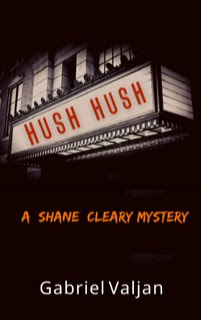
Gabriel Valjan is the author of The Company Files, and the Shane Cleary Mysteries with Level Best Books. He has been nominated for the Agatha, Anthony, Derringer, and Silver Falchion awards. He received the 2021 Macavity Award for Best Short Story, and the Shamus Award for Best PI in 2023. Gabriel is a member of the Historical Novel Society, ITW, MWA, and Sisters in Crime. He lives in Boston with his partner, Deb Well.
And both answer to a their much-memed tuxedo cat, Munchkin.
HANK PHILLIPPI RYAN: OH, what a great question. What happened to the lost colony of Roanoke? What’s the real deal about Amelia Earhart? (Cannot wait to read that new book.) What really happened in the Cuban Missile crisis? I know you all will have many more…

Deborah Well is an editor, marketing consultant, and digital strategist. After working for several decades in the finance realm, she has been happy to see her English degree get put to good use in her “retirement career” in the publishing world. Deb lives in Boston’s South End with her partner, author Gabriel Valjan.

Gabriel Valjan is the author of The Company Files, and the Shane Cleary Mysteries with Level Best Books. He has been nominated for the Agatha, Anthony, Derringer, and Silver Falchion awards. He received the 2021 Macavity Award for Best Short Story, and the Shamus Award for Best PI in 2023. Gabriel is a member of the Historical Novel Society, ITW, MWA, and Sisters in Crime. He lives in Boston with his partner, Deb Well.
And both answer to a their much-memed tuxedo cat, Munchkin.