HALLIE EPHRON: Recently got a message from Michael Neff, founder and chief architect of the excellent Algonkian Writer Conferences asking if I’d be interested in putting together an intensive, advanced workshop that would be a sort of “finishing school” for suspense and mystery novels.
I was hooked. This would so different from the kind of one to three hour workshops I often give. I’d get a chance to look at entire manuscripts rather than a single aspect, and work with more advanced writers on how to polish their own completed (or nearly completed) work.
Immediately I’ve set about trying to envision what exactly are the finishing touches that a manuscript needs so that an editor will want to pluck it from the slush pile and offer a wad of cash for the honor of publishing it. So that a reader who samples Page One is so hooked that they continue reading right through to the surprising and satisfying finish line.
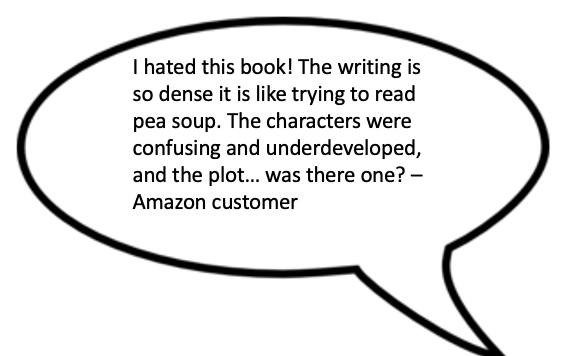
So that readers don't post devastating critiques like this one:
Most of the experienced writers I know love being in that final writing phase: polishing story lines and picking nits.
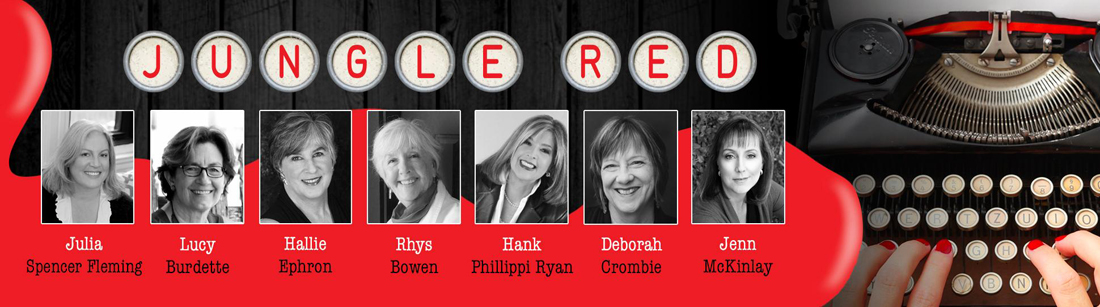
Last week, behind the scenes, one of the Reds (AKA RED A): “I got the first batch of pages from my editor. The good news is that she says she loves the book, the family stuff is great, the crime works well. The bad news is that she says it needs to be 100 to 150 pages shorter!!”
RED B chimed in: “My latest I’ve just turned in is 430 pages but I can’t think of anything I could take out. Tell her every word is precious!”
RED C: “Your words may be precious but mine are definitely not! I have a very bad tendency to over-write with too much exposition, and my editor is a genius at seeing how to tighten things up.”
RED D: “I sent mine in KNOWING 15,000 at least had to go, and eager to cut! It's now SO MUCH BETTER in every way. It's like--a treasure hunt. I'm on the prowl--what work does this line do, what work does this paragraph do, is it pulling its weight? What can I take away? I love it, I completely do. Kill my darlings? If they're clogging the pacing or being tangential, they are not my darlings, right? BAM. Gone.”
RED E commiserated: “Remember "Bird by bird?" You need to do "Slash by slash." :-)
RED F: “Wish I could help. I'm an underwriter and always turn stuff in short and then I have to be a fluffer and gas it up in the revisions.
RED G: "I will gladly take anyone's extra words, just send them on. I struggle to get to 70,000 words in a first draft!"
HALLIE: But *too long* or *not long enough* is what I’d term first-world problems. The Reds are an experienced bunch who know what we’re doing and, by the way, know our own strengths and weaknesses. For less experienced writer, the problems with an unpublished manuscript invariably run far deeper than word count. It’s more than a matter of tightening or enriching the storytelling or slashing and burning the establishing narrative. It’s the tricky business of capturing a reader’s attention from Page One, a compelling voice, a character arc, and effective pacing.
In other words, it’s complicated. And, having read so many not-quite-ready-for prime-time manuscripts, each (like unhappy families) is sub-par in its own way. Still there are patterns which I hope to get at in my workshop design.
So I thought I’d pose the question here: Beyond "it's just not my cup of tea," what makes you dissatisfied (or even stop reading) a mystery or suspense novel? A weak opening? An unlikeable character? Annoying voice? Too many coincidences? Too much background information? Unbelievable situations? Plots with massive holes in them? Typos and grammatical errors? Or, or, or...
Go ahead! I'm taking notes... What are your pet peeves? I’ll pass them along to writers who, armed with knowledge, can revise to avoid them.
HALLIE: But *too long* or *not long enough* is what I’d term first-world problems. The Reds are an experienced bunch who know what we’re doing and, by the way, know our own strengths and weaknesses. For less experienced writer, the problems with an unpublished manuscript invariably run far deeper than word count. It’s more than a matter of tightening or enriching the storytelling or slashing and burning the establishing narrative. It’s the tricky business of capturing a reader’s attention from Page One, a compelling voice, a character arc, and effective pacing.
In other words, it’s complicated. And, having read so many not-quite-ready-for prime-time manuscripts, each (like unhappy families) is sub-par in its own way. Still there are patterns which I hope to get at in my workshop design.
So I thought I’d pose the question here: Beyond "it's just not my cup of tea," what makes you dissatisfied (or even stop reading) a mystery or suspense novel? A weak opening? An unlikeable character? Annoying voice? Too many coincidences? Too much background information? Unbelievable situations? Plots with massive holes in them? Typos and grammatical errors? Or, or, or...
Go ahead! I'm taking notes... What are your pet peeves? I’ll pass them along to writers who, armed with knowledge, can revise to avoid them.