
Showing posts with label Jessica Ellicott. Show all posts

Wednesday, January 4, 2023

Jessica Ellicott on the Mysteries of Plotting


LUCY BURDETTE: You may remember during my last "what you're writing" post that I mentioned how much easier plotting seemed to go after retaining Jessie Ellicott aka Crockett to help me brainstorm. I promised I'd try to get her here to explain her method, and hurray, she's here today! Carry on Jessie...please share your magic!

JESSICA ELLICOTT:  I know not all writers share my enthusiasm, but I adore plotting novels. I like it so much that a few years ago I began to work with other writers on plotting theirs too. I love coaching people who are stuck, either at the beginning of a novel or even part-way through and seeing their eyes light up as the ideas start flowing. 



The strategy I use with clients is really very simple. I believe that one of the reasons plotting can feel so painful and frustrating is that it is impossible to simultaneously generate ideas and also to sort out where the idea belongs in the story. Trying to do so feels like being stuck in a traffic jam with no hope in sight. It’s far more enjoyable to brainstorm a number of scenes that will be in a story first and then go about the business of slotting them into their proper places later. 

Usually, the client and I will meet via Zoom. I ask them to come to the meeting with any information they know, or think they know about the story they wish to tell. I ask them about the projected length of the manuscript and also for the average word count they naturally tend to write per scene.  If they wish to do so they email some thoughts to me ahead of time so that we can launch in straightaway. 

I have a large glass board mounted to a wall in my office and I use it to scrawl some notes during as the client answers some basic questions about the story, like the setting, the time period and any characters they know will appear in it. If it is a crime novel I ask if they have any thoughts about the circumstances around that. If they are writing a mystery series I will ask about the murder method, victim and perpetrator that appeared in the previous book.

Once we have a few bits of information to work with I pull out a pen 
and a stack of sticky notes and we begin to look at the notes on the board as potential scenes. If there is a murder, there needs to be a scene where the victim is introduced. So, I write “Victim Introduced” on a sticky note and place it on the glass wall at random. If there is a victim there has to be a perpetrator, and that character must also be introduced. I write “Murderer Introduced” on another sticky note and place it on the wall well away from the first one.

We repeat the process of adding small idea chunks that are parts of different scenes to the wall and I make certain at this stage to resist the urge to make any of it neat and tidy. I have generally found that the less organized it looks, the more at ease the clients tend to be. Before long, there is a satisfying number of sticky notes available to work with.

At some point the flow of ideas will taper to a trickle, and I know that it is time to switch tasks. This is where my earlier question about word count comes in. Based on the project length and the word count per scene it is easy to approximate the number of scenes necessary to tell the story. There is an underlying architecture to stories, and it is possible to use that framework to begin sorting the scenes into place. Many writers, either consciously or unconsciously, employ three act structure or the hero or heroine’s journey to craft their work. That strategy works a treat for arranging the chaos of scenes jotted on the notes.

As we place the character introduction scenes, clue dropping scenes, etc., I leave gaps for other ideas to appear. They may not arrive immediately, but eventually they always do. And since the gaps are present throughout the storyline feeling stuck is less likely to occur. There is no need to know what happens in a gap back in act one before a gap is filled in scene three. Creative brains seem to like to hop all over the place when generating ideas and a non-linear approach leans into that preference.

The process is easy to tailor to individual writers and even to different projects for the same writer. Some people like to plot the entire novel before they begin to write. Others like to swing back and forth between plotting forward a bit and then writing the scenes they know will be in the story. It isn’t even necessary to write the scenes in order and some people I have worked with discover they prefer to work on whatever feels interesting to them when they open the manuscript.

Many clients find that they like using the technique on their own after we have done a session or two together. Others prefer to have someone to bounce their ideas off and to ask thought-provoking questions. Either way, as long as they are happily able to make progress on their projects, I am tickled pink! After all, there is nothing better than new books to read, is there? Questions and comments welcome!


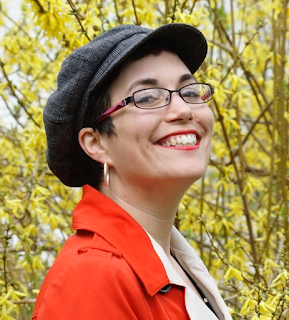
Agatha award nominee Jessica Ellicott loves fountain pens, red convertibles and throwing parties. She lives in northern New England where she obsessively knits wool socks and enthusiastically speaks Portuguese with a shocking disregard for the rules of grammar. She indulges her passion for historical fiction and all things British by writing the Beryl and Edwina Mysteries and the WPC Billie Harkness Mysteries.

Jessica’s books have received starred reviews from Publishers Weekly as well as one from Library Journal. Her first novel won the Daphne du Maurier award for mystery.


Thursday, December 8, 2022

Lucy is at the Beginning Again! @LucyBurdette #writing

 LUCY BURDETTE: Albert Einstein was once asked how he worked and was said to have answered “I grope.” That feels so familiar! I don’t know if all writers are like this, but I’m always searching for a new approach to getting good words written a little faster. My ears perked up a couple of months ago when Julia mentioned a session she’d had with a mutual writer friend, Jessie Crockett, a.k.a., Jessica Ellicott. She developed a system for brainstorming that worked to provide a book skeleton for even the most devoted pantsers. (A.k.a. those of us who try to write a book without an outline. The keepers of the black hole...)

This is for a different book, but you get the picture!


The tools for this project were simple: sticky notes, different colors for each point of view. Plus a big whiteboard. (Jessie wears headphones and dictates most of her own writing.) She asked me what I knew about the book so far. It wasn’t a lot. I knew exactly how it would open, what Hayley was going to get involved in. I knew that some of it would take place up the Keys in Big Pine Key. I knew there was a cold case. Jessie madly wrote possible scenes down on the stickies and pulled all kinds of information out of me that I didn’t know was there. Because they were on stickies, they could easily be moved around into better timelines. My writing pals Ang and Chris were there for the zoom session and had lots of good ideas, too.

Chris plotting her book


Here's a snippet from that opening chapter (no name for the book yet:)


I scrolled through my stuffed inbox, deleting all the messages from spam to junk to ‘sat on it too long to answer’. I paused over one email that arrived the night before from a name and address that I did not recognize. As my finger hovered over the delete key, the alluring subject line made me pause: Hemingway’s toxic love and an old story. I couldn’t think what kind of clever angle this spam might hold, so I opened it up to see.


Dear Ms. Snow, you don’t know me, and I apologize for intruding into your inbox. I have read a lot about you, both your restaurant criticism and your crime solving. I am hoping to interest you in talking with me, at your convenience of course. 

Below this introduction was pasted a screenshot of a yellowed newspaper clipping.


Monroe County Sheriff’s Department Investigates Report of Missing Woman. May 13, 1978. A 22-year-old woman approached the Sheriff's Department reporting that the friend she had traveled with several months ago from Michigan to the Florida Keys has disappeared. Deputies interviewed all available witnesses and investigated the area where the alleged victim was staying with her friend. There was no sign of criminal activity, although the alleged victim had been living in a commune-type encampment which was subsequently evacuated by the Sheriff’s Department. Several people familiar with the situation reported that the missing woman had been restless and eager to leave the Keys.

“I was the one who reported Veronica missing,” the email continued. “As you can read between the lines, the authorities brushed me off, insisting that she’d left the area of her own volution. But she never turned up in Michigan after I went back home, nor have I heard from her since. I even hired a private investigator. His trail ran ice cold once he hit the Keys.

You've had some experience solving mysteries and I’m hoping that you might help me look into this one.


LUCY AGAIN: One of the reasons that I think Jessie's system works is it doesn't give your brain a chance to say NO NO NO. And that keeps the ideas and possibilities flowing. I've invited Jessie to blog about plotting in January, but meanwhile, do you have ideas for keeping the creative juices flowing?

My stickies after Lottie got involved


Wednesday, May 4, 2022

Keep Calm and Write On, a guest post by Jessica Ellicott

JULIA SPENCER-FLEMING: As most of you know by now, I love historical fiction. I majored in history in college, focused on early colonial history for my grad degree, and even wrote my law school thesis on 17th century law codes in Massachusetts. History is a story - it's no wonder it's had such appeal my whole life. 

And I used to wonder, what was it like to live through this time or that time? How did people live through political disruptions,  economic crises, war and plague? 

Well, now I know. Now we all know. But a lucky few, like historical mystery author Jessica Ellicott, actually get to spin gold from the mounds of straw we've all been dealing with.


Over the past couple of years, I’ve been very interested in the different ways that writers have experienced the pandemic. For some, the circumstances made work almost impossible. For others it provided conditions that fostered the most creative and productive period of their lives. For me, the situation created an unexpected learning opportunity.


At the beginning of 2020, before any of us knew what was about to unfold, I was hard at work on the novel that would become my new release, Death in a Blackout. Although it was not my first historical mystery, or even the first I set in the UK, I had yet to write a novel that took place during wartime.


I have to admit, I felt daunted. After all, how could I begin to put myself in the shoes of people who faced such overwhelming uncertainty, in so many areas of life, for years on end? How could I possibly understand what it was like to feel that the whole world had changed overnight and that life as everyone knew it, was suddenly upended?


Which is, of course, where the opportunity came in. Just as the enormity of the pandemic became clear I had begun research that involved spending day after day poring through back issues of the Hull Daily Mail circa 1940. As I read those old editions of an English newspaper it occurred to me that an insatiable craving for up-to-date news on global events was something I could now completely understand. Informational notices about new rules and regulations scattered throughout the pages from 1940 eerily echoed the ones I eagerly consumed from that day’s Washington Post or NYT.


A sense of interconnectedness, of how the impact on far-off places could be felt locally was another point of similarity. Articles enumerating the toll advancing troops had taken on the economies, freedom of movement and even on life itself in cities across the globe struck new chords in me. Even something as mundane as a trip to the grocer snapped some of the war years’ experience into focus. The small, but shocking, amount of inconvenience and discomfort brought on by notices announcing rations on meat or cleaning products, or toilet paper left me with a far greater sense of how unrelenting years of such deprivations could have worn a population down.


Enforced distance from loved ones was another thing I had been lucky enough not to experience regularly until March 2020. Knowing how it felt to be unable to simply set a time to meet up with a friend or family member added so much to my understanding of the lives of my characters. Holidays spent apart drove the lesson home even more, especially as one year turned to two with no guaranteed end in sight.


But I think what taught me the most and urged me on as I wrote the novel was living with so much uncertainty. One of the most challenging things, at least for me, about writing historical fiction is that, positioned as I am in the future, is to remember that my characters have no idea how things will turn out. They do not know that the Allies will be victorious or for how long the war will last or how many people will lose their lives any more than we knew the path of the pandemic when it all kicked off. Uncertainty was our constant companion as much as it was theirs.


Although I hope never to write another novel under similar circumstances, I am very grateful for the opportunity to feel a deeper connection to people of the past, to experience intense emotions that added to my work and to feel encouraged and uplifted by the example of others who found ways to make the best of a difficult situation.  After all, isn’t that the ultimate purpose of stories?


JULIA: Has the pandemic - or another event in your life - made you feel more connected to the past, dear readers? One lucky commentor will win a copy of  DEATH IN A BLACKOUT!


Agatha award nominee Jessica Ellicott loves fountain pens, red convertibles and throwing parties. She lives in northern New England with her dark and mysterious husband, exuberant children and a precocious poodle named Sam.

When away from her desk, she obsessively knits wool socks and enthusiastically speaks Portuguese with a shocking disregard for the rules of grammar. She indulges her passion for historical fiction and all things British by writing the Beryl and Edwina Mysteries and the WPC Harkness Mysteries.


Jessica’s books have received starred reviews from Publishers Weekly as well as from Library Journal. Her first novel won the Daphne du Maurier award for mystery. As Jessica Estevao she wrote the Change of Fortune Mysteries. When inspiration strikes, she writes contemporary mysteries as Jessie Crockett.


She loves to connect with readers via the Wickeds blog, FB, Instagram or through her newsletter.






