Showing posts with label Lori Rader-Day. Show all posts

Tuesday, February 3, 2026

Lori Rader-Day--What's Your Obsession?

DEBORAH CROMBIE: I am such a fan of Lori Rader-Day and I am beyond chuffed to have her visiting us again here on JRW. And this book, WRECK YOUR HEART, I have to tell you, is an absolute corker! It's a pick-it-up-and-don't-put-it-down read, so I'm warning you. Block out some time for this one. 

And this cover?? If there were awards for most fun covers, this one would definitely be in the running!


What’s your obsession?

By Lori Rader-Day

I have been lucky enough to be invited to visit Jungle Red Writers for every one of my books.

In my guests posts here, I have talked about Muppets and nail polish and cookies made of ground-up angel’s wings. About the metaphor of the time loop in the movie Groundhog’s Day reflecting the realities of writing. On the death of Saturday morning cartoons, the “Dukes of Hazzard,” and the hazards of nostalgia. About the fantastic cream teas and afternoon teas I’ve enjoyed as “research.” About stargazing and my cousin the astronaut and my childhood, viewed from the back of a motorcycle. And about the playlists I have always made for my books, from the music I listen to as I write.

But really? I have only one topic, no matter what I’m writing about.

Obsession.

Writing is all about obsession, absorption. What can I care enough about to spend the vast amounts of time required to write a novel? What can I care about, even as the muddled middle stagnates, as the first draft’s finish reveals my disappointments and the long road of revision ahead? What can I care about all the way to the last, teeny, tiny edit, when I can finally let it go? 


(My agent once said of my editing process, "No one does it like this, Lori," and I am still chilled by that.)

Time passing means we never cross the same river twice, as the saying goes. What I’m obsessed with right now might be spent in the process of writing, used up, and I’ll never think about it again. (Except when I’m holding up a copy of the book in front of readers and explaining why they should join me in my obsession, at least for a few hundred pages.) I might regret the loss of that obsession, that glorious time when I was able to dedicate myself fully to a topic, when it was my job to care so much about, say, the historical records of one lovely English house once owned by Agatha Christie.


(It was a lovely time to be obsessed with Agatha's house while I was stuck in mine in the pandemic lockdown.)

As writers we get asked a lot… isn’t it easier to write a book once you’ve already done it a few times? The truth is… no. It gets harder. One of the reasons this is true, I suspect, is that we are worried about stepping into that river and finding the same water. We don’t want to write the same book over and over. Even series authors want to outdo themselves from book to book. But as a standalone author, I am at pains to keep discovering new things to obsess over to form the basis of my character’s job and life and dilemma. For each book, I must learn enough to, if not to become the leading worldwide expert, then at least not embarrass myself. As someone who is research averse, it’s about finding new topics I don’t mind spending the time on.

For my latest book, Wreck Your Heart, it was music.

Am I a musician? No more than I was a sociology professor, hotel cleaner, handwriting expert, night-sky photographer, construction company administrator, or a rejected and reassigned World War II nurse. No more than I was a mother, or widowed, or kidnapped as a child, or Agatha freaking Christie herself. I write fiction, so I’m allowed to play with these roles, imagine and reimagine what these lives might be like so that my readers receive the same opportunity.

If I do my job right, my readers will wonder about each character… is their obsession mine?

For instance: Am I a good singer? No. But I was willing to put the time the vocalist protagonist of Wreck Your Heart needed. Oh, poor me. I had to listen to music (which I would have been doing anyway; here’s the playlist for Wreck Your Heart). I was compelled to read memoirs by some of my favorite recording artists. I was forced to witness the awe of the shared experience of a live music audience, to watch how audiences interact with performers, how stage lighting paints skin. Again and again, concert after concert, poor me.


(See that little woman with the big shadow on the wall? Look for her in Wreck Your Heart!)

Actually, though Wreck Your Heart is about a musician yearning for rockstar status, the book became, in the end, about obsession, about putting your whole self into what you care about, about laying yourself open to criticism and derision and vulnerability by being your truest self. Loving something or someone fully is what makes us human. The thing you love most can be the lens through which you see the world in all its brightest colors.

I said it to Jungle Red Writers readers long ago: obsession is good for you. It’s been good to me. As soon as I figure out my next obsession, I’ll start singing about it. So to speak.

What are you obsessed with, Jungle Red readers? Tell me everything.


Here's more about WRECK YOUR HEART: 

Ann Cleeves called it “wisecracking and wonderful.” Elle Cosimano called it “Phenomenal.” Library Journal and Publisher’s Weekly both gave the book starred reviews. 


The book is the instant USA Today bestseller Wreck Your Heart, a crime novel with a big heart, about a country and midwestern singer out to catch her big break before family—or murder—wrecks everything.


Dahlia “Doll” Devine had the kind of hardscrabble beginning they write country songs about. As part of Chicago’s—yes, Chicago’s—country music scene, Dahlia is an up-and-coming singer in spangles and boots of classic country tunes. Up and coming, that is, until her boyfriend up and went, taking the rent money with him.


So Dahlia is back to square one, crashing in the apartment over McPhee’s Tavern where she performs and relying on the kindness of the pub’s owner—again. When the mother Dahlia hasn’t spoken to in twenty years shows up and then disappears again—really disappears, leaving a distraught half-sister Dahlia didn’t know she had—and a body is discovered outside McPhee’s, the two mysteries threaten not just the place Dahlia has made into a home, but everything she’s believed about her past, her dreams for the future, and the people she was just, maybe, beginning to let into her heart.


Lori Rader-Day is the USA Today bestselling author of eight novels including Wreck Your Heart, The Death of Us, Death at Greenway, The Lucky One, and Under a Dark Sky. She has been nominated for crime fiction’s highest award, the Edgar Award, and has won the Mary Higgins Clark Award, the Agatha Award, three Anthony Awards, and an Indiana Author Award. She has also been nominated for Thriller, Barry, and Macavity awards. Lori is a former national president of Sisters in Crime and a former national board member of Mystery Writers of America. She lives in Chicago, where she co-chairs the crime fiction readers’ event Midwest Mystery Conference and teaches creative writing at Northwestern University. Visit her at www.LoriRaderDay.com.

DEBS: And you can stop in today to say hi and tell Lori all about your obsessions!

Friday, September 29, 2023

Words and Music, Music and Words

HANK PHILLIPPI RYAN: It’s a question that gets asked at almost every author event: “Do you listen to music while you’re writing?” It’s also a very binary answer–every author can instantly tell you yes or no.


My answer below, and we cannot wait to hear yours. But first:  confetti, champagne, and the strewing of rose petals!  Here is the incredibly fabulous and astonishingly talented Lori Rader-Day to give us her musical secrets.


The Soundtrack of A Story

By Lori Rader-Day


I’m going to tell you a tragic story in a minute, but first some back story and, right up front: controversy.


I write to music. I write to songs, with lyrics.


Many writers will argue against this. They will say that silence is better, or if they allow music anywhere near their writing practice at all, it can only be instrumental. The complaint? Many will say that the songs will somehow crawl into the work.


Whereas I welcome songs into my stories. Hear me out.


I have written all of my novels—seven books and counting—to music, and not just any music. I make playlists full of songs you’ve heard on the radio or never will, of songs that fall into genres as diametrically opposed as rap and country, big band and metal. Yes, in the same playlist.


Here’s how it works, for me. I start with a few songs I already know, songs I think I can write to. Maybe they have something to do with the story I have in mind, but maybe they just sound right for this particular book. Tone is the most important factor in song choice, and I can’t explain it well without, perhaps, a musician’s vocabulary for how music affects the listener. (There are full books on this, and I’m not writing one.) I’m not a musical expert, only a connoisseur of the song I can write to.


The moment I hear a song I can write to, I know it.


This is not the story I meant to tell you, but here goes: When I was writing my first novel, The Black Hour, I was struggling to find my way. (I’ve adopted this, the struggle, as part of my process, but I didn’t know it was necessary, then.) I was driving somewhere here in Chicago, always an adventure, when a song came on the radio I had never heard before. It was a fairly metal song I would later identify (and purchase, and listen to on repeat) as “Sail” by AWOLnation. (You may not like it, but… you might still like the book?) Sail! What could be more perfect? My book had a lake in it, and a boat, and a regatta—


Or maybe that regatta popped into my mind when I heard the song? It’s hard to remember how things went, now. I only know that this one song became the soundtrack of the second half of my draft. A single song led me out of the morass, that boggy middle ground of a novel’s first draft.


When I hear that song now, it’s such a thrill. It sends me right back to that time. Music is a time machine. I’ve been transported back to singular moments in my life, to the origins of friendships, to the best and worst days of my life, by a song playing over the speakers at a coffee shop or, god, the grocery store. Like the country song favored by the exchange student from my freshman dorm, circa 1991. (Garth Brooks, but with an English accent.) Or “It’s a Shame About Ray” by the Lemonheads, having the AUDACITY to play when I’m busy living my now middle-aged life.


Even as I’m telling you all this, I’m listening to music. A song starts that reminds me of the day I first heard it, and how it made me miss my dad, and now I’m missing my dad. A song is a feeling as well as the packmule that carries that feeling on its back, trailing behind you wherever you go.


Each book has a playlist, and each playlist has one song that goes straight to my memories of writing that book. “Sail” and then “Team” by Lorde for Little Pretty Things, “Blood in the Cut” by K.Flay for The Day I Died. “The Yawning Grave” by Lord Huron helped me finish Under a Dark Sky, and “This Is It” by Lo Moon helped me find the core of The Lucky One. There are both modern songs and contemporaneous ones in the playlist for the historical Death at Greenway; you’d almost be able to hum along with Vera Lynn singing “(There’ll Be Bluebirds Over) The White Cliffs of Dover” if you were reading chapter eleven.


A book’s playlist helps me work, and then lives on as a soundtrack for anyone interested and a monument, possibly for me alone, of that book’s creation.


All this to tell you the story I promised earlier, about how my playlist for The Death of Us blew up.


Let’s skip the technology part. I don’t know what happened. The book was done, so I could have just moved on. Very few people demand these musical lists. My friend Debby, basically.


But I didn’t. Instead, I painstakingly re-created the playlist from my memories of the process of writing The Death of Us and from its themes and characters. Which song made me think of Lissette’s love for her son? (“Oh My Heart” by REM.) Which song’s spoken portion always took me out of the writing but earned its spot by helping me center the story in its earliest, most fragile days? (“Family and Genus” by Shakey Graves.) Late in the process of rebuilding the playlist, I suddenly recalled “I Don’t Mind,” the perfect Sturgill Simpson song that helped me capture my town marshal character’s heart, and happily added it back. I built the book again in reverse, an exercise that helped me sort out what my book was really about: family, sacrifices and betrayals, secrets, and the choices that make a family.


Writers don’t often revisit our work after edits are closed, but there was something satisfying about the rediscovery of the music that had helped me write The Death of Us, a book whose creation had run along parallel tracks to the most challenging months of my life, through cancer treatment.


No project of mine so far has been totally joyous—the struggle, as I said, is part of my process—but writing this book was medicine, towing me along through the tough spots even as I started to pull apart at the seams. Its soundtrack, now, is the packmule, loaded down not just with the book but with my survival.


I couldn’t have left these songs behind if I’d tried. They would have waited for me in the speakers of some coffee shop in the future or, god, the grocery store. But because I rebuilt the list, I offer them to you now: The Death of Us playlist.


In fact the very best thing about writing to music is that it gives me an excuse to discover new artists and a chance to share the treasures I’ve found—supporting other creative people along the path of my own creative life.


Oh, my heart. It has always belonged to music, even if I can’t sing a note. I’ve already started building the next list for the next book. I hope you all like Patsy Cline.


HANK: Oh, I adore Patsy Cline! And now I am singing. To myself. Because –as you well know, I am the world’s worst singer, truly, and the good news/bad news is that when I try to sing, I can completely hear how awful it is. Luckily for the rest of the world.


Oh, I forgot to say. Ah....usually I prefer quiet. I have had my musical inspirations, though...but usually away from the computer. I do have to admit, a climactic scene of TRUST ME was written to Prokofiev. Played live by the Boston Symphony. Long and wonderful story.


How about you, Reds and Readers?


Lori Rader-Day (here with Clementine) is the Edgar Award-nominated and Agatha, Anthony, and Mary Higgins Clark award-winning author of Death at Greenway, The Lucky One, Under a Dark Sky, and others. Her latest book is The Death of Us (Harper Collins.) Lori lives in Chicago, where she co-chairs the Midwest Mystery Conference and teaches creative writing at Northwestern University. Visit her at www.LoriRaderDay.com.


THE DEATH OF US


From the award-winning author of Death at Greenway and The Lucky One comes a chilling suspense novel in which the discovery of a submerged car in a murky pond reveals betrayals and family secrets that will tear a small town apart.


One rainy night fifteen years ago, a knock at the door changed Liss Kehoe’s life forever.


On that night, Ashley Hay stood on Liss’s front porch and handed over her brand-new baby Callan.


She was never seen or heard from again.


Since then, Liss has raised Callan as her own, and loves him as fiercely as any mother would. But in the back of her mind, she’s always wondered whether Ashley is still out there somewhere—and feared what might happen if she comes back.


When Ashley does reappear, it’s not in the way Liss expected. After all these years, Ashley’s car has been found… in the quarry pond on Kehoe property. But the discovery of the car dredges up more questions than answers. What really happened on the night of Ashley’s disappearance? Was it a tragic accident, or something far more sinister? Someone in town knows the truth, and they’ll go to great lengths to keep it quiet.


As tensions rise in the small community, Liss must fight to protect her family and keep her own secrets hidden—or risk losing everything she loves.


PS form Hank. This is SUCH a terrific book! Friday NIght Lights goes psychologically sinister–with the heartbreaking knowing voice of LRD. Do not miss it!

Thursday, October 28, 2021

Tea Party--Lori Rader Day

DEBORAH CROMBIE:  It is always an enormous treat to have award-winning author Lori Rader-Day visit us on Jungle Red (except for the fact that I think Lori was trying to torture me to death with this post!) And TREAT is the operative word here, as you will see. (You might want to prepare yourself by making a cuppa, because otherwise you will have to get up and make a pot or two once you start reading--and drooling over these photos...)


It’s tea time somewhere

By Lori Rader-Day


In 1997 I went innocently to England to visit a friend, packing my soda addiction and bringing back a tea habit. Tea for breakfast. Tea in the afternoon. Tea for a pick-me-up, a nice cuppa tea when I arrived back home from errands or at any new stage of the day, really, always served “white” with milk.


Do you know how much easier it is to get Dr. Pepper in England than it is to get a proper brew, English breakfast, with milk, once I was back in America? Even at, say, a mystery conference? But sometimes it’s difficult to get a good cup of tea even in England. Even at, say, Agatha Christie’s house.

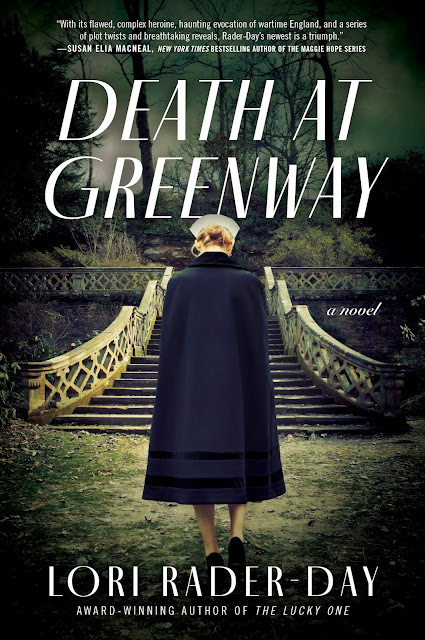
Researching my new novel Death at Greenway, I was able to visit Christie’s beloved holiday home Greenway twice, once staying three nights in the house as the guest of the National Trust, thanks to a connection made by Sophie Hannah. (Was it wonderful? Oh, yes, and absolutely essential for the book’s verisimilitude.) But we had no access to kitchen or kettle. England gave me a tea jones and then wouldn’t provide it until 10 a.m. when my husband and I were the first customers at the café when the staff and volunteers opened up. We made our breakfast from the cream tea menu. “Cream tea” means scones and is less a meal than an excuse to have a conveyance of clotted cream and jam to one’s mouth. Pure decadence.


I love tea: just “builder’s” black tea. Not green. Not cinnamon. Not mint. Not herbal, which is just flowers floating in water, or Earl Grey, which tastes like a sweater. Researching an English story in England, I had the chance to have every variation of the tea meals served there: a “bad” cup of tea that was still refreshing in Paignton, weary from travel. A wonderful cream tea in Soar to make up for backtracking to retrieve coats left behind at the inn where the sea crashed against the coast, a place that also worked itself into the book.


I have had tea up and down the countryside of England in the name of research, from South Devon down near Dartmouth and the Channel where Greenway is situated to the famous Bettys Teashop when I attended Theakston Old Peculiar Crime Festival, colloquially known as “Harrogate” for the town in the north where it takes place each year.


But can I get posh for a moment? What I truly love is afternoon tea.


Afternoon tea is the one you’re thinking of, ladies in hats. Perhaps you have called it high tea before and now never will again, OK? High tea is supper, fish and chips and such in a pub, not fancy at all, not necessarily featuring tea, the drink. It is called that perhaps because one eats high tea up at the table, while afternoon tea is taken in comfortable, low chairs in the room where visitors linger. (You can learn more about the socioeconomic history of the differences here.)

Afternoon tea is a delight, a special occasion. We have no real American equivalent to afternoon tea. A snack? Is there any precision, any pomp or history to a snack?

Shall I be mother and serve you the three tiers of afternoon tea?


Along with your actual tea, we have on the bottom tier some tiny sandwiches, perhaps egg salad or cucumber and butter? Savory bites here are welcome, as we’ll get to many sweet options soon. My friend and author Mary Anne Mohanraj hosted a tea party launch for Death at Greenway in her English garden and served all the above plus what she calls “ribbon sandwiches,” with three layers, one each of beets, carrots, and spinach. (Recipe and description here but also check out her Patreon subscriptions and cookbook.) I don’t even like beets but love ribbon sandwiches.


But save room because on the second tier we have scones, served with clotted cream and jam or lemon curd, and we can argue over which is applied first later. The important thing is to get your scone loaded with both cream and jam and heading toward your mouth.

 And we’re not even finished. Consider the top tier: tiny teacakes, perhaps some fondant involved, the sort of thing many contestants on Great British Bake-Off never perfect. Also biscuits, pâtisserie—there are no absolute rules to what might appear on the tray, and that’s part of the fun, to see what each host chooses to serve their guests. Like the mango trifle Mary Anne prepared for our launch party…


(You can find some recipes and ideas for hosting your very own afternoon tea here.)

The top tier are sweets, the likes of which makes most of us think of Paree, dessert after what has essentially been a meal of dessert. Maybe it’s too much?

Well, perhaps just one. If you insist. You’ve gone to all this trouble. It would be rude not to.

And of course we’ll finish off the pot of tea to wash it down. Afternoon tea is an event lasting as long as the tea and conversation flow. The whole point of afternoon tea is that the small bites don’t get in the way of talking. It’s a treat to be shared with friends, something special for visitors.


England and its people have been so generous with sharing their country, history, and pleasures with me throughout the process of researching and writing Death at Greenway and now? Well, sometimes afternoon tea is served with champagne when the occasion calls for celebration. I’m raising my glass in your direction. Thank you, my lover (as they say to good friends in Devon), and cheers!


Photos of the Serendib House Death at Greenway tea party launch were taken by John Thomas Bychowski. Poisoned portrait and tea cup stack photos were taken by Justin Barbin Photography. All other photos are courtesy of the author or her friends.

Lori Rader-Day is the Edgar Award- and Agatha Award-nominated and Anthony Award- and Mary Higgins Clark Award-winning author of The Lucky One and Under a Dark Sky. She lives in Chicago, where she co-chairs the Midwest Mystery Conference and teaches creative writing at Northwestern University. Her newest book, Death at Greenway, is based on a little-known moment in history, when a group of London children were evacuated from the Blitz during World War II to Agatha Christie’s holiday estate. Visit her at www.LoriRaderDay.com, Facebook, Twitter, and Instagram.


DEBS: When you've finished swooning over the goodies above, can I just add that Lori's book is delicious as well? It is so atmospheric and gripping and just creepy enough to make you want to curl up under a rug (that's British for a throw) with your very own cup of English Breakfast. Or maybe even Earl Grey. (I like Earl Grey but  Lori's description made me snort. I totally get it. And I agree about all the other tea flavors. Just no.)

READERS, tell us about your favorite afternoon tea experiences? And who has visited Greenway?