
Showing posts with label Macavity awards. Show all posts

Sunday, July 31, 2022

G.M. Malliet--Augusta Hawke

DEBORAH CROMBIE: My editor told me that during the pandemic authors seemed to  have either written like crazy, or been totally blocked. I'm happy to say that our guest today, G.M. Malliet, was one of the former. (Not talking about where I fall on that spectrum...!) I have long been a fan of her Max Tudor (dishy former spy, now vicar--what's not to love?) books and her D.C.I. St. Just books, and now there is a new series to love as well. Now, if only some of that productivity would rub off on me...


“From you have I been absent in the spring”

by G. M. Malliet


And the summer, winter, and autumn.

That’s a quote from the incomparable Shakespeare, of course. Sonnet 98. There’s a school of thought he wrote this sonnet during one or another of the plagues that beset London, forcing him to flee, and causing his separation from his beloved, whoever that was. The Dark Lady or the Fair Youth—we may never know.  

Agatha Christie adapted the title for one of her most successful non-mystery novels, writing as Mary Westmacott.

From March 2020, officially the start of our modern pandemic, I have largely been absent from the writing scene. My husband and I, at our ages not willing to play about with this, took the official advice and hunkered down, emerging towards the end only for delayed funerals of family members and for one mystery writers’ conference.

Meanwhile, to pass the time, I wrote. Constantly and as a distraction from reality, as I’ve always done, although this was a bit more intense, more enforced, and resulted in the completion of the better part of five books.

For those who don’t know me, and I’m assuming by now that is most of you, I write as G.M. Malliet and because of all this industry, and thanks to a dynamic new agent, I'm currently juggling three series. DCI St. Just of the Cambridgeshire Constabulary was the protagonist of my first series, started about 15 years ago with DEATH OF A COZY WRITER, and he was revived last year by Severn House with DEATH IN CORNWALL, St. Just #4. 

Max Tudor is my vicar sleuth – former MI5 and devilishly handsome. I did seven of those books for Minotaur starting with WICKED AUTUMN and will do an eighth for Little, Brown next year (THE WASHING AWAY OF WRONGS).

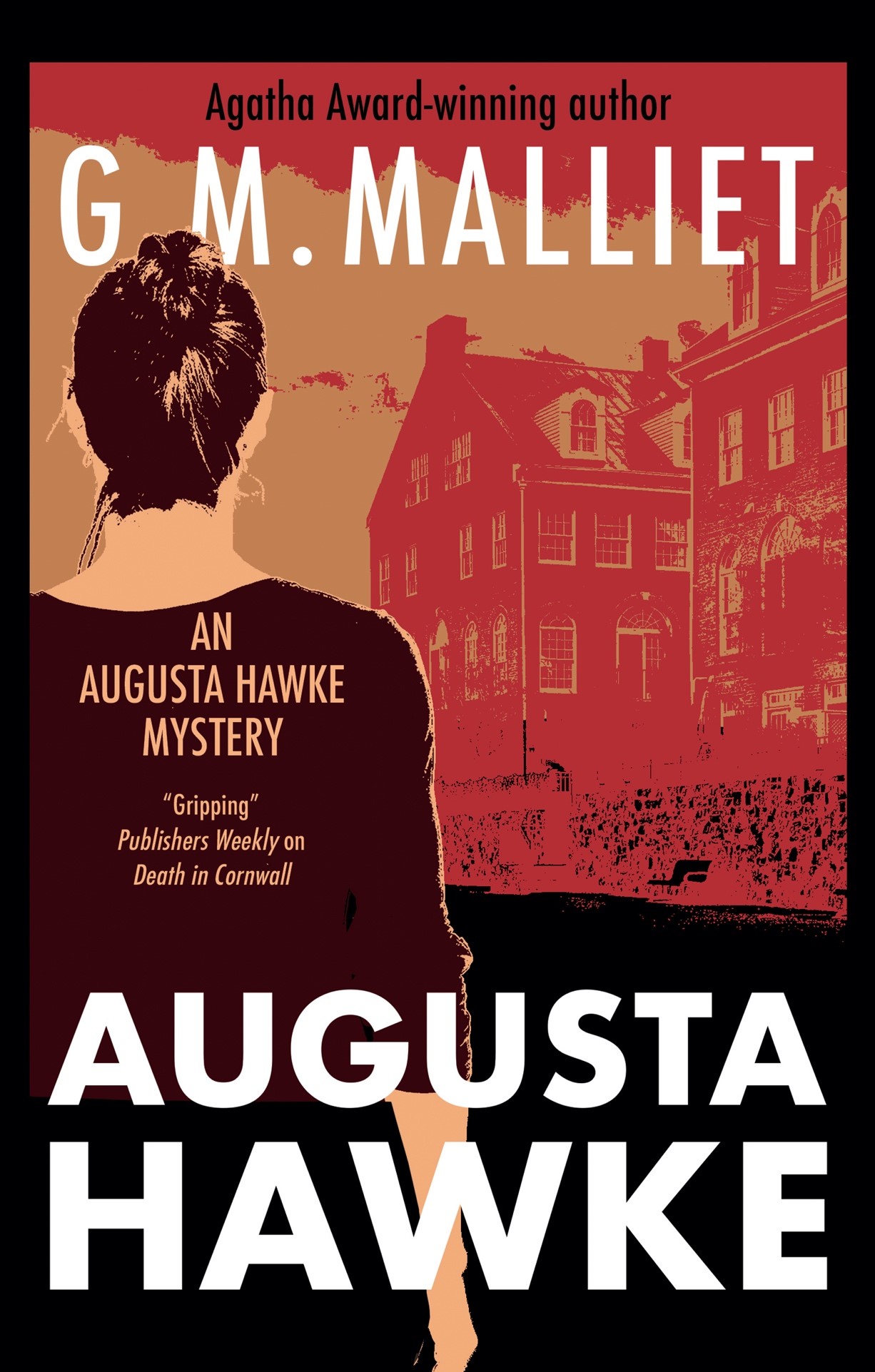
AUGUSTA HAWKE is my new series starring a first-person female protagonist, a mystery writer who notices her neighbors have gone missing. About the same time, she is becoming bored with her writing (which should sound familiar to many authors) and decides to up her procrastination game by investigating. By the second book (AN INVITATION TO A KILLER), coming soon from Severn House, she is still writing mysteries but now she has a PI license.

I also write short stories, and I’m proud to say my story appearing in the July/August 2021 edition of Ellery Queen Mystery Magazine was just nominated for a Macavity Award. Winners in all categories will be announced in September at opening ceremonies @Bouchercon2022. 

If it all seems like a lot, it is, but my husband and I recently celebrated just plain surviving with a trip to Ireland, Wales, and Scotland. I’ll spare you the millions of travel photos except for this one, which is of a place I love. 
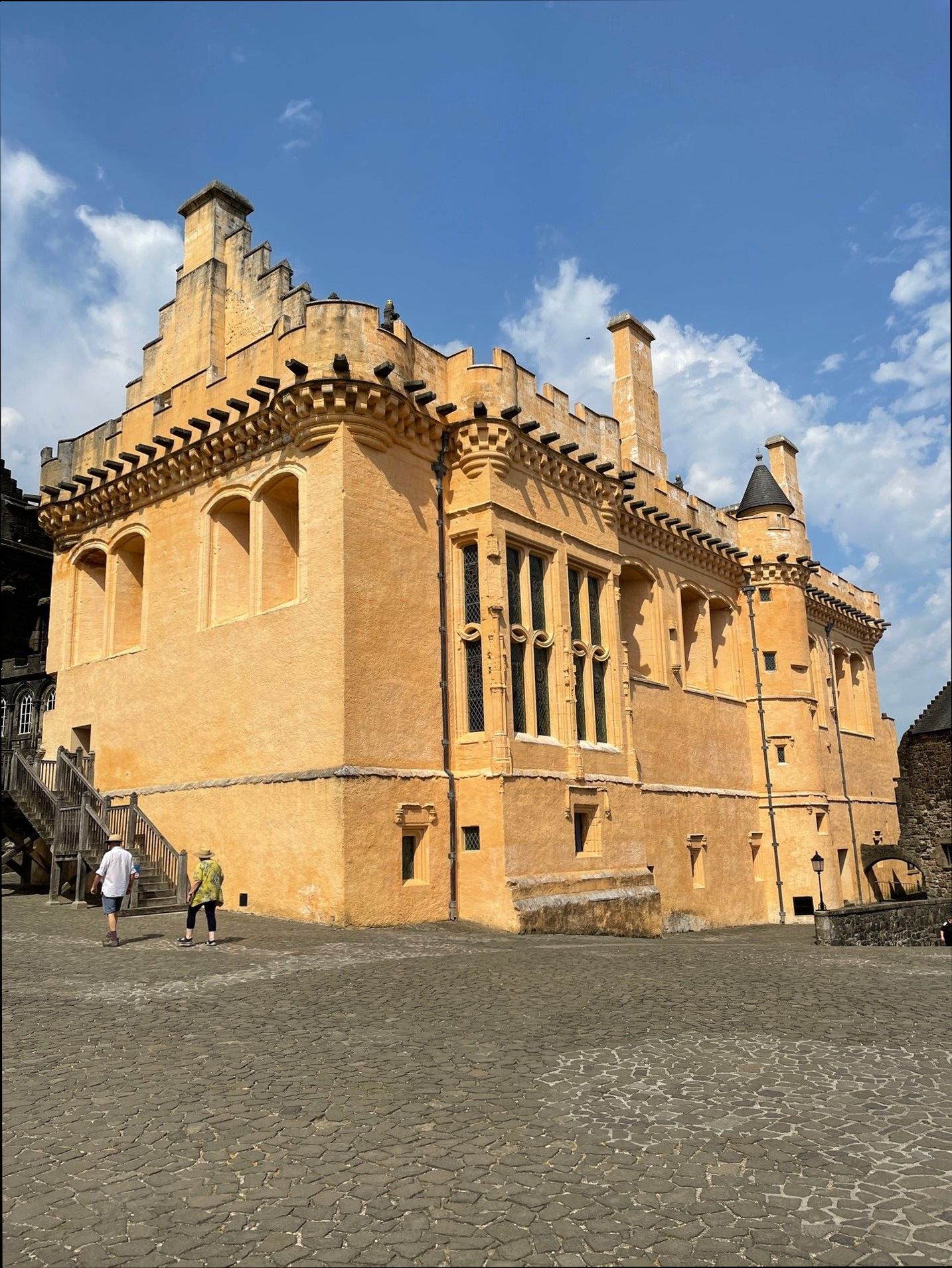
It is Stirling Castle where Mary Queen of Scots was crowned Queen of Scotland at the age of nine months. It was pretty much all downhill for our stubborn and willful Mary after that, who was beheaded at the age of forty-four after spending nearly twenty years of her life imprisoned. Somehow, despite her colossal lack of judgment, Mary remains a favorite. Perhaps because I can relate.

Godspeed and good luck and, as the Irish say, may the road rise up to greet you all. It’s great to be back.


Sometimes it's safer not to know your neighbors' secrets.


Where are Niko and Zora Norman? Crime writer Augusta Hawke puts her sleuthing skills to the test to solve the mystery of her disappearing neighbors in the first entry in a new series.

While Augusta Hawke is a successful author of eighteen crime novels, since her husband's death she's been living vicariously through her Jules Maigret-like detective Claude and his assistant Caroline. Then a handsome police detective appears investigating a real-life mystery.

Where are her neighbors, the Normans? No one has a clue what's happened - except Augusta. Although she isn't nosy, spending all day staring out the windows for inspiration means she does notice things. Like the Normans arguing. And that they've been missing a week.

Once the Normans' car is found abandoned, Augusta senses material for a bestseller and calls on the investigatory skills she's developed as a crime writer. But she soon uncovers long-hidden secrets and finds herself facing real-life dangers her characters never faced . . . ones she can't write her way out of.
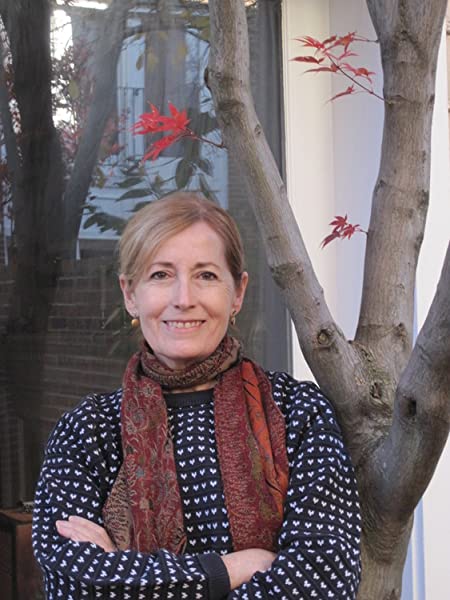


G.M. Malliet is the award-winning author of four St. Just mysteries, seven Max Tudor mysteries, the suspense novel WEYCOMBE, and numerous short stories collected in crime anthologies or published in Ellery Queen Mystery Magazine (EQMM) and The Strand. New short stories will appear soon in EQMM ("The Pact" and "Something Blue"). A new mystery series (AUGUSTA HAWKE) debuts in July 2022 and a fifth St. Just novel will appear in August 2023.

DEBS: Congratulations on the Macavity nomination, Gin!! And we are all certainly glad you're more than back! 

REDS and readers, did isolation make you more productive?

G.M. will stop by to chat, so maybe she will tell us her secret!

Tuesday, July 25, 2017

Happy Pub Day, Glen Erik Hamilton!

INGRID THOFT

I'm thrilled to welcome Glen Erik Hamilton to Jungle Reds. The third book in his critically acclaimed Van Shaw series, EVERY DAY ABOVE GROUND, is out today.  Glen's debut, PAST CRIMES, won the Anthony, Macavity, and Strand Magazine Critics awards for Best First Novel and was also nominated for the Edgar, Barry, and Nero awards.  The follow-up in the series, HARD COLD WINTER, was published to rave reviews in 2016.  Glen is a native of Seattle, but currently resides in LA with his family, where we recently met up at a tiki bar for great conversation and strong zombie cocktails!  I'm so glad he's spending his pub day with us!

INGRID THOFT: Your new release EVERY DAY ABOVE GROUND is out today, and it’s fantastic. Can you tell us about it?


GLEN ERIK HAMILTON: Thank you! EVERY DAY ABOVE GROUND is the third in the Van Shaw series.  Van was raised by his grandfather, a professional thief, and escaped the criminal life in his late teens to serve in the Army Rangers.  At the start of EDAG (as the publisher and I affectionately call it), Van has been out of the military for a few months.  He’s trying, with some difficulty, to rebuild his life and home after the events of the last book.  An old partner of his grandfather’s approaches Van with the offer of a safe cracking job.  Van would normally refuse any criminal work, but he convinces himself that this score is at least semi-legal and on the side of the angels.  As is often the case in crime thrillers, the job does not go as planned.

I had a lot of fun writing EDAG:  Van is forced to contend with some wild characters, villains at both the apex and bottom rungs of the smuggling world, and no less dangerous for being at either end.  His personal relationships are also rocky.  Van has the bad habit of neglecting his emotional life for his more active one, even when he needs the people around him more than ever. He’s a family guy without a normal family. Part of EDAG is him wrestling with those friendships and those responsibilities. 


IPT: You grew up on a boat, which is a very unique setting in which to live.  Has that experience influenced your writing?

GEH: Tremendously.  Some of those inspirations are easy to spot: I have major characters living aboard and many scenes set on or around the waterways that almost completely surround Seattle. Seattle is also our largest western seaport north of Los Angeles, so the shipping business is a tremendous opportunity for crime stories.

But beyond that, people who live aboard boats make the deliberate choice to be a little removed from mainstream society. There’s an outsider mentality, which includes a distrust, if not outright rejection of the norm (whether that’s a positive or a negative, I leave for the observer).  I have at least some of that outlook, and there’s no question that Van, with his skewed upbringing, does as well.


IPT:  If writing is your dream job, what would your second dream job be?

GEH:  This is a tough one.  I love acting on stage.  Before writing, theater was my primary creative outlet; I have a degree in it and it’s how my wife and I met. I fully intend to continue acting for the fun of it when life allows. I also enjoy reading history, and teaching, and can easily imagine an alternate life path that could have lead me to becoming the world’s foremost expert on post-WWI North African territorial wars, for example, and the impoverished academic career that might result.

IPT: Ha!  I had no idea that you have an interest in post-WWI North African territorial wars!  What are you working on now, and is there a book you’re dying to write? Romance?  Sci-fi?

GEH:  I’m working on a standalone novel, more of a direct thriller than the mystery-thrillers of the Van Shaw series. What I’m most eager to try next, time allowing, are short stories. The interstitial chapters of the Van books show our hero at different ages.  I approach those as if they were independent stories, and I have a lot of fun with the flexibility and the challenge.  Seeing one of my short stories appear in "The Strand" or "Ellery Queen" someday would be a huge milestone.


IPT:  Okay, you know I have to ask: How do you come up with character names?

GEH:  [For the reader:  Ingrid is asking this because one of the major characters in EDAG is also named Ingrid.  She’s a bad bad person.  The character, that is…]

Anytime I hear a name that strikes me as unusual and evocative, I note it down in a running list.  The best names have a particular tone, a musicality.  For example, Ostrander is a town in Washington State. The name always struck me as chilly, removed, and monied. I used Ostrander for the name of a well-heeled attorney and personal fixer for a billionaire in my second book, HARD COLD WINTER.

Van Shaw has a fun genesis – Van is short for Donovan; I wanted he and his grandfather to share the name.  In the Irish way, the granddad is Dono, so the younger Donovan is Van.  Shaw comes from two places: my favorite playwright George Bernard Shaw, and the late actor Robert Shaw, who would have made a wonderful Dono. The name Shaw also has an appropriate music to it, like a sword being unsheathed.


Oh, and the character Ingrid?  “Ingrid Ekby” had a great sound, both Nordic and subtly mechanical. Ekby, by the way, is a shelf unit from IKEA…

IPT:  Now it’s Glen’s turn to shoot a question to the readers of Jungle Red!
GEH:  What’s your favorite character name, the one that best sounds like the fictional person’s personality?

I’m going to make this a little harder and say: No Harry Potter characters allowed.  J.K. Rowling is just too good at that game.  Comment, and you'll be entered to win a copy of EDAG!


EVERY DAY ABOVE GROUND
It sounds like a thief's dream to Van Shaw: A terminally-ill ex-con tells him of a fortune in gold, abandoned and nearly forgotten after the original owner died in prison. To rebuild his destroyed house and to help the dying man leave a legacy for his pre-teen daughter, Van agrees to the job. But the safe holding the fortune is a trap and Van must figure out who the hunters are really after—while being hunted himself.


Glen Erik Hamilton's debut Past Crimes won the Anthony, Macavity, and Strand Magazine Critics awards for Best First Novel, and was also nominated for the Edgar, Barry, and Nero awards. Publishers Weekly and Library Journal gave Past Crimes starred reviews, and Kirkus called the book "an exciting heir to the classic detective novel". The follow-up in the Van Shaw series, Hard Cold Winter, was published to rave reviews in March 2016 by William Morrow (US) and Faber & Faber (UK).
A native of Seattle, Glen grew up aboard a sailboat, finding trouble around the islands and marinas and commercial docks of the Pacific Northwest. He now lives in California with his family but frequently returns to his hometown to soak up the rain.

Website: www.glenerikhamilton.com

Facebook: @glenerikhamilton
Twitter: @glenerikh


Saturday, January 23, 2016

Not the Laurel, But the Race


JULIA SPENCER-FLEMING: If you follow crime fiction news (and if not, you should!) you know the Edgar Awards, sponsored by the Mystery Writers of America, and the Lefty Awards, given at the Left Coast Crime conference, have recently been announced. We're thrilled to have three Reds on the shortlists. Hallie Ephron has been nominated for the Mary Higgins Clark Award, and BOTH Rhys Bowen and Susan Elia MacNeal are on the list for the Bruce Alexander Memorial Historical Fiction Award. (Will they go mano-a-mano for the prize, wrestling and throwing punches? Probably not, but you should attend Left Coast Crime just in case.)

Award wins and nominations are, to be perfectly frank, delightful. We at Jungle Reds like them a lot: between us we have won the Barry, the Booky, the Bruce Alexander, the Dilys, the Freddy, the Gumshoe,the Herodotus, the Lovey, the Daphne and the Nero Wolfe. We've been nominated twice for the Dilys and Bruce Alexander Awards, three times for the Barry and Edgar Awards, six times for the Mary Higgins Clark award, eight times for the Macavity, fifteen times for the Anthony and a staggering twenty-one nominations for the Agatha Award.

At home, on our bookcases, we can display two Barry Awards, three Sue Feder Historical Mystery Awards, five Macavity cats, five Anthony awards and eight Agatha teapots. For those of you scribbling figures on the back of an envelope, that's 13.14 awards and nominations per Red. Here's the thing, though: we don't write to receive nominations and awards. We write to please our readers. The teapot, the cat - or that oh-so-coveted Poe statuette - are useful. They draw attention to our work, make our publishers happy and raise our profiles in the community. But the best thing about them is that they're a tangible form of reader satisfaction.  Behind every nomination is eight or eighty or eight hundred readers who closed the cover and sighed, "That was a great book."

And that's one reason why crime fiction authors aren't (tooo terribly) jealous when our colleagues nab awards. Because we read - and love - each others' books. In 2014, Hank and I were both up for a Best Novel Agatha, for THE WRONG GIRL and THROUGH THE EVIL DAYS. When Hank won, as soon as she had finished getting her pictures taken, she rushed over to me and said, very seriously, "Is this okay?" It was, and I was happy for her, and we hugged and I had a great time that evening at the bar bragging on my sister Red.


If award nominations have any lasting impact, it's this: they remind us to always push ourselves to become better writers, to strive to deepen our understanding of the craft, and to promise ourselves to make every single book a little bit better than the last one. Reds, what are your thoughts on the role of awards in your career? And do you have any good award ceremony stories to share?

RHYS BOWEN:  Julia, the one time I was ever nominated for the Edgar best novel, you were a fellow nominee!  How seldom is a woman ever nominated and that year there were three of us. Laura Lippman was the third. I secretly felt we cancelled each other out! But I would have cheered loudly if you had won.

My most recent award ceremony memory is winning the Agatha last year and then cheering for Hank when she won hers and having our pictures taken together with teapots! You are so right that we are each others' biggest champions! We are in a great profession and wonderful community.  I feel blessed.


SUSAN ELIA MACNEAL: I was completely gobsmacked to be nominated for an Edgar for Best First Novel and I'm happy to say that we nominees (Kim Fay, Daniel Friedman, Michael Sears, and Matthew Quick) became fast friends there and have remained close! And I remember winning the Barry — not only did I never think I would win, but I didn't fix up my hair or put on fresh lipstick, and had a couple of glasses of wine beforehand. (Because I REALLY didn't think I would win.) I have no idea what I said, but my editor tells me it was sweet and people liked it. Thank goodness. Maybe that's the trick to winning? Not wearing lipstick and being completely unprepared? One of the unexpected benefits of being nominated for things is getting to sit at the awards ceremony with Lee Child, because we share an editor. Even after a few years, I'm always shocked Lee Child knows who I am. And once he even told me, "My wife loves your books." That's good — right?

JULIA: Absolutely!

HALLIE EPHRON: Julia, when you lay it out like that, we've got quite an impressive array of nominations and awards among us. Congratulations, Susan and Rhys! I had a lovely day on Tuesday when the nomination was announced -- with my phone and email pinging nonstop with congratulatory messages. I got zero writing done.

This will be my fourth time up for the Mary Higgins Clark and while it is certainly an honor to be nominated, and I admire my fellow nominees several of who I consider friends, is it okay to say: I want that glass doorstop!

LUCY BURDETTE: I'm so pleased and thrilled for our nominated Reds! I've been nominated for Agathas (up against Julia for best first, which she deservedly won), the Anthony, and the Macavity (boy do I want one of those cats one day...). I've also served on quite a few Edgar committees--best novel, best YA, best TV, best juvenile. From that perspective, a writer begins to see how much competition there is out in the world. Since we truly have no way to influence awards, my theory is we don't write for them--we write for you!


HANK PHILLIPPI RYAN:  OH, Rhys and Julia, what wonderful memories!  Thank you. I love my five teapots and my Mary Higgins Clark crystal bookend and my Anthonys  and Daphne and Macavitys. But think about it--we sit, alone alone alone, in our studies, making new worlds. something out of nothing but our imaginations. How does that even work? And then--at some point, someone will read it! Real people, most often people we've never met. And then-they decide if they "like" it. What does that even mean??  And what does"good" mean? Or successful? It's all such a magical impossible thing. So when someone says--we love it! It's the best! Well, how do you not burst into tears?

And then I work harder than ever.

Now Julia.  HOW did you do all that calculation??? Amazing.

DEBORAH CROMBIE:  Really, Julia, how did you do that?? I must say I'm collectively impressed with us. Wow! I've been nominated for the Agatha, the Edgar, and I think four times for the Macavity, which I've won twice. I know we always say, "It's great to be nominated," but it's really true. Having served on several Edgar committees over the years, I know how seriously the judges take their task, and how hard it is to choose between that top handful of books. And the awards given by readers are really special, because it means we've done our jobs and given readers a book that touched them in some way.

So thrilled for our nominated REDS this year! Will be holding my breath on awards nights!


JULIA: Coming up with those numbers involved a lot of checking out everyone's web sites and then cross checking against award records. Thankfully, most of the crime fiction writing awards have searchable databases!

Dear Readers, I think our thoughts about the role of awards is well captured in this poem by Gelett Burgess:

Not the quarry, but the chase,
Not the laurel, but the race,
Not the hazard, but the play,
Make me, Lord, enjoy alway.






