
Showing posts with label Michael Sears. Show all posts

Tuesday, September 20, 2022

Michael Stanley--We Love Our Research

DEBORAH CROMBIE: And now for something completely different! Where else can you go from stately pageantry in England to the African bush from one day to the next? And learn fascinating things you never dreamed you needed to know? 

Our guest today, Michael Stanley, reminds me what a wide window on the world books provide us. I may have been an Anglophile from an early age, but growing up I was also enthralled by Africa, and particularly by the Bushmen, because I'd had the good fortune to learn about both through books. I was thrilled to meet these fascinating people again in A DEADLY COVENANT!


We Love our Research

Michael Stanley

Most writers we know enjoy the research for their books nearly as much as they do the writing. That is certainly true for us – after all, we’re both retired academics. When we decided to set our Detective Kubu books in Botswana, we knew little about the details of the country, even though both of us had visited it. So we hit the books.

Of particular interest were the Bushman cultures. We both had a great admiration for the Bushmen and an extreme distaste for how they'd been treated. (For example, less than a hundred years ago, one could buy a license to hunt them.) Partly for that reason, partly because they are a significant group in Botswana, and partly because their culture is so different from almost anything in the West, we’ve given them a major role in a number of our books, including A Deadly Covenant, the mystery we’ve just released. In fact, the backstory of our third mystery, Death of the Mantis, is all about Bushman culture and an effort to ensure it doesn’t disappear. That book was short-listed for an Edgar.

Our research uncovered many intriguing aspects of Bushman life – far too many to include here. However, since the Jungle Red Writers are often pre-occupied with killing people, or at least thinking about killing people, we thought we’d discuss one poison that a number of Bushman groups have used in their hunting. It is so lethal that it is the Bushman equivalent of the nuclear deterrent policy. That idea is if the major powers all have arsenals of nuclear weapons, none will start a war because it would guarantee mutual destruction. Similarly, for the Bushmen, the fact that different groups had this poison prevented them from fighting each other. Since there is no known antidote, mutual destruction would be assured.

The poison is used for hunting, and the main reason for having such a powerful poison is that Bushman bows are quite rudimentary and do not have the power to kill a large animal outright. Instead, the Bushmen have discovered several remarkable poisons that they use on their arrows. The animal then runs off, and the hunter has to run after it until the poison has enough effect to drop it. This can be hours or even days in the case of an eland, for example, which is a huge antelope that can weigh up to 2,000 pounds. Even though the poison can bring down a large animal, the meat is safe to eat.

The most intriguing of the poisons is the one from Diamphidia nigroornata beetles, which lay their eggs on the branches of the Commiphora trees in the frankincense and myrrh family.


They then cover the eggs with their own faeces, creating a hard shell when dry. Eventually the larvae shed their protection and burrow up to a metre into the sand next to the tree, where they make a cocoon from sand. It may take several years before they molt into pupae.


The Bushmen dig up the larvae and pupae and gently squeeze and combine the liquids in a container. When they are ready to hunt, they apply the poison, not to the tip of the arrow in case they nick themselves, but rather to the base of the arrowhead.

Several things about this astonished us. First, how did the Bushmen eons ago discover the larvae buried so deep in the sand? Second, how did they figure out that the liquids inside the larvae were toxic if they got into the bloodstream, but safe if ingested? Finally, one can only wonder how many Bushmen died before they figured all this out.

The design of the arrows is also clever. Because the shot animal often runs through scrub and bush, and because resources in the Kalahari are few and far between, the arrows that Bushmen use have two parts: the head with the poison and the shaft. When an animal is hit and starts running, the main shaft falls off and is reusable. The part with the poison remains fixed in the animal and is retrieved when the animal collapses. Surprisingly, the arrows don't have flights, which means that the hunter has to get very close to his prey before shooting. One theory we read about is that the legendary clicks of the Bushman languages evolved as a form of communication that wouldn’t spook animals. .


Our new Detective Kubu mystery, A Deadly Covenant, is set near Tsodilo Hills, which the Bushmen regard as the birthplace of humankind. While digging a trench for a new water project, a backhoe operator unearths the skeleton of a long dead Bushman. Kubu and Scottish pathologist, Ian MacGregor, are sent to sort out the formalities, but the situation rapidly gets out of hand. MacGregor discovers eight more skeletons—a massacre of Bushmen including women and children. However, the locals deny any knowledge of the event.

When an elder of the village is murdered at his home, the local police believe it was the result of a robbery gone wrong. Kubu thinks otherwise. So does an elderly woman who believes it was the work of Mami Wata, a powerful river spirit. When she dies in an apparent crocodile attack, suspicions rise.

Things become still more complicated when a mysterious Bushman appears at the massacre site, collapses, then disappears again, but seems connected to the murders in some way.

Kubu’s boss, Assistant Superintendent Mabaku, joins them as accusations of corruption are levelled at the water project, and international anger builds over the massacre of the Bushman families. But they have no idea how the recent murders link to the dead Bushmen. As they investigate, they uncover a deadly covenant made many years before by an unknown group, and they begin to fear that their own lives may be in danger.

Once again, Bushmen play a key role in a Detective Kubu mystery!

DEBS: I want to know how the Bushmen discovered that you had to mix the two liquids together!

Michael Stanley is actually the writing team of Michael Sears and Stanley Trollip, and if you're curious about their academic pasts, and how they ended up writing about Botswana, here's more--

Both are retired professors who have worked in academia and business. Sears is a mathematician, specializing in geological remote sensing. Trollip is an educational psychologist, specializing in the application of computers to teaching and learning, and a pilot. They were both born in South Africa.

They have been on a number of flying safaris to Botswana and Zimbabwe, where it was always exciting to buzz a dirt airstrip to shoo the elephants off. They have had many adventures on these trips including tracking lions at night, fighting bush fires on the Savuti plains in northern Botswana, being charged by an elephant, and having their plane’s door pop open over the Kalahari, scattering navigation maps over the desert. These trips have fed their love both for the bush, and for Botswana.

It was on one of these trips that the idea surfaced for a novel set in Botswana.

Here's Michael.


And Stan!
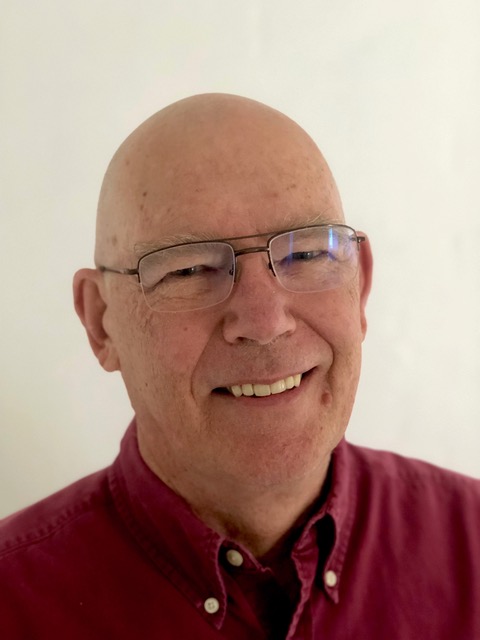

I was so sorry to have missed them at Bouchercon!

Stan and Michael will be dropping in to chat and answer your questions, and will give away a copy of A DEADLY COVENANT to one lucky commenter!


Friday, January 10, 2020

Collaboration Is the Way to Go by Michael Stanley

Today the Reds are so pleased to have Michael Stanley, aka the writing team of Michael Sears and Stanley Trollip, talking about the art of collaboration. Take it away, Michael...er...Stanley...um Michael Stanley!

Michael Stanley: The question we are asked most often at book events by both authors and readers is ‘How can two people write fiction together?’
At first, we were puzzled by the question because both of us, in our professional lives as university professors, had been collaborators. Stanley had co-authored multiple non-fiction books and Michael many academic papers. So, when we decided to write our first mystery, A Carrion Death, we never even discussed whether it was a good idea. It seemed the natural thing to do. It was only later that we realized that it was quite uncommon.
So why do we like collaboration so much? 
First, we have the benefit of having a totally involved person to brainstorm with, to bounce ideas off, and to give truly critical feedback. A single writer has only himself or herself to interact with. How depressing! How lonely! Second, we have the benefit of having someone to share a glass of wine with while discussing the intricacies of plot or character – a solo writer can’t do that, because no one else would be totally involved.
Unlike some collaborations where responsibilities are split up, we both do everything. We brainstorm together, follow up on research, travel to little known parts of Botswana, write, and edit. 
Our process is that one of us does the first draft of a piece. Sometimes that is part of a chapter; other times a chapter or two. He then sends it by email to the other, and receives a response, which is often a highly commented and edited version. The originator responds, then back and forth in that way, as many as twenty times or even more. What we have both learned from this is that there is no one, perfect way to write something, much as each of us likes to believe we have done just that. It turns out that words, sentences, and even plots are flexible.
Eventually the piece is not written by Michael or by Stanley, but rather by some gestalt, called Michael Stanley, who sits in cyberspace somewhere between the United States and South Africa. Readers tell us the product is seamless; our friends tell us they can identify who wrote what, but they are wrong about half the time!
There are many benefits to collaboration. We can brainstorm plot and character, which we think results in a more cohesive final product. When one of us flags, the other is there to nag and take up the slack. Best of all we get immediate and interested feedback on anything we write. But there are some caveats. One must be willing to take harsh criticism, knowing that it’s directed at the product rather than the person and that the only aim is to improve the work. There must be trust and an ability to see the other person’s point of view. It helps if you have similar writing styles. And it probably takes longer than writing alone. But all that is outweighed by the biggest advantage: it is great fun! And, after all, almost all people who write do it for the enjoyment.
So now, when we are asked ‘How can two people write fiction together?’, we respond that this is the wrong question! A better question is ‘How can a person write alone?’ 
What about you, Reds and Readers, do you think it is easier to work together or alone? 

On Sale Now!

FACETS OF DEATH
Diamonds can be deadly…
David Bengu has always stood out from the crowd. His personality and his physique match his nickname, Kubu—Setswana for “hippopotamus”—a seemingly docile creature, but one of the deadliest in Africa. His keen mind and famous persistence have seen him rise in the Botswana CID. But how did he get his start?

Inauspiciously. His resentful new colleagues are suspicious of a detective who has entered the CID straight from university, skipping the usual beat cop phase. Nearly broke, with no car or wife, Kubu has the support of his parents, but success will depend on self-reliance. He is immediately plunged into investigations at two airports.

One takes him to the airport near Gaborone where something criminal is going on in baggage claim.

The other begins at Jwaneng Airport, where a plane bursts into flames. It’s the opening move in a brutal heist of stones from the world’s richest diamond mine. The robbers die in a shoot-out, but the diamonds remain missing. So who masterminded the crime? Rumors of a witch doctor’s involvement send the detectives down a dark path. Ultimately, new recruit Kubu finds himself engineering a risky trap. Will his first major case prove his worth—or kill his career?
About the Author:
Michael Stanley is the writing team of Michael Sears and Stanley Trollip.
Both are retired professors who have worked in academia and business. Sears is a mathematician, specializing in geological remote sensing. Trollip is an educational psychologist, specializing in the application of computers to teaching and learning, and a pilot. They were both born in South Africa.

Thursday, February 12, 2015

FIFTY SHADES OF MICHAEL SEARS


HANK PHILLIPPI RYAN: Happy almost Valentines Day. And for some people, you know what that means:


Yup. The movie of Fifty Shades opens. (This Red will not be attending.)  And have you seen the Dave Barry column about the books? I think Deborah Crombie sent it to me...along with many other pals! My favorite lines are:

“If Jane Austen (another bestselling female British author) came back to life and read this book, she would kill herself.”

and

     “When so many women get so emotionally involved in a badly written, comically unrealistic porno yarn, what does this tell us? That women are basically insane? Yes. I mean no! No. Of course it does not tell us that.”

But neither the fictional Anastasia nor the fabulous Dave (love him!) is here today. We are so lucky to have a terrific thriller writer, the fabulously talented Edgar-nominated Michael Sears who, if Jane Austen came back to life and read his books—would be delighted.

His brand new LONG WAY DOWN is a smart, fast-paced, thoughtful thriller, which I devoured.  (He’s coming to Boston next Tuesday, and I am interviewing him at Brookline Booksmith at 7. Y’all come.)

And here’s why he’s especially perfect for today. Like Dave, he has a problem with sex scenes, too.

Why I No Longer Write Sex Scenes or How to Survive a Workshop
         by Michael Sears

My first three books were written entirely, or almost so, in a workshop.  It was a very good workshop, led by NYT bestselling author, Jennifer Belle.  When I acknowledge my debt to “my Muses,” these are the people I am talking about.  I have heard horror stories of workshops, and easily admit that even this one would not suit all tastes, but it worked for me.  The Muses input on character, dialogue, and voice will always be with me.  They were encouraging when I did well, and honest when I needed to hear disagreeable truths.  I owe them a lot.

That doesn’t say that the group was infallible.  I had to keep myself armored with the idea that only I knew what my book was about – even when I changed it.  Jenny allowed differences of opinion.  Not every idea presented was exactly what my scene needed.  But sometimes the discussion opened up exciting new avenues to explore.

Workshops need to be constructive and instructive.  They need not be kind, but they must not be mean.  But the writer who walks into any workshop with the most precious, and fragile creation held clutched to his or her breast, feeling both terrified to reveal the innermost and yet expectant of adulation, is in for BIG trouble. You can’t help bringing a bit of that in with you each week, but, heck, it’s just words on paper. Check your ego at the door.  You’re there to work.   If the group doesn’t like the words you brought them, you can always write different ones.  Keep a file titled “What They Hated Most” and go back and look through it every six months or so.  Odds are, you’ll find they were right and it won’t hurt a bit to admit it.  If you still disagree, bring it back in.  They might like it second time around.

The really great thing about a workshop is that you will quickly discover your strengths.  That is much more valuable than beating yourself up over your weaknesses.  If the group is not telling you what you’ve done well, they’re not doing their part.  It’s easier to point out the klunker sentence than it is to recognize the truth in a character’s emotional response, but that’s what you should expect from a good workshop.  If you’re not getting it, move on.

All of which brings me to sex scenes.  I don’t know why my sex scenes give women the creeps.  I think they’re funny.  I don’t think I’m writing something for Letters to Penthouse, but somehow that’s what comes across.  Maybe I need wider experience, but having been happily married for over thirty-five years, and with every intention of keeping things that way, I will forego the research.  So, I quit.  I will place the characters involved in the proper environment, complete with all their desires and dreams, and allow the reader to fill in all the naughty bits.  Or as one of the Muses said to me on this subject, “Even you can write a space break.”


HANK PHILLIPPI RYAN: So Reds? How about you? Do you read them? Do you write them?  Don't tell us any of that "only if it advances  the story" stuff. Or--would you rather talk about workshops? And are you going to see "the movie"?

 ***********************

Michael Sears is the author of the Jason Stafford and the Kid series.  His first book, BLACK FRIDAYS, was nominated for five awards, winning the Shamus, for Best First Novel.  LONG WAY DOWN, the third in the series, is now out from G.P. Putnam.


Two years in a federal prison has changed Jason Stafford, is still changing him, but one thing it has taught him is how to detect a lie.  He doesn’t think that Philip Haley is lying.  An engineer on the verge of a biofuel breakthrough, Haley has been indicted for insider trading on his own company, and Stafford believes him when he say he’s been set up.  Haley does indeed have enemies.  He is not a nice man.  Doesn’t make him a criminal.
It does make him dangerous to be around, however.  The deeper Stafford investigates the more secrets he starts to uncover – secrets people would kill for.  And that’s exactly what happens.  Soon it is Stafford himself who is under attack and, worse, his family – his fiancée, his young son – and he is a fugitive, desperately trying to stay one step ahead of both the killers and the law.

Sunday, May 25, 2014

Michael Sears: "No Such Thing as a Bad Nap"


SUSAN ELIA MACNEAL: I had the privilege of meeting Shamus Award-winner Michael Sears when we were both nominated for the Edgar Award for Best First Novel in 2012. Because it's a small world, we spoke on a panel Hank Phillipi Ryan (aka Miss Scarlett) moderated. Michael was just so calm, collected, and gracious I was always thrilled to meet up with him at other events — Bouchercon, Sleuthfest, really anywhere.


And so I'm thrilled to introduce Michael now, speaking on a topic that's also near and dear to my own heart — napping.


An Ode to the Lowly Nap


When in disgrace with fortune and men’s eyes,
When the words cease to flow and plagiarism proffers a false salvation,
When you’ve researched the derivation of the word ‘gimbal’ just to avoid placing another
desultory phrase upon the page,
When your head has bobbed for the third time in as many minutes —
Take to heart the words of my Great Aunt Nancylyn:
“There’s no such thing as a bad nap.”


MICHAEL SEARS: Winston Churchill was a famous napper.  He refused, however, to simply flop down on the divan with a clean handkerchief unfolded over his face, and his cigar near at hand in a convenient ashtray.  The man knew how to take naps.  He stripped down and got underneath the covers and slept.  Napping was serious business.  He won wars, planned the reconstruction of Europe, wrote the history of the English-speaking people, and imbibed vast amounts of non-medicinal spirits, all with the help of daily naps.

I grew up in a home where napping was allowed rather than encouraged.  My father napped before dinner most nights -- a habit he no doubt developed working shifts -- but never on a weekend.  He was always much too busy on weekends, either fixing broken pieces of house or car, cursing and grumbling throughout, or playing on his sailboat, which broke more often than anything else and yet he never cursed while repairing it.  Judging by his startle response upon being called to dinner, his naps must have been not entirely stress-free.  He napped out of necessity, not to recharge, but to prevent terminal shutdown.  (He did once fall asleep at the wheel and run off the road while coming home from working a night shift at the lab – he was a nuclear engineer – and this experience may have marked his napping dreams from then on.)  

We three older sons were in terror of being assigned the task of “getting your father up for dinner” and devised tricks, trades, and evasions to pass the chore along.  At the first querulous whisper of “Dad?” he would sit up violently and call out, “What?  What?  What?” while staring about wild-eyed like Macbeth watching Banquo at the feast.  Delivering the next single word line of our part of the script – “Dinner” – was always an anticlimax, as though we should have responded to his intensity with something worthy of it, like “The police are here!” or “The reactor blew up!” or, if not quite that dramatic, then at least the most oft-heard phrase of my childhood, “We’ve run aground.”

Wall Street, where I worked for twenty years, does not encourage napping.  Neither does my wife. I married a non-napper. So my next forays to Naplandia were stolen, feral weekend interludes with all the risks of an illicit affair (and is there any other kind?) complete with the shame of discovery.  A typical nap might be: the family arrives back at the house after cavorting in the ocean all day.  My lovely wife takes the two boys, sandy and sunburnt – better known as Jesse and Sean – and hauls them off for a quick shower and into fresh shorts and T-shirts.  I volunteer to hang the beach towels on the line and sweep the sand out of the backseat, two chores that I will, eventually, perform admirably, if not expediently.  

First, I put the seatback all the way flat, leave the driver’s side door open to capture a bit of late afternoon breeze, and close my eyes.  I am “resting.”  The sounds that are emanating from my throat and sinuses are vocal exercises that I learned as a young actor.  I am not sleeping.  As my favorite author, Patrick O’Brian, pointed out, no man born admits to having been asleep.

But in the years since I left the twenty-four/seven rule of the markets – calls from Tokyo or London broke into my sleep cycle three or four nights a week for fifteen years – I have finally learned to take a nap.

A friend recently posted to me an article which made great claims of increased productivity by nappers, but when I went online to find it, I saw that these claims are not new.  

The New York Times seems to report on the wonders of napping on a seven-year cycle, each time with the immediacy of recent discovery and announced with the kind of eye-grabbing lede usually reserved for the fall of the ruling party in England, or the discovery of a tenth planet.  I imagine that these headline writers are direct descendants of that journalist, four thousand years ago, who put pen to papyrus and informed the world, “NILE FLOODS BANK!”

Hank Phillippi Ryan, one of the illustrious authors here at Jungle Red, and a woman I now claim as a friend, gives a talk on productivity for writers, arguing that the opportunity to do what we do is so dear that the very idea of “writers block” must not be allowed.  I heard her deliver this speech earlier this year, and I took her words to heart.  I have completed three Jason Stafford novels, and am working on number four, and if the stars are very kind to me, I will continue to do this for years to come.  It is a blessing to be where I am – never a chore. 

But napping is not a retreat from this dedication, rather it is an enabler, an enhancer.  I will be productive when I am fully empowered.  And I will nap when I am not.  Churchill argued that napping for even just an hour so breaks up the day as to increase one day’s productivity to the level of two days, or at least one-and-a-half.  Winston was not a mathematician.  Yet, who would disagree?

Susan Elia MacNeal, a great fan of Winston Churchill herself, invited me to speak to the world through Jungle Red, though she may not have expected me to go on so long, or to address such a topic.  I thank her for the opportunity and dearly hope that I am invited back some day when I am better rested.


SUSAN ELIA MACNEAL: Michael, you're very welcome! Please come back soon.

Reds and readers, do you nap?

Or are you, like Michael's wife, a non-napper? 

Do you think, like Winston Churchill, naps help with creativity and productivity?

Please tell us in the comments.


Michael Sears is the Edgar-nominated, and Shamus-winning author of BLACK FRIDAYS, which introduced to the world the characters of Jason Stafford, Wall Street investigator, and his autistic son, Kid.  

His latest book is MORTAL BONDS, which explores the fallout from a massive Ponzi scheme, missing funds, and the people who will kill to recover them. 

Once he rises from his nap, Michael will finish the last round of copy edits for book #3 in the series, LONG WAY DOWN.






