Showing posts with label Nero Wolfe. Show all posts

Monday, March 27, 2023

What we're writing: Taking our own good time


HALLIE EPHRON: Last week I posted this picture on Facebook--two of my orchid plants in bloom.

So far I’ve gotten more than 700 tapbacks and nearly 100 comments, including one from my idol, Sara Paretsky, who’s an orchid fan, too.

Others commented, asking what’s the trick to getting an orchid plant to bloom. Because that’s the thing about orchids, you buy them in bloom, and if you’re lucky they keep right on blooming for a few months. Then the blossoms fall off, you cut the flower stems and, but for a few strappy leaves, the plant goes dormant.

For months and on into years sometimes, that’s the whole show.

I have no brilliant advice for getting an orchid to bloom, other than HAVE PATIENCE and DON’T OVERWATER and GIVE IT INDIRECT LIGHT. 

Watch for scale … and when you find one (or several) of those pesky creatures, swab them away with alcohol or pick them off with your fingernails. And I've read that one should occasionally (though I’m not sure how often) repot in fresh soil.

And still your orchid plant may reward you by lying there looking blah for months on end.

Which is what my pink one did. For four years.

Jerry bought it for $4 at a yard sale. At the time, it was spectacularly in bloom. Two flower shafts. Looked amazing for a couple of months. Then nothing. Year in, year out, nothing but an occasional leave.

Then SHAZAM: it’s blooming and it even has a a second flower stem.

I know, this is WHAT WE’RE WRITING WEEK again on Jungle Red, and I am actually talking about writing. Because my favorite comment from my Facebook orchid picture posting came from Louise Hillery (Thanks, Louise!). Responding to the fact that it took 4 years to produce anything, she wrote:
Just like a writer's Work-in-Progress!

So true. Because I am writing again. Little by little, characters are taking shape--four women. A townhouse for them to hang out in. A puzzling set of circumstances that are still knotted up in my head.

I considered putting orchids in the book, but Rex Stout set the bar too high with his orchid fancier, Nero Wolfe. (The fictional Wolfe started on orchids with a plant given to him by the wife of a man he had cleared on a murder rap. He and his gardener tend them on the roof of his brownstone.)
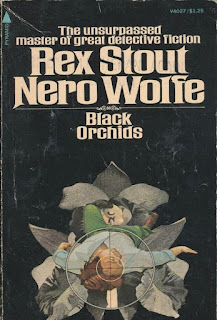

In Stout’s obituary in the NY Times, he’s quoted as saying: “The plots come when I’m shaving, watering the plants, puttering around.” It also says that for the most part, however, Stout's wife was in charge of watering his 300 houseplants. Gotta wonder how many of them were orchids.

I have fewer than twenty plants. Among them are three orchids. I take that deep pink orchid, spectacularly in bloom after a four-year wait, as a sign of encouragement. 

Like a manuscript, it’s taken its own good time. 

What about you? What are the things in your life that you've learned are worth the wait?

Thursday, January 13, 2011

"Reverend" Brad Explains It All


HANK: Okay, yes, he's trouble and does nuthin' but create chaos and mayhem wherever he goes. But we can't help it, he's irresistible. Is it the show tunes he'll sing at the drop of a hat? Or even without dropping a hat? Is it the way he'll tease ANYONE, whether he knows them or not? Is it his stable of hilariously rambunctious interns (you can meet them on his website)--maybe. It might just be, however, that he's a genuinely good guy--who's a genuinely terrific writer.


But don't tell him we said so or it'll just make things worse.


THE POWER OF A THOUSAND WORDS

A SERMON OFFERED BY THE NOT-SO-VERY RIGHT REVEREND BRAD PARKS

Brethren and sistren, children of the great story, writers published and unpublished alike, I come to the pulpit of The Church of A Thousand Words to give you my testimony, and to admit to you that I have been a sinner.

(Well-educated CONGREGATION stirs uncomfortably, because unlike BRAD, it knows “sistren” is not really a word).

Yes, a sinner! You see, oh ye shepherds of the written utterance, before I found The Church of A Thousand Words, I was lost. Aimless. Adrift. I would write when I had the time. I would write when I wasn’t too busy at work. I would write when, when – I can barely even bring myself to admit it – when “inspiration” struck me.

(CHOIR members shift in their seats, some shaking their heads).

And you know where that leads, don’t you? That’s right. Nowhere. Nowhere! Sometimes I’d write. Sometimes I wouldn’t. I’d get sidetracked by one excuse or another, and then weeks or months would pass. Sound familiar?

And then came that day, that most blessed and wonderful day, when I found The Church of A Thousand Words.

(CONGREGATION murmurs. ORGANIST strikes a minor chord, barely audible).

Now my friends, in most aspects of life, I’m a typical open-minded postmodern intellectual, drowning in wishy-washy relativism. I don’t believe in much. What I do believe, I don’t believe very firmly. I’m roughly a half-step removed from those people who get all their news from the Daily Show.

But let me tell you about the one thing I have come to believe in with more conviction than anything in this world: A writer needs to produce a thousand words a day.

I say it loud, I say it proud: I write a thousand words a day!

(CHOIR hums softly. A few members of the CONGREGATION begin fanning themselves).

Now, maybe that sounds like a lot to you. And maybe it doesn’t. But I can tell you about the power of writing a thousand words a day, because I’ve seen it in my own life. Before I found the Church of A Thousand Words, do you know how long it once took me to finish a manuscript? Well, do you? Even now, it’s hard to say it. But I’ll tell you now, because I have been a sinner, and I have seen the deepest of the depths, and so I have to admit it:

Three years.

Yes, it once took me three years to complete a manuscript!

(ORGANIST strikes and holds a mournful chord, crescendos to a mezzo piano).

Now, that I have found you, all ye who toil over your Microsoft Word alongside me? Now that I am a dues-paying member of The Church of A Thousand Words, do you know how long it takes me?

Three months.

(A man in the CONGREGATION shouts “Hallelujah” while a woman extols, “Preach it! Preach it!” A member of the CHOIR faints. ORGANIST plays a series of joyful glissandos).

That’s right! Three months. As I prepare for the Feb. 1 launch of EYES OF THE INNOCENT, the second novel in the Carter Ross series, I testify before you that I already have the third and fourth installments completed. Plus I have a Young Adult manuscript my agent in shopping.

That’s not magic, people. It’s not voodoo. It’s not an act of faith. That’s simple math. If you write a thousand words a day, every day – with no excuses, no trespasses, no trespasses against – you too will have a completed manuscript in 90 days.

And you know what? It’ll be good. That’s part of the power of a thousand words a day. It’s not too fast, not too slow. It doesn’t give you time for writer’s block. But you also don’t end up with one of those crappy NaNoWriMo novels that reads like it was written by an amphetamine-addled hamster. You end up with something you can be proud of, something that approximates your best work.

And, yes, good parishioners, unless you are blessed to be independently wealthy – or have a tremendously supportive spouse – it takes sacrifices to write a thousand words and keep a day job. Maybe you’ll have to get up three hours earlier than you ever did before to squeeze it in. Maybe you’ll have to give up late-night television. Maybe you won’t have time to pore over US Weekly and learn who Shakira was seen nuzzling on the beach in San Tropez.

But I am here to say you can make it happen. It happened for me. It happened for my dear friend, Sarah. Can I tell you about Sarah?

(CONGREGATION is boisterous now, offering encouraging shouts of “Yes!” and “Tell me!” and “Make it quick, this blog post is getting a little long-winded”).

This is a true story, oh gentle readers. Now Sarah, we’ve known each other a long time, since high school. And I am telling you, brethren and sistren, she was always a lot smarter than me. Better grades. Better SAT scores. Better writer.

(CONGREGATION has already figured that out, since BRAD has hauled out “sistren” again).

But she was lost in the great unpublished wilderness. She had been writing for years but was wracked with self-doubt and uncertainty. She had no structure, people! She had no discipline!

Then, in September, we shared coffee at the Boston Public Library and she heard the good news of The Church of A Thousand Words. The next day, she set aside all the transgressions of her writing past – all those almost-finished 75,000-word manuscripts, all those half-considered outlines, all those character Bibles cluttering up her hard drive – and she dedicated her life to a thousand words a day.

And you know what? By November, she had completed her novel.

(CONGREGATION shouts “Amen.” ORGANIST stops the random improvisation and begins playing a jazzy version of “Amazing Grace” in a thunderous forte).

But more than that, brethren and…

(CONGREGATION grimaces in anticipation of the malapropism, which BRAD finally notices).

… Uh, ladies and gentlemen… more than that, she has new belief in herself. She’s going to start shopping that novel to agents soon. And that can be hard on a lot of folks, facing the wrath of those fallen angels. But no matter what they say, Sarah has found the power of a thousand words. Even if the rejection letters pile up higher than the great wall of Jericho, she knows she’s never more than three months away from her next completed manuscript. All she has to do is keep believing in a thousand words a day.

She believes! I believe! Let us all believe!

Now go forth, and sing it to the multitudes!


*******************************************************************************

In 2010, Brad Parks became the first author to win the Shamus Award and the Nero Award in the same year. His next book, EYES OF THE INNOCENT (St. Martin’s Press/Minotaur Books) releases February 1.


Library Journal gave it a starred review, saying, “Parks’s sequel to his acclaimed debut, FACES OF THE GONE, is as good if not better.”

You can follow @Brad_Parks on Twitter www.twitter.com/Brad_Parks


or just visit him at http://www.bradparksbooks.com/
and send him a note.

Wednesday, May 5, 2010

Finding Inspiration – Finding Dreams


By Jane K. Cleland


One of the questions I get asked most often is who are my favorite authors. I love that question because it gives me an opportunity to talk about some of my heroes. Lately, I’ve been wondering whether other authors feel as strong a connection to their favorite authors as I do, so I decided to ask several of my favorites, “Which authors inspired you to write, and why?”

Five out of the eight authors I interviewed (myself included) list Carolyn Keene (the pen name used by the various authors of the Nancy Drew stories) as inspiring their own writing. Agatha Christie got two nods. In all, the eight authors listed 22 different names. The authors’ choices, and their reasons for making the choices they did, are, I think, fascinating. Here, in their own words, in reverse alphabetical order, are their answers.

From Sheila York, http://www.sheilayork.com/

The Carolyn Keenes.

As a teenager:
Mary Stewart. I loved her vivid sense of place; I traveled to exotic and exciting places, such as Skye, the Greek isles and the south of France. And of course, she had heroines who got into all kinds of adventures at a time when a teenager longs to break free—safely.

Agatha Christie. How did she keep coming up with those twisty solutions? And Miss Marple and Hercule were so meticulously created and consistently presented.

As an adult:
Raymond Chandler. He made Los Angeles the noir capital. He took a town full of sunshine and made it the darkest place on earth. And there is something overarchingly sad in his much of his work, without his ever appearing to try to make you feel it. It reminds me of that line about acting: “If they can see you acting, you ain’t.” I also admire the economy with which he laid out a character and the way he could pick a single detail to capture place.

Dick Francis. The creation of dozens of believable amateur sleuths. He also taught me how to drop in detail about occupations, teaching the reader something, but not appearing to teach.

Dorothy L. Sayers. The wonderful puzzles. The detail of place and character. And nobody since Dickens has filled so many pages so well.

From Kate White http://katewhite.com/

Nancy Drew. When I read The Secret of Red Gate Farm at the age of 12, I saw for the first time that women could be as gutsy as men and it would pay off for them, and of course, I also fell in love with mysteries then. I also learned how to write cliff hangers at the end of each chapter from re-reading some of the books as an adult. Every chapter seems to end with a line like, “’Nancy, look out,’ Bess shouted as the truck bore down on the duo.”


You just have to turn the page!
From Elaine Viets, http://www.elaineviets.com/

Nancy Drew: The ultimate fantasy for a teenage girl. Nancy has a rich, doting daddy, a boyfriend available only when she needs him, loyal friends, a housekeeper to cook and do the chores and her own car. No visible mom to nag or criticize her. Adults, including the police, listen respectfully to her. (See rich, doting daddy.)

Agatha Christie: Her mysteries featured a woman who was seriously underestimated—alittle old lady who said, “I am Nemesis.” Agatha showed the murder and wickedness lurking in a small English village. I began to see the possibilities for murder and mayhem in the dull St. Louis suburb where I lived.


From Lisa Scottoline, http://scottoline.com/Site/

Grisham and Ludlum. They wrote different kinds of books, but their heroes shared several characteristics: they were always super experts and super competent. They were also always men. As a single mom, I got thinking… what about the super expert and super competent women I know?

From Hank Phillippi Ryan, http://www.hankphillippiryan.com/

From Agatha Christie I learned about plots—that the very ordinary can become the very deadly.

From Arthur Conan Doyle—how to use clues. Foreshadowing. That things are not always what they seem.
You can’t put down a good Herman Wouk.I remember at about age 13, sneaking Marjorie Morningstar from my parent’s bookshelf, thinking I was going to read something racy. What I got was a really compelling story. Talk about drawing the reader in!
From the first, I was enchanted with Shakespeare. And writing mysteries, I often think about all the double meanings he uses, the layering of words and weaving of themes.
Thomas Wolfe and Tom Wolfe—showed me that characters need to have a past and speak like real people.

F. Scott Fitzgerald for writerly elegance.

Edith Wharton for wry humor, and proof that you can sneak in social commentary.
And, all homage to Stephen King’s The Stand. Talk about a page-turner—he manages to pack suspense into every word.


From Chris Grabenstein, http://www.chrisgrabenstein.com/

James Patterson—First, hit ‘em with a pie in the face then, while you have their attention, tell ‘em something smart.

Donald E. Westlake—That crime can be fun and funny.

Elmore Leonard—It’s all about characters and what they say to each other.

From Wendy Corsi Staub, http://www.wendycorsistaub.com/

Carolyn Keene—Funny that a woman who doesn’t even exist triggered my love of mysteries with gothic settings. I breathlessly followed Nancy Drew from Blackwood Hall to Moonstone Castle to the Moss-covered Mansion. My dog-eared collection of yellow-spined hard covers traveled from my childhood bedroom to my first New York City apartment when I moved there at 21 to become an author myself.
Mary Higgins Clark—In sixth grade, I graduated to “adult” novels when my neighbor Sue Criscione loaned me A Stranger is Watching. That book marked the beginning of my interest reading page-turning suspense.
Harlan Coben—Because I now plot suspense novels for a living, it’s pretty rare that I don’t see twists coming when I read the work of my fellow authors. Harlan is one of the few who can keep me guessing!


Me, Jane K. Cleland, http://www.janecleland.net/

Carolyn Keene—I was a Nancy Drew addict from a young age. Her world became an idealized dream. She was smart, kind, loved, and rich.

Robert B. Parker—That an author could create a tough guy who was smart and sexy blew my socks off. Plus I fell in love with Spenser.

Ed McBain/Evan Hunter –In addition to the fact that Hunter was a master storyteller, he had a gift of finding turns of phrase that resonated as I read them, and that stick with me to this day. One of his characters in the 87th Precinct series, Eileen, always toasts to, “Here’s to golden days and purple nights.” I have my protagonist, Josie Prescott, use her dad’s toast, “Here’s to silver light in the dark of night,” as a kind of tribute to Mr. Hunter.

Rex Stout—Nero Wolfe is like a father to me; I ask myself what Mr. Wolfe would think of my doing x, y, or z before I act. His ethos guides me. And of course, I fell in love with Archie.

If I hadn’t happened on a Nero Wolfe novel back when I was in college, I wonder if I’d be a mystery author today. Certainly I wouldn’t be the author I am, aiming to write smart mysteries featuring brave women trying to do the right thing. That ethos derives directly from the wonderful stories written by Carolyn Keene, Robert B. Parker, Ed McBain/Evan Hunter, and of course, by Rex Stout.


Speaking of Rex Stout… I’m actively involved in the Wolfe Pack, http://www.nerowolfe.org/, the literary society that celebrates all things Nero Wolfe. Do you know us? Among other things, we’re the folks who give out the Nero Award for the mystery that best honors the tradition of Rex Stout’s Nero Wolfe stories each year. (I’m the chair of the committee. Past winners have included Lee Child, http://www.leechild.com/, Tess Gerritsen , http://www.tessgerritsen.com/; Julia Spenser-Fleming, http://www.juliaspenserfleming.com/; and Martha Grimes, http://www.marthagrimes.com/, among many others.) In addition, we give out the annual Black Orchid Novella Award in partnership with Alfred Hitchcock Mystery Magazine. We’re also the sponsor of what we hope will become an annual tradition—this year marks the 2nd annual Rex Stout banquet to be held on October 15, 2010, at Bouchercon. http://www.bcon2010.com/. I’m thrilled to announce that New York Times bestselling author, Gayle Lynds, http://www.gaylelynds.com/, will be our keynote speaker. We sing! We toast! We have a rollicking good time, and I cordially invite you to join us!


May I ask… whether you’re an author or a reader or both… who inspires you?