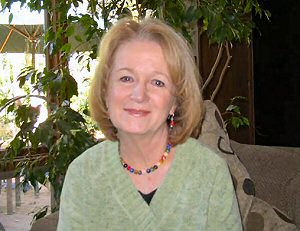
LUCY BURDETTE: Thank you so much Rhys! All of you Reds have been amazingly supportive and for that I am very, very grateful.
As early as 2008, I was thinking about the question of why public figures take enormous personal, career-threatening risks:
The type of people we tend to elect to public office also are the type to take risks — big risks, says Frank Farley, professor of educational psychology at Temple University in Philadelphia. "They believe they control their fate," he says. "It's the thrill of it." If Spitzer had simply wanted to have an affair, "he could have done it in a less risky way."
Hmmm, somehow I had to work that into the story. I found notes from my earliest (very rough and sometimes ridiculous) brainstorming in 2009:
A woman finds a baby in the subway and no one claims the child. The police aren’t taking the case as seriously as they should.
(Homeless women are kidnapped or offered shelter while they carry a baby for wealthy couples who can’t conceive-a doctor is involved who is implanting pre-fertilized eggs (only in young homeless women who have no STDs), so no DNA from the women will ever be discovered.)
One of the homeless women escaped and left her baby in the subway where the protagonist found her. She goes undercover and interviews homeless women, gang members and others to find out the truth of how the baby came to be abandoned.
But the wealthy wanna-be parents aren’t about to let her uncover their secrets without trying to murder her to hide the truth, and they have some corrupt cops on their side.
Since these girls are runaways, no one reports them missing, and once they’ve delivered the child, they can easily be murdered with a drug overdose and no one questions one more homeless OD.
No, no, no! This was a mess of unruly ideas! No one in her right mind would read this...At that point, I took a few classes. Here were some questions from Bob Mayer’s class in 2010, focused on essential blurbs:
ME: What if a teenage runaway gives birth to her baby alone in a New York subway station. She presses the infant into the arms of a newly jilted bride who soon learns that the child could be the offspring of a well-known public figure and that the girl’s life—and her own—are now in danger.
BOB: Big problem is your plot runs on coincidence. Jilted bride just happens to be there? It can work, but has to be well done. In danger how? The Pelican Brief Syndrome is when the bad guy does something worse than the original bad thing to cover it up. It’s an incident. I’m not seeing the whole story. Why does the bride care? Why doesn’t she turn the kid over to child services?
ME: Oh brother, how will I ever write this??
There was a significant lull while I was writing the first seven Key West mysteries. Then, when the series was dropped by Penguin, I turned back to the “homeless baby thriller,” as the poor thing was called for the longest time. Here’s part of an editorial letter with suggestions from my agent:
PAIGE: My last string of comments brings me to another issue that readers may have, which is the timing or pacing of the novel. Pacing was both your greatest strength and your greatest weakness in the story. While the opening chapters achieved an excellent momentum that kept readers frantically turning pages, the middle lagged. This is because too much of the plot has readers watching Elizabeth unravel mysteries that we already know the answers to.
And then some very smart feedback from my pal Susan Hubbard in 2017:
SUSAN: I would start with Addy on the subway. All we should know is that she’s running away from someone called Georgia, whom she fears, and running toward someone named Rafe, who is supposedly going to help her. The reader should be concerned that Addy might not know who’s really got her best interests at heart.
Now I had plenty of good suggestions, but Crooked Lane had bought the continuation of the Key West series, so I had a lot of writing to do. The next thing I knew, last February, my clever agent had sold the book to an editor at Severn House. Here's what the editor said:
I’ve now had a chance to read UNSAFE HAVEN, which I found a darkly compelling and original read, involving a sympathetic and engaging young heroine, a well-paced plot and an emotionally powerful denouement.
The upshot is that we would be delighted to make you an offer!
Phew! Except I’d made so many false starts I wasn’t confident I had the story just right. Luckily, the editor at Severn House was fantastic and helped me figure out ways to tie up loose ends and tighten plot and character.
Now it's flown the nest where it fledged for YEARS and I hope you'll give it a try!
Have you ever worked on a project that took forever? How did you stick with it? I have one hardcover copy to give away to one commenter...