
LUCY BURDETTE: First, I must thank the entire Jungle Red community for celebrating the publication of A DISH TO DIE FOR—while I was on vacation. This is so not recommended! However the pandemic that will not end uprooted our plans to go to Scotland several times and I had to grab the chance when it arrived. Thank you so much my friends for celebrating without me here on the page!
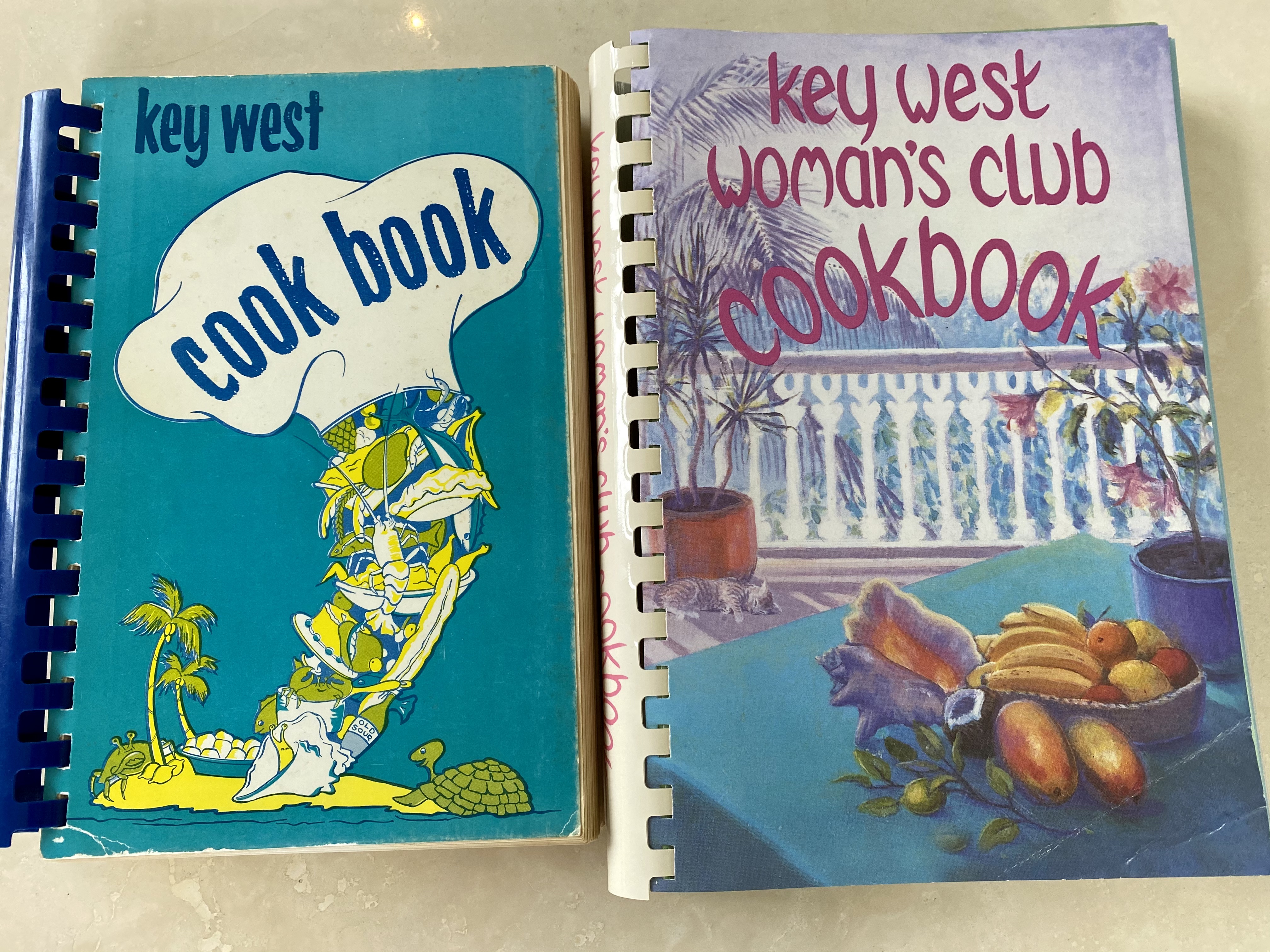
Before I left on vacation, I was busy writing blogs to help get the word out about the new book, including an article for CrimeReads. The assignment was to write something that would tie into the book without being overly focused on self-promoting. The topic I chose was the use of cookbooks in novels. You might remember that one of the important plot strands in A DISH TO DIE FOR is about an old Key West Woman’s Club cookbook that Hayley finds in a pile of library donations. (In fact, I have two of those to give away today—one is the 1949 edition, and the other from 1988, so do leave a comment!) It turns out I am not the only writer who’s thought of this angle. Mystery writers Ellen Byron, Kate Carlisle, and Daryl Wood Gerber have all used cookbooks as part of the plots and settings in their mysteries. I’ve also mentioned recently a book I really enjoyed called Miss Cecily’s Recipes for Exceptional Ladies, in which the two main characters slowly connect through their mutual love of food, and through the pages of a mysterious cookbook wedged on a shelf in Miss Cecily’s bedroom.
In Recipe for a Perfect Wife by Karma Brown, the protagonist discovers an old cookbook from the fifties in the basement of their old home, but soon learns that it harbors darker secrets than the recipes for fancy 1950’s dinners. In The Secret French Recipes of Sophie Valraux by Samantha Verant, the mysteries are not of the murderous kind, but instead the secrets of complicated families, after a chef finds handwritten recipes from her grandmother’s collection.
What is it about a cookbook that attracts a fiction writer’s interest? I don’t think it could be the list of recipes, or even their content. The best of these cookbooks showcase the writers’ voice. Often descriptions introducing the recipe reveal a lot about the writer, as well as the times in which it was written.
In the case of Dish, Hayley learns about Key West in the 1940's and the psychology of women in those older times. The discovery of an early version of the first cookbook adds fire to her rumination about a current day murder. Here’s an example from that first cookbook that shows what I mean about voice:
“Make your appetizers small, pretty, zippy, and easy to handle-for it is very very hard to greet an admiral with decorum when involved with a limp piece of celery overstuffed with soft cheese, and practically impossible to exchange witticisms with the suave novelist when one’s whole being is concentrated on the problem of what to do with olive pits!” From the Key West cookbook 1949
For me, old cookbooks turn out to be a perfect inspiration for fiction, both the plot and the voice. I am now on alert for new ideas—consider the article sent by a friend from a cookbook published in 1926 by the Ways and Means Committee of the Ladies' Benevolent Society of the Westville Congregational Church in Connecticut. The title of the piece? Recipe for Cooking Husbands.

Do you have a favorite old cookbook that would be fodder for a novel? Can you add another novel to my list? Leave a comment of any sort to be entered in the drawing for the two Key West cookbooks. I will choose winners on Friday!
PS Here are the book discussion questions for Dish that I cooked up, in case you missed them...








