Showing posts with label Agatha. Show all posts

Sunday, April 14, 2013

Malice Memories--what's yours?


HANK PHILLIPPI RYAN: Today, a guest star! Shawn Reilly Simmons is the knower of all knowledge, the organizer extraordinaire (along with the other brilliant devoted and  
legendary Malice Board members...) of Malice Domestic. Heard of it? Never heard of it? That's why we welcome Shawn today!


Shawn Reilly Simmons: Two things happen every spring in the Washington DC area: the national cherry blossoms begin to bloom...


... and Malice Domestic gets underway. Both are time honored, highly anticipated events and both remind us that spring has sprung.


This year is Malice Domestic’s 25th year and we’ve become a bit nostalgic while planning our Silver Anniversary. It’s amazing to think that 25 years ago less than 100 mystery fans and authors gathered together for the first Malice and honored Barbara Mertz, Robert Barnard, and Agatha Christie in spirit. 

Today we have upwards of 600 attendees who travel from all over the country and far parts of the world to honor the Traditional Mystery in the very same way.

In looking back and to honor this special year, we decided to publish a book complete with essays and memories from fans and authors entitled Not Everyone’s Cup of Tea…An Entertaining History of Malice Domestic. It is being published by Wildside Press and copies are available for pre-order on our site and will be for sale at Malice. It’s been a huge project with so many contributions and fun memories from our fans and authors. We are so excited to have this piece of history available for everyone to enjoy. Some of the memories that our attendees provided were funny, some insightful and some moving.

Malice Domestic is often referred to as a family reunion. The Malice Board really feels that way too and we always have our attendees in mind as we plan the events, assign the panels and select the menus. We meet once a month all year long at the hotel to plan that one long weekend in the spring, a weekend we hope is an exciting and interesting immersion into the traditional mystery genre. We want our attendees to rub elbows with their favorite authors, see old friends and make new ones along the way.

As with any family, we’ve lost some loved ones along the way. Authors, Fans, Supporters, Friends and Board Members. We miss them terribly but it is a comfort for us to come together and see our friends every year and be able to remember them together. Having a special anniversary does tend to remind us of those who we’ve lost but who are with us in spirit as we carry on with our love of Malice.

But it’s not all fond memories and familiar faces. Every year roughly 25% of our attendees are first timers, which we always find so exciting. We regularly have new attendees join us to see a specific author or attend a specific event and then they end up registering onsite for the following year after they have a great experience the first go round.

We are very grateful to be turning 25. We would not be marking this milestone if it weren’t for the support from the traditional mystery community, our authors and fans. Malice is primarily a fan convention. We don’t offer programming on how to write or how to meet an agent, or how to get published (these are very important topics that other conventions cover extremely well). 
Our focus is our love of the authors and their books and the traditional mystery genre modeled after the work of Agatha Christie.

So we’ve asked this question a lot this year: What is your favorite Malice Memory?

I’ll tell you mine (briefly). I was sitting in a panel and Anne Murphy, one of the Faithful Few (those who have attended every Malice since that first one in 1989), and our intrepid Volunteer Chair, turned around and noticed the name on my badge: Shawn Reilly. This was my first Malice 10 years ago and it was all a bit overwhelming, in a great and fun way. She said to me “Reilly! That’s my maiden name! And you spell it correctly….Are you having a nice time and would you like to volunteer next year?”

And the rest, as they say, is history.


To learn more about Malice Domestic, to register or order a copy of Not Everyone’s Cup of Tea… please visit: MaliceDomestic.org

Thanks!

HANK: I'll be there!And Lucy and Rhys..and Julia?  And Hallie? Who else?? And what's your favorite Malice memory?

Friday, November 26, 2010

Going supernatural wth Dana Cameron and Toni L. P. Kelner

Werewolves, vampires, and ghosts have become almost as common in mystery novels as PIs and cops. Mystery authors Toni L. P. Kelner and Dana Cameron are dipping their pens in the the supernatural and hitting it big with multi-award nominated short stories.

While Toni writes the delightful “Where Are We Now” series for Berkley Prime Crime, she also is writing short stories and co-editing urban fantasy anthologies, including "Death's Excellent Vacation" which debuted at #8 on the NY Times Bestseller list. Her multi-award nominated short stories feature pirates, werewolves, and vampires.

Dana, who wrote a great series of mysteries featuring archaeologist Emma Fielding, has been having a huge success with short stories, too, including her “urban ‘Fangborn’ fantasy” titled “The Night Things Changed” (in "Wolfsbane and Mistletoe") which won Agatha and Macavity Awards.

JRW: Toni, Dana, are you having fun with the supernatural and urban fantasy?

TONI: I really am, a lot more so than I expected. There seems to be more rip-roaring adventure in the paranormal stuff than I end up with in my mysteries, and maybe a bit more drama and emotion. It's refreshing.

DANA: I'm amazed at how much fun I'm having, and how much I'm learning about writing in general by doing it. I get to play with the conventions of the supernatural story, and it's also a chance to tackle huge issues (morality, justice, prejudice, faith, etc.) on an operatic scale. While my werewolves and vampires are basically folks trying to do the right thing, you can really amp up things by throwing them into conflict with pure evil. Emma Fielding never had to worry about the fate of humanity.

JRW: What do you think is it that makes urban fantasy and supernatural so appealing to mystery readers, and are they actually broadening the audience?

TONI: I think they like the sense of the stories being "larger than life," adding a bit of mythic power. But I'm not sure about broadening the audience, actually. The paranormal crowd will read paranormal romances, mysteries, or whatever, and of course people who are Charlaine Harris fans and Dana Cameron fans will follow them no matter what they write. But then there are plenty of hard-core mystery readers who won't touch anything where the paranormal is involved.

I am, I think, broadening my own audience. The paranormal stuff sells a whole lot better than my straight mysteries, and I think people who read the anthologies Charlaine and I do are sometimes convinced to try out my novels. That's what I'm hoping for, anyway.

DANA: Toni's right; some mystery readers wouldn't go near the supernatural, but à chacun son gôut. For those of us who read across subgenres, it's a great opportunity to have a mystery with a new sort of detective. Through the years, sleuths have had all sorts of skills and powers, from inquisitive old ladies and amateur sleuths to PIs and police detectives to superheroes like Batman or Superman. In that context, the introduction of vampires and werewolves doesn't seem so much a stretch. And I think it has the terrific side-effect of introducing supernatural readers to mystery writers they might not already know.

JRW: Vampires, werewolves, fairies... which most suit your fancy?

TONI: I'm a sucker for vampires. (Also for puns, needless to say.) I like werewolves, too, but they don't have the same mystique for me. Maybe it's because I'm a woman--a monthly change is no big deal for me. I've never done anything with fairies, though I do enjoy reading some of the fae books.

Vampires are just so darned useful as metaphors. Bram Stoker used them as a metaphor for sex in Dracula, Joss Whedon used them as a metaphor for the horrors of high school and fear of sex in Buffy the Vampire Slayer, Charlaine uses them as a metaphors for gays and other so-called outsiders, romance writers use them as a metaphor for the demon lover... And of course I use them as an excuse to make puns.

DANA: I was waiting to see how long it would take Toni to make a pun.

As far as reading goes, I have no preference, it depends on the writer and the world. As far as writing them myself, I've been basing my supernatural world in science (admittedly, as-yet-unexplained science) and world mythologies (traditions of shape-changers are nearly universal). While there are plenty of mythologies about fairies, fae, and the like, I haven't found them in my Fangborn world, but I never say never, anymore.

JRW: Does it feel completely different from writing a ‘traditional’ mystery, or not so much?

TONI: Actually, it's not that different, at least not for me. A lot of what I do with mysteries, particularly with short stories, is explore different milieus. I've set mysteries in the rural South, in a carnival, on pirate ships, in a circus, at a science fiction convention, and around show business. Those may sound like a wide variety of settings, but what they have in common is the introduction of a new "world," often with unique word usage and slang. With the paranormal, I do the same thing.

It's just that instead of reading about circus lingo or consulting my mother about Southernisms, I'm making up the world and the language. It doesn't matter if the realm is real or imagined, the techniques for explaining them to the reader are pretty much the same.

One other thought. Whether or not I'm writing paranormal mysteries or straight ones, I try to make the story dependent on the setting--a crime that could only be committed and/or solved in that milieu. So the way my carney catches a murderer in "Sleeping With the Plush" would only work in a carnival, and the motive for murder in my forthcoming book Blast from the Past only applies to people in show business. So again, I do the same thing with paranormal mysteries. Only a werewolf could solve the crime in "Pirate Dave's Haunted Amusement Park" and only a vampire could commit the crime in "Taking the Long View."

DANA: I agree: writing supernatural is similar to traditional mysteries is a balance of the characters' skills and shortcomings against the conflicts they find themselves in. If you give them superpowers, you need to give them super conflict, and also, super disadvantages to trip them up. It's fun to figure out really cool ways (unexpected, at the same time, obvious) for them to use their powers to solve a seemingly impenetrable mystery.

So far, I've been lucky to write in a number of subgenres: amateur sleuth, historical, supernatural, noir. I suppose I could add "PI" because Gerry, in addition to being a werewolf, is a PI (though it's not the focus of the stories). In each case, there's a different set of conventions, so the idea of switching conventions is just the challenge of being a writer, not specific to writers of supernatural fiction.

What I have noticed is how much I relate to the characters (no, no, I'm not admitting to being a were or a vamp). Obviously, writing Emma Fielding drew a lot from my academic life. I relate strongly to Gerry and Claudia Steuben, because their background and attitudes are similar to mine. I have more in common with them, on some levels, than Anna Hoyt (from “Femme Sole” in "Boston Noir"), who is about as far from supernatural as you can get. So I guess I really don't see a major difference in the characters among subgenres.

JRW: Thank you so much! Toni and Dana will be checking in today so please welcome them and join the conversation!

Sunday, April 19, 2009

ON OUR SECRET HISTORIES


I took the road less traveled by

And that has made all the difference.
*** Robert Frost


HANK: How did you turn out the way you turned out? Was it what you planned? Dreamed of? When I was given the some multiple-choice preference test, back in whenever-it-was, the high school guidance counselor told me I had scored high in "literature" and "persuasion."

"You should work in a book store, I guess," she said.

All righty then.

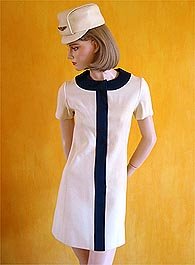
But I remember, vividly, that my first job aspiration was to be an airline stewardess. Yes, that's what they were called. You got to go cool places, look chic, bring passengers whatever free stuff they wanted, and tell people what to do. (That was a key element of it, as I remember.) Then I decided I'd rather be an English teacher. Then, a geneticist. Then a radio disc jockey. Then, in college, I decided I would be the lawyer for the Mine Workers' union.

The unplanned and surprising road to TV reporter went through a stint as a legislative aide on Capitol Hill, a job I got at age 20 by going door to door with my resume. Wound up as the press secretary to a congressman from Texas. Then at Rolling Stone magazine as an editorial assistant. And then--my first job in TV, at age 25. And there I was, doing my life's work. And now writing mysteries about it.

Literature, and persuasion. Pretty funny. What did you want to be when you grew up?

JAN: I decided in first grade that I was going to be writer. When you think about it, that's actually when you learn to write, first grade. So the first thing, I learned. I stuck with.

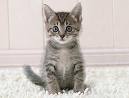
I remember the first story I wrote: The Cat on the Moon, about a poor kitten tormented by a pack of little boys (much like the author was tormented by her three older brothers). Even at six year's old, I had delusions of being published, and was infuriated when I found a book by the same title on my second grade shelf. Those sneaky plagiarists!

RHYS: I wanted to be a lion tamer when I was a little kid, but nobody would give me a lion to practice on.

HANK: Oh, Rhys, I'd love to see photos.

RHYS: When I was a teenager I wanted to be a movie star. I have always written, edited the school magazine, wrote short stories, was invited to have tea with Iris Murdoch when she came to my school, and then edited the college newspaper. This convinced me that I didn't want to be a journalist. Too much hard work and deadline pressure.


HANK: Smart girl, even then.


RHYS: So my thwarted theatrical ambitions were channeled into the production side of BBC drama instead. It was while I was there that I decided some of the plays weren't that good and I wrote my own. As only a 22 year old can do, I took it personally to head of drama. He liked it and the BBC produced it. More followed. I might still have been there but I got lured to Australia by ABC, met my husband and wound up in San Francisco. Funny how life takes side turns.

ROBERTA: I edited the yearbook instead of the newspaper and performed some very bit parts in the school plays--no danger of reaching Broadway there! I finished college without any firm idea of what was next, having run through majors of biochemistry and art history before settling on French lit. so naturally my first job was--in a book store! Then I spent some time as a vocational rehabilitation counselor before going back to school for clinical psychology. I never anticipated becoming a writer--in fact I could kick myself now for opportunities I didn't seize when I was young. But I wasn't ready--just happy to be here now!


RO: I wanted to be exactly what I turned out to be..someone who has a lot of fun, travels, does cool things and hangs out with cute guys.


HANK: Come on, RO. Fess up. And yup, Roberta, timing is everything. Sometimes I think, gosh, I should have started writing mysteries sooner. But then, I wouldn’t be who I am now, so the books couldn’t be the same. I do think Rhys still has a future as a movie star, though. And Jan, do you still have Cat on the Moon? We’d all love to read it!

And how about you all? What did you want to be when you grew up? Is that who and what you are?