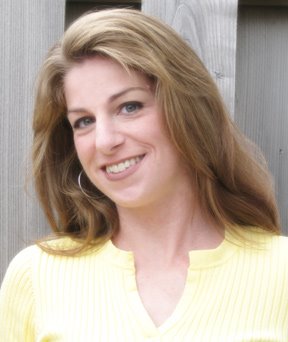
ROBERTA: Lots of times on Jungle Red we introduce our readers to books we wish we'd written ourselves. Today is one of those days for me. Carolyn Kaufman's new book, THE WRITER'S GUIDE TO PSYCHOLOGY, is published this month by Quill Driver Press and it's a winner! Carolyn has had the same cringing reactions I have about the way psychologists and psychology are often depicted in popular fiction. Her answer to that was to write a reference book for writers that dispels myths, explains psychopathology, and demonstrates how psychological treatment is really conducted. And she's agreed to stop by the blog today to answer our questions. Congratulations and welcome Carolyn!
I know my first question is impossible, but here goes anyway. Since all of us on this blog have written murder mysteries and really struggled with how to make our characters believable, I wonder if you
could comment on motives for murder--at least in fiction. Are there stumbling blocks we should avoid when we plan our villains' actions? How can we understand murder from the murderer's perspective?
CAROLYN: I think one of the biggest mistakes writers make is failing to spend enough time coming up with a good motive. Or maybe it’s not a failure to come up with a good motive – maybe it’s just feeling uncomfortable with really trying to understand that motive.
Granted, sometimes we create villains who are psychopaths – cold, remorseless killers who need little motive other than that a killing is convenient, exciting, or makes for an interesting diversion. But for characters who have a better reason than that, I think it’s worthwhile to really spend some time trying to see the conflict from the villain’s point of view. That can help us write more convincing villains.
As I mentioned above, I think many writers are uncomfortable with doing that. They don’t want to delve into a dark character because it requires them to delve into the dark parts of themselves. Being able to do so, however, can make your villain far less of a cardboard cutout and far more of a character. And stronger characters make more compelling stories.
HANK: What do you think are the most powerful motives for wrong-doing? (Greed? Control? Money? Fear? Lust?) And we always talk about how bad guys don't think they're bad--do you think that's true?
CAROLYN: I do think the Seven Deadlies all make for strong motivators. And different psychologists point to similar things as motivators. BF Skinner, for example, believed that the five things people want most are attention, approval, affection, submission of others, and material things. Other psychologists, such as Erich Fromm, agreed that there is a strong human drive to either dominate or submit, particularly when one is somehow overwhelmed by the world.
A couple of motives I’ve been thinking about lately, though, are modern narcissism and Fromm’s theory of how people “escape from freedom.” A little on each:
You’ve probably heard that there’s some compelling research that shows that each generation (starting with the X generation) has become increasingly entitled, self-centered, self-aggrandizing, and insensitive to others’ needs. This has led to increased spending and debt as well as increased interpersonal nastiness, some of which leads to the type of interpersonal violence we see in the news.
The recent Knox county, Ohio case, where Matthew Hoffman abducted a young girl and killed three adults, whose bodies he stuffed in a tree, seems to have strong narcissistic leanings. I was asked by one of the local news stations to review the police report he wrote after committing arson some years back (because I’m a psychologist and they wanted an expert’s take on the report for their evening news). Essentially what happened was Hoffman got a key to a neighbor’s apartment and was living in their house when they weren’t there. Eventually he decided he wanted some of their things in his own house, so he took them. And then to cover the crime, he burned the place down…which led to several other apartments burning. Talk about entitled! It’s not enough that he’s watching their TV and hanging out on their furniture and enjoying their art – he just decides to take some home and commits a much larger crime to try to cover the behavior. Though we don’t have enough information yet, I suspect the more recent murders were motivated by similar thoughts. He wanted the little girl, but there were adults in the way, so he committed the larger crime (of murder) to try to hide that he’d taken what he wanted (and felt entitled to).
Fromm’s theory that people try to “escape from freedom” goes something like this: we have so much existential freedom in modern life, and so much personal responsibility as a result. One way to try to cope with that is to destroy things and people. If I feel overwhelmed and even overpowered by choices and responsibility, destruction is a way to try to eliminate the things that overwhelm me. (Hope that isn’t too esoteric.) So to go back to the original question…yes, I think fear can be a very powerful motivator.
HALLIE: Is it possible to remember something that didn't happen?
 CAROLYN: Absolutely. False memories are so easy to create that every quarter that I teach Introduction to Psychology, I create (a benign) one in my students. One mistake I see writers making with false memories, however, is that they assume that a false memory feels somehow different from a “real” one. In fact, false memories are as convincing – and sometimes more convincing – than others.
Here’s how they happen. Memory is not like a DVD you pull out of your mental library and pop into a mental player. Rather, each time we remember something, we re-construct it, pulling pieces of the memory together from all over the brain. Over time, new information seeps in, or we fill in parts we’ve forgotten with assumptions, or a newer perspective on life influences how we remember the past. Therefore, most memories are suspect.
False memories are typically influenced by language. For example, if you show someone a video as if they were driving a car, and afterwards say “Did you see A stop sign?” most people will say no. (And they should – there’s no stop sign in the video.) If, however, the interviewer says “Did you see THE stop sign?” most people will say yes. Even more interesting, if you show them the video again, rather than realize that there was no stop sign, they’ll claim you’re showing them a different video. The false memory has taken hold, and it’s strong.
So pay attention to how people question the witness in your stories, including detectives, friends, and attorneys. Any suggestion that the perpetrator said or did a particular thing or looked a certain way can influence the memory strongly. (There’s a reason lawyers aren’t supposed to “lead the witness”…and a reason they do it anyway…regardless of whether the statement is “struck from the record,” the idea has been implanted in jurors’ memories and can therefore influence a verdict.)
ROSEMARY: I think there's a lot of pressure from some quarters to have a high body count in mysteries. I can understand Greed/Lust and Revenge motivating someone to kill once, but how realistic is it for
the non-serial killer, non-career criminal to kill again?
CAROLYN: One of the most interesting things I’ve ever read about the psychology of killing stated that the body counts were much lower in wars that were fought in much closer quarters than they are today, ie when people could actually see the faces of their enemies well. Over time, however, our killing machines have become so much more impersonal – for most it’s much easier to pull a trigger, for example, than it is to stab someone. More than that, though, we’ve gotten desensitized to body counts because of all the television, movies, books, and video games. So I think it’s becoming easier for people to kill, and kill more than once, because the psychological barriers that made killing so horrifying have broken down for many people in the modern world. (Just as an example: the movie The Lost Boys was rated R in 1987; the modern CW series The Vampire Diaries, which is watched by many tweens and teens, includes just as much violence and gore, if not more, and nobody complains.)
ROBERTA: Carolyn, thanks so much for your terrific answers. Carolyn will be stopping in today to answer questions about writing and psychology so bring them on! You find Carolyn blogging on Psychology Today. One of her most popular posts is called "Cardboard Cutouts Make Rotten Villains" http://www.psychologytoday.com/blog/psychology-writers/201010/cardboard-cutouts-make-rotten-villains
Also check out "Psychotic or Psychopathic? on The Vampire Diaries", talking about how psychopaths are different from people who are psychotic -- they've made that mistake on Vampire Diaries, the old "psychotic killer" when they meant to say "psychopathic killer."
She also blogs for QueryTracker
Carolyn's first book for writers, THE WRITER’S GUIDE TO PSYCHOLOGY: How to Write Accurately About Psychological Disorders, Clinical Treatment and Human Behavior, is now available at Amazon.com. You can visit Carolyn’s WGTP website for more information including the media kit and a detailed table of contents, follow her on Facebook, visit her YouTube channel, or send her your psychology and writing question at Archetype Writing, her website on psychology for writers.