
"The whole zombie thing is hot now, but it's all the same, zombies as slobbering, mindless monsters. What if the zombie was the hero? In fact, what if it was a lawyer practicing law in L.A.?"
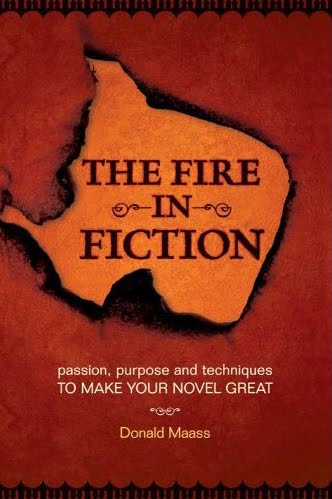
That's the question author James Scott Bell (suspense writer, extraordinary writing teacher, and author of the classic, "Plot & Structure") posed to his agent, the legendary Donald Maas.
Bell spun the idea out further:
"I mean, how can you tell the difference between zombies and defense attorneys anyway? Most people think there IS no difference. And what if this lawyer specialized in defending outcasts like vampires, who never get a break?"
I'm laughing. You're laughing. Donald Maas was laughing. Immediately he wanted a proposal that he could take to publishers and sell.
 So Bell put together a pitch and a tagline for the as-yet unwritten novel that would become "Pay Me in Flesh," the first in the Mallory Caine, Zombie-at-Law series by the "mysterious yet roguishly handsome" K. Bennett and published this month by Kensington.
HALLIE EPHRON: James Scott Bell, AKA K. Bennett, Bell is here with us today. Tell us the pitch you up with, Jim?
JAMES SCOTT BELL: Here it is --
Tagline: In L.A., practicing law can be hell. Especially if you’re dead.
Pitch: In an increasingly hellacious L.A., zombie lawyer Mallory Caine defends a vampire hooker accused of the crime Mallory herself committed, even as a zombie-killer closes in and the love of her former life comes back as the Deputy DA she must oppose. And as Lucifer himself begins setting up L.A. as his headquarters for a new attack on heaven and earth, Mallory slowly discovers she may be the one who has to stop him.
HALLIE: I love it! Truth: How do you craft an amazing pitch like that, and did you have to revise it after you wrote the book?
JAMES SCOTT BELL: Actually, this pitch hasn't changed since I wrote it. It's exactly what went into the proposal. This is always how I start my novel preparation. I have to have a tagline and a short pitch that is exciting enough for me to believe in the book. If I just start writing I might find out that the foundation is weak. But if I have a strong premise in this form, and I'm jazzed, then I have about half my work done.
I actually enjoy this process. I like thinking like a marketing executive. What sort of thing would go on a movie poster? That's my tagline. And then I want to write back cover copy. What pitch would compel a browser to buy the book?
HALLIE: Tell us about zombies, and what makes one a good lawyer?
JAMES SCOTT BELL: For a zombie to be a good lawyer, she would have to have to have a good law school education and experience in the courtroom. Mallory Caine has both. Unfortunately, she was murdered and brought back to life by someone who wants to control her, and is now one
 of the walking dead. But not the slobbering kind. Not the cliché monster we see in countless movies and books and TV shows. She's still got a will and she's still got her mind and she will not allow anyone to control her. Yes, she's got to eat human flesh and brains, but no one's perfect. Especially an L.A. lawyer.
HALLIE: I've heard you say that it's not a good idea to 'write to the market' - You end up with a book without any soul (not good, even for a zombie novel). So I'm guessing you came up with a plot that you connected with emotionally. Can you tell us how?
JAMES SCOTT BELL: That's exactly right. I've never believed in writing for the market alone. But your agent and the people who are going to pay you for your books do have an eye on the market. The key is to bring a fresh voice to that perspective. That's what you always hear agents and editors say on a panel. They want something unique and fresh with a "voice," but they also want to know that it's something that can sell. You have to put those two dynamics together.
For Pay Me in Flesh, the concept jumped out at me. I'd been thinking, What hasn't been done in zombie fiction? So much of it is the same. Then I thought, How about an actual legal thriller where the lawyer just happens to be a zombie? All sorts of intriguing possibilities started to pop up.
And then I went into my character work. I knew I wanted the lawyer to be a woman helping low level paranormals with their problems. One of the first things I do with a major character is a Voice Journal. I start a free-form document, stream of consciousness, in the voice of the character. I let the voice begin to develop on its own. When it starts to speak to me in a unique way, with attitude and singularity, I know I'm on the right track. That's when I start to connect with the character.
Then I need to bond with the character emotionally. I build some backstory for that. When I find myself thinking about the character when I'm not writing, I know I’m close to getting started.
HALLIE: Why the pseudonym?
JAMES SCOTT BELL: Simply for brand differentiation. I've got a strong readership under my own name, and this is a launch into a whole new genre. I'm not making it a secret. I just want readers to know from the cover what kind of book it is.
HALLIE: Love how you describe your doppelgänger and nom de plume: "K. Bennett boxed Golden Gloves and worked as a bouncer in Hell’s Kitchen before turning to fiction, and often imagines the past in terms that are not entirely truthful." Really?
 JAMES SCOTT BELL: The cool think about a pen name is I get to make up a whole new personality. At one time I did want to be a boxer, so I gave that bit of backstory to K. Bennett -- and then dropped in the “less than truthful” part. I never boxed Golden Gloves or bounced in Hell's Kitchen, except in my dreams. But now I get to put my dreams into a bio.
HALLIE: Tell us what you're up to next? Another novel in the series, I hope.
JAMES SCOTT BELL: There will be at least two more Mallory Caine, Zombie-at-Law novels. The next one is The Year of Eating Dangerously, to come out sometime next year. Meantime, I'm working on new projects under my own name and will have a new e-book collection of suspense stories coming out in September. And a new book on writing from Writer's Digest Books, Conflict & Suspense, will be out in time for WD's big New York conference in January, where I'll be speaking.
Thanks for having me on your blog today, Hallie. What a great place to hang out.
HALLIE: Thank YOU K, er... Jim. Jim will be checking in today, so please give us your thoughts on Zombies, defense attorneys, bouncers from Hell's Kitchen, taglines... and the like.