Showing posts with label James Scott Bell. Show all posts

Sunday, April 10, 2016

James Scott Bell, Master plotter takes us to the movies

HALLIE EPHRON: Yesterday I had the great good fortune of
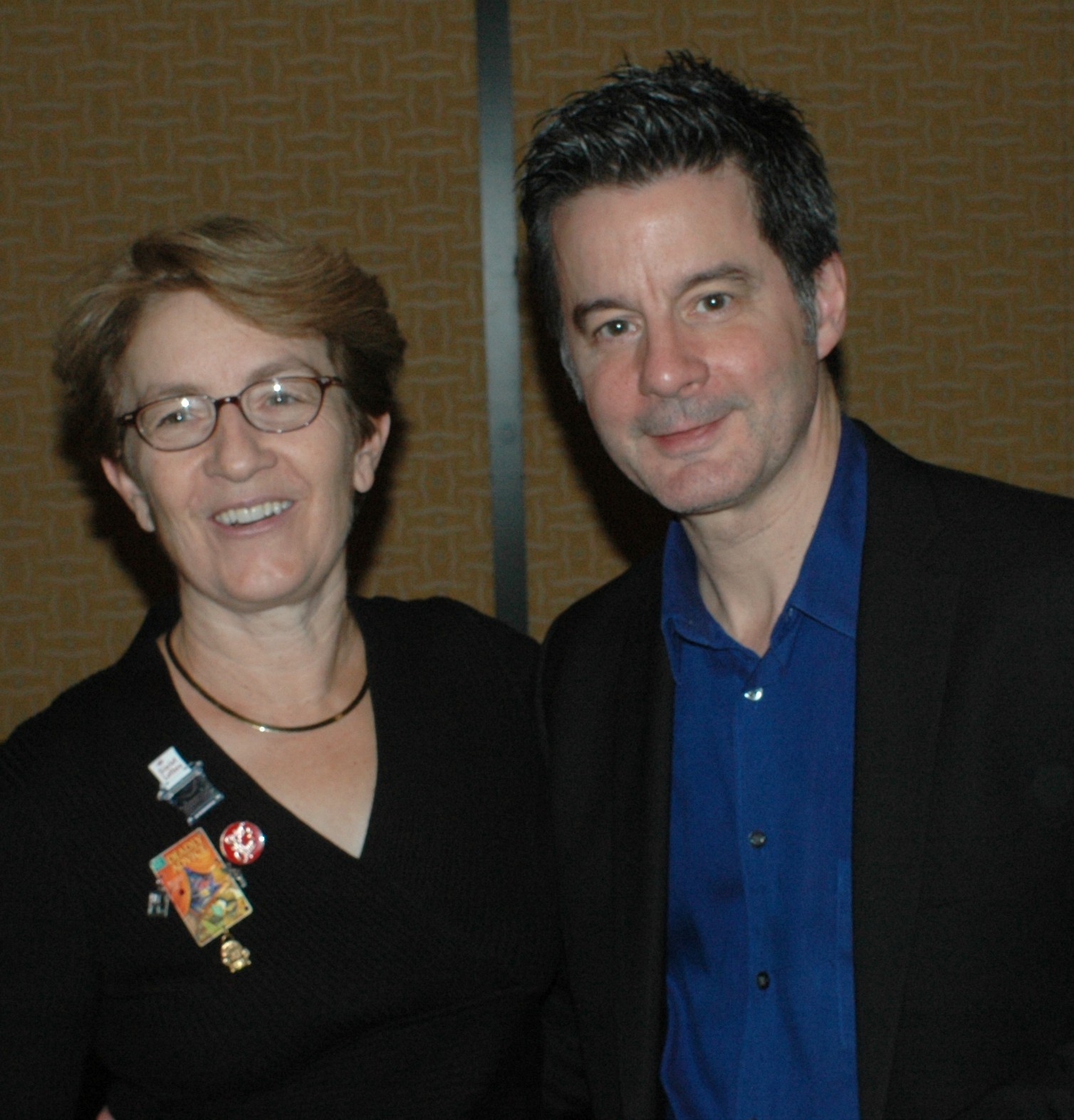
attending an all day workshop given by James Scott Bell (author of PLOT & STRUCTURE and pictured with me, Hank, and Ray Daniel, president of the New England chapter of MWA). 

Perfect timing: I'm in the final stages of writing a novel, about to start revising, and ready to recharge my critical eye with advice from a pro.

For me, one of the most useful pieces of advice is that at the midpoint in the novel, there should be a "mirror moment." The main character takes stock -- he looks at himself in the virtual (or actual) mirror and and asks: What am I? What have I become? What must I become? And in the second half of the novel, what he realizes plays itself out.

During the workshop, I opened my manuscript, marked the midpoint, and took furious notes about how to tweak it to make it a real turning point in the character's arc. 

The great fun of Bell's class is that he uses classic movies to drive home his points about plot. Here are some of the movies he uses:

- The Fugitive
- The Godfather
- Casablanca
- Lethal Weapon
- The Wizard of Oz

Which got me thinking about movies, and how much the great ones can teach us about structuring plots. Here are some movies I'd add to Bell's list:

- The Sixth Sense
- The Usual Suspects
- Pretty Woman
- Memento
- The Shawshank Redemption 
- Field of Dreams
- Thelma and Louise

What movies would you add, movies that have the kinds of plots we all wish we could write?

Tuesday, August 16, 2011

Zombie lawyer defends a vampire hooker: "Pay Me in Flesh" by K. Bennett


"The whole zombie thing is hot now, but it's all the same, zombies as slobbering, mindless monsters. What if the zombie was the hero? In fact, what if it was a lawyer practicing law in L.A.?"

That's the question author James Scott Bell (suspense writer, extraordinary writing teacher, and author of the classic, "Plot & Structure") posed to his agent, the legendary Donald Maas.

Bell spun the idea out further:
"I mean, how can you tell the difference between zombies and defense attorneys anyway? Most people think there IS no difference. And what if this lawyer specialized in defending outcasts like vampires, who never get a break?"

I'm laughing. You're laughing. Donald Maas was laughing. Immediately he wanted a proposal that he could take to publishers and sell.

So Bell put together a pitch and a tagline for the as-yet unwritten novel that would become "Pay Me in Flesh," the first in the Mallory Caine, Zombie-at-Law series by the "mysterious yet roguishly handsome" K. Bennett and published this month by Kensington.

HALLIE EPHRON: James Scott Bell, AKA K. Bennett, Bell is here with us today. Tell us the pitch you up with, Jim?

JAMES SCOTT BELL: Here it is --
Tagline: In L.A., practicing law can be hell. Especially if you’re dead.

Pitch:
In an increasingly hellacious L.A., zombie lawyer Mallory Caine defends a vampire hooker accused of the crime Mallory herself committed, even as a zombie-killer closes in and the love of her former life comes back as the Deputy DA she must oppose. And as Lucifer himself begins setting up L.A. as his headquarters for a new attack on heaven and earth, Mallory slowly discovers she may be the one who has to stop him.

HALLIE: I love it! Truth: How do you craft an amazing pitch like that, and did you have to revise it after you wrote the book?

JAMES SCOTT BELL: Actually, this pitch hasn't changed since I wrote it. It's exactly what went into the proposal. This is always how I start my novel preparation. I have to have a tagline and a short pitch that is exciting enough for me to believe in the book. If I just start writing I might find out that the foundation is weak. But if I have a strong premise in this form, and I'm jazzed, then I have about half my work done.

I actually enjoy this process. I like thinking like a marketing executive. What sort of thing would go on a movie poster? That's my tagline. And then I want to write back cover copy. What pitch would compel a browser to buy the book?

HALLIE: Tell us about zombies, and what makes one a good lawyer?

JAMES SCOTT BELL: F
or a zombie to be a good lawyer, she would have to have to have a good law school education and experience in the courtroom. Mallory Caine has both. Unfortunately, she was murdered and brought back to life by someone who wants to control her, and is now one of the walking dead. But not the slobbering kind. Not the cliché monster we see in countless movies and books and TV shows. She's still got a will and she's still got her mind and she will not allow anyone to control her. Yes, she's got to eat human flesh and brains, but no one's perfect. Especially an L.A. lawyer.

HALLIE: I've heard you say that it's not a good idea to 'write to the market' - You end up with a book without any soul (not good, even for a zombie novel). So I'm guessing you came up with a plot that you connected with emotionally. Can you tell us how?

JAMES SCOTT BELL: That's exactly right. I've never believed in writing for the market alone. But your agent and the people who are going to pay you for your books do have an eye on the market. The key is to bring a fresh voice to that perspective. That's what you always hear agents and editors say on a panel. They want something unique and fresh with a "voice," but they also want to know that it's something that can sell. You have to put those two dynamics together.

For Pay Me in Flesh, the concept jumped out at me. I'd been thinking, What hasn't been done in zombie fiction? So much of it is the same. Then I thought, How about an actual legal thriller where the lawyer just happens to be a zombie? All sorts of intriguing possibilities started to pop up.

And then I went into my character work. I knew I wanted the lawyer to be a woman helping low level paranormals with their problems. One of the first things I do with a major character is a Voice Journal. I start a free-form document, stream of consciousness, in the voice of the character. I let the voice begin to develop on its own. When it starts to speak to me in a unique way, with attitude and singularity, I know I'm on the right track. That's when I start to connect with the character.

Then I need to bond with the character emotionally. I build some backstory for that. When I find myself thinking about the character when I'm not writing, I know I’m close to getting started.

HALLIE: Why the pseudonym?

JAMES SCOTT BELL: Simply for brand differentiation. I've got a strong readership under my own name, and this is a launch into a whole new genre. I'm not making it a secret. I just want readers to know from the cover what kind of book it is.

HALLIE: Love how you describe your doppelgänger and nom de plume: "K. Bennett boxed Golden Gloves and worked as a bouncer in Hell’s Kitchen before turning to fiction, and often imagines the past in terms that are not entirely truthful." Really?

JAMES SCOTT BELL: The cool think about a pen name is I get to make up a whole new personality. At one time I did want to be a boxer, so I gave that bit of backstory to K. Bennett -- and then dropped in the “less than truthful” part. I never boxed Golden Gloves or bounced in Hell's Kitchen, except in my dreams. But now I get to put my dreams into a bio.

HALLIE: Tell us what you're up to next? Another novel in the series, I hope.

JAMES SCOTT BELL: There will be at least two more Mallory Caine, Zombie-at-Law novels. The next one is The Year of Eating Dangerously, to come out sometime next year. Meantime, I'm working on new projects under my own name and will have a new e-book collection of suspense stories coming out in September. And a new book on writing from Writer's Digest Books, Conflict & Suspense, will be out in time for WD's big New York conference in January, where I'll be speaking.

Thanks for having me on your blog today, Hallie. What a great place to hang out.

HALLIE: Thank YOU K, er... Jim. Jim will be checking in today, so please give us your thoughts on Zombies, defense attorneys, bouncers from Hell's Kitchen, taglines... and the like.

Wednesday, September 1, 2010

On writing...authentic dialogue with James Scott Bell

Continuing with our look a the just published second edition of “The Complete Handbook of Novel Writing,” welcome James Scott Bell, a bestselling suspense writer and former trial lawyer who wrote three of the most popular writing books ever, including "The Art of War for Writers" and the the classic “Plot & Structure.”

Jim contributes a terrific article to "The Complete Handbook" with some truly insightful tips on how to create authentic dialogue.

HALLIE: Love your advice, Jim, especially “Pour it out like cheap champagne.” What did you mean by that?

JAMES SCOTT BELL: We all remember those New Year's Eves, or weddings, where the champagne flowed freely. The guests all looked happy, didn't they? They were talking it up, laughing it up. In the moment. When you write dialogue, one of the best ways to go about it is to let it flow without too much thought. You can always edit later. The free form pouring out will get you things you didn't anticipate, just like those champagne conversations at the New Year's party may have got you the love of your life, or a new, good friend.

HALLIE: One that’s counterintuitive is “cultivate silence.” I know you don’t mean to leave blank space on the pages in place of dialogue. Can you give an example?

JAMES SCOTT BELL: What I mean is, think about silence as a response from time to time. Substitute an action instead. The story I reference in the Guide is Hemingway's "Hills Like White Elephants." He makes masterful use of silence, in the way the character reacts: looking at a table leg, reaching out for a beaded curtain and so on. We too often think of putting words in mouths as the only way to respond, and that's wrong.

HALLIE: Can dialogue be just a bit too clever for its own good, and how can you (as the author) tell?

JAMES SCOTT BELL: Absolutely. Dialogue that jumps too far off the page can seem forced. On the other hand, I'm all in favor of polishing bits of dialogue so it's fresher, even memorable. There is no scientific way to measure it, of course. I would ask a couple of questions. First, is it completely natural for the character? It has to sound like this is what that character would say at that moment, even if it's elevated. Second, how does it sound out loud? Often, saying the words will reveal weaknesses, and "too clever" may be one of them.

HALLIE: What mistake do you see new writers most frequently make in writing dialogue?

JAMES SCOTT BELL: Too often writing dialogue in complete sentences. Trimming out a word or two will sometimes work wonders. Also, too much "on the nose" dialogue, meaning direct response followed by direct response. While you shouldn't avoid it altogether, it does help sometimes to do what I call "the sidestep." Be a little indirect in response, or give a sudden punch, or answer a question with another question. There are various techniques that work. The nice thing is that anything "off the nose" creates an immediate sense of conflict. Why'd the character answer that way? Reading interest goes up.

HALLIE: Can you tell us what you’re working on now, and do you find as I do that it’s harder to take your own advice than it is to give it?

JAMES SCOTT BELL: Great question. I think about this all the time. Teacher, teach thyself! I must admit that it's easier to be objective when you're looking at other work besides your own. But I do find things becoming second nature. When I write dialogue, for example, I do use the tools I've come up with, and do so somewhat naturally. I guess I've finally drummed some of that into my own head. I'm entering the home stretch on the first draft of a novel. I can't slow down for too much reflection. I write and I trust. I'll go back over it, though, and fix things later. That's really what all this writing technique should be about. When you write, write like the wind. When you edit, edit like a gentle breeze.

HALLIE: Jim will be checking in today so please, if you have any comments or questions, join the discussion!

And tune in tomorrow to join the conversation with the amazing Jane Friedman, former Writers Digest Books publisher, who truly is what she bills herself: "the most progressive media professional you'll ever meet." We'll be talking about how some literary agents are adapting in order to survive in a changing publishing industry.

Monday, October 26, 2009

The Eternal Student


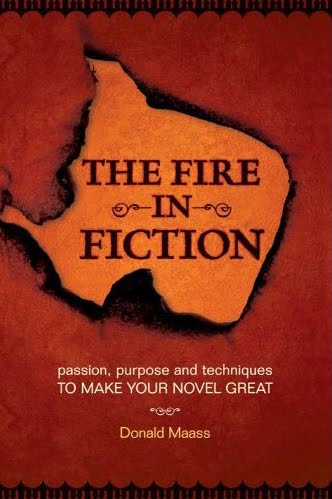
ROBERTA: I have to admit I'm a writing book junkie. I have dozens of them and I'm always looking for tips that will catch my imagination and improve my writing. Just before the mystery convention Bouchercon began, I was fortunate to attend Donald Maass's seminar on writing the breakout novel, sponsored by Sisters in Crime. Who wouldn't want to write the breakout novel, if you're going to all the trouble of writing one anyway? I was quite relieved when he talked mostly about developing complicated characters, rather than outlandish plots. Now I'm going through my novel draft, looking for ways to make the readers care more about my protagonist, to make her human, to make her multidimensional, to bring forth more drama, more conflict, more contradictions. A lot of what he discussed can be found in his excellent new book, THE FIRE IN FICTION. Though sometimes it takes hearing the ideas out loud for them to sink in. Have you heard any tips on writing lately that have caught your imagination and maybe made a difference in what you're writing? Or maybe an oldie but goodie that you tend to fall back on?

HALLIE: When I was at Bouchercon I was on a panel with James Scott Bell who wrote the excellent book, PLOT AND STRUCTURE. He talked about the "doorways of no return." At the end of Act 1 of a novel, for instance, there's a point when the protagonist must have no alternative but to move forward (and do something that character is profoundly uncomfortable doing) -- and once through cannot turn back. Moving through that doorway of no return propels the character into Act 2. It's a much more useful notion than "plot twist."

JAN: I took an online class in screenwritng last fall that was amazingly helpful. I needed it to remind myself how to write a screenplay, but it's also a way to look at novel writing from the point of pure structure. Along the novel writing way, I've developed a system I use for revision -- after the first draft. I was thrilled to find that it worked equally well in revising a screenplay.

On the other hand, I just wrote an essay for an essay collection thats coming out on how crazy parents make themselves over college admissions. And I can tell you, after all these years, an essay is hard every time.

HANK: Writing tips. Yeah. Why are they so provocative? It always seems like there's the perfect one, just the one you need, just around the corner. I'm so bummed I didn't get to hear Donald Maass, and Hallie's class was wonderful and inspirational, as usual. I'm starting a new project and of course, now in my head I'm going through all the "tips" I've ever heard.

And I guess the one I'm stickin' with is: Sit down at the desk. Write the book.

RO: I like Hank's tip. I've taken two classes that I thought were enormously helpful - Hallie's workshop at Crimebake three years ago, and Nancy Pickard's class for SINCNew England a couple of years back.
I bought a lot of books when I first started writing and I leaf through them every time I start a new book. Time to start leafing again.

ROBERTA: Jan, do spill the name of your screenwriter teacher when you get a chance. And please chime in with your favorite writing tips. And come back often this week--tomorrow we'll feature suspense writer Libby Hellmann, then James Benn on Wednesday, and on Friday--stay tuned for the Hallopolooza!