Showing posts with label Edwardian. Show all posts

Wednesday, July 25, 2018

Do I have to write what I know?


RHYS: I meet the most interesting people when I do book signings around the country. It was in Scottsdale last spring that I met Dianne Freeman who told me about her upcoming book. It sounded just like my cup of tea so I was sent an advance copy and really enjoyed it. And when the book came out I invited her to come to Jungle Red Writers.

And her blog really strikes a chord with me. How many of us write about what we know? Most of our own lives (except Hank's) are boring. We go to the supermarket. We cook for family. We sit at computers. So I want to escape to somewhere much more thrilling in my writing life... and so does Dianne... don't we all?

DIANE FREEMAN:

Do I Have to Write What I Know?
I’ve never liked the adage, “write what you know.” My debut novel is a fun whodunit set in London in 1899. The main character is an American heiress who married an earl, nine years earlier. When the story opens, she’s a widow struggling to live independently.
This has no relation to what I know. While I’m all about fun, I’ve never been involved with law enforcement, nor have I ever committed or solved a murder. I’ve never lived in London, certainly not in 1899. I’m neither an heiress, nor an aristocrat, nor (thankfully) a widow. So, what am I doing writing a story with this premise?
It fascinates me!
First, the mystery part. I love a good mystery. After all, I was an accountant for thirty years which is a lot like solving a puzzle or mystery. I had to collect data, piece it together, and try to determine if people were telling me the truth. They were almost never telling me the truth. (Really, that trip to the Bahamas was solely for business purposes?)  I could have written a mystery with an accountant as an amateur sleuth, but I read to learn something new, to take myself to another place. Why shouldn’t I write for the same reason?
The second element is the era. I love history in general, but something of a phenomenon happened from the mid-1870s through the early 1910s that makes this a period that really brings out the history geek in me. This was a time when nouveaux riches Americans discovered they would not be allowed to take what they considered to be their rightful place among the upper crust of New York society. Neither could they buy their way in. Imagine being stuck in junior high school forever. That’s what it was like.
It didn’t take long for these outsiders to learn they’d receive a warm welcome across the Atlantic in Europe. At least their money and their young daughters would be welcome. What started as a trickle soon became a flood of intercontinental marriages between cash-strapped European aristocrats and American heiresses.
I doubted this type of arrangement would make for a very happy marriage, but it had all the ingredients for an intriguing murder mystery. A story took shape in my head and resulted in A Lady’s Guide to Etiquette and Murder. I had much more fun researching and writing this novel than I ever would have had my sleuth been an accountant. There’s nothing wrong about writing what you know, but there’s a lot to be said for writing about something you want to know better.  


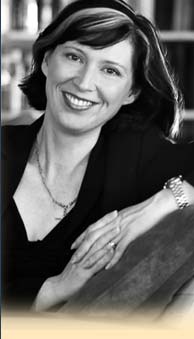
Dianne Freeman is a life-long book lover who left the world of corporate finance to pursue her passion for writing. After co-authoring the non-fiction book, Haunted Highway, The Spirits of Route 66, she realized her true love was fiction, historical mystery in particular. She also realized she didn’t like winter very much so now she and her husband pursue the endless summer by splitting their time between Michigan and Arizona.


And Dianne will give away a signed copy of her new book to a lucky commenter today!


Friday, November 7, 2008

ON WOMEN'S SUFFRAGE


"The book sweeps from the steamy bazaars of Egypt to proper English drawing rooms as Ursula battles international intrigue and her own sensuous nature. Dorothy Sayers would be proud of her Oxford sister."

**Rhys Bowen, Award winning author or the Molly Murphy and Royal Spyness mysteries


HANK: I met Clare Langley-Hawthorne in the one of the world's most high-tension white-knuckled situations--Malice Go Round. That's the feared and beloved event where new authors get like 10 seconds to convince a group of experienced, savvy and educated mystery readers that their new novel is the greatest thing since..well, the last greatest thing they've ever read.

Clare hit Malice Go Round out of the ballpark. Talking about her debut Consequences of Sin, she was calm and direct, articulate, passionate and intelligent. And funny. (And of course, 'historicals' are hot in the publishing world these days.) I told her afterward--I was running right out to buy her book. She absolutely won me over.


Now she's on book two--more about that in a minute. But while millions of voters in the US woke up this week to find they had participated in an historic election, Clare didn't get to vote. Why? And how does she feel? She tell us in one word:


Disenfranchised


by Clare Langley-Hawthorne

After the election this week I confess to feeling particularly disenfranchised. As I am not a US citizen I was not able to vote (and neither was my husband which actually may be a good thing as we traditionally cancel out each other’s vote as we hold opposing political views!) nor am I able to vote in Australian elections as we have been abroad so long.


In Australia voting is compulsory – a fact that many American’s find incredible – and we are fined if we fail to vote in an election. For the last couple of elections my husband and I missed getting postal votes and had to send in a letter ‘excusing us’ from voting to avoid a fine – we were then unceremoniously dropped from the Australian electoral roll. So now we are truly disenfranchised!


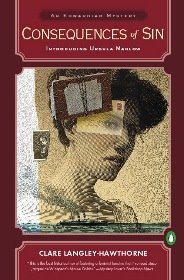
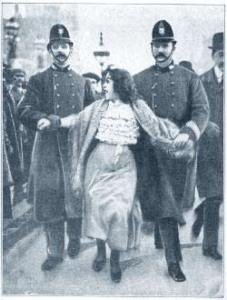
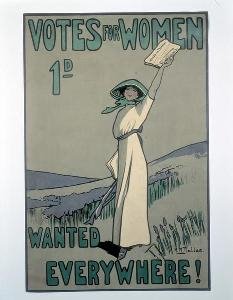
This gives me particular empathy for my character, Ursula Marlow, who is a suffragette in Edwardian England desperately trying to secure votes for women at a time when voting in England was restricted to men who owned or rented property. My first book, Consequences of Sin, is set in 1910 and includes the infamous ‘Black Friday’ protest which occurred after the failure of the Conciliation Bill which would have extended voting to some women.

On that day women faced unwarranted police brutality and realized just how entrenched the ‘establishment’ that opposed female suffrage was in Britain. Many of these women had already spent time in Holloway Prison and had endured forcible feeding (they went on hunger strike to protest the government’s refusal to treat them as political prisoners).

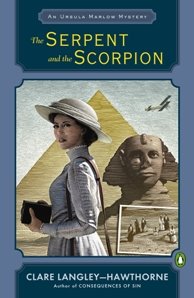
By 1912, the year in which my second Ursula Marlow book, The Serpent and The Scorpion is set, members of the militant suffragette movement (the Women’s Social and Political Union) had become thoroughly disenchanted (as well as disenfranchised!) and had begun to mount a window smashing and arson campaign. The fight for votes was reaching a level of desperate militancy that would only cease with the outbreak of the First World War when the WSPU agreed to suspend their fight for votes for women to focus on their patriotic war duty.

By the time the war was over a whole generation of men would be wiped out, women over 30 would finally be granted the vote and the nearly 2 million so called ‘surplus’ women became a political force to be reckoned with. Just imagine what could have happened if women had received the vote before the war?!

It’s hard for me to believe that Australia –a land settled by convicts and squatters - granted votes to women nearly twenty years before Britain (although Aboriginal women were still excluded).


I have to confess, as an unabashed feminist, I fully support my character’s political quest (and hey, my husband is convinced Ursula is actually me anyway!) though I have to admit to a sneaking jealousy (maybe even covetousness) for Ursula’s upper class Edwardian lifestyle. She gets to have a maid, a chauffeur, a butler, a housekeeper and a cook. At my house I have to play all those roles!


She also has the luxury of time and wealth. The kind of wealth that allows you to have custom designed French clothing (where’s my dress by Poiret?!), travel by elegant ocean liner (rather than being a sardine in coach class) and flout conventions (though I live just near Berkeley where there are no conventions to flout anyway!). But was all of this lifestyle worth having no say in the way your country was governed? When I try to absorb the sensibilities of the Edwardian period, to think and feel as Ursula would have, the answer is clearly no.


So my character and I have something in common – neither of us have the vote but we both recognize just how powerful and important that right can be.


HANK: Thanks, Clare! And there's more--


A contest! Clare has generously offered to give away a signed edition of her first book--and that's something we can all vote for. So just leave her a comment...and she'll pick a winner at random!


Clare Langley-Hawthorne was raised in England and Australia. She was an attorney in Melbourne before moving to the United States, where she began her career as a writer. Her first novel, Consequences of Sin, was nominated for the 2008 Sue Feder Memorial Historical Mystery Macavity award. The second in the Ursula Marlow series, The Serpent and The Scorpion, was published in October 2008. Clare lives in Oakland, California with her family.
http://www.clarelangleyhawthorne.com/