
Showing posts with label Libby Fischer Hellmann. Show all posts

Tuesday, April 5, 2022

A Chicago Story by Libby Fischer Hellmann


LUCY BURDETTE: Today, a big Red welcome to our good friend, Libby Fischer Hellmann!

LIBBY FISCHER HELLMANN: Hi, Reds. It’s great to be back. 

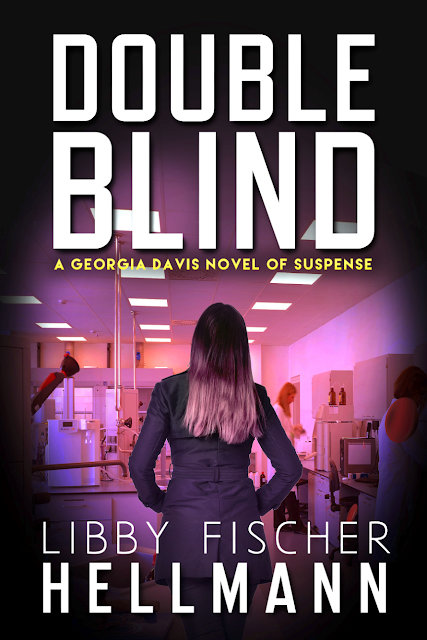
My latest Georgia Davis thriller, DoubleBlind, came out last month.  It’s doing well, even though it’s the 6th in the series. I was going to write about keeping a series fresh, but decided to do that on my own blog. You can find it here, and I hope you’ll check out the book.

But today I wanted to write about something else. I’m going to a formal wedding tonight down at the Palmer House. Have you ever been there? The lobby ceiling is fantastic, and I talk about it—and its history in DoubleBlind.


In fact, the ceiling reminded me of a Chicago story that occurred soon after I moved from DC to Chicago in the fall of 1977. At the time I was looking for a job in broadcast news (Which turned out not to happen, but that’s another story). I’m still not sure who told me about it, but I stayed at the Belden-Stratford, an apartment-hotel in the middle of Lincoln Park, which at the time, housed one of the best Mandarin restaurants in Chicago, the Dragon Inn. 

But I digress.

The Belden-Stratford wasn’t an assisted living facility, but you might have mistaken it for one. Formerly an elegant hotel, but it had faded into a dusty, dingy, place with frayed carpets, and cracked leather furniture. I booked it for a month, spending my time going on interviews, working freelance, and seeing the sights of Chicago. I would get back to the hotel around four, and would be greeted by a phalanx of senior citizens lounging on chairs and sofas in the lobby. They would stare at me as I swung through the door. Most of them looked vacant, some sad, and no one smiled. I would make a beeline for the elevator. 

One day, though, one of the women did smile at me, and I decided to sit next to her. She must have been well into her eighties, she looked frumpy, and she walked with a cane. We started to chat about this and that… nothing important, just passing the time of day. She asked me why I was staying there, and I told her. I asked her how long she’d lived there, and she told me. I was about to say goodbye and go up to my room when she said. “You’re probably too young, but do you happen to know who Benny Goodman was?”

Now, you need to know my late father was a party animal. He was the guy everyone wanted to be around when the music started and the drinks were flying. Along with Frank Sinatra and Ella Fitzgerald, he had all of Benny Goodman albums. In fact, at least once a week, usually on Saturday nights, the strains of Benny’s clarinet or Ella’s perfect soprano or some other Swing/Big Band would float upstairs as I was trying to fall asleep.  I told the woman. 

She grinned. “Well, I’m Benny Goodman’s sister.”

Once I put my jaw back in alignment, she said, “Come with me, sweetie.”

We went up to her small, cramped apartment. Every available inch of wall space was covered with framed photos and newspaper clippings. Other mementos spilled onto end tables next to china figurine miniatures, lace doilies, and other tchotchkes. All of them were a memorial to her brother. 

Photos of him playing with Gene Krupa and Harry James at the Blackhawk restaurant… album covers (some the same as my father’s)… family photos taken in the Maxwell Street area where they grew up – there were twelve siblings – and one photo of their father, who died before his time in a traffic accident.  

I looked through everything. Then I asked if I could bring my camera down so I could take pictures of the pictures for my father. 

“I have a better idea,” she said (To this day I can’t remember her first name… my bad). “How would you like a photo?”

She gave me a picture of Benny, Gene Krupa, and Harry James. It was a candid, and they were rehearsing. She didn’t know where. I do remember two of them (don’t recall which ones) had cigarettes burning. 

I sent my father the photo the next day. 

That was my first “Chicago” moment, not particularly exciting or memorable except to me. A piece of Chicago’s past had been shared with me, and I felt a bond with the city, its history, and the talent nurtured on the shores of Lake Michigan. 

That was over 40 years ago. Benny and his sister are long gone. So is my father. But during the few moments I spent in her apartment, something registered—a sister who was inordinately proud of her brother and was able to tell the tale to a younger person who appreciated it. 

It was a special moment, and I knew from that day forward that I belonged in Chicago.  I was going to live here. Maybe I’d even tell this story one day. 


Friday, September 25, 2015

Libby Hellman--Today We Can All Be Spies

DEBORAH CROMBIE: What a roller coaster week! And what better to top it off than SPIES. 

Who else is fascinated by spy stories? Not just Bond-esque, but real life spies, those shadowy figures who risked everything to save the world--or damn it. And do you ever wonder how espionage has changed? Here's our Jungle Red friend Libby Fischer Hellman to give us the scoop.

LIBBY HELLMAN:

Hi, Reds and Reds fans. It’s great to be back at the party. Thanks for having me.

I’ve been focusing on espionage recently. Which means reading as many fiction and non-fiction accounts as I can, watching a lot of espionage movies (you can imagine how hard that’s been ☺), and keeping up with the news. I visited the Spy Museum in Washington and Bletchley Park in the UK. The result so far is a novella called The Incidental Spy, set in the early years of the Manhattan Project in Chicago. It’s just been published, and it’s about a German refugee who is forced to spy on the nuclear fission experiments at the University of Chicago from 1940 to 1942.

Today, though, I’d like to share my thoughts with you about the world of espionage and how it’s changed. Because it has changed. Significantly. At the same time, though, it’s brought back some tradecraft I assumed was obsolete.

World War Two at Home

Depending to whom you’re talking, Prague and/or Lisbon were the European spy capitals during the Second World War. Anyone was a potential spy, and they held the future of the world in their hands – the stakes were that high. Unfortunately, many spies were notoriously unreliable or became double agents when their marks realized they were being spied upon.
At home, though, it was a different story. America was physically untouched by the war (except for war bonds and rationing and families sending loved ones into battle). The reality was that if you were, say a farmer in the Midwest, it was possible to ignore the war and go about your business. Which made spying a little easier. Most Americans didn’t constantly look over their shoulder fearing someone was out to steal
private secrets.

Still, there were some infamous (and unreliable) spies. Take Doctor Ignatz Griebel, who served in the German Army during World War I. He emigrated to the US, became an American citizen, and eventually became the president of the Friends of the New Germany, which eventually merged into the German-American Bund. When Griebel was arrested by the FBI, he revealed the details behind a German spy ring operating in the U.S.  A Federal grand jury subpoenaed him, but in 1938 he escaped aboard the German ship Breman, taking vital intelligence with him. And in a brazen act of chutzpah, he even tried to come back to America after the war, but was arrested before disappearing into obscurity.

Dr. Ignatz Griebel
The Duquesne spy ring was a German attempt to spy on the US arms industry and their preparations for war. The network's head, Frederick 'Fritz' Joubert Duquesne, hated the Brits, fought for the Boers, and worked for German intelligence during World War I. He was determined to keep the USA neutral and out of the war.  His ring came to a rapid end, thanks to William Sebold, a freshly-naturalized US citizen who ended up working for the FBI. 33 people were tried as a result of the ring's break-up, 19 pleaded guilty and the rest were found guilty anyway. One Abwehr officer later said the ring's demise proved the 'death blow' of wartime German espionage on US shores.

Atomic Spies

When we think of the so-called Atomic spies, based in the US, UK and Canada, we, of course, think of the Rosenbergs who gave away information about the US nuclear weapons program to the Soviets. In reality, though, physicist Klaus Fuchs was probably the most notorious Communist spy—he actually worked on the Manhattan Project and had extensive access to high-level scientific data. The Venona project intercepted Soviet intelligence reports sent during and after the war, which gave US officials clues to his identity. Many believe there had to be other spies as well, perhaps even at Los Alamos. Rumors swirled about Oppenheimer
Klaus Fuchs
and David Greenglass, and their reputations were ruined forever.

The 1950s and McCarthyism

As fear of the Nazis waned, America's fear of communism grew, and our reaction to alleged spies in our midst exploded. Government official Alger Hiss was accused of being a communist spy. After a mistrial he was tried again in 1950, convicted of three counts of perjury, and served over three years in prison. (Thank you, Richard Nixon). Throughout his trial and after, he denied any wrongdoing.

That paved the way for McCarthyism, which kick-started an extraordinary period of Communist-driven fear in the 1950s. As you probably know, thousands of American citizens, from government workers to movie stars, were asked by a congressional panel: "Are you now, or have you ever been, a member of the Communist party?”  Their answers weren't always taken at face value and countless reputations, careers, and lives were ruined. The public seemed not to react to the horrors of the situation until Joseph Welch uttered the famous question “Have you no sense of decency sir?” at the Army-McCarthy hearings, and Edward R Murrow took him down on national TV.

Lack of Clarity Today

Today the game has changed. Technology has proven to be a double-edged sword. The motivation for espionage has changed, too. In the past it was truly a matter of life or death. Soldiers’ lives were at stake during the war; everyone was at risk during the atomic bomb scares. There was a clarity to espionage. There were good guys and bad guys, and we were always the good guys.

It’s not so simple today. While anyone could be a spy during the war, today we all can be spies all the time. All we need is a camera, perhaps a drone, a bug on a phone, a computer hacker, or a really good decryption code.

Which makes figuring out who’s spying on whom and why murky. Today governments spy on individuals. Corporations spy on competitors. Nation states spy on each other. And while espionage used to be motivated by the defense of one’s nation, we now know espionage is used for corporate advantage…manipulating election results… or stealing the latest technological advances.

Ironically, that has brought some of the old spy tradecraft back in vogue. Why write an encrypted email when you can just arrange a dead drop? Why risk being recognized on a video camera when you can disguise yourself with a wig and pair of glasses? (Don’t forget to change your shoes.) And that American flag you used last July 4th? Plant it in a flower pot to signal a meet. Who’s going to know?

Our reaction to the murkiness of espionage is equally murky, and I could go on for another three pages about it. If I do, though, the Reds will have me for lunch. Happily, I have a new Ellie Foreman book coming out next March (it’s been over 10 years since the last one), and it deals with —what else? — espionage in the post-Snowden era and our reaction to it. It’s called Jump Cut, and I’ll (hopefully) be back to talk about it next year. Meanwhile, what do you think about the current state of espionage? Or do you refuse to think about it at all? What tradecraft techniques do you admire? DId you ever want to be a spy? Why or why not?


Libby Fischer Hellmann left a career in broadcast news in Washington, DC and moved to Chicago
35 years ago, where she, naturally, began to write gritty crime fiction. Twelve novels and twenty short stories later, she claims they’ll take her out of the Windy City feet first. She has been nominated for many awards in the mystery and crime writing community and has even won a few. 

DEBS: I was not only fascinated by spy stories, I played spy! My friend and I had secret drops, and codes, and I'm sure we annoyed the hell out of the neigbors by watching them with binoculars, just waiting for them to do something sinister...

What about you, REDS and readers? Any secret hankering to practice your tradecraft?

REDS ALERT: Kaye Barley, you are the winner of Peter Robinson's In the Dark Places! You know the drill:-)

And Libby, fascinating stuff. I can't wait to read The Accidental Spy. Just bought it! 

Tuesday, September 9, 2014

Libby Hellmann, Reluctant Writer


SUSAN ELIA MACNEAL: Welcome, Libby Hellmann — and congratulations on the publication of your eleventh novel and fourth in the hard-boiled PI Georgia Davis series, NOBODY’S CHILD! Libby's novels are dark and twisty — as she herself says of her work: "Think Karin Slaughter or Tess Gerritsen on steroids."

Libby's dropping by today to celebrate the publication of NOBODY'S CHILD — but is talking more about being a reluctant writer. (Certainly, none of the Reds use any of Libby's procrastination techniques, right? Right? RIGHT? Oh, never mind...)


Without further ado, here's Libby!


LIBBY HELLMANN: Hi, Reds. And Reds readers. It’s great to be back!

I came across an article not long ago titled “My Friend Thinks I Don't Work Because I'm a Writer…” In defense, the author said this:

Even when we procrastinate, we are working, because we are so consciously aware of the fact that we are NOT producing in that moment but we're thinking about WHAT we're going to say when we actually do sit down at the computer.


I wish I could claim that as an excuse. But, alas, I don’t think it applies to me. At least consciously. I’ve always been a “reluctant” writer — writing fiction is the hardest thing I’ve ever done. I am not one of those people who can’t wait to let words and images pour out of them. Who write ten pages in an hour. You know the type. Maybe you’re one of them. If so, I’m jealous. I’ll do ANYTHING to keep from writing. In fact, I have no idea how I wrote the latest four thrillers, including Nobody’s Child. The sad part is that I used to be more productive. I had a day job, a schedule, a routine. I wrote early in the morning and churned out eight or nine books. Now though, it all seems to have dissipated into the ether.

To that end, here is a typical day for me.


7 am: Coffee and email. Respond. Check my rankings on various online booksellers. Check my number of Twitter followers, FB friends, Google+ circles.

8 am: Walk the dog and listen to an audiobook (The most enjoyable part of my day)

8:30 am: Work out.

9:45 am: Shower and get dressed. Wonder if it’s time for lunch.

10:30 am: Check email, Twitter, Google +. Respond if necessary. Unsubscribe from all the shopping emails that are cluttering up my inbox.

11:00 am:  Go through my photos of Europe for the blogpost I promised myself I’d post two weeks ago. Remember how the Tiergarten in Berlin gave me an idea for one of the scenes in the novella I’m supposed to be writing.

11:30 am: Open the document I’m supposed to be writing. Read it again. Make one or two small revisions.

Noon:  It’s lunchtime. Yay! Let dog out in the yard.

1:00 pm:  Decide to write a blogpost. Start researching. Find a couple of articles whose titles are so captivating that I need to read them right away.

1:30 pm: Look out the window. Watch the mailman come. Wonder if I should go out and get mail. Or whether I need to go to the grocery store.  Or the bank.  Or the cleaners.

2:00 pm: Realize two-thirds of the day is gone and I haven’t written anything. Let the dog back in.

2:15 pm: Check my email and book rankings. Go on Facebook. Respond and reply. Wonder why I’m not getting more emails cluttering  up my inbox.

3:00 pm: Call a friend or two or five. Or go to grocery store. Let dog ride in back because it’s his favorite thing to do.

3:45 pm: Realize only 90 minutes remain before the evening news. Start reading one of the articles I’ve bookmarked about promotion or Google Plus or foreign translations or something.

4:00 pm: Have a glass of wine because it’s 5 o’clock someplace. In the unlikely event I’m abstaining, a cup of tea.

4:15 pm: Start writing. One tortured paragraph at a time. After all, I only have to do it for 45 minutes.

5:00 pm: Stop writing. Watch the news. Think about dinner. Check email. Wonder if there are productivity shrinks and if I should try to find one.

Evening: Binge watch something on Netflix or Amazon. Or go out. Or read. Go to bed.


Is there any hope? If you have suggestions, I’m all ears.


While you’re thinking of a great solution to my quandary, here’s a little bit about Nobody’s Child. It’s the fourth installment of my Georgia Davis series, and it’s possibly the darkest thriller I’ve ever written. Think Karin Slaughter or Tess Gerritsen on steroids. In it Georgia discovers she has a half-sister she never knew about. That sister is now in Chicago, and involved in a sex trafficking ring. When Georgia tries to extricate her, she runs into an old enemy (whom I wrote about in An Image of Death). So if you want to read the “backstory,” once you finish Nobody’s Child, it’s available.

Thanks Reds. Always a pleasure to be here.

SUSAN ELIA MACNEAL: And thank you, Libby. Reds and readers, what do you do to procrastinate when you're supposed to be working. (Could it be, perhaps, checking in on your favorite blog hosted by mystery writers? Hmm?)


More about Libby:


Libby Fischer Hellmann writes Compulsively Readable Thrillers. Her 10th novel, HAVANA LOST, a stand-alone literary thriller and love story set in Cuba, was released in September, 2013. A BITTER VEIL, another stand-alone thriller and a best-seller, is set in revolutionary Iran during the late ’70s and was released in 2012.
SET THE NIGHT ON FIRE (2010), a stand-alone thriller, goes back, in part, to the late Sixties in Chicago. She also writes two crime fiction series: EASY INNOCENCE(2008), DOUBLEBACK (2009), which was selected as a Great Lakes Booksellers’ Association “2009 Great Read,” and TOXICITY (2011), a police procedural thriller, all feature Chicago P.I. Georgia Davis. In addition, there are four novels in the Ellie Foreman series, which Libby describes as a cross between “Desperate Housewives” and “24.”
Libby has also published over 15 short stories in NICE GIRL DOES NOIR and edited the acclaimed crime fiction anthologyCHICAGO BLUES. Originally from Washington D.C., she has lived in Chicago for 30 years and claims they’ll take her out of there feet first.


Wednesday, September 25, 2013

You Say You Want A Revolution


LUCY BURDETTE: You all know Libby Hellman by now, right?--she's been around as long as I have, LOL. I admire how she's never afraid to stray into new territory, whether it's the subject matter of her books or the way she gets them published. She's got a new novel out that I'm dying to read because I'm insanely curious about Cuba. Libby not only went, she wrote a book about it. So here's Libby with her latest adventure!

LIBBY HELLMANN: Hi, Reds. Thanks for hosting me today. It’s great to be back.
As some of you know, my most recent three thrillers are all set in historical periods of extreme conflict, otherwise known as revolutions, (or in the case of FIRE, as close to a revolution as this country came since the Civil War). So, why did I create a “Revolution Trilogy?”

In fiction, they say, there must be conflict on every page, even if it's only someone wanting a glass of water that he or she can't get. Because I tend to overdo things in general, I asked myself what type of backdrop or setting would provide the most conflict in and of itself. The answer turned out to be  a revolution. Or war. Or strife within a culture. When characters’ lives unfold in an uncertain and potentially violent backdrop, almost anything can—and does—happen.

In fact, I can't imagine a more extreme conflict than a revolution. It affects everything and everyone: from individuals, to families, to neighborhoods, cities, countries, and regions. A revolution can transform a society’s culture and art, its food, education, personal freedoms, literature—the entire Zeitgeist. It affects whether people trust one another. It splits families in two. It makes everyday living dangerous. Essentially, it touches every aspect of life. 

When you superimpose extreme conflict on top of conflicts that already exist in a character’s life, those people become unpredictable. Some become heroes, while others turn into cowards. I love to explore those transformations in a character, and I love when I’m surprised by what happens. Just when I’m convinced a character is about to behave one way, they tak
e a different direction altogether. When that happens, it makes me feel more like an observer than a writer. I’m simply channeling an individual’s inner turmoil and decision-making process.

 Which, hopefully, makes my novels unpredictable as well. In too many crime novels the hero or heroine does the right thing, faultless in their judgement, usually emerging unharmed and victorious at the end. Not so much in my stories. I try to let my characters develop the way they indicate, and they don’t always win their battles. They might not even make it past the first few chapters if that’s the way the revolutionary cookie crumbles.


The ‘revolution trilogy’

My novel An Eye For Murder goes back to World War Two, which, although not technically a revolution, was indeed a period of extreme conflict. An Image of Death deals with the collapse of the Soviet Union, which I’d call a bloodless revolution. Set the Night on Fire took place during the troubled times of the late 1960s in the US. A Bitter Veil explores a family’s life during the Iranian revolution. And Havana Lost, my latest release, is set partially during the Cuban revolution and its aftermath. But there’s also action taking place in Angola – which was and still is an incredibly violent and lawless place— and Chicago, which some people would say is too. In fact, I’m now calling my latest three thrillers a “Revolution Trilogy.”

It doesn’t hurt that I'm a history major and I love research. It’s almost Pavlovian on my part. And I find it curious that although every revolution is different and has been fought for different ideological reasons, many end up being quite similar.

Revolution 101


Take the Russian revolution in 1917 or the French revolution or the Chinese ‘cultural’ revolution. It’s a common theme; people want to be free, but their leaders don't know what to do with that freedom when they get it. So it’s the ordinary people who suffer. Ironically, the only revolution that was different was the American. But that’s another blogpost.

When I put the characters in HAVANA LOST squarely into a revolution, the only thing that is certain is change. The way the characters face up to that change and handle its challenges is what makes writing so much fun. They all have minds of their own, and like the rest of us, they are essentially unpredictable, especially under stress. Also like most of us, their instinct for survival is what drives them to survive desperate circumstances.

So, Reds, that’s why I’m drawn to times of extreme conflict and strife. But what about you?
If you could choose a period of extreme conflict to write about, what would it be and why?

Thursday, April 26, 2012

You Say You Want A Revolution…

LUCY BURDETTE: Libby Fischer Hellmann was one of my earliest friends in the mystery business--energetic, talented, and indomitable. Since her first novel was published in 2002, she's never stopped stretching her writing muscles in different and interesting ways. Today we welcome her to talk about her new thriller, A BITTER VEIL.

LIBBY HELLMANN: As crime writers we learn early that “conflict” is the most essential ingredient of fiction. We learn that there must be conflict on every page, even if a character just wants a glass of water but can’t get it.  Over the years, I’ve taken that lesson to heart. I’m always looking for conflict, large or small. Recently I may have taken it to the extreme by writing about revolutions. In fact, my publisher says I’m in the midst of my “revolution trilogy.”  (She’s not far off—my next book will be set largely in Cuba.)

But I come by it more or less honestly—I was a history major in college, and I still love to examine the past and how it affects the present.  And what triggers more conflict than a revolution?  Whether it’s the French, Russian, Cuban, Chinese, American—well that one was a little different—or what we’re now calling the Arab Spring, nothing shakes the foundation of a society more than internal strife.

A revolution provides conflict that can affect an individual, a family, a village, a government, and its relation to the rest of the world…in a word, everything. It is a time where people can prove to be cowards or heroes, informants or patriots. People form unusual relationships, while others are torn apart. Love can flourish, but so can hate. A member of one family can be an enemy to the others—to the point of violence or death.

The rumbling of discontent always precedes the revolution, and there’s usually an overreaction afterwards. In the French, Russian, Cuban, and Chinese revolutions, a period of extremism followed the overthrow of the king, czar, or government. And those periods can prompt even more conflict and chaos. Even a revolution that didn’t quite make it—for example, the period of the late Sixties in the US, which was the setting for my previous thriller, SET THE NIGHT ON FIRE—can be a powerful source of turmoil.

That was one of the reasons I chose to write about Iran. The Islamic Revolution profoundly changed the Iranian people and their culture. Persia has been invaded many times over the centuries, but invaders tended to assimilate the magnificent Persian culture rather than imposing their own on Persia. Not this time. Was it because the revolutionaries were insurgents and not foreign invaders? I’m not sure, but it was a compelling question. Plus, the revolution was relatively recent. Fortunately or not, the Iranian revolution has been of the best-covered revolutions in history. Most of us can remember TV news footage of the Shah piloting his plane out of Iran, and the return of Khomeini a few weeks later. It was not difficult to find films, books, articles, and other materials that made my research relatively easy.

The other reason I chose to write about Iran was personal. It’s a strange story, and I still am not sure how I got it wrong. I went to a high school reunion years ago, and one of my former classmates told me how she’d fallen in love after college with an Iranian and moved with him to Tehran before the Shah left. Afterwards her life became difficult and ultimately impossible, and she came back to the States. I decided to fictionalize her story and when it was done, I, of course, called her to let her know what I’d done. When we finally connected, it turned out that she hadn’t gone to Iran at all. She’d gone to India! My first reaction was disbelief…how had I screwed that up? Clearly, it was a subconscious error. After a while, though, I realized it didn’t matter. I’d written the story I was supposed to write.

However it developed, though, it’s never been my intention to write a political screed. For me story trumps everything, but if it can be enhanced by conflicts large and small, so much the better. That’s what I hoped to accomplish in A BITTER VEIL. I hope it works for you.
A BITTER VEIL -- April 2012


 Libby will be happy to take comments and questions. You can also like her on Facebook
and follow her on Twitter. :






