
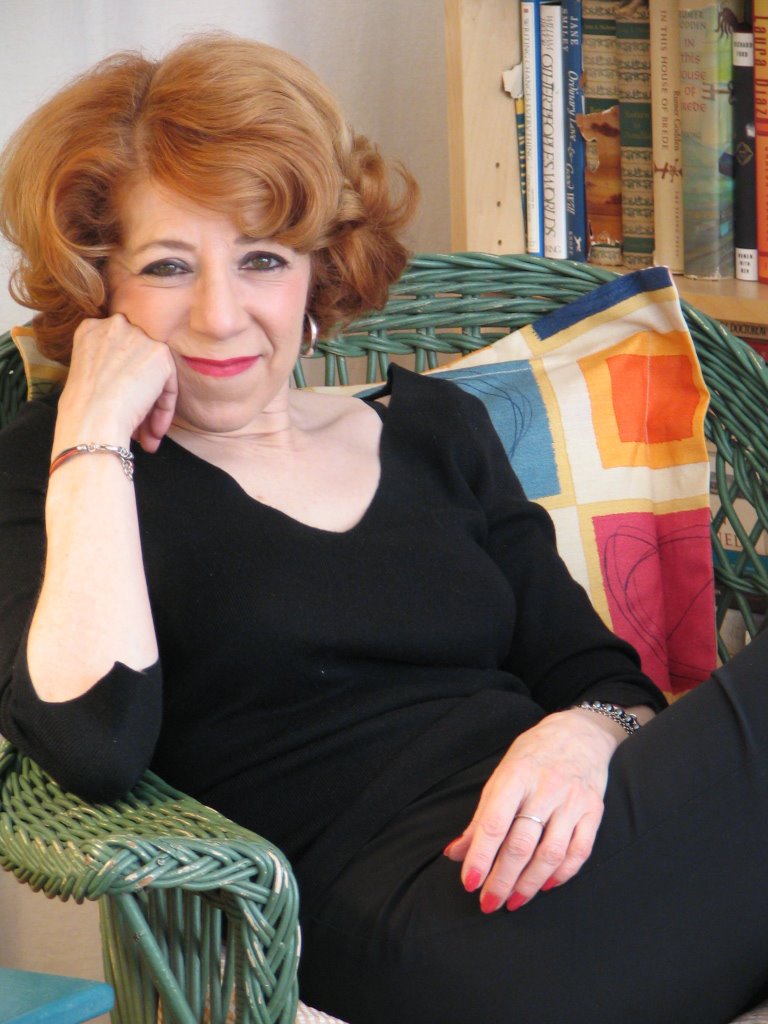
 HALLIE: When I wrote my first mystery novel, I was old enough to know that I didn’t want to waste a lot of time sending out a manuscript that wasn’t ready for prime time. So I took it as far as I could on my own, and then I brought it to freelance editor Lorraine Bodger.
The good news was that I had a great plot. The bad news was that my characters were, well, insufficiently developed. Cardboard and bland. I had a major revision ahead. But when I was finished, I did find an agent.
Lorrie has published more than thirty books of her own, and she’s been a professional freelance editor for more than fifteen years. She says, “Writing books makes me a better editor, and editing makes me a better writer.” And though most of her own books are nonfiction, she found that she had a gift for editing fiction and personal memoir. “It’s all about telling a story.”
She remembers working with author Ted Kerasote on his first novel. Until then he’d written only nonfiction about the wild. “He came to me with a 450-page manuscript that his agent wanted cut by at least 100 pages. Which we did, and it was a wonderful story, but it never quite worked. After that it was hard for Ted to find his next book, and I kept telling him, ‘You talk to me all the time about your dog, why don’t you write about your dog?’ I nudged him mercilessly. And finally he wrote his hugely best-selling Merle’s Door.”
Lorrie, welcome to Jungle Red Writers. (Lorrie can be reached at roxielifton “at” hotmail dot com.)
JRW: You see a lot of crime fiction from aspiring writers. What are the most common problems?
LORRIE: Top of the list: unoriginal plot and undeveloped characters.
JRW: Yikes, that about covers it. What do you usually see lacking in the plot?
LORRIE: Invention. The plot feels like chewed-over material—too imitative of David Baldacci or Agatha Christie, for instance. The writer hasn’t found or worked with his or her own originality. Often it’s missing an interesting hook, or the plot points aren’t clear enough, or they come too soon or too late, or the story isn’t hanging together in a compelling way. A good mystery or thriller keeps you turning the pages.
JRW: And what’s wrong with the characters?
LORRIE: They’re flat, two-dimensional. Or they’re generic to the point that you could give them titles like “The He-man” or “The Nasty Mother-in-law”—so stock that they’re not interesting.
JRW: Are writers surprised when you tell them the plot and characters are weak?
LORRIE: Writers I work with are often astonished when I explain the problems. They’re too close to the manuscript and they can’t “see” it anymore. Every writer suffers that—it’s why we have other writers read our work. But it’s extreme with new writers, and that’s the value of having a fresh and professional eye look at your draft.
JRW: What do you look for in an opening?
LORRIE: The important thing is that the reader must attach to the main character. And I almost always tell writers to think twice about starting with a prologue. With rare exceptions, and of course there are those, it’s a distraction that keeps the reader from getting into the book. Better to plunge right in and take the reader with you.
JRW: Do you think most new writers are willing to do what it takes to revise a manuscript?
LORRIE: What I’ve found is that people who are open to change are more likely to be able to do the crucial rewrites—because they’re flexible enough to change direction and make the work better.
But I couldn’t count the number of writers whose manuscripts I’ve read and critted who say, “I’m going to go back and revise it,” and then don’t. What distinguishes an amateur writer from a budding professional is understanding that good writing takes time and doesn’t happen on the first try. You have to take the long view. And it’s very hard for impatient new writers to take the long view.
One of the best writers I’ve worked with was a woman living in a small town in Oregon. The minute I read her manuscript I said whoa, she’s really got it. It was a little bit Sue Grafton, but it was also very original. She worked really hard and took crit really well. She got a lot of agents to read her manuscript, and she got very close to a sale. If she goes on and writes another manuscript or even does more rewrite on the first one, there’s a good chance she’ll get her work published. You have to understand that getting close is a very big deal.
JRW: Is that the measure of success a new writer should shoot for?
LORRIE: Aim for publication, of course, but to get an agent to read more than your query letter and your five submitted pages is major. It opens the door for the future. You can go back to those agents with your next query and manuscript and they’ll respond positively to hearing from you. And you can’t get anywhere without an agent.
JRW: Do you think that if a writer works long and hard enough, and writes a good enough manuscript, that it will find a publisher?
LORRIE: Not necessarily. I wish I could be more positive, but lots of very good work doesn’t find a publisher. It’s totally unpredictable. There are so many uncontrollable exigencies of the marketplace at the moment you send out your manuscript. What you can do is pay attention to what’s happening in your genre right this minute. But at the same time, search for your own originality.
JRW: If a writer is going to work with a freelance editor, when is the best time to do it?
LORRIE: When you have a complete manuscript—preferably copy-edited and using industry-standard page setup—and you’ve taken the writing as far as you can get on your own.
JRW: Thanks, Lorrie. Any questions for Lorrie? Now’s your chance… Or reach Lorrie one-on-one, e-mail her: roxielifton “at” hotmail dot com.








