HALLIE EPHRON: Today I am thrilled to host Tim Maleeny. The tag line for his latest Cape Weathers mystery, HANGING THE DEVIL, irresistible:
It was supposed to be a simple job: steal the paintings, leave the forgeries.

Tim's mystery novels are always intricate, fascinating, and alternately heartpounding and funny. This new entry in the series is somethig more - it's deeply steeped in art.
Welcome, Tim!
TIM MALEENY: Hallie, big thanks to you and all the Reds for letting me join for the day!
Before I start talking about writing, research, and art, I have to mention that I’ve been trying to declutter lately—not my strong suit—and at my wife’s insistence finally tackled the daunting task of emptying an old storage unit.
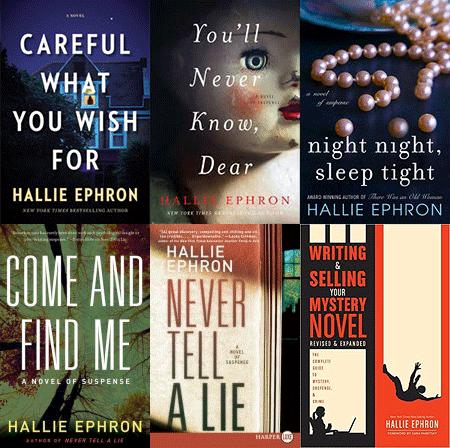
As you’d imagine, Careful What You Wish For keeps popping into my head, that’s such a terrific book! Fortunately none of the dark corners of our storage unit or the bins bulging with books and papers have revealed any dark secrets or put me in peril...yet.
HALLIE: This is starting to sound all too famliar...
TIM: However, one thing I did discover is a stack of posters and prints that once decorated an old apartment of mine, which brings me to the topics of today’s post: research and art history. These are subjects in which I had a rough working knowledge when I began writing my latest novel, Hanging The Devil, but my research revealed I had so much more to learn.
The book opens with a daring heist at The Asian Art Museum in San Francisco that goes horribly wrong when a helicopter crashes through the skylight, a robbery ending in tragedy that sets off a series of events connected to a global ring of smugglers, master forgers, and organized crime.
The story is loosely based on actual crimes, so I had to get my facts straight, which meant visiting museums, studying catalogues, and learning how to paint a convincing forgery.

I don’t know about you, but I tend to get lost in the research for my novels, maybe because writers love learning, or perhaps because the one thing I’ve truly mastered is procrastination. Either way, this story needed characters who came across as credible experts, which meant I had to travel down the rabbit hole as far as I could go.
What I discovered over the course of my research is that the stories behind the art were, by far, the most fascinating part of the puzzle.
Most of the paintings and sculptures I admired when I was younger were captivating for the skill of the artist, and while that’s still the case, my investigations led to a genuine fascination with how art gets made.

Researching the materials used to make paints in prior centuries—something any good forger must know—demonstrates how incredibly important art is to the human psyche. Whether writing, painting, sculpting or composing, telling a story in words, pictures, marble or song isn’t easy, and it used to be much, much harder than it is today.
When it comes to painting, certain pigments weren’t readily available, which limits your color palette. Imagine being asked to write a novel but only with certain letters or words? The chemistry behind the materials used to perfect paints that would hold over time was practically alchemy, trial and error involving everything from tree sap, dead insects, pulverized gems, and animal urine. (Yes, you read that last one correctly; it’s better not to ask.)
Not to mention the lack of indoor plumbing or electric lighting a modern artist’s studio might be expected to provide. It’s hard enough to paint in full daylight, let alone by candlelight with no central heating while your subject is scratching the head lice away.

When you hear the stories behind the art—the themes represented and the politics of the day—you start to appreciate why these efforts at self-expression served a great purpose, an outlet for people to find their voice and society to see itself from a fresh perspective. And then, when you learn what it took to physically make the masterpieces we’ve all seen and admired, it gives a new appreciation for why art matters, and why our own visceral response to a story, painting, or any work of art, is an emotional echo of something much bigger than ourselves.
As for mixing my own paints and becoming a master forger, I’ve decided to stick with writing. The tree sap is impossible to wash off, the dead insects are gross, and the rest of it...well, I prefer to play with words.
###

HALLIE: And lucky for us that Tim has decided to stick with writing. What we do for our "art"! I want to know how he knows what handling dead insects is like... Tim will be dropping by today so if you want to know more about art forgery, fire away!