Showing posts with label ballet. Show all posts

Thursday, March 27, 2014

Kathryn Craft and the Mystery of Self-knowledge


SUSAN ELIA MACNEAL: Kathryn Craft, the author of the novel The Art of Falling is our guest today, and I can't tell you how thrilled I am! 

(Full disclosure: I used to be an editor at Dance Magazine and just finished a binge reading of ballet books: Sophie Flack's novel Bunheads (about a young women questioning her place in a company similar to Flack's own New York City Ballet), Jenifer Ringer's memoir
Dancing Through It: My Journey in the Ballet (about her unsteady rise to principal dancer at NYCB), and rereading Toni Bentley's spare and gorgeous A Winter Season: A Dancer's Journal (about the trials and tribulation about life  in the corps of NYCB under dance master George Balanchine.) )

Kathryn's The Art of Falling is a sister book to these, as well as a mystery — as all-too-human dancers measure themselves against the standard of impossible perfection ballet demands of them. But it's not just about the world of ballet — we all "fall" regardless of profession and we all (at least we all try) to pick ourselves up.

Here's a brief description of The Art of Falling:


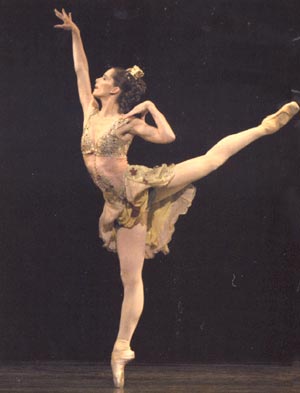
Penelope Sparrow was fourteen when her body first betrayed her—when her ballet teacher took her aside and said she didn’t have the right build to be a star. All Penny ever wanted to do was dance, and after a lifetime of trying to perfect her body, she’s about to make her international debut despite the odds. Everything seems set for her big break.

But that chance is taken from her when she wakes up in a Philadelphia hospital, unable to move after a death-defying 14-story fall. With a second chance at life and through an extraordinary friendship, Penny begins a journey toward self-acceptance—while piecing together the dark mystery of what happened on that ledge.


SUSAN ELIA MACNEAL: Welcome, Kathryn!


KATHRYN CRAFT: 

I Am the Mystery


When it comes to understanding my own motivations for acting in a certain way, or for making certain decisions, I can only offer my best guess. My wording betrays me: “Maybe I went shopping alone because I was sick of waiting for him to have time. Or maybe it’s because he always pays, so he gets to pick out the gift, and I wanted a chance. Or maybe, for once, I just needed to follow where my nose led, and not be held accountable for that.”

Maybe, maybe, maybe. You’d think I’d know the answer—I’m talking about me, after all!

But there are so many versions of me beneath this
skin. A short list: woman, daughter, wife, lover, sister, mother, lifelong learner, U.S. citizen, dancer, critic, author, biologist, philosopher, believer, optimist, summer home owner, and survivor, each of which influences me in some way. Each suggests its own characteristics; each is the result of different preparation or previous decisions. Any one of these inner folk might respond differently on any given day, and who knows how any two, in combination, might affect one another.

This is proof that the people who say I’m a real character are all wrong.

I am a character set.

As such, it would be asinine to presume that I could analyze the complexities of my behavior in any given moment well enough to come up with one irrefutable answer.

God I love that.

As a matter of fact, I could people several novels with the characters that live inside of me—and have. The way they contribute to the story allows me a prismatic view of its premise, which in turn creates great fodder for book club discussions. Why do these characters act the way they do? That mystery is always hiding beneath the skin of the story.

Each novel I write teaches me more about a woman who is a living, breathing function of her many selves. Nothing excites me more than when someone discussing my book intuits a character motivation that I hadn’t picked up.

To that I say, Welcome to my inner life.

I’ll respond, “Or, maybe she did it because…,” at which time the reader laughs and says, “Don’t you know? You wrote it!”

And to that I say, Yes, I wrote it. All of me did.

I am the story. In The Art of Falling I am the woman who believes she should be more accepting of her body and the woman who still thinks, at middle age, that she can maximize her body’s potential. I am the woman who declares she will eat less and the woman who sneaks a Snickers. I am the woman who loves unconditionally and the woman who expects only the best. The one who holds on tight, and the one who lets go.


KATHERINE CRAFT: Now tell me, Reds and readers, in no less than five listed characters: Who are you?


Kathryn Craft is the author of two novels from Sourcebooks: The Art of Falling, which went back for a second printing six days after its January release, and a second novel, based on the true events of her husband’s suicide standoff, due Spring 2015. Her work as a developmental editor at Writing-Partner.com follows a 19-year career as a dance critic. Long a leader in the southeastern Pennsylvania writing scene, she now serves as book club liaison for the Women’s Fiction Writers Association. A member of the Philly Liars Club, she lives with her husband in Doylestown, PA.


Wednesday, July 31, 2013

Too Much Pink. Some insights into Gender Roles by Susan Elia MacNeal

RHYS BOWEN: A couple of years ago I was asked to read and give a quote to the first book in a new mystery series. It was Mr. Churchill’s Secretary by Susan Elia MacNeal. I thought it was terrific and have been delighted with Susan’s success, included being nominated for an Edgar for best paperback original. She has now written 3 books in the Maggie Hope World War Two series and her latest is His Majesty's Hope.

So I asked Susan to come and guest blog for us at Jungle Reds today. And she’s chosen not to talk about the world war or research but a subject dearer to her heart— take it away, Susan.
“Too. Much. Pink.”

The Story of a Boy at the Barre

By Susan Elia MacNeal


“No, Mommy, no! Don’t make me go back there! Pleeeeeeeeease don’t make me go back!!”

            Our then six-year-old son Matthew wasn’t crying about juvenile detention or foster care or the Russian gulag. He was crying about dance class. He didn’t want to finish his first year as a student at the School of American Ballet (the one created by George Balanchine, the legendary choreographer and ballet master of New York City Ballet).

            Eventually, my husband and I untangled the problem. Matthew’s problem was not ballet. The problem was being a boy in ballet.

            “I don’t think you should make him go,” said my well-meaning mother-in-law. “He’s too young to handle it if his friends make fun of him.”

            But how old do you have to be to stand up for who you are and what you love? When do we, as parents, teach that?

            For us, ballet started with physical therapy. At nine months, Matthew had been diagnosed with torticolis, known in layman’s terms as twisted neck. He began physical therapy three times a week at nine months, and continued through age five. When he “graduated,” we asked his therapist what more we could do. A former dancer, she said, “Ballet. I don’t know of anything better for the body.”

            The summer before kindergarten started, we took Matthew to the studio down the street and signed him up for summer dance camp—ballet, tap, and jazz. He loved it. He started dancing anywhere and everywhere, to all kinds of music.

            And then in the fall, he asked for ballet lessons. We brought him back to the same studio.

            It was a disaster.

            Matthew was the only boy in the class. The teacher didn’t help things. “Ballerinas, over here!” she would trill, excluding my son, the lone figure in a white t-shirt and black leggings. “Fairy princesses, this way, please!”

And this sort of treatment of boys in ballet class at the beginner level is not unusual. According to Mark Tappan, Professor and Director of the education department at Colby College and the co-author of Packaging Boyhood: Saving our Sons from Superheroes, Slackers, and other Media Stereotypes (St. Martin’s Press, 2009), gender role awareness at this age is normal, but it’s brought on by media and cultural influences, not biology: “For boys, it doesn’t take long to get the message that certain activities are taboo and they should feel bad about themselves if they like something stereotypically ‘girly.’ ”

Or, as Matthew put it, “Too. Much. Pink.”

            And that would have been the end of it, had we not watched the DVD of George Balanchine’s The Nutcracker that December. Matthew was swept away, by the music, the dance, the drama. 

            “You know,” I happened to say one evening, “that particular Nutcracker is done here, in New York City. The Nutcracker prince is a kid who studies at the School of American Ballet. Someday, you might be friends with someone who’s really in it.”

            Behind Matthew’s eyes, I could see the wheels spin. “Mommy, I want to be in The Nutcracker.”

            And that’s how he ended up at SAB. Twice weekly we’d trek from Park Slope, Brooklyn, to Lincoln Center, where he took class with famous retired ballerinas. (One former star is known affectionately in our household as “The Yelling-est Ballerina Ever.”) And he loved class, saying, “At the other school, the teachers were nice, but at SAB, they’re firm. They show us how hard ballet is, that it isn’t just a game. I like that.” And not only were there other boys at SAB, but they were treated with respect.

            More than respect, actually. Males in ballet are not just a rare commodity, but also a historically privileged minority. It’s a definite advantage to be a male in ballet. First of all, there’s less competition. And at SAB, all boys attend on scholarship—a savings, at the beginner levels, of about $7,500 per year. Peter Martins is not just Ballet Master of NYCB and a major choreographer, he is also Mr. Balanchine’s successor as Chairman of Faculty at SAB. As Tappen says: “That’s the way the patriarchy works—men are privileged to have the authority to be the directors and leaders and ones in charge, with resulting higher salaries.”

            But something happened to Matthew that year. He became increasingly aware of gender roles and terrified the kids at school would find out and tease him. He began to get stomachaches before class, not wanting to go. “Why not?” I asked finally.

“Mommy, ballet is just too girly,” he confided.

           The subtext, to quote Billy Elliot’s disapproving father in the eponymous film, is that male ballet dancers are thought of as “poofs.”

“They’re not,” Billy counters. “Ballet dancers are as fit as athletes!” But it’s that underlying homophobia that persists. And what my son, even if he couldn’t yet articulate it, was sensing.

            Somehow, though, we made it through. A myriad of things helped. One was the incredible support we received from SAB. Matthew and his father were able to observe an advanced boys-only class—taught by a male teacher. “It was really cool that a man was teaching a class of all boys,” Matthew said. “It was really hard and athletic and I loved it.”          

            Although we went through a wrenching time of questioning and then resolution—Matthew ultimately made the decision to follow his love for dance and continue at SAB—it seems as if ballet itself is also questioning its own image and trying to tone down the pink.

When asked about his classmate’s reaction to his taking ballet, he shrugs. “They might still laugh,” he says, “but I’d like them to take a class and see how hard it really is. And then if they like it, that’s great, and if they don’t, that’s OK, too.

“It’s all right for boys not to dance ballet.”


Susan Elia MacNeal is the author of the New York Times bestselling Maggie Hope mystery series from Random House. Her novels have been nominated for the Edgar, Macavity, Dilys, and Barry awards. She lives in Park Slope, Brooklyn, with her husband and son.
And Suan will be giving away a copy of His Majesty's Hope to her favorite comment of the day.

Saturday, April 14, 2012

On Lying


JAN: Because I believe some things never change, I've reposted this 2009 blog.


"And, after all, what is a lie? 'Tis but The truth in masquerade"


Lord Byron


JAN: Do people really lie three times within 10 minutes of meeting someone new? That's a popular statistic circulating the web. Even as a journalist, always searching for lies, I found this tough to believe.

But then I realized. Hey, It's true. I probably lie a minimum of three times within the first ten minutes of a cocktail party. At least by the way the study defines lying.

Included in the definition are things like falsely agreeing with others and the misrepresentation of feelings. Ever choke back the way you really think?? I do it all the time.

Let me explain. Politically, I'm probably to the left of 80 percent of the country. Personally, of course, I think I'm dead center, with some surprising views on various issues that keep both the conservative and the liberal action groups sending me mail. But I live in Massachusetts, so by local standards, I'm a raging conservative. And because I'm a writer, people take it for granted that I'm liberal. They make statements presuming I agree with them. Do I jump into it?

It would mean a verbal fist fight, and because I believe that no one has ever really swayed anyone's political beliefs by cocktail conversation, I smile and say nothing.

For me, it's politics. For others it's religion, music, or whether they actually enjoy the ballet. I know people who have to lie to stop people from shoving a cocktail into their hands. Sometimes we just keep our mouths shut because it just doesn't seem right to tell your best friend her new hairdo looks like straw or that her new drapes are making you dizzy.

So come on, fess up: What do you LIE about??

HALLIE: Here's what I don't lie about. My age. Or what I paid for the outfit you just complimented me on, bless you.

But yes, if someone starts in on anything political, I don't so much lie as refuse to engage. My politics are my personal business, thank you very much. Besides, it seems like I rarely meet anyone who is genuinely interested in engaging in a discussion on issues--they just want to be clever and dismissive and yell. So I shut down. Is that lying?

JAN: Yes, according to this study's definition: You are lying about your feelings, God forbid.

RO: My first instinct was to protest that I never lie, but reading your definition of lying I guess I do. I went to a reunion recently...and definitely dropped a few omissions/lies there. And Bouchercon is coming up...oooh I'll probably do a bit of fibbing there. (e.g., "It's an honor just to be nominated!") I try not to make a habit of it, though, because I'm really a terrible liar. My mother always used to say that and I think she did it just to spook me into always telling her the truth. She said she could always tell when I was lying and now I think everyone else can too.

So Hallie...where did you get that wonderful black shoulder bag you have...the small one with the metal clasp? Was it fabulously expensive? (This is a test.)

HALLIE: Ooooh,isn't it great? Italy! At a factory outlet...gorgeousness for less than $50.00. Unless you count the cost of the trip. Those Italians really know how to make gorgeous handbags.

HANK: I guess...I do...I always feel SO GUILTY,though. Social excuses, mostly.(Oh, so sorry we can't make it, because...but most often I don't give a reason.) And I actually do lie about the cost of things. Actually, I don't lie, I just don't tell. And in political discussions, I generally just try to prevent the other two guys from fighting.

There's a person I see from time to time, and if you ask her a question, she'll often begin her answer with "I'm not gonna lie to you, but..." I just instantly decide whatever she's saying is not true. (And RO, it IS an honor to be nominated for an Anthony. No lie. Congratulations!)


JAN: Okay everyone, what do YOU LIE about?