Showing posts with label creativity. Show all posts

Sunday, April 19, 2026

AI and "The Struggle"

 And the winner of the Dude bookmark is... dianneke!!!!

Email me at jennmck at yahoo dot com with you mailing address and I'll send your Dude bookmark.

JENN McKINLAY: Okay, AI is all we seem to hear about these days (if we ignore the war of choice) and I've had my opinions about AI from day one. We've even discussed it here before, but I think the prevalence of AI has gotten even worse since our discussion of Hallie's Generative What? post last September. Sometimes, I loosen up about its use and other times, well, no. I am currently in a "Oh, Hell No" place where I've blocked embedded AI (located in settings and switched it off) from my devices and refuse to use it in any form now.


I'm going to put aside the fact that Anthropic helped itself to 35 of my books, taking them without approval or compensation, and fed them into their machine to "teach" it. Yeah, no. Theft is theft. The lawsuit currently underway is offering artists a fraction (that they have to split 50/50 with their publisher, FFS) of what Anthropic would have paid had they bought the rights properly. Because of course they never offered to legitimately buy the rights as one of the grifting execs said, "That would be entirely too expensive." Yeah, no duh. I guess I'll just go take that new car I want from the dealership because paying for it would be entirely too expensive. Same thing, y'all. Theft is theft.

I'm also going to table the horrors of what AI and its required cooling Data Centers are going to do to our planet's environment. Wells polluted with forever chemicals, water made undrinkable, farms drying up, light pollution, noise pollution, communities forced to pay for a behemoth non job producing monster that tanks their property values as the cherry on top of the poop sundae. 

Instead, what I'm going to pop off about is the actual creative process. I'm in what I call "proposal writing season." This means I've finished all of the books I had under contract and am now writing proposals for potential future books. This would seemingly be a grand place to use AI. I could open up one of their question boxes and say "outline a romcom with XY and Z tropes with an organic farm as the setting" and it would churn out exactly that using my prompts and the more input I fed it, the tighter it would be. I could even ask it to tailor the proposal to the voice of Jenn McKinlay (I know it has the capability because it stole so much of my work). 

In fact, I did use AI to write an outline for a non-fiction piece I was asked to write last year. Non-fiction is not my jam and the outline was super helpful but it was a two paragraph OUTLINE not the article. 

Fiction to me, however, is an organic thing. It lives and breathes in the heart and mind of the artist and it can't be replicated by a machine no matter how many books by the author the machine has been fed. My opinion about this cemented when I had an epiphany, sometimes they hit like lightning bolts and this one did.

I knew I needed another idea for a romcom. I enjoy writing them, but they are by far the hardest genre for me. All that sticky authentic emotional angst is excruciating when I just want to crack jokes and avoid feelings. Ha ha.

The well, as they say, was empty, almost like a Data Center had moved into my head and sucked it dry, ahem. But then, when I was putting my loaded dinner plate onto the table, an entire book appeared in my head and I audibly gasped. Hub immediately asked if I was all right, and I shouted yes as I ran from the room to write down the most awesome idea for a romcom ever. Now, here's the thing, this idea came from a conversation I'd had with a woman seventeen years ago that my brain suddenly trotted out and said, "Well, how about this?"

And here's where the struggle comes in. The spark had arrived but it took me another week of thinking, plotting, revising, rejecting, and scribbling on random pieces of paper when new ideas struck at an inconvenient times, to piece together how this story needed to be told. Could AI have offered a million suggestions on this part? Probably, yes. But the struggle is the important part. I needed ideas to fail so that stronger ideas would appear, a process that takes patience and tenacity.

And that's when I had my epiphany, not just about the book in my head, but the entire problem with AI. Creativity is magic. It comes from the human experience and takes all the bits and bobs of your life or the way you view the world, both of which are unique to you, and crafts them into art in whatever from you decide, whether it's a story or a painting or a performance, and no machine can ever, ever, ever produce anything other than derivative slop replicating that creative magic. Only a human can create something out of nothing. A machine can only produce a subpar imitation. I believe we should demand better of ourselves and the corporations trying to crush us by stealing our creativity and destroying our planet.

Reds and Readers, what are your thoughts on this? 


Thursday, June 9, 2022

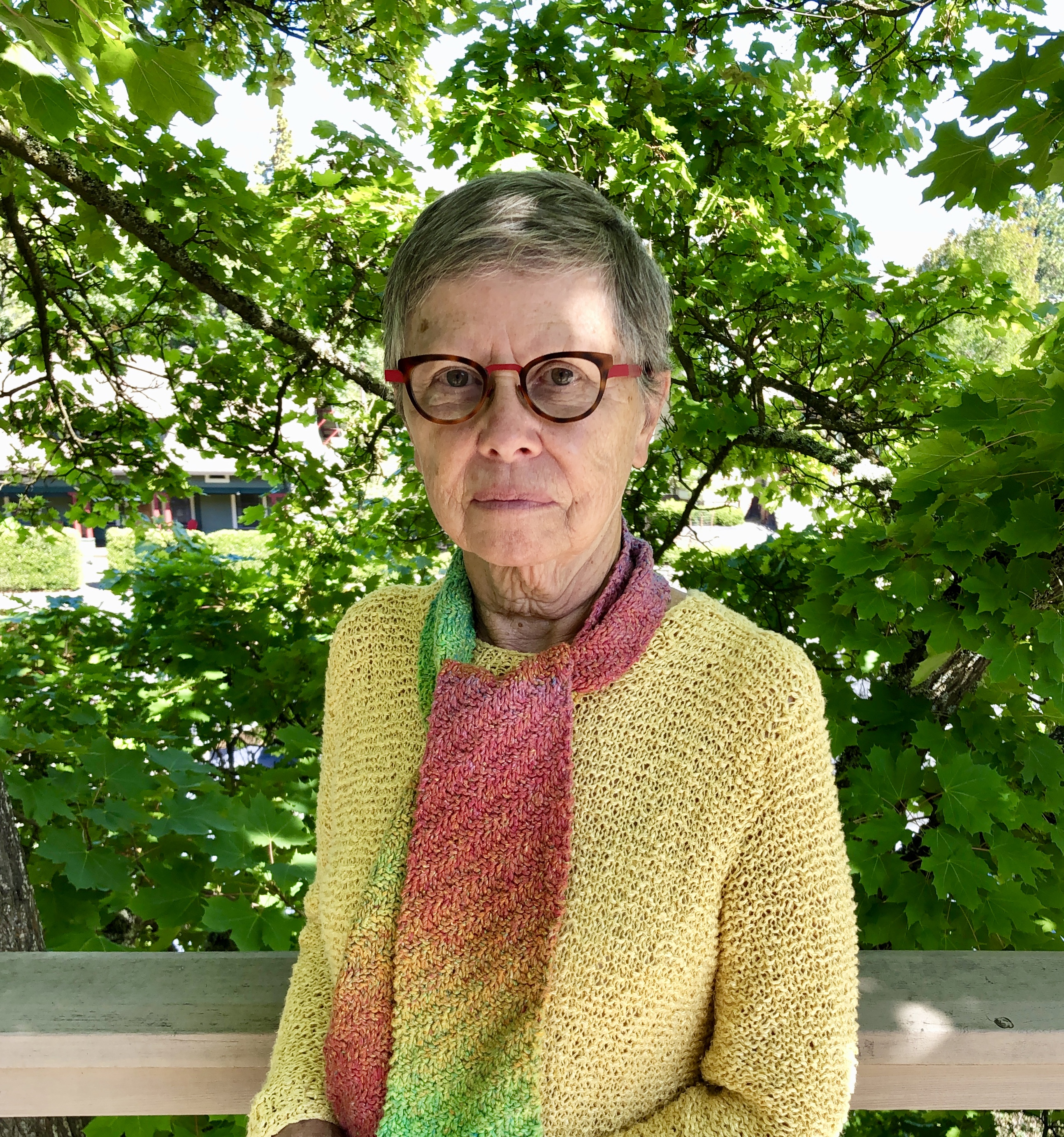
Bridging Careers, a guest post by Sharon Dean

 JULIA SPENCER-FLEMING: Here at JRW, we are all about celebrating the creativity that blossoms and continues as we grow older. We had a wonderful conversation about "third act creativity" with Amanda Le Rougetel this spring, and I'm delighted to welcome Sharon Dean, with her new mystery CALDERWOOD COVE, today. Sharon and I have a lot in common, including an Air Force husband, living in an old New England house (she's since mercifully escaped to beautiful Ashland, OR) and, most importantly, leaving another career behind to take up the mantle of author.  She explains how she did it - and what she brought with her - today.


Writing sustains us, but so does money. As Melville wrote to Hawthorne in 1851, “Dollars damn me; and the malicious Devil is forever grinning in upon me, holding the door ajar. . . . What I feel most moved to write, that is banned, – it will not pay. Yet, altogether, write the other way I cannot.”


Melville was most successful not when he was forced to make money to support his family, but when he drew on his experiences whaling to compose his early novels and later his magnificent Moby-Dick. In his novel Pierre, he imagines a writer locked in a back room trying to write despite the constant need for the damned dollar. But the idea of the solitary writer removed from world is more myth than reality. After all, Hawthorne came out of his garret room to marry Sophia Peabody. Without exiting the garret, he might never have produced anything except Fanshawe, a novel so imperfect he tried to burn all the copies.


A subset of writers seems to be emerging today. Some self-publish; others, like me, publish with independent presses. Many of us have retired, and though we’re not rich, dollars no longer damn us. We’re privileged to have had careers that bridge us into writing that sustains us emotionally even without the windfall of the best seller.


Because we write what we know, we draw on our past careers. Retired actor Clive Rosengren has created Eddie Collins, sometimes actor, sometimes PI. Rosengren sprinkles his deep knowledge of Hollywood like glitter throughout his Eddie Collins series. Toxicologist BJ Magnani fills her Lily Robinson series with poisons. S. Lee Manning’s international spy thrillers draw more on the writing skills Manning honed as lawyer than on any experience as an international spy.


I was an English professor for many years before I hung up my academic hat and began writing novels. My Susan Warner series features a retired English professor and reluctant sleuth and my Deborah Strong series features a much younger character who, widowed, returns to her hometown to become a librarian. Neither of these series puts me into a faculty meeting or a classroom, but I’ve been surprised at how much I draw on my knowledge of literature and my skills with researching as I write.


Much of my academic work was on the nineteenth-century writer Constance Fenimore Woolson. I re-imagined her as Abigail Brewster when I put my protagonist Susan Warner at a conference celebrating the fictional Brewster’s life and work. I reprised Brewster again when my librarian character Deborah Strong discovers a letter written to Brewster in the archives of a New England college. While I was writing these novels, I learned about an actual woman named Madame Restell, who in the nineteenth century was dubbed “The Wickedest Woman in New York” because she performed abortions. My habit of research often leads me to discoveries like these that I integrate into my work.


But therein lies the challenge I’ve faced as I’ve bridged the distance from academic writing to fiction. I’ve learned the fine art of omitting––how much research to use, how much becomes a mere “fact dump.” I’ve also had to learn to eliminate my analytical voice and to find ways to let characters and plot make the story come alive. I’ve learned to leave the analyzing to readers, but I hope that there’s room for analysis in what I write even though my novels will never be discussed in a college classroom.


I thank my former career for giving me not only the tools to write and research, but also the luxury of a retirement fund. Neither career has made me rich, but both have fed me.


Do you enjoy reading or writing novels that draw on your own or another author’s career?


When Deborah Strong accepts an invitation for a reunion with high school friends who will all be turning fifty, she anticipates a lovely Fourth of July weekend in Maine. But soon a murder disturbs the quiet of the summer homes that dot the isolated cove. Deborah's suspicions follow her like the Maine landscape--plenty of sunshine, plenty of fog, and plenty of evening mosquitoes that arrive like the sparks of fireworks. Where is Brenda's husband? Where have her caretaker and cook gone? Who is the anorectic young man who keeps appearing? Is one of them a murderer? Or is it the old woman who lives across the street, her son who runs an oyster farm in the face of global warming, her poet-tenant who lives in her apartment? Deborah even suspects each of the friends she grew up with. By the time she finds the answer, she is ready to leave Calderwood Cove where an idyllic summer retreat turned as deadly as contaminated shellfish.


Wednesday, April 20, 2022

Creativity in the Third Act, a guest post by Amanda Le Rougetel

 JULIA SPENCER-FLEMING: If you hang out here at JRW daily (and if not, why not?!?) you'll know we have a real community of commentors, and I think we all feel like we know each other in ways small and large. So I was embarrassed to learn that our own Amanda Le Rougetel has a blog devoted to writing, creativity, and - pertinent for today - how to focus on those pursuits in retirement. Shoutout to Celia Wakefield for pointing me toward Five Years a Writer.

Retirement is much on the mind for many of my group as we all approach the age. For my author friends, the question is: do writers retire? Do artists? Musicians? Amanda says no - and that if you haven't started yet, retirement is the perfect time.


Julia, thank you so much for the invitation to be on the front side of the blog. I am honoured and delighted.


You know that question we ask little kids? The one that goes, What do you want to be when you grow up? Well, I think we should ask that same question of people who are heading into retirement: What do you want to be when you retire from the rat race? But do you know what I was asked, more often than not, when I was heading towards retirement? How are you going to keep busy? The little kids get a question all about hope and promise and dreams. The retirees — what do we get? A question about filling time. And that doesn’t sit right with me.


For me, retirement is my Third Act (capital T, capital A) and I want to play it out on a stage that is bright and active and, well, if not exactly loud, then I want to make some noise and I want to be heard. No invisibility for me. This retiree won’t be going quietly into the night…No. This retiree is figuring out how to build community through writing and art and how to translate those heretofore ‘hobbies’ into meaningful and satisfying work.


I spent 40+ years in the full-time paid workforce, first in various communications-related jobs and occasionally climbing a step or two up the promotions ladder, then in the education sector as a college instructor for the final years. Teaching was the most creative work I had done and the students, while occasionally frustrating, kept things fresh. Those final years of my formal career turned out to be the springboard into my Third Act as a Creative.


I am now ten months into retirement and thoroughly enjoying it, though I didn’t find it easy at first. The abrupt change in routine and schedule threw me for more than a loop; it blindsided me. I was so unused to having so much time on my hands that I could not find my rhythm for using it all. But then I remembered what May Sarton, the famous journal writer, said about time and routine and schedules: “A body without bones would be a limp impossible mess, so a day without steady routine would be disruptive and chaotic.”


I took Sarton’s advice, stopped whiling away the time and, instead, harnessed it for all those things that I had been longing to be able to focus on. As a Creative — someone who finds both joy and satisfaction in working with words and images — I no longer needed to squeeze those activities into the interstices of an organizational work week. I could use full days to write and to collage and, yes, even to read. Wow. What a revelation!


I had been planning for decades to arrive at this point in my life. I had been diligent about saving money and living within my means, so the money side of retirement was not the issue for me. Though this doesn’t mean I’m wealthy; far from it. I’ve never been wealthy, so it’s no surprise that I’m not wealthy now! Though I am rich — very rich — in that most precious commodity of all: time. And I want to get the very best payback from it I can.


For me this means continuing to work. Not as an employee, not in a larger organization with all the constraints that such an arrangement inevitably must bring. No. I am continuing to use my knowledge and experience and am leveraging my skills to develop and deliver writing workshops in the community with my long-time friend and creative collaborator, who is also retired and also a Creative. We have so much fun with this work, it is an endless source of amazement and joy for us. 


So, when people ask me how I’m keeping busy in retirement, I just shake my head. Because Creatives don’t retire — not from work, though we may, if we’re lucky, leave the rat race. Once we are free from the limits of the boss’s nine to five regime, we are able to work at our craft for as many hours a day as brings us pleasure and satisfaction. These days, that work feels like play to me and it’s certainly the most fun I’ve ever had working!


My schedule may be full, but I do not feel busy. I am happy. In charge. Productive. A Creative, retired from the rat race, still working, and totally engaged by living on that bright active Third Act stage.


Dear Reds and Readers: What are your post-work plans? Who do you want to be — or who are you already — in retirement?


Amanda Le Rougetel reads, writes and does collage art in the heart of the Canadian prairies in Winnipeg, Manitoba. She blogs at Five Years a Writer, and teaches writing workshops through Writing as Tool. She is a long-time reader and commenter on the JRW blog and is a loyal fan of the JRW authors.