Showing posts with label derringer award. Show all posts

Saturday, May 12, 2012

LIZ ZELVIN--AN OUTRAGEOUS OLDER WOMAN


DEBORAH CROMBIE: Today, the multi-talented Elizabeth Zelvin--writer, singer, song writer, psychotherapist--gives us a much-needed (at least on my part) Saturday boost! Liz's latest mystery is DEATH WILL EXTEND YOUR VACATION. Her short stories have appeared in Ellery Queen’s Mystery Magazine and have been nominated for three Agathas and a Derringer award. As Liz Zelvin, she recently released OUTRAGEOUS OLDER WOMAN, an album of original songs.

Oh, and a bit of business before we turn it over to Liz.  Our winners of advance reader's copies of Charles Todd's An Unmarked Grave are Karen Russell, Ethan, and Diane Hale! Could you three send your mailing addresses to me at deb at deborahcrombie dot com? I'll forward them to the Todds' wonderful publicist at William Morrow.


And now--

LIZ ZELVIN: In a recent discussion of the term “senior citizen” on the Sisters in Crime e-list, everybody had a different idea of how old you have to be to merit that mildly demeaning label. My best answer is the last verse of my song “Creeping Age,” which appears in my new album of original songs, OUTRAGEOUS OLDER WOMAN. (The first version, written twenty years ago, was titled “Middle Age”.)
           
            I never will be elderly, I never will be old
            Though my roots have turned to silver 
            and my molars all to gold
            The woman that I am, my friends, is what I’ll always be
            Getting old? So what! ’cause too damn old 
            is ten years more than me. 

As we’ve all heard, sixty is the new thirty. Seventy is the new forty. To my tennis-playing Aunt Hilda, since her birthday last month, 100 is the new seventy. And although I’m collecting Social Security and a card-carrying Medicare recipient, call me senior at your own risk. When I dive into that phone booth (let’s pretend I can still find a phone booth in 2012) and whip off my trifocals and frilly blouse, I reveal a T-shirt that says “Outrageous Older Woman.”

I actually have the T-shirt. Sometimes I put it on to go for my three-mile run in Central Park, only one long block from my apartment. By the time I reach the park, I’ve usually forgotten what I’m wearing. (Sad to say, Outrageous Older Women suffer from declining memory, just like senior citizens.) It only comes back to me when I notice that a helluva lot of women of a certain age are giving me a big smile as they pass by.

So what’s the matter with “senior citizen”? The term was coined as a euphemism for such epithets as “elderly,” “little old lady” or “little old man,” and the floridly disrespectful “old bag” (female) and “geezer” (male). But sometimes a painstaking attempt to be polite reeks of insincerity, and the recipient takes it for the false compliment it is. My Aunt Marta was in her mid-sixties, younger than I am now, when she ran into a high school classmate she hadn’t seen in decades. When the woman told her she was “looking very spry,” she was so furious that steam came out of her ears when she told me about it.

The up side of being a senior is the half-price bus and subway fare and the discount at the movies. Oh, and the accumulated wisdom of long experience. The down side is everything else, including the fact that we shrink. There’s nothing figurative about that “little.” I’ve lost an inch and a half already and will probably be looking up instead of down at my grandchildren in another ten years.

So what have I done with my golden years? So far, I’ve published three mystery novels featuring recovering alcoholic Bruce Kohler and his friends, world-class codependent Barbara and computer genius Jimmy. DEATH WILL EXTEND YOUR VACATION is just out. In this one, Bruce and his friends take shares in a lethal clean and sober group house in the Hamptons. The first one, DEATH WILL GET YOU SOBER, came out on my sixty-fourth birthday. And in the hiatus between book two and book three (I don’t need to say anything about the current state of the publishing industry, do I?), I wrote a dozen short stories (three nominated for the Agatha for Best Short Story and another for the Derringer) and recorded OUTRAGEOUS OLDER WOMAN.

It’s not so much the mystery plots that I couldn’t have written as effectively when I was younger. But that cumulative life experience I mentioned enables me to create complex characters, breathe life into them with distinctive voices and authentic relationships, and explore such themes as addiction and recovery and the nature of friendship. In the album, I sing about love and family, abuse and healing, and yes, aging. I do my best to make  readers and listeners laugh and cry. In the books, Bruce hits bottom, displays a smart mouth and a lot of New York attitude, and eventually takes an honest look at himself. The songs range from the embellished retelling of a Jewish shaggy dog story to my take on 911, written in New York a day or two after the tragedy.

It seems to me that “senior citizen” is a patronizing term. It implies that once you reach a certain age, your effectiveness diminishes and people have to make allowances for you.
Being an Outrageous Older Woman is all about empowerment: no allowances, no excuses, and a helluva lot of fun.

DEBS: I say "hooray!" How about you, REDS and readers?

Monday, November 16, 2009

KEEPING IT SHORT


We interrupt our regularly scheduled chat today--because it's time for Quarry!

HANK: OKAY--wait. We'll chat. What's the best short story you've ever read?


HALLIE: Mine is "All that you love will be carried away." It's a very un-Stephen-Kingy short story by Stephen King that was published in The New Yorker.

King wrote the story when he was recovering from that terrible car accident that nearly killed him and left him crippled. In the story, I see the author facing the decision of whether to keep living...and writing.

JAN: Bernice Bobs her Hair, by F. Scott Fitzgerald. Also, I devoured two volumes of shorts stories by Somerset Maugham but can’t remember one by name. They were all terrific.

HANK: Well, we all might have some new candidates soon--and they may come from Quarry. (And see below for a CONTEST! to win a free book!)


Quarry is the seventh collection of crime stories by New England authors from Level Best Books. Level Best is the result of a decision by northshore writer Susan Oleksiw to use the medium of the short story to take a “snapshot” of New England mystery writer’s minds. Were there things unique to our culture, our history, our geography, that influenced the way our writers saw the world, particularly, the world of crime?

Oleksiw invited two other writers, Skye Alexander and Kate Flora, to join her as editors. The result was an eleven story collection, Undertow, published in 2003. Level Best Books published Ruth McCarty's very first short mystery in their first anthology, Undertow. Ruth became a partner and editor with the publication of Seasmoke in 2006.

Kate told me they love titles that have double meaning, like last year's Deadfall (which, with the cover, also became a pun). They’re also looking for something that reflects New England character or geography...thus Quarry...which, of course,also suggests prey.

Susan says--We picked Undertow for the first book, thinking about the dangerous undercurrents in a beautiful day at the beach. We liked the double image of beauty and danger. The next title, Riptide, followed this pattern. By the third, we decided to stick with wind/landscape images that seemed true of New England--the landscape that was both inviting and ominous. We considered and discarded the idea of a single name carried from year to year, and decided to make each volume unique in both title and content.

HANK: SO! Tell us about Quarry!


KATE FLORA: The project was so much fun, and it was so satisfying to sit on the editorial side of the table, discovering exciting work by established authors and introducing readers to work by undiscovered authors, that the editors decided to do it again. Seven years and one editor change later, we’re still doing it.


SUSAN OLEKSIW: Quarry grew out of an attempt to offer a publishing venue to New England writers of short crime fiction. More and more people are turning to writing short fiction, but the venues are fewer and fewer. Even the ezines don't seem to last very long. We've lasted seven years and given a lot of good writers their start, promoted short fiction, which holds a special place in crime fiction, thanks to Poe, and shown what writers with no office and no services except a telephone can accomplish.

JRW: What makes Quarry special?


KATE: We like to think that each of our collections is special, and unique. What is different about Quarry is that, judging from the quality and number of our submissions, we seem to have “arrived” as an established regional publisher.

As editors, there will always be particular stories in each collection which are our individual favorites. Sometimes a collection will tend to have more dark stories, some are lighter. This year, we’ve got a beautifully balanced collection of strong stories that richly represent the region’s diversity. The stories in Quarry run from the downeast lobtermen practicing a Nigerian-type scam on a guy from away to a policeman turned marginal detective in rusting Connecticut city. Whether they explore the way hardscrabble small town life can turn neighbor against neighbor or suburban workers turning to a self-styled guru for ways to magically improve their lives, these stories probe the secrets of the heart and the dimensions of courage. These are stories that linger in the imagination long after the book covers are closed.

JRW: How difficult is the selection process?

KATE: The selection process is always difficult. In order to keep the books affordable, we have very tight space limitations, and are always forced to reject stories we would like to include. This was by far our hardest year. Our process is to each make a list of our top stories. Then we sit down and compare lists, trying to find the right balance of short, medium, and long, of stories lighter or darker in tone, of stories that represent the diversity of the region and include, as much as possible, writers from all the New England states. This year, our “yes” lists were each twice the size of the book we could publish.

It is terribly painful to send rejection letters to writers whose stories we admire, to writers who are our friends, to writers whose stories are “almost there” but not yet ready for publication.

SUSAN: Every year is challenging, but this year was especially difficult. We have length limitations, and we had to turn down some wonderful stories. Usually we can filter out a lot of the submissions as just not ready for public view, but that wasn't so this year. We have a lot of good stories that are sometimes not quite in the genre--more ghost or paranormal, for example--but this year everything was so good that we found ourselves turning down things we really liked.


JRW: What have you learned about short story writing from reading the submissions?

SUSAN: New England writers have quirky, unique imaginations, and they use the landscape well.


KATE: Oh, a zillion things. I’ve learned how important voice is in a short story. How sometimes three or four writers will submit stories that have essentially the same plot, but one will stand out because the writing grabs me, or the character’s voice is so distinctive. I’ve learned that, at least in arena of the crime story, plot logic matters just as it does in a crime novel. If the cops are cartoons, or the cleverly plotted murder would instantly be discerned by a competent detective, if the police procedure is crummy without being deliberately crummy—all of these things are turn-offs for me as an editor.


I’ve learned how one of the best ways to tell if a story works is if it leaves me with a small sigh of contentment at the end, a frisson of surprise at the author’s twist, or an indelible character or situation in my mind.

JRW: Stories from your anthologies have had some wild success…tell us about that ?


RUTH: Our favorite story, of course, is about Mark Ammon’s “The Catch.” This is a story that was submitted to us the year before we published it. We didn’t feel it was quite ready to go, nor that it had enough mystery, so we sent it back to Mark suggesting he rewrite and resubmit. According to Mark, he did what many of us do with rejections, he stuck it in a drawer. But sometime in the middle of the year, I ran into him and asked about the story and whether we’d be seeing it again, so he took it out, reworked it, and sent it to us again. It went on to win the Robert L. Fish Award that year for best story by a first time writer, and was nominated for an Edgar for best crime story. It really doesn’t get much better than that.


KATE: Our stories have been nominated for Agathas and Macavities, and won several Derringer Awards, including Ruth McCarty’s this year at Bouchercon for “No Flowers for Stacy.”

JRW: Whoo hoo Ruth! And now: because you cannot wait to read Quarry, we’re going to present a few excerpts from some of the wonderful short stories included in this year’s anthology (including mine..).


Oh, wait—you mean we’re out of time for today?

Well—then come back tomorrow for a special preview of Quarry!

If you can’t wait and want to buy it right now—for yourself or a lovely holiday gift—just click here!
Any questions for the Level Best gang? Or--what's your favorite short story? Do you read them?
CONTEST:
**(Hank's note: I'll draw from the fave short story submissions for 2 copies of QUARRY--U.S. and Canada only, please!)
(And coming up this week: tomorrow, previews of short stories! Wednesday--a visit from Canada. Thursday, one of your favorite and funniest authors ever. Friday, a new guy in town who needs your help--and Saturday, his amazing true confessions. And Sunday--well, we might have some photos from CrimeBake!)

Tuesday, August 5, 2008

dave white


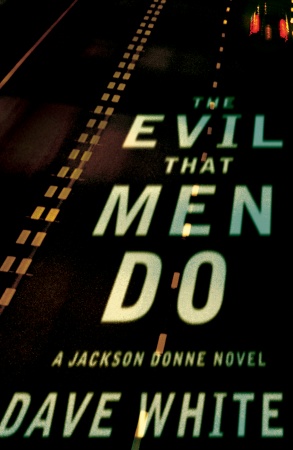
He was just nominated for a Shamus award for this first book, When One Man Dies (2007) and we were able get Dave to come to Jungle Red to talk about his new book, The Evil That Men Do. He is among the youngest winners of the Derringer Award, and has contributed to many anthologies and collections, including The Adventure of the Missing Detective and Damn Near Dead. Dave lives in my hometown in New Jersey, and has the courage to teach middle-school English.

JAN: Tell us about your protagonist, Jackson Donne, how you dreamt him up and how he has evolved through your two books? He seems to be a reluctant investigator, which for me makes him more interesting. Why did you develop him that way?

DAVE: Jackson Donne was born when I was in college. I was trying to do things a little different, show that Jackson was younger. So--thinking I was REALLY clever--I had him have a dead fianceƩ instead of dead wife.

I liked writing stories about him in a college setting and, since I went to Rutgers, it was easy to research. That's how he started, at least.

Donne's evolved since then, through the short stories, and then through the two novels. By the end of When One Man Dies, he's been stripped of his PI license, so he can't really work. Something has to draw him into a case.

So, yes, he's very reluctant in The Evil That men Do--even more so than he is in my first book. And there are lots of reasons for that. My guess is that if you're a PI, and you've been involved in as many deaths and shootings that Donne had been in the short stories, you're going to get some press. And not good press. The people that knock on your door are going to be looking for someone to help with the dirty and violent stuff. Not something you want to be involved in on a regular basis.

And since the last case he gets into before The Evil That Men Do basically destroys whatever shreds of life he has left, I don't think he'd be willing to do that sort of thing again. He's learning from his cases. He's learning that they only screw him up.There are three things I'm looking to explore with Jackson Donne. His family's past, his relationship to the cops he put away, and his mental state. The first two novels do both of those things. Fortunately, I feel there are still more of those aspects I can explore. So, Donne will keep evolving.

JAN: Dave and I are almost related, in that his uncle was one of my brother’s best friends and helped me clean up after wild parties when my parents went away. When I read Dave’s first novel, I was transported back home. Tell us how you exploit New Jersey as a backdrop.

DAVE: New Jersey is a GREAT place to set a crime novel. First of you have everything -- big cities (Philly and NYC) nearby, farms and forests to the south, (we are the Garden state) and bustling suburbia --which is what I like to write about. You can almost set anything in this state. And NJ is wonderfully corrupt in certain areas, so a crime novel is not a stretch of the imagination. That said, I'd love to be able to push some images about NJ across that show it's better than what people say about it. Which I believe it is. I love NJ and wouldn't want my stories to take place anywhere else.

JAN: Since you are an English teacher, did you toy around with Shakespearean plays or other writing first? Or did you always know you wanted to write mysteries? Also, since you started with short stories, tell us the pluses and minuses of the two forms of storytelling.

DAVE: Ha! I never tried my hand any plays or poems or anything of that nature. Every once in a while I'd sit down and say "Okay, this is going to be my coming of age love story. Not a crime story." And then ten pages later, I have a dead body. It just keeps happening. I love the crime genre. The first story I ever had published was a Sherlock Holmes story I wrote in fourth grade. It got published in the school literary magazine, and I dug it up 3 years ago and published it on my blog. If you want to read it, get ready to cringe, but here's the link (http://jacksondonne.blogspot.com/2005/03/fourth-grade-fiction.html)

The plusses of short stories are two fold. I wrote them first and to be honest, they got me some attention. It was a way to attract readers, build somewhat of a buzz. (Not a huge buzz, but hey every little bit helps.) Plus, when you do one well, you get some nearly instant feedback. But novels, man, novels are so much more fun to me right now. I love following characters along for a year or so. And I love getting to that point where the novel climaxes and you can put some wacky twists in there, really try to surprise the readers.


Both short stories and novels are difficult, and rewarding, but in their own ways.

JAN: Do you write during the summer months when you’ve got a break from middle schoolers or do you write all year long? How do you produce a novel a year?

DAVE: I write whenever I can. It's a yearlong process. I try to get a lot done in the summer, but it's still the 1,000 words a day thing. I just don't feel as much pressure in the summer. During the school year I have to treat it as a second job. Get out of school at 3:30, go running, sit at home and write for two hours. I'm trying to write fast, but I would much rather write well. Having both would be key.

JAN: Well, I think all the awards and nominations you’ve been receiving would attest to the writing well part. I’m wondering, what do your students think about having a teacher who writes mysteries. Are they impressed? Do you include it in the curriculum? Or use mystery to help their writing??

DAVE: It's tough to tell. My students are a sarcastic, fun bunch (8th graders? Sarcastic?), but they don't really give a lot away about what they think about the writing stuff. I hope they think it's cool. I know a few of them went out and bought it. I do use mystery to help their writing and reading. We compare short stories in the genre. I use it to show the form of writing a story. There are lots of things I use it for.

JAN: Your blog (http://www.jacksondonneblogspot.com/) is hysterical, and if I remember correctly, you had a blog long before you had a novel. Did it help you develop an audience or find a publisher? Any advice for writers trying to break in?

DAVE: To be honest, I don't know how much the blog helped. It must have helped somewhat. It was definitely a way to get my name out there. I mean, I've had my share of blog stalkers. Two people impersonating Abe Vigoda (including on who started a blog "100 Reasons I Hate Dave White") and PlotBabyPlot (plotbabyplot.blogspot.com) who apparently are out to get me. I have no idea who they are, but I find it hilarious. I love that sort of stuff.

It also helps me because it puts the real me out there. The books are dark and at parts very humorless.That's not me. I'm a total goofball, and I want a way to put that out there too. And what's interesting is, publishers, agents, fans see that sort of thing, that people are reading and I'm sure that helps.

But my advice for up and coming writers is to forget the blog. Don't make that your first thing. The first thing to do is write. Write and finish some short stores, get them out there. Publish them where ever you can. Webzines, Magazines, anthologies. Whatever you can do. Then blog The writing is the most important part. You can attract agents and publishers with the quality of your writing. The rest is fun.The rest is hoopdedoodle. The hoopdedoodle comes last. Being a writer means sitting down, doing it, and most importantly FINISHING IT. You'll never get half a novel published. So, the key--obviously--is to write it.

JAN: Thanks Dave, for visiting Jungle Red and more importantly, for teaching me the word hoopdedoodle. (it's a great word)

And to show what a good sport, he is, Dave agreed to take the Jungle Red Quiz!

Miss Marple or Hercule Poirot?
It’s always been Poirot for me. Pretty much because he’s the French version of the Penguin. Instead of “awk awk”-ing, he say “haw haw.” And he’s smart.

Sex or violence?

Heh. In books or in real life? I mean… the answer’s kind of obvious isn’t it? In terms of real life. However, in books, since I write noir-ish/hardboiled crime fiction, I like me some violence.

Pizza or chocolate?

Thin crust pizza from any Jersey thin crust pizza place. (The Emerson Hotel gets my nod.)

Daniel Craig or Pierce Brosnan?

As Bond? Daniel Craig. As a sex symbol… er… I don’t really have a choice, though in the later Bond movies, Pierce was starting to get a martini gut.

Katherine Hepburn or Audrey Hepburn?

Considering the only movie with either of them I’ve seen all the way through is Charade, I’m going with Audrey. Plus she’s hotter… and when she talks, she doesn’t sound like a car struggling to start.

First person or Third Person?

Originally first, lately third.

Prologue or no prologue?

No prologue. Unless you’re a writer who can pull it off. AKA, Dave hedges his bets. Your favorite non-mystery book?Well my two favorite novels are THE GREAT GATSBY and THE SUN ALSO RISES—both of which you can probably argue are some sort of hardboiled story in a way.

Making dinner or making reservations?

I like to grill… bratwurst, burgers, steak, chicken, turkey burgers. But I also like to go out. Man at this point, I’m just really bad at picking one thing, aren’t I? I’ll go summer time—make dinner—winter time, go out to eat.

And now, the part everyone was waiting for:

Tell us four things about you that no one knows. Only three can be true. We'll search for the fraud.
1. I’ve been banned from entering Canada
2. I really stink at beer pong.
3. I like the movie You’ve Got Mail.
4. I spent the night in jail for breaking a business shop’s window.

Wednesday, April 2, 2008

Roses for Rosemary! A Derringer Award nod...


Bouquets to our Ro!

This just in! The Short Mystery Fiction Society has nominated Jungle Red's own Rosemary Harris for a 2008 Derringer Award for her short story, "Growing Up is For Losers." It was published in "Still Waters" from Level, Best Books, 2007.
The story features one of the characters from her debut novel, "Pushing Up Daisies."

Congratulations!