
Announcing book winners! Lynn in Texas has won FOGGED OFF by Wendall Thomas and Diana aka Bibliophile has won THE DEADLIEST SIN by Jeri Westerson. Ladies, contact julia spencer fleming (all one word) at the Google mail, and I'll hook you up.
Jenn McKinlay: Very happy to have a fellow Arizonan on the blog today! Our historical mystery readers will be thrilled to have the super talented Karen Odden in the house as we celebrate the release of her latest Inspector Corravan mystery!

Karen: Thanks so much to the Jungle Reds and Jenn McKinlay
for inviting me today! I think this is my third appearance here, and
over the years, I have loved all the conversations about life,
travel, fears, writing, dogs, and books that happens on this site.
I don’t always comment, but I learn a ton from listening in!
When people ask me why I write mysteries, I can name
plenty of reasons. For one, there were unspoken words and
secrets in my house of origin that confused me deeply as a
child and resulted in a messy knot of perplexity. I think that
certainly contributes to my desire to craft the happier, smoother
version of that arc, from confusion to clarity, in mysteries. But
other reasons are that when I was twelve, I didn’t play bridge,
and it rains and snows a lot in upstate New York.
I grew up in Rochester, and most Sundays, my family would
go to my grandparents’ house, about twenty minutes away. They
lived in a sprawling one-story stone ranch in Bergen, a very rural
town with one blinking traffic light and acres of pine trees. On
sunny days in the summer, the whole family—my grandparents,
their five children, and the dozen or so grandchildren, of which I
was the oldest—went to the pavilion for picnics and volleyball
games (I was terrible, always picked last). But on days when it
rained or snowed, which comprised most of the year, the
grownups would gather in the living room at two folding card
tables and play bridge. I could hear their bids (“one no trump”
“two spades”) and mildly snarky chatter from the next room over,
which was the library, a square room with a stone fireplace and
one of those sideways-S-shaped chairs covered in
mustard-colored thick pile, almost like fur. It rocked clunkily
into one of two positions, forward and back, and there was a
light with an adjustable brass arm overhead. Now, usually my
grandfather occupied that chair to watch football, but once he
was in the living room playing bridge, it was mine.
On the floor-to-ceiling wooden shelves were all kinds of
books—some heavy-duty dull looking medieval history books,
with their navy or black cloth binding fraying at the edge and the
writing on the spine faded; my grandfather’s medical treatises,
with the transparent pages overlaying the skeletons with nerves
and organs; and my grandmother’s bodice rippers, with the
grammar corrected in pen in the margins. I’m not kidding; she
was particular about English usage and deplored phrases such
as “between you and I” and “he was taller than me”.
They were the natural continuation of books I’d read even
younger—Nancy Drew, of course, with her friends Bess and
George and Ned Nickerson. Remember her powder blue
convertible, and her indulgent father, Carson? And then
Trixie Belden, with Honey Wheeler and Jim, the red-headed
orphan the Wheelers adopted, and all the other Bob-whites.
Cherry Ames and Sue Barton, which depicted the nursing
profession as full of adventure and mysteries. Phyllis Whitney’s
young adult mysteries and Elizabeth George Speare’s
The Witch of Blackbird Pond which isn’t
really a mystery but is full of suspense, tinged with
romance.
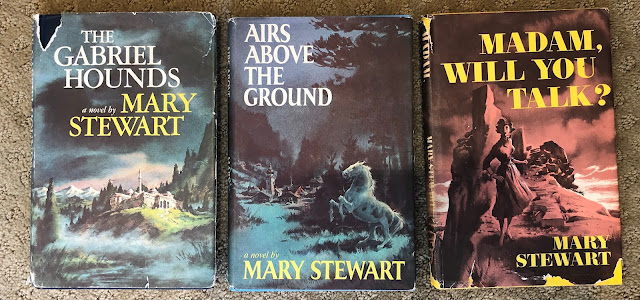
What was your favorite place to read growing up?
KAREN ODDEN received her Ph.D. in English literature from New York University and subsequently taught at the University of Wisconsin-Milwaukee. She has contributed essays and chapters to many academic books and journals; she wrote introductions to novels by Dickens and Trollope for the Barnes and Noble Classics Series; and she served as an Assistant Editor for the journal Victorian Literature and Culture. She freely admits she might be more at home in nineteenth-century London than today, especially when she tries to do anything complicated on her iPhone.

All of her mysteries are set in 1870s London. Her first novel, A LADY IN THE SMOKE, was a USA Today bestseller and won a New Mexico-Arizona 2017 Book Award. Her second novel, A DANGEROUS DUET, introduces readers to Nell Hallam, an ambitious young pianist in 1870s London, who stumbles on a notorious crime ring while playing in a Soho music hall. In A TRACE OF DECEIT, Annabel Rowe, a young painter at the Slade School of Art, must delve below the glitter of the art and auction world to uncover the truth about her brother's murder.








