Showing posts with label promotion. Show all posts

Sunday, April 2, 2023

What I'm Writing by Jenn McKinlay

First, the winner of Ellen Byron's HERE COMES THE BODY is Judy! Please email Ellen at: ellenbyronla at outlook dot com


Jenn McKinlay: I think it might be easier to ask me what I'm not writing. It feels like my deadlines seem to stack up no matter how hard I try to stay ahead of them. So here's what's happening...

We are 45 days from the release of SUMMER READING on MAY 16th! I am in a world of promo writing, which includes articles for Barnes & Noble, Writer's Digest, and Debbie Macomber's Magazine. I also have ten different Q&A's to answer and a seemingly endless number of blog posts to craft. I appreciate the opportunities--I do!--but sometimes it's A LOT. 

On the upside, SUMMER READING got a STARRED REVIEW in Booklist, so I'm very giddy (and relieved) about that!

BUY NOW

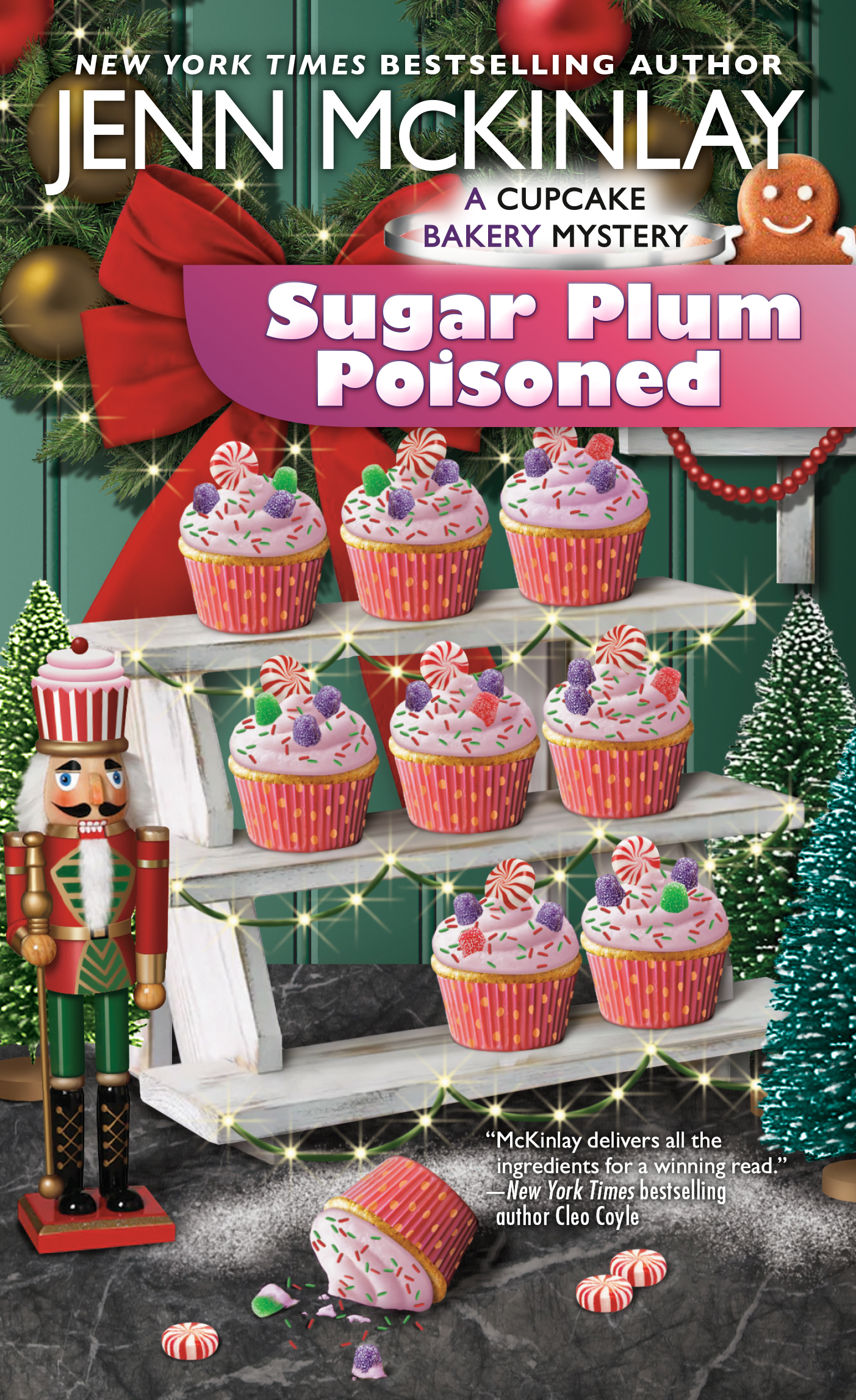
I finished the page proofs for SUGAR PLUM POISONED and just turned them in a few minutes ago. YAY!

OCT 2023

Lastly, I'm writing the first draft of my next women's fiction romcom LOVE AT FIRST BOOK that was due a few weeks ago but whose resolution is eluding me. I feel like I am writing the book without an ending. Ugh. Truly, for me the plotter this is maddening.

I have no snippet to share at the moment because I am gassed. But I do have a question for you, Reds and Readers! What online promotional items draw you to an author's work? Blog posts? Q&A's? Podcasts? Memes? Time is such a finite commodity, I'm trying to figure out the best place to expend my energy. Any input welcome!


Sunday, August 1, 2021

What We're Writing Week: Imposter Syndrome by Jenn McKinlay

Howdy! I'm currently writing a book that is due in September even though I haven't received the contract for it and I can't tell you anything about it since it isn't legally locked down (that pesky contract thing) yet. Shortest blog post ever, am I right?

I'm sure there are authors out there clutching their pearls and wondering why I would write a book when I haven't signed the contract yet but the truth is I do this all the time. Last year, I wrote two books before I received the contract (pandemic issues). But I'm a speedy writer and I figure if the worst case scenario happens and the offer blows up, meaning the publisher changes their mind, I will have a completed book to shop elsewhere or publish on my own, so I don't consider it a big deal. But it is a little weird. I can admit that. 

I am also writing a lot of blog posts and interviews to promote my upcoming August 10 release WAIT FOR IT


It has been the recipient of a very lovely starred review from Booklist, which reads in part: 


I have to be honest, that sort of high praise gives me an itchy case of Imposter Syndrome, like, was it a fluke? Did I just get lucky with this book? Can I keep it up in the next book? I think being a writer is 75% self doubt and 25% ignoring said doubt and writing anyway. At least it is for me.

So, what can I share with you? How about a snippet from today's work in progress for Writer's Digest? It's called Say What? Five tips for Writing Authentic Dialogue. Here's tip number one:

1. Listen to people. I am the worst dining companion in the world because I will spend the entire meal listening to the conversations of the diners around me rather than converse with those who are with me. So rude, I know. Then I report back to my tablemates, who generally roll their eyes unless it’s something really good like an argument or a breakup. 


It's so important to listen to people talking in real life, not on television (scripted) or online (edited) but actual people living their daily lives. People do not speak like robots. If your dialogue reads like a conversation between C3PO and a Stepford wife, I am out and your book has probably taken flight and is tongue-kissing a wall somewhere. In real conversations, there are starts and stops, ums and ahs, interruptions, swears, and slang. All of those traits need to lightly season your characters’ dialogue and give it a rhythm or cadence that engages the reader as if they're listening to a real conversation. So, listen, listen, listen. 


Of course, writing think pieces about writing for other authors also gives me a scorching case of, you guessed it, Imposter Syndrome. This is ridiculous given that I have fifty books under my belt but there it is. Even after all of those books, every manuscript is a new challenge, a new K2 to climb, and I never feel fully prepared and yet somehow, by putting one word after another, I finish the book aaaaaand I still feel like a fraud. I think the condition might be chronic. LOL.


Sure, no pressure.

So, how about you, Reds and Readers, do you ever suffer from Imposter Syndrome? When? 
Why? How do you manage it?


Friday, March 9, 2018

Publishing Surprises

INGRID THOFT

Every Q&A I do with a writer always includes this question:  "What has surprised you most about becoming a published author?"

A common response is how welcoming and supportive the mystery/thriller community is to newcomers.  For a group that murders on a regular basis, where actually quite kind.  On Wednesday, Mike Lawson mentioned the need for self-promotion as being a somewhat unwelcome surprise.  I would second the vote for the inclusive nature of fellow writers, but I also have another surprise to add.  I was surprised how much being published didn't change the work itself:  It didn't get easier!  Each book presents its own challenges and having a contract and an editor don't change that.

What about the rest of the Reds?  What has surprised you most about (or since) becoming a published author?


HANK PHILLIPPI RYAN:  Huh. Interesting. Of course, as you say, the enthusiasm and congeniality of my colleagues. Astonishing. AND the wonderful people at events. I am constantly delighted with the level of welcome I receive.  But I wasn't surprised about the personal pressure to consistently be better, or the intense need to hurry hurry hurry. The level of how much stuff there is to do, though, is really incredible. I have massive to-do lists, and they grow and grow. This is not in the nature of a complaint, by any means--but the work that accompanies the writing is endless. Ah--I hope it's endless, right?

HALLIE EPHRON: I kept thinking it would get easier, but it hasn't. Not for me, at least.  At Sleuthfest this week Andrew Gross talked about how, as a writer you're harvesting your own experiences, and soon you run out of the low-hanging fruit. So true. That's one reason it gets harder -- you don't want to repeat yourself. But also, as Hank says, you keep raising the bar on yourself.

JENN McKINLAY: Honestly, I agree with all of the above. The writing community is amazing. I feel fortunate to have made some of the best friends of my life within it. Also, the amount of promotion (ugh) and that the writing does, actually, get harder was unforeseen, but it makes sense if you're striving to make each book better. What surprised me beyond all that was what little control I have. After the first contract, I thought I had wiggle room. Nope. After I hit the NYT, I thought, now I'll have more say. Nuh-uh. I am still mostly the content creator with very little input on the cover, the marketing, the schedule, etc. Mostly, I'm fine with it as writing is what I want to be doing but there are days...ahem.

RHYS BOWEN: Oh, how I agree with the warmth and generosity of the mystery community. I think all of us have developed real and close friendships among writers who should have been considered our rivals. And I agree too that it doesn't get easier. I am not an outliner and the first fifty pages of every book I write find me in pure panic mode. And the stakes seem to get higher with each book, especially after one wins a few awards. Each book has to be better or at least as good as the one before. It's a challenge after 40 books to make the next one fresh and exciting.

The Reds, prepping to write each day
Another surprise, and it's a humbling one, is how few people will know who you are. You say you write mystery novels and they say what's your name, and then they shake their heads and say "Never heard of you!"

DEBORAH CROMBIE: I was not surprised by the amount of self promotion--I'd been well-prepared by published friends and mentors. BUT, I could never, in the early nineties, have anticipated social media and the presence required there! Nor did I anticipate the sheer amount of non-writing work involved with being a writer. Or the fact that books just keep getting harder, or at least they do for me. As Hallie mentioned, trying not to repeat yourself becomes a big issue.

But on the very plus side, although I'd learned pretty early that writers were generally a friendly bunch, I continue to be amazed by the strength and generosity of the mystery community. I wouldn't trade it for anything!


JULIA SPENCER-FLEMING: Since I agree and would repeat everything already said, may I mention money? Don't worry, I'm not going to mention figures, but after hearing time after time after time that it's impossible to make a living as an author, it was a happy surprise to discover I could, in fact, support myself (and the family) as a novelist. 

The stories about financially successful writers always seem to focus around the blazing "It" debut of the year whose author got a $600,000 advance, or it's someone who's an international bestseller with a TV show/movie spin-off. You seldom see stories about authors like, well, many of us - people who write popular books year after year (well, not me, obvs., but the rest of you do!) growing their readership until sales and advances reach the point where they don't need a day job. 

When I talk to young people, that's one of the key messages I try to get across - you CAN make a living as an artist. 


Your turn!  Do you have tales of publishing surprises or a publishing question?  Ask away!

Monday, June 5, 2017

Author's Virtual Assistant Jenel Looney!


Do you have a virtual assistant? If not, would you like one? If you do have one, what do you find most helpful? If you don't know what one is, keep reading!

Jenn McKinlay: I do not. I love the idea of a virtual assistant but, honestly, I am such a control freak I'd have a very hard time giving up any control of my stuff. Plus, I really love playing with apps. I do have young, hip librarian friends that step in and help with the grunt work of contests and mailings, when needed, but mostly, it's just me.

Hank Phillippi Ryan:  I’d adore to have a virtual assistant, but I always worry that it would take longer to explain to someone what to do than to do it myself. How does that work? And I’d love to have a real person come to my house to help with mailings and contests…but again, I always write personal messages and there’s no one who can do that with me. And sometimes I wind up doing that at midnight, or whatever, so that might not be the most convenient. Anyway. I’d love some advice on how to get a virtual assistant relationship to work successfully—I know there’s a lot of time I spend dong something that someone else should be able to do—but I’m not sure what that something is.   

Ingrid Thoft: Alas, I do not have a virtual assistant.  I suspect that, like Jenn, and given my self-identification as a "control enthusiast," I might have trouble letting go of the reins.  I'm still trying to make the transition from a paper calendar to a completely electronic one.  I recently went so far as to download a to-do list app to my phone, which felt pretty gutsy!  I'm curious to learn about must-have apps from Reds and readers.

Jenn: Oh, "control enthusiast" made me belly laugh, Ingrid!

Deborah Crombie: Honestly, I'm not even sure what a virtual assistant does. I have had a real part-time assistant a few times, but it only ever worked for me when it was my friend who was between jobs and was WAY overqualified to be doing stuff for me. And I have found that having someone come in and work totally blows my writing time, in which case I might as well do things (or not...) myself. 

Hallie Ephron: What I need is someone to go to the bank and post office and grocery shopping for me. Someone to buy a light for my dining room and get it installed. Clip my hedges. Please. 
The career work I need to do myself... until that happy moment when there is SUCH a clamor for my presence that I'm overwhelmed. Then virtual assistant? Bring it on!  But really, why virtual? Why not actual personal assistant?

Jenn: I hear you, Hallie! I think we need a butler or a valet or just someone named Jeeves at our beck and call.


Jenel Looney in a fetching hat!
And now to answer all of our pressing questions, here is virtual assistant extraordinaire: Jenel Looney!

True confession, I've done some amazing promotions with Jenel and invited her here mostly so I could pick her brain and now you can, too. You're welcome!

    
How did you come to be a virtual assistant? What do you love about it? What do you find most challenging?

I had gone to grad school for writing popular fiction, but had lost the dream of being a writer. I was looking for a new career, and I knew that one of my classmates and friends had a virtual assistant, my dream job. That friend was Susan Mallery, a fabulous romance and women's fiction writer. I asked Susan how much she paid her VA just so I could figure out whether I could really make a living at what sounded like a made-up job. The math worked, and as it turned out, Susan was looking for a new assistant. I've been working for her since around August 2008, and since shortly after that, for Kate Carlisle and Maureen Child, as well.

The thing I love the most about being an author's virtual assistant is also the most challenging—it's constantly changing. In book marketing (and probably all marketing), you have to keep adapting and trying new things. When something works, everyone starts doing it, and then it doesn't work anymore. I have never, not for a minute, been bored at this job.

    What do you consider your main function as a virtual assistant for authors?

Marketing. It used to be, authors were competing against other books that came out at around the same time. With the advent of ebooks, books never go away. There is no longer a limited shelf life, which means you're competing for readers' attention against an ever growing number of books. The challenge is to come up with new things to get readers excited about the book you're promoting.

For example, in ONCE UPON A SPINE, Kate Carlisle's latest Bibliophile Mystery, bookbinder Brooklyn Wainwright solves a murder linked to a rare first edition of Alice's Adventures in Wonderland, so Kate and I came up with the idea of making a custom set of ONCE UPON A SPINE playing cards. (In honor of the cards that come to life in Alice.) Every face card is holding a different Bibliophile Mystery and a different murder weapon.

Kate is doing 30 days of giveaways in the Secret Room at KateCarlisle.com, which is how we're using the cards to drive membership on her mailing list and get readers excited about the book.

     As you promote your authors on multiple platforms, I imagine you see their functionality in a different light than most people. What do you think is the most essential place for an author to build their audience? Website? Facebook? Twitter? Other?

Mailing list, 100%. That's the only method of communication over which you have any control. Any of your social media properties could be taken away from you in an instant. (They probably won't be, but they could.) Everyone with a Facebook business page knows that you often get frustratingly low reach with an important post.

Don't get me wrong, Facebook is valuable, but I recommend that authors use it in part as a tool to build their mailing list. Also, targeted Facebook advertising can be very effective. Play around with different audiences so you're not always advertising to the same people.

When a book is first released, I think the most effective advertising an author can do is to people who are already her fans. It's easier to motivate a current reader to buy your new book than it is to motivate someone who has never heard of you to buy it. So when a book is first out, I suggest targeted advertising to people who have liked you on Facebook, and to people who are on your mailing list.

Instagram gets more and more interaction all the time, and I think it's valuable. Twitter is like cocktail party conversation—if you happen to be in the right spot at the right time, you can be impacted by it, but the conversation flows so fast that I'm not sure you sell a lot of books on Twitter. An exception to this might be for live-tweeting during specific events, like when Kate Carlisle live-tweeted during the airings of her Fixer-Upper Mysteries on Hallmark Movies & Mysteries.

   What metrics do you use to determine the success of a promotion? Reader engagement? Book sales?

The most frustrating thing about marketing is that it's rare that you can draw a straight line from this promo to that sale. That said, book sales are always the ultimate metric. It's just that we can't ever really know whether they came from our promotional efforts—with traditionally published authors, at least. Self-pubbed authors have more immediate sales information at their fingertips.

I'm quite nervous about a promotion I'm coordinating right now for Susan Mallery. Susan invited her readers to sign up for three Secrets of the Tulip Sisters bookmarks to promote her summer hardcover. Thousands of readers signed up, and each of them will receive the three bookmarks. The first was mailed on June 1. The second will be mailed on June 22, and the third will be mailed to coincide with the book's July 11 release date. On the back of each bookmark, there's a secret contest, driving readers to secret pages at TulipSisters.com where they'll watch secret videos of Susan talking about the book.

This is a complete experiment. Susan is always looking for ways to connect with and reward her readers, so in terms of goodwill and brand awareness, I already consider this a win. But our hope, of course, is that it will also drive early book sales. Here's the thing: we'll never know. If sales increase over last year's hardcover, it's probably because of a number of things—the bookmark promotion, the efforts of Harlequin's marketing department, and the simple fact that Susan consistently writes books that readers love. No amount of marketing matters without a great book to back it up, because when readers discover a good book, they spread word-of-mouth.

     You create a lot of online content for your authors. Seriously, you're amazing! What are your favorite tools/apps to use? How much have you had to stretch yourself to keep up with technology?

I have a subscription to Adobe Creative Cloud, so I use Adobe products—Photoshop, Illustrator, In Design, After Effects—to create most images and videos. But there are a few free apps that I use regularly.

Spark Post – Has an extensive library of free images that you can use to create a graphic with text—a still image or a 4-second video—or you can upload your own image to use in the graphic.

Hyperlapse – Makes high-speed videos, which are very eye-catching.

Boomerang – Makes a brief, looping video based on a burst of photos. Again, catches the eye.

     For authors looking to hire help, what should they look for when hiring a virtual assistant?

That magical combination of good ideas and a killer work ethic. As with writing, ideas are worthless unless they're executed.


And now, readers, Jenel has a question for you: What apps do you love for creating social media content?

Jenn: Apps! I love apps. Seriously, it's a problem. My most favorite for easy to create promo slide shows with music is Ripl but for editing and pasting book covers onto cool backgrounds with book quotes or blurbs, I adore Pixomatic!

Friday, March 13, 2015

Do you Have a Brand? Great Insights from Jennifer Fusco

RHYS: When I got my first contract to write mysteries I thought (naively, as it turns out) that I'd write a book, send it off to the publisher and that would be that. They would do all the promoting and I would collect the royalties.
Well, no. As I soon discovered, publishers may pull out all the stops for the really big names, but for most of us we have to work just as hard publicizing the book as we did writing it. And frankly how many of know where to start? So this post by Jen Fusco is particularly useful. How to let people know what they are getting when they see one of your books. How to build your brand.

So please, take it away, Jen.


What is brand?
By Jennifer Fusco


            Over the years, I’ve talked about the importance of building an author brand, why it’s necessary and what the benefits are for having a brand. I’ve also learned that brand means different things in different genres. And, while that’s true, at its core brand is perception. Brand means the author’s identity. Collectively, it is how the author wants people to think, feel and talk about their work. It is how the author will be known and what he or she will be known for. Brand identifies the author in the mind of the reader and delivers on the promise it makes to the reader through their work. 

Brand has existed long before authors assumed they need to create a brand for themselves. Brand pioneer Walter Landor (1935-1995), founder of Landor Associates, left his mark in the business world by helping to increase the recognition of some of the world’s top companies, including, Levi’s, Kellogg’s, and Bank of America. Landor is quoted as saying, “Products are made in the factory, but brands are created in the mind.” (http://www.areaofdesign.com/inthespotlight/landor.htm)
Yet, you, the author have an advantage over industry. Brand must appeal to the emotions of the consumer, and an author’s most powerful tool to support their brand is the emotions they evoke from their readership.
Some authors choose to have a brand statement, that is to say they craft a 5-7 words statement which identifies and introduces their work to a potential reader. Others let their work and cover art speak for the brand itself. The choice is up to the individual author. However, if you are interested in crafting a brand statement, here are some tips to get your started:
Write down the answers to the following questions:
·        What is it about your work that speaks to your passions?
·        What makes you unique?
·        How would you describe your voice?
·        Look at your body of work. What are the common themes?
·        Write two or three power words associated with your book. (Examples of power words are: Thrilling, Sexy, Steamy, Murder, Forbidden, Daring, Confessions, Stunning, No-risk, etc.)
·        Answer the question, what is your book’s emotional hook?
Examine the answers. Circle the power words. Then, using the selected power words, compose a statement, in less than ten words, that describes you as well as your work while incorporating the answers to the questions above. It sounds like a chore. It is. But, give the exercise a try and see if you like the results.
     Keep in mind, brand is more than just a statement. You can create a brand my blending your work and your persona. Our own Hank Phillipi Ryan says, “People want to know what they're getting. They don't want to have to guess. Having a good brand means you're reliable, dependable, and desirable. It means if they liked what they got the last time, they're going to get it again. That’s good.”
     So, do you have a brand? If so, what is it? How did you create it? And what tips would you give to others for creating theirs?

RHYS: And Jen did not mention that she has written a definitive book for writers!  Ask her questions.