Showing posts with label The Shining. Show all posts

Friday, November 9, 2018

Another Tantalizing Question!


See if you can. 


That Time I Did A Show With Harry Houdini

Thank you for letting me visit today! The third Lila Maclean Academic Mystery, The Spirit in Question, is set in a haunted opera house. For research purposes, my family journeyed up to the famously “active” Stanley Hotel in Estes Park, Colorado, which was the inspiration for Stephen King’s The Shining. 

And there, master magician Aiden Sinclair performs at the Stanley in Illusions of the Passed: A Theatrical Séance. It was a truly remarkable experience.

Before the show began, we were invited to browse a table set up with various historical artifacts which Aiden has collected over time—for example, items from the Titanic and objects from the hotel’s original owners. But as I circled the table, it was Harry Houdini’s playing cards that drew my attention immediately. 

If you read the author’s note at the end of The Spirit in Question, you’ll see that the opera houses in Colorado did in fact host an array of luminaries, such as Harry Houdini, Oscar Wilde, and others. Fascinating stories—and pictures—kept surfacing in my research. And there were Houdini’s cards, right in front of me! Truth be told, I was itching to lift up the glass and touch those cards but managed to restrained myself. Barely.

During the show, we witnessed one amazing thing after another, performed with the help of audience members. (And maybe some ghosts? Seriously, it all remains inexplicable.) At first, we suspected the people in the audience were planted. But then Aiden asked if anyone knew what Harry Houdini looked like. My hand was in the air before I was even aware of moving—it was all that research—because yes, I did know. When he consequently invited me onstage, I immediately regretted it. Stupid hand. But it was too late, so up I went. 

Aiden pulled out the deck I’d seen earlier and reminded everyone that these belonged to Harry Houdini. After a thorough shuffle, he asked me to draw a card and look at it without showing anyone, including him. He gave me the entire deck and instructed me to place the card on top, put both hands around the desk, and think about what I’d drawn. He also told the audience to think of a card—any card—and to concentrate on it.

“Now imagine,” he said to me, while strolling around the room, “that Harry Houdini is standing behind someone and you’re going to tell me who it is. Concentrate on the card and also see him here with us now.” 

Now this part is extra-weird. As I sat there, thinking of Harry Houdini and my card, the deck seemed to generate energy—within moments, my heart was racing and my hands shook, as if I’d been given a shot of adrenaline. 

I am not making this up.

After a few minutes, Aiden asked me to point out the person I saw Harry standing behind. To be honest, I didn’t actually seea figure, but I wascompletely drawn to someone sitting in the middle of the room, so I identified her. Aiden asked her to stand and tell us what card she was thinking of, which she did. It was the king of diamonds.

Then he invited everyone who had chosen the king of diamonds to stand and, out of the hundred or so audience members, only two did. 

When he asked me to reveal my card, the whole room gasped. It was the king of diamonds. 

So, to recap, only three people had the same card in mind as the one that I’d pulled. Three. And I’d led Aiden to one of them on the first try. 

I cannot explain it. And I most certainly was not a plant. 

So...thank you, Harry Houdini.

HANK: Oooh. HOW did that happen?v I always think people are plants (you know what I mean), but Cynthia was not!  Reds and readers, what do you think?  Cynthia, on further reflection, what do YOU think?

----------------------------- 

Cynthia Kuhn writes the Lila Maclean Academic Mystery series: The Semester of Our Discontent, an Agatha Award recipient for Best First Novel; The Art of Vanishing, a Lefty Award nominee for Best Humorous Mystery; and The Spirit in Question. Her work has also appeared in McSweeney’s Quarterly Concern, Literary Mama, Copper Nickel, Prick of the Spindle, Mama PhD, and other publications. She is professor of English at Metropolitan State University of Denver, president of Sisters in Crime-Colorado, and member of the multi-author blog, Chicks on the Case. For more information, please visit cynthiakuhn.net.

The Spirit in Question is now available at booksellers and online:
Amazon:amzn.to/2unzWF9
Barnes and Noble: bit.ly/2NlGFXe
IndieBound: bit.ly/2vH7ChC
Kobo: bit.ly/2NVbi71

Website: cynthiakuhn.net
Twitter: @cynthiakuhn
Facebook: www.facebook.com/cynthiakuhnwriter
Amazon Author Page: www.amazon.com/Cynthia-Kuhn

Blog: chicksonthecase.com
Wednesday, June 26, 2013

"Push yourself. That's something no one can do for you." - Anonymous


ROSEMARY HARRIS: Today Vincent O'Neil is back to tell us how he came to write his latest novel, Interlands. He did it by stretching himself...
 
VINCENT O"NEIL:   A horror novel first inspired me to try my hand at writing. When I read Stephen King’s The Shining as a teenager, I was so impressed that I decided to see if I could pen something that other people might enjoy. My first book came from that inspiration, and yet decades later I had not yet written a horror novel.

 
I deeply enjoy scary stories, so I decided to give it a try. Having read Poe, Shelley, Stoker, Lovecraft, King, and many others, I already had a good base in the macabre. Raised in New England and living there now, I have personal knowledge of a region absolutely loaded with supernatural legendry. Researching the folklore of the northeast led me to another first, in that I decided to base the story in Providence, Rhode Island. This was a departure for me, because the towns in my previous works were all made up.

At that point I recognized how much the new novel was moving into areas I hadn’t explored before. After acknowledging that, I decided to do one more thing I’d been meaning to do, and make my main character a woman.

All of my books have had female characters in them, many of them playing key roles, but until now my protagonists have all been male. Having decided to stretch my writing in both genre and location, it seemed appropriate to add one more challenge and cast a different gender in the starring role. Oddly enough, the toughest part of doing that was the decision to go ahead and try.

I discovered something important while building the story of Angie Morse, a grad student combing the New England woods for a lost stone obelisk. When writing stories of supernatural horror and creating protagonists of a different gender, the same admonition applies: Don’t overdo it.

Here’s what I mean: Describing the scratching sounds in the wall of the silent library is far more frightening than simply having the Thing leap out and attack. And focusing on the presentation of a main character who is relatable and engaging is far more productive than layering the role with thoughts, discussions, and actions that allegedly represent the character’s gender.

Creating a protagonist who is complex and interesting makes it simple to then weave indications of gender into the story, and this in turn lets the character behave naturally.
 
Instead of leaning on stereotypes, this approach allowed me to turn Angie loose on her quest and let her demonstrate what she was all about. Mentally tough but abundantly human, highly driven (some would say obsessed) but shrewdly calculating, she’s willing to take some chances in order to accomplish something beyond the norm. 

Stretching herself in order to possibly achieve something both transcendent and valuable. Now why does that sound so familiar?

ROSEMARY: More good advice from good pal, Vincent O'Neil. If you're lucky enough to be going to the New England Crimebake this fall, check out his workshop on self-publishing and thank him in person. If you're not going, please visit his website at www.vincenthoneil.com 
 

Wednesday, August 12, 2009

A Quiet Belief in Roger


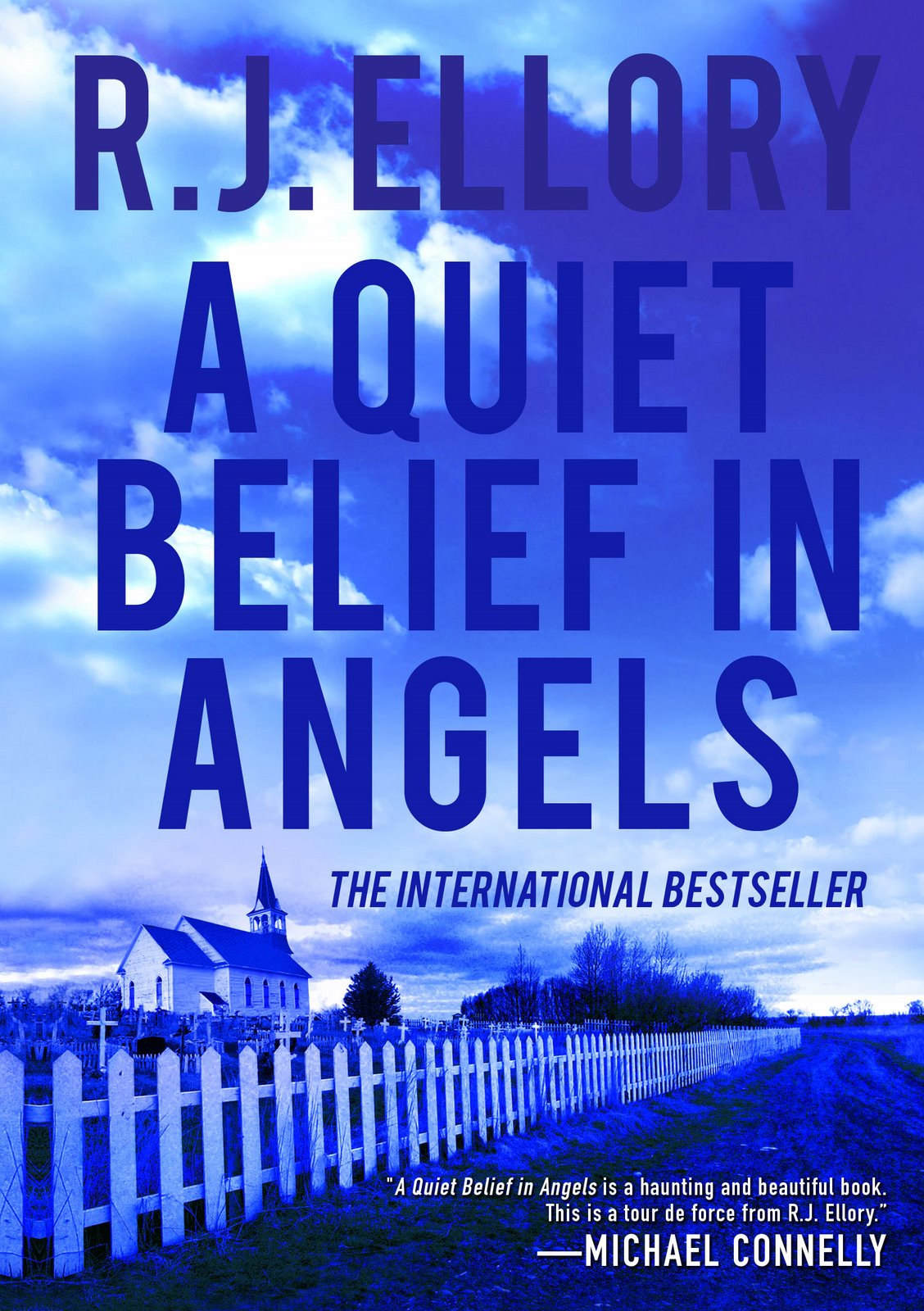
I confess, I am smitten. Anyone who knows me knows I have a thang for Roger Federer, but a new Roger may have quietly supplanted him this summer. No not on the tennis court. Um..in my bedroom, where I have not been able to put down A Quiet Belief in Angels, the first book by RJ (Roger) Ellory to be published in the US. (Note: for some reason the cover of this book..which is a gorgeous warm orange and brown..wants to be blue on my computer. Fingers crossed it will appear in the right color on the blog.)


Already an internationally bestselling author, Ellory hits the US with a novel that's already been called "a beautiful and haunting book.."... Michael Connelly, " a mesmerizing tale.."...Clive Cussler, and "a riveting mystery as compelling as it is moving" ...Ken Bruen.
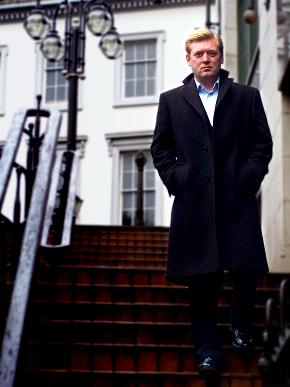
I call him a terrific guy who is kind enough to visit with us today and tomorrow.

1939. In the small Georgia community, a 12 yr-old boy learns of the death of a young classmate, a girl he quietly loved. The murder is the first in a series of killings that will plague the community for the next decade. The boy and a group of friends vow to watch over the girls..but the murderer evades them and fifty years later he confronts the nightmare that has overshadowed his entire life...


But I'll let him tell you about it.


RJ: Last year I did more than one hundred and fifty public events in England and abroad, and the question I am forever asked is, ‘Why, as an Englishman, are you writing books set in the United States?’

For me, the answer couldn’t be easier. Paul Auster, a wonderful New York novelist, said that becoming a writer was not a ‘career decision’ like becoming a doctor or a policeman. You didn’t so much choose it as get chosen, and once you accepted the fact that you were not fit for anything else, you had to be prepared to walk a long, hard road for the rest of your days.
And that was the case for me when it came to choosing the subject matter I wanted to write about.


I was orphaned at seven and spent the next nine years living at various schools. I read voraciously. That’s what I did to fill my time. Cross-country running, table tennis and reading. I read everything I could get my hands on. Through Conan Doyle and Agatha Christie to Algernon Blackwood and HP Lovecraft, I read and read and read. And then I came across American literature – Steinbeck, Hemingway, McCullers, Harper Lee and William Faulkner. It was like coming home. There was a rhythm and a timbre and a poetry to this literature that I had never experienced before, and I fell in love.


When I was thirteen I contracted chicken pox. I was quarantined and left to my own devices for a good week or so. It was during this time – sequestered in a twelve-bed dormitory by myself, the locked door giving on to a black-and-white checkerboard-tiled corridor – that I read a book called ‘The Shining’. Half of it I didn’t understand, and the half that I did understand scared the hell out of me. It was then that I really grasped the power of a great novel, the fact that whereas non-fiction had – as its primary purpose – the conveyance of information, fiction had as its primary purpose the evocation of an emotion.


It was – coincidentally – another Stephen King book that propelled me to write. It was November of 1987. I was studying in the south of England, and a fellow student spent all his meal times and breaks reading a book. I happened to ask him what it was. ‘It’, he said, ‘by Stephen King’. And then he went on to detail how transfixed and captivated he was by this novel. It was then – in that moment – that a lightbulb went on in my head and I decided that this was what I wanted to do with my life. I wanted to write stories that would captivate and transfix readers to the same degree.


I started that night, and here we have too little time to discuss the twenty-two novels I wrote in the subsequent six years, most of them in longhand. Here we have too little space to detail the more than five hundred rejection letters I received from more than one hundred publishers, both in England and the United States, but what we will say is that in 2002, fifteen years after first putting pen to paper, my twenty-third novel was accepted for publication.


And that was just the start of the work!


Come back tomorrow for the story of how that persistence paid off in the second part of our visit with RJ Ellory, author of A Quiet Belief in Angels (Overlook Press, September 2009)