
Thursday, July 14, 2011

Guest Blog - Kate Flora introduces the Maine Crime Writers

Pretty much everyone who has hung around mystery and crime conventions over the past few years knows Kate Flora. Among her many hats she is a Goddess (the official term for a former President of Sisters in Crime National) and a much-acclaimed author in both the mystery fiction and true crime arenas. Kate's latest feat of derring-do, accomplished with her signature grace and style, is bringing together 10 of Maine's fiercely individualistic crime writers and fashioning them into a single, elite team to discuss books, the writing life and the state they all love, Maine.

To Be Or Not To Be – That Was The Question, by Kate Flora

As I perched on the verge of creating Maine Crime Writers, my teeter-totter question was pretty basic: on one end was my idea that bringing a group of Maine writers together to blog about living and writing in Maine would be interesting to mystery fans and those who love Maine; on the other, my fear that the blogosphere was already too crowded, and my worry that we wouldn’t have enough to say.

Silly, that last one, since we’re all writers, so I’m glad that creation won. After a flurry of e-mails about forming the group, getting a designer and all the rest, our ten authors were lined up and MaineCrimeWriters.com was designed and launched. And now, a little over a week into the process, it is looking good.

Every new post—from Gerry Boyle’s on the contrast between the real landscape and the one we imagine to Sarah Grave’s hilarious take on how you know you’re a Mainer—is a surprise and delight. Who knew there was a Moxie Festival, or that the beverage was good for hiding the taste of poison? Or how Barb Ross came to own a bed and breakfast in Boothbay Harbor?

We cover a wide swath of the state, from the Oxford Hills to Eastport, from China to Bailey Island, from Portland and near Portland to Boothbay Harbor, with a double dose of Camden. We write contemporary, historical, cozy, hard-boiled, suspense, and true crime. Mostly, we write series books with characters you want to follow and settings you want to explore. To introduce us, I asked the writers to give me a quick one or two sentences describing them and their work. And just like our blog entries, they are as varied as the writers themselves. See for yourself:

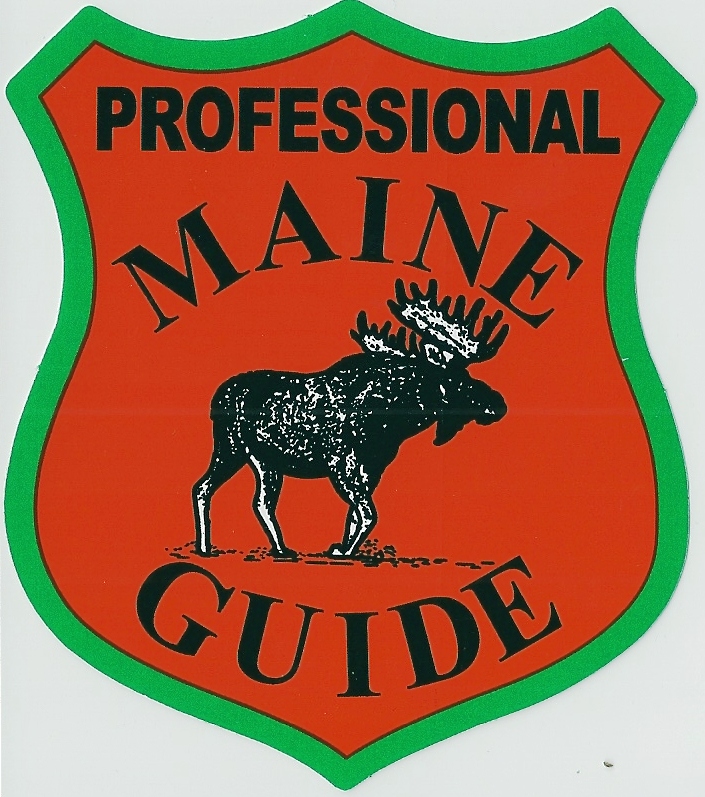
Paul Doiron is the author of two novels about Maine game wardens: THE POACHER'S SON, which was nominated for eight awards including the Edgar and the Anthony, and the best-selling TRESPASSER. He is the editor in chief of "Down East: The Magazine of Maine" and a Registered Maine Guide.
Sarah Graves' most recent book is KNOCKDOWN, the 14th in the "Home Repair is Homicide" series starring Eastport, Maine's favorite old-house repair enthusiast and reluctant sleuth, Jake Tiptree.

Lea Wait is convinced that, despite the date on her birth certificate, she had a 19th century childhood. In her latest, SHADOWS OF A DOWN EAST SUMMER, she manages to channel Winslow Homer to find out what really happened when two local girls posed for the famous artist in Prouts Neck, Maine in 1890.

Gerry Boyle's upcoming book is PORT CITY BLACK AND WHITE, his 11th crime novel. The book features a rookie, work-in-progress Portland, Maine, cop named Brandon Blake, who wants to put away bad guys and finds they do, indeed, lurk around every corner.

Full-time writer Kaitlyn Dunnett (aka Kathy Lynn Emerson/Kate Emerson) is the author of the Liss MacCrimmon Scottish-American Heritage Mysteries featuring a former professional Scottish dancer as an amateur sleuth. In the fifth title, SCOTCHED, in stores in October, murder plagues a small mystery fan convention taking place in rural Moosetookalook, Maine.

Realtor Vicki Doudera writes mysteries grounded in the world of luxury real estate, starring Darby Farr, an agent who solves murders, makes deals, and looks great while doing so, as well as the non-fiction guide, MOVING TO MAINE.

New York Times Bestselling author Julia Spencer-Fleming, whose latest is ONE WAS A SOLDIER, has only lived in Maine for 24 years. But she DID move to the town where Maine native Stephen King buried the tin box, if that counts for extra citizenship points.

In Kate Flora’s upcoming Joe Burgess police procedural set in Portland, REDEMPTION, Burgess deals with the suspicious death of high school friend who never recovered from their experiences in Vietnam. Kate bounces between strong women in her Thea Kozak series, cops in the Burgess series, and cops, wardens and victims in the challenging world of true crime.

In Barbara Ross first mystery novel THE DEATH OF AN AMBITIOUS WOMAN, suburban Police Chief Ruth Murphy must decide what price she is willing to pay for success. Barbara is also a co-editor at Level Best Books, publisher of award-winning anthologies of crime stories by New England writers.

Like his hero, Detective Mike McCabe, James Hayman is an ex-New Yorker who moved Portland and discovered he loved living in Maine. The first McCabe thriller, THE CUTTING, came out in 2009 and was followed by THE CHILL OF NIGHT last year.

Curious? You can find Maine Crime Writers at their blog, on Facebook, and on Twitter. One lucky commenter will receive a free copy of Julia Spencer-Fleming's latest hardcover, ONE WAS A SOLDIER.

Wednesday, July 13, 2011

EYES WIDE OPEN


Do you know Andrew Gross? We won't even talk about his cool and exciting past (you know about it, right?) because his future is so exciting. This week there was a full color ad in the New York Times about his newest book. EYES WIDE OPEN. How cool is that? He's a terrific and generous guy, and wonderful writer, and life with Andy is never a dull moment.

But in his latest novel, he explores new and sensitve territory. personal territory, that some authors would not be brave enough to tackle. And now on Jungle Red, describes meeting someone most of us will only encounter in nighmares.

On Jungle Red's Writer Wednesday, a chat with Andrew Gross.

EYES WIDE OPEN is a totally different kind of tale for me, and one that has been inside me a long time. More like a family memoir chocked with chills, it goes back to two real-life occurrences from my own past: the suicide of my twenty-one year old nephew last year; who was found at the bottom of a famous cliff in Morro Bay, California; and a chance encounter forty-two years ago with none other than Charles Manson. My nephew Alex was a severely troubled kid, who suffered from bipolarity and bouts of s chizophrenia, as did his dad, my old brother, Michael.

Like Charlie in the book, Mike was a wayward child of the Sixties, who bounced around the country, living in communes and on the street, wherever there was drugs and music, trying to live out his rock star fantasies. More than once he found himself tossed in jail for possession or vagrancy, or into the mental wing of various hospitals.

By the late Sixties he’d found his way out to Southern California, and ended up at a hippie commune under the sway of a dark, but charismatic figure who was trying to push his music himself. That commune was the Spahn Ranch outside of LA, and the person leading Michael was, of course, was Charlie Manson.

I met him when he came with up with my brother to our father’s house atop Benedict Canyon. Mike and my father had about the most tempestuous relationship a father and son could possibly have. My father was absentee, divorced several times, and Michael blamed him for much of what was wrong in his own life. And there was always a lot of accusations, finger pointing, profanity, competing for the same women, even physical fights.

I was fifteen that day, and visiting from New York. No one knew who the gaunt, scruffy, dark-eyed caftan-clothed hippie who came in with Michael was, along with a loquatious, over-selling sidekick who called himself a rock producer and may well have been Terry Melcher. Only that within minutes they were totally rejected and humiliated by my dad and a friend he had up there with him— and then left shouting, finger-pointing, my brother spitting out four-letter words and vows of revenge.

The scene is described in the book, and in real life, I remember Manson restrained, almost eerily-polite, holding Michael back, going on about “how you have to respect your fathers,” and thanking us all for our time “to let them talk for a while.” So polite, they almost seemed laced with a threat.

A year later, Sharon Tate and four others were brutally murdered on Ciello Drive, and my father, who never backed away from a tale he could tell over a few Rob Roys. claimed the group had somehow gotten lost in the hills above LA, and had been actually heading for him! My brother, in truth, was long gone by then, having left the ranch shortly after that, and was in Boulder at the time of the murders.

While you have to remember, Manson wasn’t Manson when I met him, and no one knew at that time who he was or what he would become; he was just another long-haired drifter Michael had connected with.

But I never forgot the look, nor did my sister who was there too—the kind of intense, spine-tingling aura that came from him, magnified by his later deeds. And those smiling, slate-colored eyes. I never had to conjure very hard to draw the creepy image to mind while writing the book.

In the end, Mike went back to California after his music career never blossomed. He met a gal in AA; married; settled in a sleepy Central Coast town, and lived out a secluded and highly medicated life, on welfare, as a ward of the state. And he had a son, and though Alex seemed spectacularly gifted in many ways—precociously smart and enough of a basketball whiz to attract college scouts- he inherited much of what made my brother’s life a failed one— the shifting bouts of charm and violence, anger and euphoria; a deep sense of blame amid the depressions and delusions of grandeur.

After he went out and purchased a firearm, which scared Michael and his wife Suzanne to death, they called the police to their home—one of many such times—and Alex was taken away in restraints, thrown in a hospital in San Luis Obispo, medically subdued, examined, assessed, but because he was over twenty-one, and, somehow deemed to be no danger to himself or others, he was released into the care of an unrestrictive halfway house in Morro Bay, a place completely unsuited for Alex and his state of mind.

On the second day, he said he was going out for a walk and never returned, and the next morning, was found on the jagged sea rocks at the bottom of the Morro Bay Rock, a breathtaking 600 foot mound of granite that rises above the harbor there, and ruled a suicide.


It was a poignant and sad end to a troubled, abbreviated life; in fact, it took many sad lives, as my brother’s and sister-in-law lives pretty much ended that day as well.

As writers, what do we have except to build a story out of life, and while EYES WIDE OPEN is not exactly Alex’s story, or Mike’s, or even the creepy, malevolent figure controlling things from jail on a thirty year vendetta, this book is my testament to him and I hope in the end bestows him, the way I told it, with a sheen of dignity and honor. EYES WIDE OPEN mixes in the themes of sons who collide with their fathers; mental illness; the LA music scene in the Sixties; a bit of lore from the garment business, and ultimately, a ruthless, jailed cult killer, whose evil runs as freely now, and as chillingly, as it did back then.


HANK: Thanks, Andy. That's--incredible. And we'll give away a signed copy of your book to a lucky commenter.


***************

Find more out about EYES WIDE OPEN on andrewgrossbooks.com, and be sure follow me on facebook (Andrew Gross author) and twitter (The__ Andrew Gross.)

Monday, July 11, 2011

True Crime Tuesday. The Case of the Missing Picasso

One thing we strive for in our books is a crime of great complexity--clever clues, deeply psychological motive, police baffled. Alas real life is seldom like that. Most crimes are ridiculously simple, and none more so that what happened in San Francisco last week.


A man walked into an art gallery, lifted a Picasso drawing from the wall and walked out with it. In broad daylight. He then hailed a cab and disappeared. Not so fast, however. We live in an age of surveillance cameras. He was picked up not by the gallery's cameras but by those of a nearby bar, walking past with a suspicous retangle under his arm and... big clue... he was wearing no socks. So it didn't take long for the police to find him. Mark Lugo, a 30 year old waiter from New York, staying at a high end hotel.


The Examiner says, "Lugo is accused of snatching the Picasso sketch “TĂȘte de femme,” valued at $275,000, from the wall of the Weinstein Gallery at Geary and Powell streets late Tuesday morning.
Lugo allegedly strolled into the gallery, plucked the artwork off the wall, then walked less than a half block to a cab parked at the nearby Handlery Hotel, police said.
A media frenzy followed the brazen midday heist. Lugo was tracked down after a cabbie directed police to where Lugo had been dropped off – the posh Hotel Palomar in downtown San Francisco, where he was staying.
Further investigation that included video surveillance evidence from restaurant Lefty O'Doul's, which captured the thief’s getaway, led cops to Napa.
Lugo was arrested while partying with pals at a Napa condo apartment, police said. Police say Lugo agreed to a police search in the condo, where cops say they found the artwork undamaged but without its frame.
Police say Lugo was preparing to ship the artwork to an unknown party


This had me thinking about how easy it would be to carry out a crime. It has a lot to do with Hutzpah. If I need to use a restroom when I'm in the city I walk into the foyer of a good hotel and find their sumptuous rest room. Nobody has ever stopped me. Why? Because I am well dressed and I walk througb that foyer as if I belong there.


I know people who have crashed weddings and nobody has stopped them. The best example was when John's grandfather was a judge. A man walked into the courtroom when court was in session, put up a ladder and removed the clock. It later transpired that he had stolen it. How's that for hutzpah?


So I've sometimes wondered whether I could pick up an expensive item in a high end store and simply walk out with it and nobody would try to stop me. Don't worry, I'm not a potential shoplifter, I'm just curious about how much one could get away with if one had enough confidence. A sweater from Nordstroms? An item from a museum? A Picasso?


Probably not so easy in these days of security cameras and tags on garments. But when I was growing up and the assistant in Harrods brought one twenty dresses to try on and then went away again.. did anyone try to walk out with a stolen dress under her fur? I bet they did.


I'm tempted to try--the publicity at my arrest might even sell a few books. So fess up, Jungle Reds. Has any of you been tempted to see if you could carry out a crime?






