HANK PHILLIPPI RYAN: Like gravity, or quantum physics, Gabriel Valjan is a force of nature. If you know him, you are cheering right now to see him here on Jungle Red. He's the most generous, most thoughtful, most outrageously supportive author in our writing-reading world. With no reason other than his true and honest passion, he constantly promotes and shares and publicists other authors' events and books and successes.
Most authors secretly whine a bit about how much promotion is necessary and expected for their books--but Gabriel, the amazing Gabriel, not only does it without being asked, but does it spectacularly!
Follow him here on Twitter, and be amazed. And awed.
So now, Reds and readers, the person whose face in in the dictionary when you look up "generous"--has a new book of his own.
"Wrung their bread from stocks and stones"
by Gabriel Valjan
The line above is from one of Robert Lowell’s lesser known poems, “Children of Light.” Ephesians 5:8 inspired his poem. I plucked the phrase for two reasons.
"Wrung their bread from stocks and stones"
by Gabriel Valjan
The line above is from one of Robert Lowell’s lesser known poems, “Children of Light.” Ephesians 5:8 inspired his poem. I plucked the phrase for two reasons.
One, Lowell confronted the violence that is the history of New England. Two, I admire the metaphor of finding sustenance from common but difficult materials. Boston is a city haunted by history, most of it unpleasant, but rich for an author of crime fiction, such as myself.
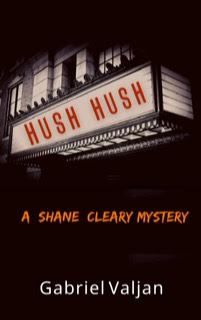
I write about Boston in the 1970s, a time of systemic corruption and institutional racism. A murder in Boston’s Red Light District inspired my third Shane Cleary novel, HUSH HUSH, but I take the details in a different direction. (If you’re interested in both historical context and the crime, consult Jan Brogan’s Combat Zone.)
Like the poet, the mundane fed my imagination. Located on Columbus Ave. in Shane Cleary’s South End, Charlie’s Sandwich Shoppe has been serving customers since 1927. The young Sammy Davis, Jr. used to dance for change outside its doors. For decades, Charlie’s was the only place in Boston where black and white diners could sit and eat together.
To give you a sense of how bad race relations were in Boston, a riot broke out at Carson Beach in 1975 when black protestors tried to use the beach, and the desegregation of Boston schools and public housing was not completed until 1988.
Shane’s South End was a hotspot for traveling African-American and Latino performers who worked the club circuit in town and the burlesque houses in Scollay Square. Charlie’s was a safe space according to The Negro Motorist Green Book. If you know Charlie’s location, then you’re aware that Back Bay Station is nearby.
On the second floor, above Charlie’s, was the office of the first black union in the nation, the Brotherhood of Sleeping Car Porters. This union, under the leadership of A. Philip Randolph, organized strikes and campaigned for labor laws and racial equity, despite threats of violence. It is from Randolph that his protégé, a theology student at Boston University named Martin Luther King, Jr., had the dream of a March on Washington.
In HUSH HUSH, this history is folded into exposition without becoming didactic. The scene in Chapter 2 that unfolds becomes tense and relevant for readers. You can read it online in the Look Inside feature at Amazon for HUSH HUSH. A man double-parks his Cadillac in front of Charlie’s, two police officers stop, and the Q &A that ensues sounds procedural but it’s all subtext. Shane witnesses it and feels compelled to examine the facts of a case.
Bread wrung from stocks and stones.
History is all around us if we look for it. We should examine both the heights and depths, the dark and the light.
It doesn’t have to be as monumental as the Boston Massacre. It’s often forgotten history that fuels the imagination of writers, like how the Boston Common is the resting place of the colonial American and British dead, or that there’s a small plaque honoring an elm tree in the middle of the Common.
The tree is gone, and a memorial states that the Sons of Liberty assembled there, but it omits one sinister detail. The tree was where criminals, Quakers, and Native Americans were executed.
Has a page from forgotten history or an important public place inspired your writing?
HANK: That is such a thought-provoking question. And every time I walk on the Common, or in the Public Garden, I think about the people in history who have walked in the same place. It's either inspirational--or chilling. In The Murder List, the Boston Common bandstand provides a pivotal moment...for the very reason you suggest, dear Gabriel!
I write about Boston in the 1970s, a time of systemic corruption and institutional racism. A murder in Boston’s Red Light District inspired my third Shane Cleary novel, HUSH HUSH, but I take the details in a different direction. (If you’re interested in both historical context and the crime, consult Jan Brogan’s Combat Zone.)
Like the poet, the mundane fed my imagination. Located on Columbus Ave. in Shane Cleary’s South End, Charlie’s Sandwich Shoppe has been serving customers since 1927. The young Sammy Davis, Jr. used to dance for change outside its doors. For decades, Charlie’s was the only place in Boston where black and white diners could sit and eat together.
To give you a sense of how bad race relations were in Boston, a riot broke out at Carson Beach in 1975 when black protestors tried to use the beach, and the desegregation of Boston schools and public housing was not completed until 1988.
Shane’s South End was a hotspot for traveling African-American and Latino performers who worked the club circuit in town and the burlesque houses in Scollay Square. Charlie’s was a safe space according to The Negro Motorist Green Book. If you know Charlie’s location, then you’re aware that Back Bay Station is nearby.
On the second floor, above Charlie’s, was the office of the first black union in the nation, the Brotherhood of Sleeping Car Porters. This union, under the leadership of A. Philip Randolph, organized strikes and campaigned for labor laws and racial equity, despite threats of violence. It is from Randolph that his protégé, a theology student at Boston University named Martin Luther King, Jr., had the dream of a March on Washington.
In HUSH HUSH, this history is folded into exposition without becoming didactic. The scene in Chapter 2 that unfolds becomes tense and relevant for readers. You can read it online in the Look Inside feature at Amazon for HUSH HUSH. A man double-parks his Cadillac in front of Charlie’s, two police officers stop, and the Q &A that ensues sounds procedural but it’s all subtext. Shane witnesses it and feels compelled to examine the facts of a case.
Bread wrung from stocks and stones.
History is all around us if we look for it. We should examine both the heights and depths, the dark and the light.
It doesn’t have to be as monumental as the Boston Massacre. It’s often forgotten history that fuels the imagination of writers, like how the Boston Common is the resting place of the colonial American and British dead, or that there’s a small plaque honoring an elm tree in the middle of the Common.
The tree is gone, and a memorial states that the Sons of Liberty assembled there, but it omits one sinister detail. The tree was where criminals, Quakers, and Native Americans were executed.
Has a page from forgotten history or an important public place inspired your writing?
HANK: That is such a thought-provoking question. And every time I walk on the Common, or in the Public Garden, I think about the people in history who have walked in the same place. It's either inspirational--or chilling. In The Murder List, the Boston Common bandstand provides a pivotal moment...for the very reason you suggest, dear Gabriel!
How about you, Reds and readers? Or is there a place you think about in a different way because of a book? Or a place you wish you could visit because of a book?

Gabriel Valjan is the author of the Roma Series, The Company Files, and the Shane Cleary Mysteries. He has been nominated for the Agatha, Anthony, and Silver Falchion Awards, and received the 2021 Macavity Award for Best Short Story. He lives in Boston.
Gabriel Valjan is the author of the Roma Series, The Company Files, and the Shane Cleary Mysteries. He has been nominated for the Agatha, Anthony, and Silver Falchion Awards, and received the 2021 Macavity Award for Best Short Story. He lives in Boston.