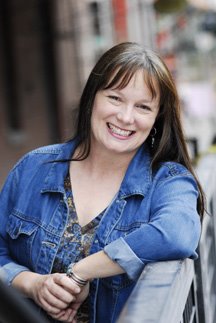
Christina Katz's reputation precedes her. I first heard about her from Writers Digest Books editor extraordinaire Jane Friedman who was raving about this hot-shot writer who was absolutely amazing at promoting her work and creating community, and this was before her first book WRITER MAMA had even come out. In promoting WM into one of Writers Digest's bestsellers, Christina turned what she was--a mother--into that elusive gold we writers search for, "platform."
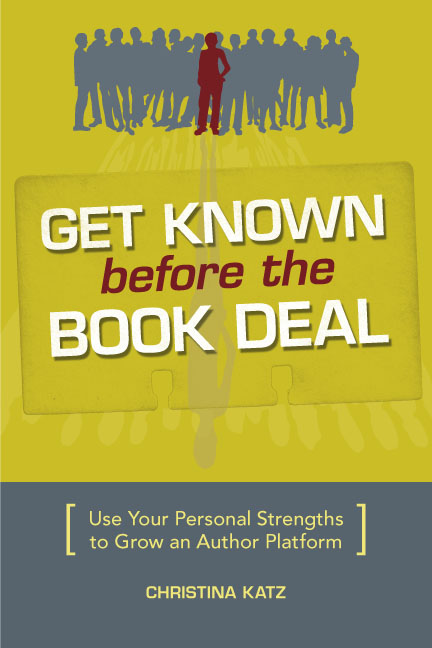
Now she's written GET KNOWN BEFORE THE BOOK DEAL, a guide for other writers who want to turn their personal strength into a winning, book-selling platform.

Welcome, Christina!
JR: What exactly is a platform and why do writers need one...before the deal?
CK: A platform is a promise, which says you will not only create something to sell (a book), but also promote it to the specific readers who will want to purchase it. Agents and editors have known this for years and they look for platform-strong writers and getting them book deals. If you want to land the book deal today, then you need to be a platform-strong writer.
Your platform communicates your expertise to others, and it works all the time so you don’t have to. Your platform includes your Web presence, any public speaking you do, the classes you teach, the media contacts you’ve established, the articles you’ve published, and any other means you currently have for making your name and your future books known to a viable readership. If others already recognize your expertise on a given topic or for a specific audience or both, then that is your platform. A platform-strong writer is a writer with influence. When you sign a book contract, you promise to use your platform to sell your book. But you can’t deliver on that promise unless you start in advance—long before you even pitch a book.
JR: Most of us don't realize we need a platform until our book is about to come out. How did you know you needed to create one for yourself when you wrote WRITER MAMA, and how did you go about it?
CK: I was fortunate by the time WM came out that I’d been cultivating my platform for three and a half years. For me, platform-development is not only instinctive; it’s fun. My platform-in-progress was instrumental in landing the deal for WM. I say platform-in-progress because writers often forget that platform is active, it’s what you do, not what you’ve done. When I pitched WM, I was already a freelance writer and a writing teacher, and that was good because my publisher likes to work with writing teachers.
But I needed speaking experience, so as soon as I signed my book contract I started looking for speaking opportunities to beef up my credentials. Whereas I used to have to pitch myself to get a speaking gig, now about half the time I am invited by people who have heard about me. That’s two years of practice starting to pay off and that’s the way we all need to think. “How can ramp up my platform to increase my reach when my book comes out?” The way to do that is by identifying your expertise, clarifying what you offer, and putting it to work.
JR: Is there a single most important thing authors need to do to build a platform?
CK: When you think about the fact that about 500 books are published each day in this country, you realize that having a book is NOT going to set you apart from anybody.
So, the first thing you need to know is what makes you and your expertise unique and communicate that. If you don’t know who you are and what you uniquely offer, how is anyone else going to know? I call this your identity, not branding, because that word is so grossly overused these days.
JR: What I love about your book is that there are so many suggestions for exactly how to do this. What's the biggest mistake to-be-published authors make?
CK: Not taking 100% responsibility for their writing careers. My mission is to try to get every writer who aspires to book publication to realize this in advance of the book deal. Thinking that anyone else is ever going to care as much as you do. Trust me, they won’t. And then you’ll be disappointed and looking for someone to blame. It’s been fashionable for a long time to blame the publicist at your publisher.
I remember before my first book came out, I read the line, “No one cares is you’ve written a book,” and I didn’t believe it. Then I wrote a book and I found out it’s true.You have to know why others should care and be able to communicate the reasons concisely. If you don’t know what your expertise is—and even more specifically what your niche topic is within that larger body of expertise—then you are just going to be a writer lost in a crowd of writers, an author lost in a crowd of authors.
JR: What social- and/or book-oriented on-line communities do you recommend most for authors?
CK: Facebook and Twitter are really interesting right now but the list for social networks for authors is long. And, of course, you never know how folks will hear about you, so you may as well get your face and your expertise out there as much as possible.
It’s fine to spend most of your time on Facebook, if that’s your favorite social network, but don’t neglect MySpace, Squidoo, Twitter, Red Room, Shelfari, Goodreads, Linkedin, etc. Because of the clickable nature of the Internet, you never know how someone will find you. It only takes about a half hour to get set up on any site, just be sure to visit occasionally to touch base and keep your info up to date.
JR: What are the special challenges for fiction writers building a platform?
CK: fiction/memoir/children’s writer will often spin off a series of topics they can explore to help promote themes they’ve already written about and hope to sell in book form. For example, novelist Marc Acito wrote "How I Paid For College, A Novel of Sex, Theft, Friendship & Musical Theater. Afterwards," it made sense for him to write and teach and speak on how to write humorous fiction or how to write a page-turner. Note how specific his topics were. He spun them off after mastering them in his process.
Other things fiction writers often learn about involve: place, a topic from their research, a time period, a truth or phenomenon, universal human themes, a particular time or phase every person experiences (like coming of age), or the creative process itself. These can become promotional opportunities (sometimes even paying ones) that spark book sales.
JR: Are there any types of writers who don’t need a platform?
CK: Yes. Only writers who want to establish themselves as professional writers, who aspire to publish a book or a self-published book need to concern themselves with platform development, in my opinion. If you are writing for other reasons, such as to heal, to connect with friends and family, or just for pleasure, then probably you don’t need a platform.
JR: When you're done platform building, how do you find time to write?
CK: My career goes in cycles. I have periods that focus on writing followed by periods that focus on self-promotion. I’m in a promo cycle right now and it’s fun! And I’m still writing plenty. I have noticed that these supposed “non-writing times,” often yield the next book idea and that has been the case again this time. I can’t wait to pitch it!
If a writer allows platform development to be an integrated aspect of her writing career, I’m sure she will find that the two efforts really do feed into each other and help her career to grow naturally and authentically. What writer wouldn’t want that?
Now for our Jungle Red Quiz:
Miss Marple or Hercule Poirot?
Miss Marple. I’m a feminist.
Sex or violence?
Definitely sex.
Pizza or chocolate?
Chocolate all the way. Preferably dark.
Daniel Craig or Pierce Brosnan?
Neither. Robert Downey Jr.
Facebook or MySpace?
Love my Facebook friends!
Katharine Hepburn or Audrey Hepburn?
Oh, Katherine. Admire her Yankee spunk.
Your favorite non-mystery book?
Dorothy Allison’s Bastard Out of Carolina. She should have won the National Book Award that year.
Making dinner or making reservations?
Reservations for three, though we usually just show up.
And now tell us four things about you that no one knows. Only three can be true. We'll guess.
I have a tattoo on my right hip.
My cats names are Mercury, Buddha, Devo, and Mama.
My degree is in fiction, though I write primarily nonfiction.
My true hair color is increasingly silver.
NOW IT'S YOUR TURN -- Post your questions about platform building today and tomorrow and Christina will be on JRW to answer them.
 I heard about Christina Katz before I met her. The amazing and talented Jane Friedman, then acquisitions editor at Writers Digest Books, told me about this writer whom she'd just signed who was not only a terrific at her craft, she was even more brilliant at creating community, marketing, and promotion.
 I love the idea of framing the daily job of being a writer -- from feeding the blog to feeding Facebook, to answering email and updating my Web site, and on to booking appearances, and oh yeah, researching and writing the books -- as a workout that builds a career.