Showing posts with label Dylan Thomas. Show all posts

Monday, December 20, 2021

Curl Up With Our Favorite Christmas Reads


DEBORAH CROMBIE: Recently we talked about our favorite Christmas mysteries, but going into the hustle and bustle of Christmas week, let's push that out a bit and share our favorite Christmas READS. What do you pull off the shelf when you need a gingerbread latte-sized dose of the warm and fuzzies?


I always, always read Dylan Thomas's A Child's Christmas in Wales, a tradition that I've given to the Kincaid/James family as well. Even though I have a nice, new illustrated copy, before bed on Christmas Eve I will pull out my little much-loved, paper-covered copy with its woodcuts by Ellen Raskin because it's not Christmas until I've read it all the way through.
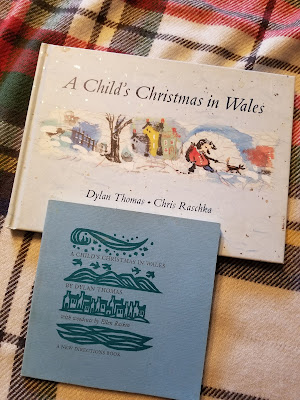


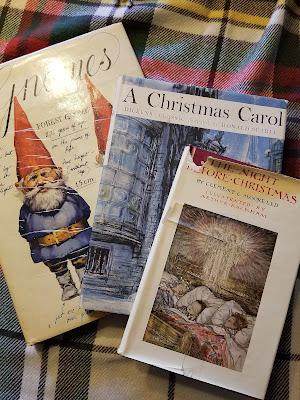
Then there is my very battered copy of The Night Before Christmas, illustrations by Arthur Rackham, and an almost equally battered copy of A Christmas Carol, illustrated by Ronald Searle (although they both miraculously still have their dust jackets!) J.R.R. Tolkien's Letters from Father Christmas. The Polar Express by Chris Van Allsberg. An old book about gnomes which isn't exactly Christmas but is such fun.

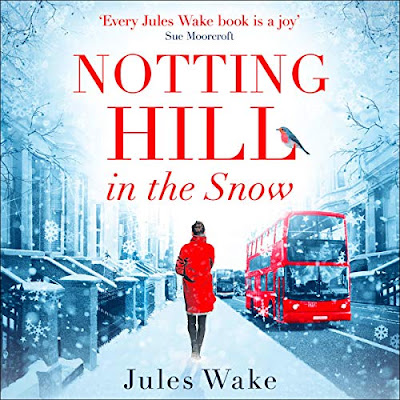
And because nothing says Christmas like a little romance, I'm going to add Notting Hill in the Snow by Jules Wake, We Met in December by Rosie Curtis, Snowflakes at the Little Christmas Tree Farm by Jaimie Admans (the book is better than the title, I promise.)  And I'm looking forward to The Christmas Bookshop by Jenny Colgan.


I know I'm leaning way British here, so chime in, dear REDs, and share what books say HOLIDAYS to you.


HALLIE EPHRON: With my daughters and grandkids arriving soon, Debs you’ve inspired me to scour our many many many bookshelves for holiday stories, hard because Debs grabbed off the classics and because Jerry’s encyclopedic brain isn’t around to point me to the correct room, never mind the right shelf. 


I’m a huge fan of A Child’s Christmas in Wales, especially the opening stanzas that say winter more than any other work I can think of. 


Now I have a little stack ready to go. The Night Before Christmas of course… for the eponymous night. The Grinch That Stole Christmas. And more. Then queuing up music: The Nutcracker and Handel’s Messiah and Elvis’ Christmas Album. 


And adding hot chocolate and marshmallows to my shopping list.


LUCY BURDETTE: I love both of your lists, but I confess not to being much of a rereader. I can recommend Jenny Colgan’s CHRISTMAS AT THE ISLAND HOTEL. I found it in the pile of light reading I’d bought during the pandemic months and didn’t have time to read. At first, I thought it was too light to keep my interest, but by the end, I was yearning for the story to continue. She is so good at bringing cold, remote Scottish settings and quirky characters to life–this one is set on the fictional island of Mure, halfway between Norway and northern Scotland. And the action takes place in a new hotel kitchen leading up to Christmas–it hit all my sweet spots!


DEBS: Lucy, I LOVE Jenny Colgan's Bookshop on the Corner trilogy so much that I hated for the books to end! These are set in a Highland village on the shores of Loch Ness and by the time you finish them you will be hunting for your passport!


HANK PHILLIPPI RYAN: My step-dad used to read from A Child’s Christmas in Wales to us every year when we were little. We could not figure out what was so great about it, and fidgeted. Now, I see. (As can be said for so much.)  What books say holidays? On First Chapter Fun last year, we read out loud the first and last –I think they’re called “staves”--of A Christmas Carol.  I could not get through mine without crying. I urge you all to re-read.

This year we are doing something a bit different, but a bit the same. See you there! And you will be surprised at what books take place at Christmas!


DEBS: Ooh, can't wait! Mark your calendars!


JENN MCKINLAY: The Night Before Christmas every Christmas Eve forever and ever! Then I roll into my favorite Christmas mysteries always set in England, by our Rhys and Kate Kingsbury. Cozy reads by the light of the tree with a hot cup of tea - perfection. 


JULIA SPENCER-FLEMING: Love Christmas mysteries and romances. In fact, I just finished reading several of Carla Kelly’s novella collections. She’s one of my favorite Regency writers, but there aren’t any dukes and marqueses in her books - her characters are most often men and women whose lives have been torn apart by the Napoleonic Wars, which lasted half a generation. SO GOOD. And speaking of Regency, one of my favorite seasonal mysteries is Georgette Heyer’s A CHRISTMAS PARTY - if you’re a fan of Rhys’ THE TWELVE CLUES OF CHRISTMAS or GOD REST YE, ROYAL GENTLEMEN, you’ll like this.


For the classics, I’m a Dickens gal, and when the kids were little, Clement Moore’s ageless poem as well. I would read The Polar Express and bawl at the end, because I was a grown up and couldn’t hear the magical sleigh bell ring.


DEBS: Julia, if I ever read the Heyer, I've forgotten it! Searching now...


RHYS BOWEN: My Welsh grandfather used to insist on A Child’s Christmas in Wales, so I felt that I’d had enough of it, until recently when I rediscovered it and it took me back to my childhood. The Polar Express both moves me and scares me. I don’t want to think of Santa’s place as a giant factory! I’m also a sucker for Christmas cozies–and movies like The Holiday. But who has time for reading right before Christmas? I have family arriving: 15 people for quite a few meals. When they’ve all gone again I’ll curl up by the fire and read.


DEBS: Rhys, somewhere I have a DVD of Denholm Elliott reading A Child's Christmas--it was that dramatization that was done years ago on PBS, I think. So lovely. I also have a recording (somewhere) of Dylan Thomas reading, but I'm embarrassed to admit that I can't understand most of it with his very heavy accent! 


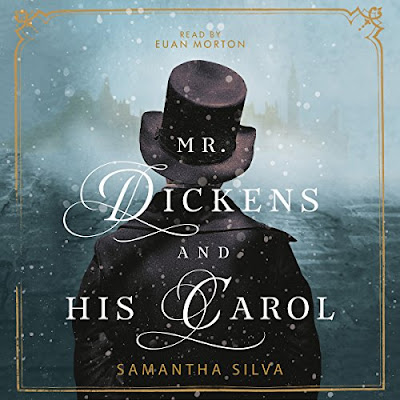
READERS, what faves have we missed? Oh, and has anyone read Mr. Dickens and his Carol


It's a novel about Dickens writing A Christmas Carol and has such fabulous reviews that I've ordered it.

Monday, December 19, 2016

All Reds Read for Christmas...

RHYS BOWEN: By California standards it's very cold here. There was frost on my balcony and driveway this morning and I looked out on white rooftops. I know, it sounds wimpy compared to what most of you are experiencing.

 But when I see frost and smoke rising from chimneys my instinct is to curl up by a warm fire with a cup of hot tea or cocoa and read a good book. So I'm wondering if you have particular old favorites that are brought out on cold and wintery days to be re-read. I always listen to the audio version of A Christmas Carol and always get a little weepy. And the Christmas part of Little Women. I am fond of Wind in the Willows and the scene when Mole gets lost in the snow and finds Badgers house. In fact I enjoy reading about other people trudging through snowy landscapes, knowing that I am safely indoors! I'm not sure what that says about my character. 

And I might take out an Agatha Christie Christmas mystery--is it called A Holiday with Murder? The one with Simon Lee and his sons.

I might even re-read my own Twelve Clues of Christmas as I wrote it to recreate my fantasy English Christmas in an old manor house. Do you ever read your own books, Reds? And enjoy them? Anyway, recommendations please for good reading by a roaring fire, with a glass of hot mulled wine in hand.

HALLIE EPHRON: I'm reading ... ahem, STILL reading THE GOLDFINCH. It is endless and it makes my hands ache to hold it but oh so engrossing. But for a Christmas read I'd go to poetry. A Child's Christmas in Wales. Followed by Agatha Christie or P. D. James short stories. Or a book about food. Laurie Colwin's HOME COOKING. Hoping my granddaughter is old enough to sit through 'Twas the Night Before Christmas.

HANK PHILLIPPI RYAN: When we were little, my Mom would read  A Child's Christmas in Wales to us...

“One Christmas was so much like another, in those years around the sea-town corner now and out of all sound except the distant speaking of the voices I sometimes hear a moment before sleep, that I can never remember whether it snowed for six days and six nights when I was twelve or whether it snowed for twelve days and twelve nights when I was six.” 


and then my step-dad would read A Visit from st. Nicholas.

"...when out on the roof there arose such a clatter--I sprang from my bed to see what was the matter!"

I'm trying to think what Christmas books I've read, besides A Christmas Carol. Hmm.  But please read Winters Tale, by Mark Helprin.  The snowiest coldest most beautiful book ever. Dead of  winter in  Manhattan, in two different centuries, with a flying white horse.

DEBORAH CROMBIE: Since I was a child I've reread (or at least tried to find the time to reread) A Christmas Carol and The Night Before Christmas every year. Last year I listened to Tim Curry reading A Christmas Carol, free from Audible, and it was fabulous. I'm going to listen again if I can figure out how to make the book start over:-) And every year, last thing on Christmas Eve, I read A Child's Christmas in Wales. It is my very favorite Christmas thing. 

Somehow I did not manage to pass my love of these traditions to my offspring. I'm hoping for better luck with the next generation:-)

Oh, and Rhys, I'm going to reread The Twelve Clues of Christmas! It is--well, maybe, because it's such a hard choice--my favorite Georgie. And I adore the traditional Christmas in the manor.

HANK: What about you, Reds and readers? Christmas reading? Or are you too crazed?

Sunday, December 23, 2012

A CHILD'S CHRISTMAS IN WALES

DEBORAH CROMBIE: I've had one unbreakable Christmas tradition since my daughter was small and I first discovered Dylan Thomas's A Child's Christmas in Wales. I have a little paper copy of the book (as you can see, it's well used) illustrated with Ellen Raskin's charming woodcuts. How I discovered the poem, and where I got the book, is now lost in the mists of undependable memory.

But find it I did, and I read it aloud on Christmas Eve to my daughter, along with The Night Before Christmas (therefore honoring both her British heritage on her father's side and her American heritage on mine) and sometimes at least parts of A Christmas Carol. Then she grew up, and now I read my tattered copy to myself, the last thing before I fall asleep, every Christmas Eve.

For those of you who don't know Thomas's beautiful, funny, and evocative poem, here's the beginning:

One Christmas was so much like another, in those years around the sea-town corner now and out of all sound except the distant speaking of the voices I sometimes hear a moment before sleep, that I can never remember whether it snowed for six days and six nights when I was twelve or whether it snowed for twelve days and twelve nights when I was six.

All the Christmases roll down toward the two-tongued sea, like a cold and headlong moon bundling down the sky that was our street; and they stop at the rim of the ice-edged fish-freezing waves, and I plunge my hands in the snow and bring out whatever I can find. In goes my hand into that wool-white bell-tongued ball of holidays resting at the rim of the carol-singing sea, and out come Mrs. Prothero and the firemen.

It was on the afternoon of the Christmas Eve, and I was in Mrs. Prothero's garden, waiting for cats, with her son Jim. It was snowing. It was always snowing at Christmas. December, in my memory, is white as Lapland, though there were no reindeers. But there were cats. Patient, cold and callous, our hands wrapped in socks, we waited to snowball the cats. Sleek and long as jaguars and horrible-whiskered, spitting and snarling, they would slink and sidle over the white back-garden walls, and the lynx-eyed hunters, Jim and I, fur-capped and moccasined trappers from Hudson Bay, off Mumbles Road, would hurl our deadly snowballs at the green of their eyes. The wise cats never appeared.

We were so still, Eskimo-footed arctic marksmen in the muffling silence of the eternal snows - eternal, ever since Wednesday - that we never heard Mrs. Prothero's first cry from her igloo at the bottom of the garden. Or, if we heard it at all, it was, to us, like the far-off challenge of our enemy and prey, the neighbor's polar cat. But soon the voice grew louder.

"Fire!" cried Mrs. Prothero, and she beat the dinner-gong.

And we ran down the garden, with the snowballs in our arms, toward the house; and smoke, indeed, was pouring out of the dining-room, and the gong was bombilating, and Mrs. Prothero was announcing ruin like a town crier in Pompeii. This was better than all the cats in Wales standing on the wall in a row. We bounded into the house, laden with snowballs, and stopped at the open door of the smoke-filled room.

Something was burning all right; perhaps it was Mr. Prothero, who always slept there after midday dinner with a newspaper over his face. But he was standing in the middle of the room, saying, "A fine Christmas!" and smacking at the smoke with a slipper.

"Call the fire brigade," cried Mrs. Prothero as she beat the gong. "There won't be there," said Mr. Prothero, "it's Christmas."
There was no fire to be seen, only clouds of smoke and Mr. Prothero standing in the middle of them, waving his slipper as though he were conducting.

"Do something," he said. And we threw all our snowballs into the smoke - I think we missed Mr. Prothero - and ran out of the house to the telephone box.

"Let's call the police as well," Jim said. "And the ambulance." "And Ernie Jenkins, he likes fires."

But we only called the fire brigade, and soon the fire engine came and three tall men in helmets brought a hose into the house and Mr. Prothero got out just in time before they turned it on. Nobody could have had a noisier Christmas Eve. And when the firemen turned off the hose and were standing in the wet, smoky room, Jim's Aunt, Miss. Prothero, came downstairs and peered in at them. Jim and I waited, very quietly, to hear what she would say to them. She said the right thing, always. She looked at the three tall firemen in their shining helmets, standing among the smoke and cinders and dissolving snowballs, and she said, "Would you like anything to read?"

Years and years ago, when I was a boy, when there were wolves in Wales, and birds the color of red-flannel petticoats whisked past the harp-shaped hills, when we sang and wallowed all night and day in caves that smelt like Sunday afternoons in damp front farmhouse parlors, and we chased, with the jawbones of deacons, the English and the bears, before the motor car, before the wheel, before the duchess-faced horse, when we rode the daft and happy hills bareback, it snowed and it snowed. But here a small boy says: "It snowed last year, too. I made a snowman and my brother knocked it down and I knocked my brother down and then we had tea."

"But that was not the same snow," I say. "Our snow was not only shaken from white wash buckets down the sky, it came shawling out of the ground and swam and drifted out of the arms and hands and bodies of the trees; snow grew overnight on the roofs of the houses like a pure and grandfather moss, minutely -ivied the walls and settled on the postman, opening the gate, like a dumb, numb thunder-storm of white, torn Christmas cards."

"Were there postmen then, too?"
"With sprinkling eyes and wind-cherried noses, on spread, frozen feet they crunched up to the doors and mittened on them manfully. But all that the children could hear was a ringing of bells."
"You mean that the postman went rat-a-tat-tat and the doors rang?"
"I mean that the bells the children could hear were inside them."
"I only hear thunder sometimes, never bells."
"There were church bells, too."
"Inside them?"
"No, no, no, in the bat-black, snow-white belfries, tugged by bishops and storks. And they rang their tidings over the bandaged town, over the frozen foam of the powder and ice-cream hills, over the crackling sea. It seemed that all the churches boomed for joy under my window; and the weathercocks crew for Christmas, on our fence." 


Do read the rest, here.  Or listen to Dylan Thomas read it himself, here. Or watch the lovely film version narrated by Denholm Elliott, if you can find it. 

(You can buy a much less tatty version of the book I have here.) 

However you experience Thomas's poem, I hope it will bring you a glimpse of "the close and holy darkness," and a very blessed holiday season to you all.

Merry Christmas, to my fellow REDS, and to all our wonderful readers, 

from

DEBS

Friday, December 25, 2009

On Christmas


We hope Santa filled your fondest wishes. Ours is that you have Happy Christmas!

Here's today's entry from Hallie's "The Bibliophile's Devotional"


Dec 25

A Child’s Christmas in Wales by Dylan Thomas

One Christmas was so much like the other, in those years around the sea-town corner now, out of all sound except the distant speaking of the voices I sometimes hear a moment before sleep, that I can never remember whether it snowed for six days and six nights when I was twelve, or whether it snowed for twelve days and twelve nights when I was six.


There’s a reason this short story, written in 1955 for radio, has become a classic. The voice of a small child wonders: Could Christmas really have been so different years and years ago. The narrator answers: “Our snow was not only shaken from whitewash buckets down the sky, it came shawling out of the ground and swam and drifted out of the arms and hands and bodies of the trees; snow grew overnight on the roofs of the houses like a pure and grandfather moss, minutely white-ivied the walls and settled on the postman, opening the gate, like a dumb, numb thunderstorm of white, torn Christmas cards.”


The vivid imagery and rolling rhythm of the prose cry out to be read aloud before a roaring fire on Christmas.


Born in Wales in 1914, Dylan Thomas had already begun to make his mark as a poet by the age of eighteen. This work— based on a piece Thomas wrote for the BBC and an article he penned for
Picture Post magazine—was published in a 1954 volume of collected works, Quite Early One Morning, a year after Thomas’s unexpected death at the age of thirty-nine. He is buried in Poet’s Corner at Westminster Abbey.


“In a way Thomas is a simple poet; as with Blake, his prophetic revelations are based upon songs of innocence.”
—Louis MacNeice, New York Times