DEBORAH CROMBIE: I didn't really grow up watching westerns. Well, I do remember The Lone Ranger (should I even admit that?) And my favorite cousin and I watched Gunsmoke together and then acted out our own plots with what served as action figures in the day. I remember we had a lot of fun hanging Bat Masterson from the stairwell in my house. (Okay, so we were weird. We both grew up okay.) But, that said, there was always a certain allure to the stories of Wyatt Earp--and, of course, Doc Holliday. He was just such a tragic, romantic figure. And, now, thanks to the talent of David Corbett, he's downright haunting. Here's David to tell you about him.

The Gunman and The Nun
By David Corbett
By David Corbett
First, it’s a delight to be invited back to Jungle Red Writers. Deborah Crombie asked me to talk a little about how I came by the idea for my upcoming novel, THE LONG-LOST LOVE LETTERS OF DOC HOLLIDAY. In truth, the idea’s been floating around in the back of my mind for decades.
I grew up in the era of the great TV Westerns— Have Gun, Will Travel; Wagon Train; Maverick; Gunsmoke; Rawhide; The Rebel; The Rifleman; The Lone Ranger; and, of course, The Life and Legend of Wyatt Earp, where I first made the acquaintance of John Henry “Doc” Holliday.
I would meet him again in various incarnations: Victor Mature in My Darling Clementine, Kirk Douglas in The Gunfight at the OK Corral, Jason Robards in Hour of the Gun, Stacy Keach in Doc, Val Kilmer in Tombstone, Dennis Quaid in Wyatt Earp. Several of these portrayals proved compelling, but none of them, I’d learn, were all that accurate. (I somewhat sheepishly harbor a certain fondness for Victor Mature’s performance; though certainly the least heralded of the actors named, and the one bearing possibly the least physical resemblance to Doc, he nonetheless comes closest to capturing Doc’s fatalistic desperation. Then again, maybe that’s just because of John Ford’s majestically stark lighting.)
The fact that so many attempts to capture Doc failed to faithfully evoke his essence only made him all the more intriguing to me, through the sheer fact that he proved so elusive.
But what particularly piqued my imagination was the fact that Doc had a life-long correspondence with his cousin, Mattie, who was rumored to have been his sweetheart—a theory made all the more beguiling by the fact that she subsequently entered the convent.
I mean, what about that isn’t fascinating?
Adding to the intrigue is the fact that Mattie destroyed the letters near the end of her life, meaning we’ll never know for sure what they contained—a situation any self-respecting writer of fiction would consider a call to arms. (More on that in a moment.)
In all of my novels, one way or another, I’ve addressed the notion of redemptive love. By that I mean the ability, through loving and accepting that we are loved, we can move beyond our guilt and shame, our fear and weakness, to reclaim a place in the human community. Love grants us both the dignity and the humility to do that, if honestly given and acknowledged.
The trick lies in the honesty. Often the shame and guilt and fear are unrelenting, and we fool ourselves into half measures in order to avoid a full reckoning of what we’ve done and who we’ve hurt. Sometimes love, especially romantic love, can fool us into thinking that since someone sees us in a favorable light, maybe we’re not as weak or scared or guilty as we know ourselves to be. Maybe love can give us a pass, and we can slide by. When that happens, we all too often end up jeopardizing not just the love but the forgiveness, the wholeness we crave.
Doc offers a perfect example. He was clearly heartbroken when his mother died from tuberculosis, and was enraged when, only three months later, his father remarried. Making matters worse, the bride was a young woman a mere seven years old than Doc himself (he was fifteen). Her family lived just down the road, suggesting the elder Holliday had been courting her while his dying wife lay suffering at home.
Doc’s father didn’t merely betray his wife, however. Shortly after the war, dedicated to making the best of post-war circumstances, he became head of the local Freedman’s Bureau, which a teenage Doc, utterly dispirited by the Confederacy’s surrender, saw as little different than consorting with the enemy.
This kindled in Doc a simmering rage that haunted him throughout his life. His Herculean consumption of alcohol only exacerbated that. Before he left Georgia for the West, he was diagnosed with the same disease that had killed his mother, so he knew he would not live to a ripe old age. Trained as a dentist, he also knew that he had two recourses for the pain he would suffer—laudanum and alcohol. He chose the latter, and arduously self-medicated for the rest of his life.
The quickness and vehemence of his temper was legendary, prompting a reputation as “the touchiest drunk in the West.” But as Bat Masterson pointed out, despite Doc’s genius for getting into seemingly endless, desperate scrapes, the irony remained that very few were his own doing. Rough men just thought they could get the better of a frail, natty, tubercular drunk who they suspected of cheating, no matter how keen his intelligence, sharp his tongue, violent his disposition, or true his aim.
That reputation, though inflated or outright fabricated in many of its details, has been handed down from the beginning. What has only been guessed at is why such an irascible, volatile fatalist kept up a life-long correspondence with his saintly cousin?
The most incriminating letters were burned by Mattie, despite her belief that, if people could only read them, they would have a far more generous impression of the kind of man Doc was. This begs the question—if the letters were innocent, and her relationship with Doc was completely Platonic as the family has consistently professed, why destroy them?
It’s been conjectured that the reason Doc and Mattie did not develop their relationship openly was because the Catholic Church forbade marriage between first cousins. This becomes all the more compelling when one learns that the name Mattie chose upon entering the convent—Sister Mary Melanie—references a saint who did in fact marry her first cousin. (Another interesting fact: Margaret Mitchell, who was related to Doc and Mattie, based the character Melanie in Gone With the Wind on her aunt the Sister of Mercy, and it is often conjectured that Rhett Butler owes no small inspirational debt to Doc.)
All of this points to a far more interesting question: if Doc and Mattie were in fact sweethearts, what was the nature of their attraction? And what kept it alive for the rest of Doc’s life?
Mattie helped Doc care for his mother, and no doubt saw in him a profound capacity for affection, devotion, and sacrifice. The more I learned about Doc, the more I came to believe that the bond between them lay in the fact that she knew the man Doc could be, and refused to allow him to forget that. She echoed the angel in his nature that so often got shouted down by the devil in it.
For Doc’s part, I think he truly hoped that Mattie would decide that their love was more important than her Catholicism. His mother, on her deathbed, turned away from Presbyterianism— her husband’s faith, with its harsh Calvinist devotion to the concept of election (predestination)—and converted back to the Methodism of her youth, with its belief in grace through good works. “Deeds not creeds,” was how the distinction was known. Doc’s mother did this as an example to Doc, because she did not want him believing he might be damned with no recourse, or that his deeds meant nothing. If his mother could convert for his sake, why couldn’t Mattie?
This created an unrelenting tension between them. As I came to imagine it, Mattie continued trying to appeal to Doc’s better nature, hoping he would turn away from his nihilistic pursuit of danger and chance and return within the fold of faith and family. Doc, for his part, hoped that his slow-motion self-destruction would lure Mattie west, to save not just his soul but his life, and that once they were reunited he could convince her to stay with him.
I decided against simply writing an epistolary novel consisting of the letters alone, and instead, inspired by A.S. Byatt’s Possession, elected to write a novel with two parallel story lines, one contained in the correspondence, the other a modern-day narrative based on the sudden, unexpected, and questionable reappearance of the letters. Since the letters no longer exist, of course, I would have to do what any honorable writer of fiction would do: I wrote them myself. (One of the most gratifying, if inadvertent compliments I’ve received was from someone who asked, “Where did you find these letters?”)
The key, however, was always the notion that love can somehow make us whole. It’s a very seductive lie. When Mattie entered the convent, effectively ending any hope of her and Doc as a couple, Doc’s life entered the inexorable downward spiral that would end in his lonely death four years later. I think it was only near the end he realized he had lived in the false hope that, with Mattie by his side, he would not have to face his demons directly; they would just magically vanish through the grace of her affection. And conversely, Mattie’s decision to become a nun indicated a long-resisted acceptance on her part that love is not enough—she could not lure Doc back to virtue (or Georgia) simply by using their connection as bait.
This same dynamic—hoping love can absolve us of shortcomings we refuse to honestly admit ourselves—animates the present-day story line of the novel as well. Though the letters serve as a MacGuffin for the characters, and they pursue them relentlessly, even violently, the letters aren’t the real thing of value any of them craves. What motivates them all is the need for validation through love. And several characters endure incredible hardship and suffering in the effort to prove themselves worthy of that love, as though hoping their punishment will finally allow them at last to be forgiven. To her credit, my protagonist, Lisa Balamaro, comes to recognize the bait-and-switch this kind of love represents, but she has to travel a pretty rough road to reach that self-awareness.
DEBS: Although I say I'm not well-versed in westerns, I've actually seen at least half of the films David mentions, and I have to say I'm voting for Dennis Quaid in Wyatt Earp. (But then I always vote for Dennis Quaid.)
The most notorious love letters in American history—supposedly destroyed a century ago—mysteriously reappear, and become the coveted prize in a fierce battle for possession that brings back to life the lawless world evoked in the letters themselves.
Lisa Balamaro is an ambitious arts lawyer with a secret crush on her most intriguing client: former rodeo rider and reformed art forger, Tuck Mercer. In his newfound role as expert in Old West artifacts, Tuck gains possession of the supposedly destroyed correspondence between Doc Holliday and his cousin and childhood sweetheart, Mattie—who would become Sister Mary Melanie of the Sisters of Mercy.
Given the unlikelihood the letters can ever be fully authenticated, Tuck retains Lisa on behalf of the letters’ owner, Rayella Vargas, to sell them on the black market. But the buyer Tuck finds, a duplicitous judge from the Tombstone area, has other, far more menacing ideas.
As Lisa works feverishly to make things right, Rayella secretly enlists her ex-marine boyfriend in a daring scheme of her own.
When the judge learns he’s been blindsided, he rallies a cadre of armed men for a deadly standoff reminiscent of the moment in history that made Doc famous: The Gunfight at the OK Corral.

David Corbett is the award-winning author of six novels, including 2018’s The Long-Lost Love Letters of Doc Holliday, the story collection Thirteen Confessions, and the writing guide The Art of Character (“A writer’s bible” – Elizabeth Brundage). His short fiction has been selected twice for Best American Mystery Stories, and his non-fiction has appeared in the New York Times, Narrative, and Writer’s Digest, where he is a contributing editor. www.davidcorbett.com
 |
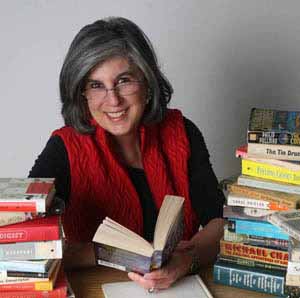
| David and his wife, Mette |
DEBS: Readers, are you western fans? Do you have a favorite Doc Holliday? Stop in and chat with David!