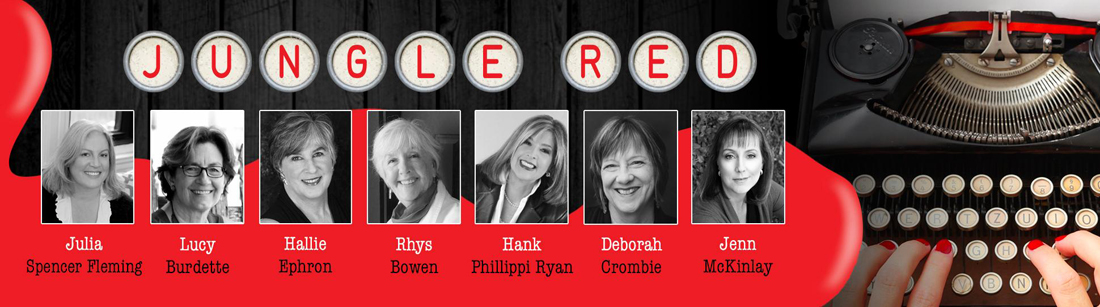

ROBERTA: The first book in Laura DiSilverio’s humorous PI series, Swift Justice, debuted from St. Martin’s Minotaur on 12 Oct. The starred Booklist review said: “DiSilverio deftly mixes light, zany humor with the darkness of the crimes.” Romantic Times added: “Swift Justice manages to be serious and funny at the same time.” Today Laura's here to talk about being funny! Hooray for the new book, Laura, and take it away...
LAURA: When Roberta invited me to JRW to talk about humor because my books are funny, my first thought was: Nothing makes things unfunnier faster than trying to explain how to make them funny. However, I’m going to give it a shot by sharing four of Laura’s Twenty-eight Rules of Humor. If you don’t chuckle, or smile, or at least think about smiling as you peruse this, don’t read my books. They will not amuse you. (Notice I didn’t say “Don’t buy my books.” Just don’t read them.)
(Serious paragraph—skip ahead if you want to.) In an attempt to keep this post on the brief side, I won’t say too much about the challenges of writing humor except to point out that humor is tricky because people laugh at different things (unlike with drama where almost everyone can agree that a pedophile is horrible or a car crash that kills a family is tragic). You’ve got satire, dry wit (think British), slapstick, word play/puns, parody, irony, etc.
 People who like the Three Stooges (think husbands) don’t crack a smile during an Oscar Wilde play, and vice versa. So, if you embark on a humorous novel, be prepared for mixed reactions from your readers. Both of them.
1. Conflict is funny. An always agreeable character is boring, unless it’s a character who is only agreeable in order to irritate everyone else. Think about sitcoms: in general, the characters who generate the most conflict are the funniest. Archie Bunker and Lucy Ricardo (for the mature JRW readers), Charlie Sheen in Two and a Half Men, the grown-up Doogie Howser in How I Met Your Mother. So, in Swift Justice, I paired my 37-year-old loner PI, Charlie Swift, with her opposite, a bubbly, barely competent, fashion-obsessed socialite in her fifties. Lots of room for conflict and humor, from arguments about office décor to Gigi’s inability to lie, an essential PI skill, in Charlie’s opinion. (Her philosophy: Always tell the truth, unless a lie will work better.).
2. The unexpected is funny. A sweet young woman as a kindergarten teacher is not funny. Arnold Schwarzenegger is. A vampy sexpot in leather corsets and six-inch heels as the owner of an “adult toys” store doesn’t make us laugh. A fluffy-haired granny in twinset, pearls and support hose does, especially if we can listen in as she debates the merits of various . . . um, products with her customers. You’ll notice I didn’t name any “products”; that’s because you’ve got to be careful of the “ick factor” in humor (see #3).
3. Beware the ick factor. Dildos and ball gags are amusing to a certain portion of the reading public, but they’re icky to an equally large number of readers. Ditto for farts and boogers. If you’re writing middle grade fiction for boys, you can’t have too many rude body sounds or excrescences. If your audience is over fifteen and/or female, err on the side of deleting references to icky things. Or, in other words, be cautious when inserting dildos. In your writing, or course.
4. Beware the mean factor. Humor all too often turns on insulting a certain group of people: blondes, ethnic groups, lawyers. All I can say here is: Know your audience (or just don’t give a damn if you annoy as many people as you amuse). If you’re writing for a bar association publication, they’re probably not going to like the one about ten thousand lawyers at the bottom of the sea being a start. People don’t laugh too hard when they’re genuinely offended. (The exception that immediately pops to mind is the movie Pulp Fiction which was simultaneously offensive in almost every respect and hysterically funny.)
 Addendum: Don’t expect to win prestigious literary awards if you write humor. Or if you make funny movies. When’s the last time a comedy won the Best Picture Oscar? By my reckoning, it was The Sting in 1973 or maybe Driving Miss Daisy in 1989. As for the Pulitzer, I went back to 1948 and didn’t come across a novel I’d consider primarily humorous; let’s face it, The Road and American Pastoral and Beloved are not laugh-a-page kinds of books. (Confession: I haven’t read all the Pulitzer-winning novels, so if I overlooked a funny one, let me know!) If you want awards for your humor writing, become an essayist a la Barry or Erma Bombeck or David Sedaris.
Thanks to Roberta and Jungle Red for hosting me today. Let me end with an abbreviated list of some of my favorite funny novelists, in no particular order: Dave Barry, Carl Hiassen, early Janet Evanovich, Joan Hess, P.G. Wodehouse, and Robert Flynn (religious satire: his Growing up a Sullen Baptist is hurt-your-tummy-laughing funny).
What “rules” am I leaving out? What funny novelists and/or novels? Leave a comment for a chance to win a copy of my newest, VERY FUNNY book, Swift Justice.