Showing posts with label civility. Show all posts

Sunday, January 1, 2023

Happy New Year!

 RHYS BOWEN:  Happy New Year! 


I hope it's a stellar one for you in every way.

New hopes. New dreams. It's lovely to start off with a clean slate, isn't it?

Yesterday I asked what we'd like from Society this year. Overnight I thought about it and decided what we wanted was a new form of government. No more left and right, hating each other, striving to destroy the other side. We'll have a new political party. I'll call it the SPP.

Short for Sensible People's Party. Those elected to office would be ordinary folk who were not given a million dollars to start them off. Women and men who had balanced a budget during tough times, paid their mortgage on time, put off buying a new car until they could afford it, taken camping vacations nearby when times were hard. They would be ethical, decent people who paid their taxes, supported their places of worship, brought up their children to tell the truth and respect their fellow men.

They would look through a Pentagon wish list and decide what was really necessary and what was frivolous or too expensive.  They would not pass bills that added pork to sensible topics. They would help those in need but keep an eye on those who wanted an easy hand-out. Every bill would be weighed for its benefit to the good of the whole country.

We'd balance the federal budget in no time at all. There would be no more talk of war because it would be more women in office than men. We'd have a sane immigration policy that allowed a guest-worker program with temporary visas.

We'd combat climate change, encourage innovation in things like alternative energy and stop mega corporations from fleecing the US public. Everyone would be forced to pay their fare share of taxes, including corporations. There would be no more lobbyists. Election spending would be capped at a modest amount and no negative ads allowed. 

Guns would be regulated and licensed like we do cars. Licenses renewed with a test every five years.

Oh, and any media spreading lies or hatred will be immediately removed. News channels would have to live up to a high standard of unbiased reporting.

So this is my dream for the New Year. If it came to pass we'd live in Paradise.

Do you think any of it is possible?

Thursday, September 8, 2022

Things We Have Lost


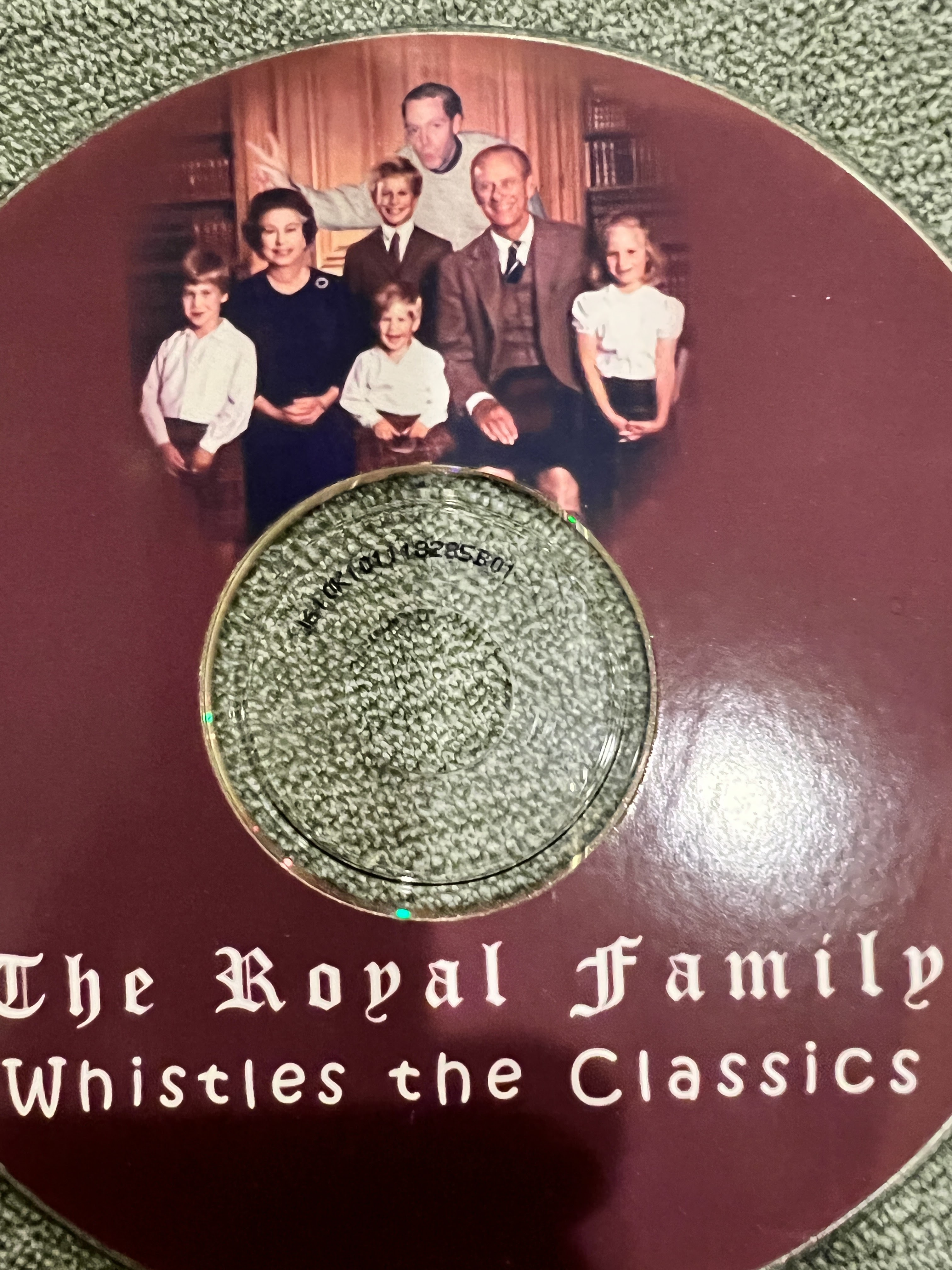
RHYS BOWEN:  My son-in-law whistles. You can always hear him coming because of his whistle. It’s quite tuneful and he whistles all sorts of different music from country to show tunes. John used to complain about it, so one Christmas son-in-law Tom made a CD called The Royal Family Whistles the Classics. The numbers ranged from “I’m Dreaming of a Different Son-In-Law” to “Son-In-Law is Coming Into Town.”  Highly amusing!  And the cover was a photo of the royal family with Tom photo shopped in.  He’s a great guy.


I was just thinking about this as we went through CDs the other day because whistling is something you don’t hear any more. My father was another man who whistled as he walked. You could always hear him coming up the path because of his whistle. It was always men, wasn’t it? You never heard a woman walking around whistling. Was it mainly a British thing? How many old books does one read in which the butcher’s boy comes up the path, whistling a merry tune? Does the Instacart person ever whistle a merry tune?  I don’t think so. So whistling is one of the things we have lost as a society. How many of you actually know how to whistle? I can still do it, but I don’t.

Another thing that has been lost is the art of conversation. Do you know that teenagers don’t call to chat on the phone any more? They text in abbreviated little non-sentences. U OK? And the reply is a sad-faced imoji.  My twin grandchildren have just been introduced to their college room mates. They have never actually spoken to them but have communicated in a series of texts.  Our own conversations are usually limited to emails.  How seldom do we sit down with a friend and a glass of wine and exchange views?  I was reminded of this because my brother in Australia Facetimed me yesterday and we spoke for an hour and a half. So satisfying!

So do you think the art of conversation may be lost forever? I always wished I could have been a member of the Algonquin Round Table and could join in the witty repartee that went on there. How often do we have witty repartee? The closest is right here, with the discussion among Jungle Reds. Even when we meet fellow writers I don’t think we often sit and discuss our craft in depth. More often it’s a whine about the flight and the airport, or about our publisher or a bad review.

I suppose this is tied to the other thing we have lost: time. In my grandmother’s day there were long evenings during which people had to amuse themselves because there was no TV or radio. They played the piano, recited poetry or just discussed things. They read. They had large vocabularies. You’d never have heard my grandmother using filler words like “like” or “you know.”  Now we are always in a rush.  And at the present I spend so much time in Zoom interviews that I really don’t want to talk much when they are over.

Another thing we have lost is civility. If you are only doing the speed limit cars swoop around, angry at being kept waiting. People let doors swing in your face. Steal parking spaces you are clearly waiting for. How rare to have someone who serves you with a greeting and a smile? When it happens I treasure it.  I try to keep up my own little civility. At a stop sign I will wave the other car ahead with a smile. Sometimes it generates a smile back.

So what do you do to create a kinder, gentler world? And can you whistle?

Thursday, March 8, 2018

It's a Beautiful Day in the Neighborhood

INGRID THOFT

An article in the "New York Times" on Monday caught my eye, 'Mr. Rogers' Neighborhood at 50.'  It's hard to believe that it's been fifty years since Fred Rogers first donned his cardigan and changed his shoes on PBS.  Airing for more than three decades, the show became the gold standard of television programming for children.  The NYT's article quotes show producer Margy Whitmer who said the key values of the show were civility, kindness, empathy, and that it's okay to make mistakes—qualities and a lesson that are just as relevant today, fifty years later.

I have fond memories of watching Mr. Rogers, but I don't remember the "lessons" he taught, which was part of the brilliance of the show.  He never seemed preachy or condescending.  Instead, his matter-of-fact manner enabled him to speak on a whole range of topics, many of which were considered sensitive at the time.  Divorce, secrets, mad feelings, and day care were just some of the issues that Mr. Rogers broached while changing his shoes or chatting with King Friday or Lady Elaine.  His calm approach made it okay to talk about difficult things.

I found myself going down a Mr. Rogers YouTube rabbit hole and revisited some of the more memorable episodes of the show.  His guest list read as a "who's who" of Hollywood, pop culture, music, and science.  In fact, it wasn't unusual for guests to approach the show and pitch a segment in which they hoped to be included.  Mr. Rogers and his talented staff had a knack for pairing guests with lessons they were uniquely qualified to impart to the viewing audience.  Some examples include:


Margaret Hamilton aka The Wicked Witch of the West
Viewers first meet Hamilton as she waited for him on his porch, looking like a harmless old lady from the neighborhood.  Once inside, she and Mr. Rogers discussed her role as the witch and the fact that many kids found her quite scary.  With Mr. Rogers' help, Hamilton donned her witch costume over her clothes, thereby demonstrating that she was just playing make-believe.  Viewers were reassured and also encouraged to explore the possibilities of make-believe.
LeVar Burton
The actor from "Roots," "Star Trek: Next Generation," and "Reading Rainbow" stopped by to talk about why he loved his job as an actor.  His favorite parts were using his imagination, being in touch with his feelings, and reading—scripts and books.  Burton went on to read a book about fathers, which featured fathers of a variety of races and ethnicities.  Mr. Rogers was ahead of the curve when it came to showing how people were different and yet similar at the same time.


Bill Bixby aka David Banner aka The Incredible Hulk
Bixby gave Mr. Rogers and Mr. McFeely a tour of the studio where his show was filmed and talked about his world of make-believe.  In a discussion that must have made parents chuckle, Bixby talked about sometimes feeling angry and strategies for managing anger while not hurting others or oneself.  Turning green and ripping his clothes apart were not part of his approved coping mechanism.

Mr. Rogers was known not only for his decency and kindness, but also for his sense of humor.  He made the rounds of late night talk shows and was always a good sport.  Universally liked, he seemed to be the epitome of the Golden Rule.  His respectful treatment of others made it impossible to dislike him.


A final confession:  Although I grew up loving the show, I had no love for Daniel the Cat, who lived in the make-believe neighborhood.  Mr. Rogers' patience and goodwill were never more apparent than when he was interacting with that annoying cat!


Do you have memories of "Mr. Rogers' Neighborhood" as either a viewer or a parent?  Any favorite guests?


Mary/Liz, you won the Mike Lawson giveaway!  Email me at ingrid@ingridthoft.com with your mailing address.


Thursday, January 2, 2014

George Fong, FBI, with thoughts on civility.

RHYSBOWEN: I always pictured FBI agents as steely-eyed, ruthless and scary. That was before I met George Fong. He is kind, generous, with a great sense of humor and yet he has had a distinguished career involving many high profile crimes, drug busts, murders, kidnappings. And now he has written his first novel and I’m delighted to have him here as our guest on Jungle Red. So welcome, George. The stage is yours:

GEORGE FONG:
When Rhys Bowen asked me if I would be interested in writing a blog for the Jungle Red Writers, I was elated.  Then I got worried.  In my prior life as a federal agent with the FBI, I have briefed Senators, Premiers, and foreign dignitaries throughout the world and was comfortable – dare I say – confident.  Twenty-seven years on the job gave me comfort.  But this one made me sweat. 

That night, I went to bed thinking of all the cases I have investigated, all the undercover assignments and thought – The Jungle Red Writers don’t want to hear your war stories.  Mystery writers have heard them all. 

Don’t get me wrong, I enjoy speaking about the cases I have worked on, doing so at many conferences and writer’s groups.  But as much as I think procedures are important to a story, I have found what forms a protagonist’s character and perspective on life is far more interesting.  It was something I have learned from the many writers that have helped me in my writing endeavors over the years. 
And so, for this blog, I want to tell you about something I recently observed and how it affected me.  I hope you find it interesting.
.
Looking Out the Window

Last week, my wife Rebecca and my daughter Rachel decided that we should attend the Newport Beach Boat Parade, one of the top ten things to do during the holidays, according to their website.  Touristy things never sounded good, being local to the area but the idea felt like the right thing to do.  It brought a bit of normalcy to a life that - in the past as a federal agent - was usually crowed with bad news. 

I spent 27 years as a Special Agent with the FBI before retiring in 2010.  During that time in my life, holidays and family functions were usually – if not the norm – interrupted by a kidnapping, a drug delivery or a gang shooting.  On the phone or off to meet with an informant, my time rarely belonged to me, let alone my family.  When I retired, I took on a new job – Head of Security for ESPN, the Worldwide Leader in Sports.  The job offers different challenges that after four years, gave me a huge perspective on what really is a crisis.  Take that boat parade as an example.

We departed the house mid afternoon, hoping to catch a bite on the pier before hopping aboard The Amigo, a ferry that would tour us around Balboa Island to watch the colorful lights hung on multi-million dollar yachts as well the ocean view homes encircling the bay.

Driving to the pier, we passed an endless line of parked cars and lots with signs stating “LOT FULL.”  Nearly two miles from our destination, finding a place to park going forward was going to be a lost cause. 

As we entered Balboa, an hour had passed and still, no sign of an open space. We pulled into a public parking lot and decided to wait for someone to leave.  Three others had the same idea.  It was another 20 minutes before a family walked up to a car parked close by, getting ready to leave. 

One of the waiting cars, a woman driving an SUV, crept forward in an attempt to claim the spot but before she could get into position, a large black SUV sped forward, positioned to claim the open slot.  I watched as the driver of the black SUV refused to give in, even though others had been waiting for quite some time.  

The two vehicles lurched and braked, squaring off like a pair of angry dogs, challenging each other in a game of chicken.  A little girl exited the back of the black SUV, watching the two 5,000 pound vehicles dare each other to see who would be willing to bend metal over a parking space. Muffled words were exchanged between the two, the message clear from their hand gestures.

Just then, another woman walked up and entered another car next to mine. Rebecca hopped out of the car, confirmed the lady was departing – cheered – and gave me the thumbs up sign.  I was elated, knowing we would still have time to catch a quick bite before hopping on board the ferry. I started to ease forward. 

As I started to pull into the slot, the woman in the SUV accelerated forward trying to take my parking space.  Trying to reason with her through my open window, the woman began to scream in a mantra of phrases that would not have surprised me to contain the words, “Kennedy, CIA and grassy knoll.”

The little girl from the black SUV, who was still standing in the fray of this very dangerous mix of vehicles, looked over at the woman and quietly remarked, “You’re in the wrong lane.”  The woman screamed her reply, “Shut the f**k up, you little b**ch!” 

It was at that moment, my world took a pause. I was stunned at the reaction she had to an innocent remark coming from a little girl. From the other side of the parking lot, the voice of another woman called out, “Merry Christmas!”
We got our parking space and made it to a Bar-b-que stand before boarding The Amigo.  As we finished the tour, the three of us reflected on that little girl who stood in the street, unattended by her parents while being screamed at, civility being tossed to the wind.  

Then, I thought about the days as an FBI agent, when I would meet with the parents of missing children, of finding their child’s body in a shallow grave. The guilt I felt, being the one that gave the news, not receiving it.  I was the person looking out a window into a world of dangerous realities that no person should ever have to experience. 

Having seen the woman in the parking lot screaming profanities at a little girl without provocation and the fact that the parents of that little girl were nowhere to be found reminded me of how people need to take a breath and reflect on the priorities of life.
  What really justifies anger and where has the holiday spirit gone? 

It was at that moment that I realized I was outside the window, looking in - with everyone else.  The difference was, I saw what it was like from the inside and knew parking slots and aggravated crowds were nothing to get hostile about. Besides, it’s the holiday season. 

I try not to over-analyze every situation, but I have to admit, having witnessed the worst in society, gives you a bit more pause when things go awry.  I still get angry but in most cases, my wife reminds me, “No one died, no one got kidnapped.”  Good point.  


George Fong was born in San Francisco, California in 1959, to a Chinese immigrant father who joined the US Navy, met his Japanese mother in Okinawa and brought her home to America.  His father didn’t speak Japanese, his mother, not a lick of Chinese.
After a distinguished career in the FBI, including investigating the infamous Yosemite murders, he found a need to write.  The result is a debut novel entitled Fragmented and is loosely based on a kidnapping case of a ten-year-old girl when he worked as a rookie agent in Bellingham, Washington.
RHYS: Thank you for joining us and for the insightful story, George. And good luck with the book. I can't wait to read it! George will give away a copy for his favorite comment on JRW.