Wednesday, October 28, 2009

Evil for Evil: James R. Benn

ROBERTA: Here's an embarrassing story about today's guest. Several years ago, he approached me wondering if I would read and blurb his first book before publication. I decided I had to be honest: I just don't enjoy historical mysteries that much, especially war stories. Jim was most gracious about my refusal and we've gone on to become friends. And his World War II mysteries featuring the appealing protagonist Billy Boyle have become a huge success. Welcome Jim!

JIM: Thanks, Roberta. Embarrassing perhaps, but that story also illuminates a problem inherent in writing a mystery set within the Allied high command during World War II. Many readers start off with same comment as yours; that “war stories” are not their cup of tea. The first thing that often occurs to people is that it must be a “shot-‘em-up” series. But what I am trying to explore is the overall emotional effect on my character of going to war; everything from being uprooted from his family to confronting death. In all four books, there is only one actual battle scene—in BLOOD ALONE, where Billy is swept up in defense of a Sicilian beachhead—otherwise, the gunplay involves the other enemy, those villains who seek to profit from war’s misery.

ROBERTA: 
Why World War II?

JIM: I’m part of the generation that grew up with a father who had been to that war. It’s been ever present in my life, all mixed up with father-son relationships, so it’s no surprise that Billy’s father plays a role. He’s at a remembered distance, but his influence is still felt. Every time Billy gets into a fix, he tries to recall the advice and training his dad gave him. As with many sons, he didn’t pay attention at the time, and later on wishes he had. The Second World War in Europe also offers a tremendous tapestry of stories, ranging from the heroic to the desperately foolish. I try to find an interesting historical situation and wrap a fictional mystery around it, in order to bring it to light and look at it in what I hope is a fresh way.


ROBERTA: Tell us about Billy Boyle and where you see his career heading?

JIM: Billy is part of an extended Irish-American family in Boston. The men are cops and watch out for each other. Family loyalty is key to the Boyles, as is loyalty to the cause of Irish nationalism. They are no friends of the British Empire, and after one of the brothers was killed in the First World War, the surviving brothers vowed no Boyle would ever again die in any cause joined with the English. So when the Second World War comes around, they finagle their political connections to get Billy appointed to the staff of a distant relative in Washington DC; an obscure general named Dwight David something. But instead of a safe sinecure, Billy is sent off with “Uncle Ike” to be his personal investigator. Not what the Boyles bargained for. Right now, I’m focusing on his career leading up to D-Day. Not much beyond that. People do ask about going home to Boston, but I can’t see that far ahead. Although it might be interesting to keep him in post-war Berlin for a while….


ROBERTA: 
How did Billy end up in Ireland in the current book?

JIM: In EVIL FOR EVIL, I had the British ask Eisenhower to loan them Billy to investigate links between the IRA and the Germans in Northern Ireland (which actually occurred). This presented Billy with his greatest challenge, to investigate the heroes of his youth, as a (reluctant) agent of the British. He uncovered more than he (or I) wanted to know about the brutalities carried out by both sides in that conflict. At one point he says “I wish God hadn’t given me the sense to see both sides of a thing.” That pretty well sums it up.

ROBERTA: What's been the most interesting part of being a published author?


JIM: The readers. The way people get swept up in this universe of characters that you’ve created. They are real enough in my mind, but to see them through the vision of the readers is a real gift. I’ve had a number of people thank me recently for something very specific; “hours and hours of pleasure”. It’s not often you can give that to a perfect stranger!

ROBERTA: 
As a psychologist, I'm interested in your comment on the website about how your psychotherapist wife helps you puzzle out character motivation. Can you give us some examples?

JIM: She helps with the male-female dynamic and crafting dialog when it has emotional content. Specifically, she helped me understand the effects of a particular kind of amnesia (in BLOOD ALONE). She works a lot with trauma survivors, and for the recently completed RAG AND BONE (2010) she gave feedback on appropriate behaviors for a character with PTSD (shell shock back then). For the book I’m working on now (for 2011 release) she has helped me with an understanding of the psychopathic personality. It’s an interesting process, to talk with a current practitioner, but to then consult texts (such as THE MASK OF SANITY) and revert to 1940’s language and understanding..


ROBERTA: Wow, she's a real resource. Maybe we'll have her on as a guest:). What's up next?

JIM: A research trip in December to Rome and Anzio. The 2011 book, tentatively titled THE KILLING GAME, takes place within the Anzio beachhead south of Rome. A psychopathic killer on the loose in the midst of a deadly battle. Not that there were any restaurants open in the Anzio area back then, but we will research Italian food and wine as well. Billy does like a good meal when he can get it.

Don't we all! Thanks for stopping in today and best of luck with Evil for Evil!

Tuesday, October 27, 2009

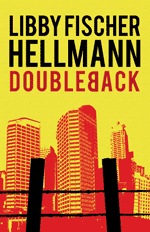
Libby Hellmann on DoubleBack


ROBERTA: Today JRW welcomes Libby Fischer Hellmann, author of six novels including her latest, DOUBLEBACK, featuring PI Georgia Davis. Libby also edited a collection of short stories called CHICAGO BLUES, has written many short stories, and served as the president of Sisters in Crime. Welcome Libby! Please start by telling us where the idea for DB came from.


LIBBY: People who know me well know I’m a little neurotic. (Stop laughing, Roberta). Some of my primal fears are flying, bees, and being trapped in a stalled elevator. So I imagined 6 people in an office building elevator that lurches to a stop. The lights go out, the car sways, and panic ensues – people cry, curse, pray and yell. They think they’re going to die. Suddenly the elevator resumes operating and descends to the lobby as if nothing has happened. The people spill out, and the last man out looks at his watch and says, “Right on schedule.”

That’s the first chapter of DOUBLEBACK. Now all I needed was the rest of the book.

At the time I started writing, Blackwater was all over the news. Eric Prince was saying his mercenaries weren’t exactly military, so they shouldn’t be accountable to military law. Then he said they weren’t really civilians either, so they shouldn’t be accountable to civilian law. It was a Catch-22 and it infuriated me. So I decided to incorporate that into the story. What if mercenaries, who are up to the highest bidder anyway, changed sides? What would happen? How would you detect it? How would you fight it? Those are some of the questions I explore in DOUBLEBACK.


ROBERTA: I'm not laughing, Libby! We love nutty here at JRW:). Why did you mix first person with third person… what’s been the reaction?


LIBBY: I knew from the start that I would be pairing my series protagonists in DOUBLEBACK. My first series features Ellie Foreman, a single mother, video producer, and amateur sleuth. I have always written her in first person, mostly because Ellie wants you to know who she is and how she feels. Georgia, who made her debut in one of the Ellie books, but came into her own in EASY INNOCENCE, has always come to me in third person. That’s because she’s cautious, guarded, and prefers to keep people at a distance. I did try to write Ellie in third person, for consistency’s sake, but it didn’t work. She lost some of her fire. So I bit the bullet and wrote them the way they wanted to be written. I think their voices are distinct enough that readers won’t be confused. At least I hope so.


ROBERTA: Are you going to continue with the dual protagonists?


LIBBY: I don’t know. The next Georgia book looks like it will feature her as the protagonist. However, Ellie will make an appearance. I haven’t started it yet, but in my third Ellie book, AN IMAGE OF DEATH, which, coincidentally, was the book that introduced Georgia, one of the bad guys gets away, and I’m thinking of bringing him back in number 7. So we’ll see how heavily Ellie is involved.


ROBERTA: Will Georgia ever find true love?


LIBBY: Georgia has had a hard time in her relationships, and she’s due for a break. And yes, I know who I’m bringing in to be her love interest. Once again, he’s a character from an Ellie book, but I can’t tell you who or which book-- I’d have to kill you. Or maybe Georgia would.


ROBERTA: Where did your love of suspense come from?


LIBBY: Before I ever thought about writing books, I read thrillers. These were in the salad days of Ludlum, LeCarre, Deighton, Follett, etc.(They were all men back then…) I loved the the sheer inability to put a book down until it’s finished, even though you’re up half the night. Once I started writing, I knew suspense would be a hallmark of my work, and at this point I can’t imagine not building in suspense. I’m just grateful that so many women have broken into the subgenre. More, more!


Libby's on tour with Doubleback right now. You can read more about her books and her tour stops at her website.

Monday, October 26, 2009

The Eternal Student


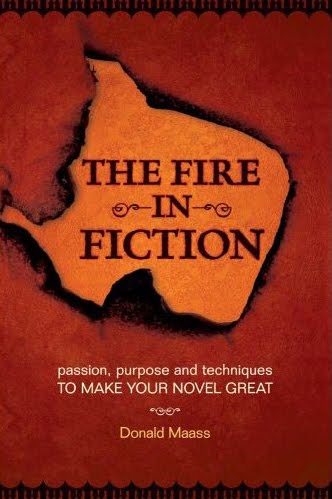
ROBERTA: I have to admit I'm a writing book junkie. I have dozens of them and I'm always looking for tips that will catch my imagination and improve my writing. Just before the mystery convention Bouchercon began, I was fortunate to attend Donald Maass's seminar on writing the breakout novel, sponsored by Sisters in Crime. Who wouldn't want to write the breakout novel, if you're going to all the trouble of writing one anyway? I was quite relieved when he talked mostly about developing complicated characters, rather than outlandish plots. Now I'm going through my novel draft, looking for ways to make the readers care more about my protagonist, to make her human, to make her multidimensional, to bring forth more drama, more conflict, more contradictions. A lot of what he discussed can be found in his excellent new book, THE FIRE IN FICTION. Though sometimes it takes hearing the ideas out loud for them to sink in. Have you heard any tips on writing lately that have caught your imagination and maybe made a difference in what you're writing? Or maybe an oldie but goodie that you tend to fall back on?

HALLIE: When I was at Bouchercon I was on a panel with James Scott Bell who wrote the excellent book, PLOT AND STRUCTURE. He talked about the "doorways of no return." At the end of Act 1 of a novel, for instance, there's a point when the protagonist must have no alternative but to move forward (and do something that character is profoundly uncomfortable doing) -- and once through cannot turn back. Moving through that doorway of no return propels the character into Act 2. It's a much more useful notion than "plot twist."

JAN: I took an online class in screenwritng last fall that was amazingly helpful. I needed it to remind myself how to write a screenplay, but it's also a way to look at novel writing from the point of pure structure. Along the novel writing way, I've developed a system I use for revision -- after the first draft. I was thrilled to find that it worked equally well in revising a screenplay.

On the other hand, I just wrote an essay for an essay collection thats coming out on how crazy parents make themselves over college admissions. And I can tell you, after all these years, an essay is hard every time.

HANK: Writing tips. Yeah. Why are they so provocative? It always seems like there's the perfect one, just the one you need, just around the corner. I'm so bummed I didn't get to hear Donald Maass, and Hallie's class was wonderful and inspirational, as usual. I'm starting a new project and of course, now in my head I'm going through all the "tips" I've ever heard.

And I guess the one I'm stickin' with is: Sit down at the desk. Write the book.

RO: I like Hank's tip. I've taken two classes that I thought were enormously helpful - Hallie's workshop at Crimebake three years ago, and Nancy Pickard's class for SINCNew England a couple of years back.
I bought a lot of books when I first started writing and I leaf through them every time I start a new book. Time to start leafing again.

ROBERTA: Jan, do spill the name of your screenwriter teacher when you get a chance. And please chime in with your favorite writing tips. And come back often this week--tomorrow we'll feature suspense writer Libby Hellmann, then James Benn on Wednesday, and on Friday--stay tuned for the Hallopolooza!