Thursday, February 26, 2009

Carolyn Kaufman on Psychology in Fiction


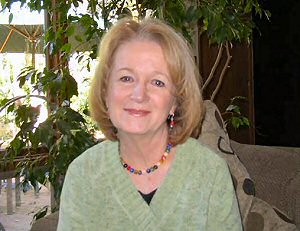
Today JRW welcomes Dr. Carolyn Kaufman. Carolyn has a Doctorate of Psychology (PsyD) in clinical psychology, and teaches full time at the college level. She also works with journalists who are writing nonfiction articles and books, so gets quoted in magazines, newspapers, and books fairly often — that's fun! She's been writing since the age of 11. She's had some short fiction published in magazines, and is currently seeking representation for a contemporary fantasy novel, and working hard on a nonfiction project for Quill Driver Books. The working title is Nervous Breakdowns and Psychotic Killers: The Writer's Guide to Psychology.
ROBERTA: Welcome Carolyn! Love the title! That's quite a list of projects--where do we start?? You're a psychologist who writes and teaches about creating characters in fiction. We'd love to hear your tips about creating characters that come alive on the page.
CAROLYN: I think villains are too often neglected when we talk about characters, partly because some people find them uncomfortable to write. I believe the best villains are the ones we can relate to a little bit. So rather than describing your villain's actions with one of the old standbys — he was abused as a child, she was just born evil, he's a madman — try to figure out what it would take to drive someone to act the way your villain does. Your goal is not necessarily to make the character sympathetic; your goal is more to get the reader thinking "Would I really be any different in the same circumstances?"
ROBERTA: Tell us about the new book project from Quill Driver Books. In a nutshell, you'll be teaching fiction writers how to use psychology accurately in their books. Can you give us some tips in advance?
CAROLYN: One of the most important tips I can give is this — don't trust what you think you know about psychology. I've found that some of the most persistent myths are passed from storyteller to storyteller, because each new writer believes that the last one did her research!
Fortunately, some of the old misconceptions are starting to get cleared up; unfortunately, writers don't have easy access to information that will help them fill in the gaps. For example, more writers are realizing that schizophrenia is not the same thing as multiple personalities. The problem is, they still don't know exactly how they're different, and they let assumptions creep in to fill the gaps.
ROBERTA: And as if that wasn't enough, you blog regularly for QueryTracker.net. Tell us how that came about and what it offers aspiring writers.
CAROLYN: QueryTracker.net is a website that a guy named Pat McDonald created a couple of years ago. Pat decided that writers needed a database where they could 1) keep track of information about agents they were interested in approaching and 2) keep track of their submissions to those agents. The site also gathers statistics so that users can see just how long, on average, it takes Agent X to respond. Or how often Agent Y requests partials and fulls.
I discovered the site about a year ago and was just head over heels with everything it could do. I became a regular contributor to the QueryTracker.net forum, and together with a small group of other contributors, decided to take over responsibility for the QueryTracker.net blog. The blog had languished while Pat was busy developing a new social networking site, RallyStorm. Our mission has been to help and educate serious writers who hope to find an agent and get published themselves; we also keep people abreast of what's going on in the publishing industry from week to week. We've had an incredible response from readers so far!
ROBERTA: And just for fun (because this is one of my pet peeves too), who is the worst fictional shrink you've come across so far?
CAROLYN: I've seen a lot of useless and elitist therapists in written fiction, but the ones who bother me the most are the ones who could care less about helping their clients — they're just there to get rich. (I have no idea which Alternate Universe these therapists live in, but it's sure not one I want to visit.)
If we expand into television and movie shrinks, there are some real doozies out there, but my current favorite is Dr. Vance from the horror/action movie Blade Trinity. Not only does he ooze self-importance and openly mock the main character (not very therapist-like behaviors), he makes a series of disjointed, completely useless interpretations. Then he asks about Blade's mother out of nowhere, to the point that the line is a non sequitur. He's an ugly hodgepodge of clichés. I can never decide whether to laugh or cry about that character.
My fantasy is that writers — and that includes screenwriters! — will be able to use the information in my book to create therapists that look and act more like real therapists.
ROBERTA: Okay gang, pile on with questions and comments! And you can read more about Carolyn at Archetypewriting.com. And by the way, my nominee for dreadful fictional shrink is Dr. Molly Griswold in TIN CUP:
“Meet Dr. Griswold,” golfer Roy McAvoy says to his friends in the movie, Tin Cup. “This is Molly. She’s my shrink.”
“Ex-shrink,” Dr. Molly Griswold corrects him. “We’re sleeping together now so I can’t be his therapist.”
'Nuff said Carolyn??

Tuesday, February 24, 2009

An Interview with Kate Collins


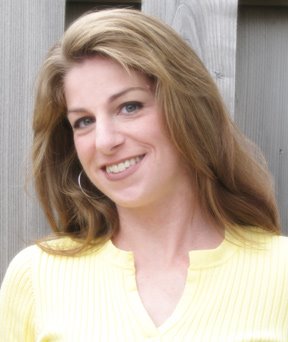
Today, JRW welcomes Kate Collins, the author of the popular Flower Shop Mysteries. Her books have made the Barnes & Noble mass market mystery bestsellers lists, the Independent Booksellers lists, and are available in large print editions in the U.S. and the UK. Kate’s eighth book in the series, EVIL IN CARNATIONS, is a February, 2009, release. Kate and her husband divide their time between their Indiana home, Key West, and Chicago.

JRW: Welcome Kate! Have you always wanted to write?

KATE: Seriously? I never even liked writing checks. In school, I especially hated essays. If someone had told me I would one day write entire novels, I would have punched that person out (especially while laboring over horrible eighth grade writing assignments like, “Describe your life as an inanimate object.”) I knew by second grade that I wanted to be a teacher, and nothing would deter me from that goal.

JRW: What changed your mind?

KATE: It wasn’t until after I’d earned a master’s degree in education, taught elementary school for six years, had two children, and took lessons in tole painting, cross stitch, needlework, crochet, embroidery, rug hooking, macrame, gardening, and sewing, before I discovered I had a flair for telling stories. (It wasn’t like I didn’t already know. My mother had stood me in the corner many times for “telling stories.”) I truly enjoyed my years of teaching all those little open minds, but I hated the politics. So many rules! So many forms! Such a stifling environment for someone with a muse clamoring for attention. I eventually took a correspondence course, started selling short stories to children’s magazines, worked my way into historical romance, and finally found my calling in mysteries.

JRW: How did you come up with the character of sleuth Abby Knight?

KATE: Writing a mystery with a humorous undertone and a dash of romance called for a spunky sleuth. So I created a short but feisty female knight-in-shining armor (hence the last name Knight) who gets booted out of law school and scrapes up enough money for the down payment on a little flower shop named Bloomers.

As popular as Abby is with fans of the series, I think her romance with the sexy owner of the Down the Hatch bar, Marco Salvare, keeps them hooked. Another popular character is Abby’s mother, a kindergarten teacher who believes she’s an artist and foists a different, hilarious creation on Abby to sell at her shop in each book. And I haven’t even mentioned Abby’s sidekicks, Lottie and Grace, or fashionista cousin Jillian, the woman readers love to hate. I guess you’ll have to read about them.

JRW: Are any of Abby’s family or friends based on people from your own life?

KATE: Abby’s father. My father was also a cop, a man who wouldn’t take bribes or play politics, and was punished for it by being passed over for promotions for many years. Unlike Abby’s father, who is paralyzed and wheelchair bound because of a stroke he suffered while chasing down a drug dealer, my father’s stroke happened just after he retired from the force at the age of 54, and he died three years later. He was honored several times for his bravery and always downplayed it. Being familiar with the ways of cops, good and bad, I’ve always had a love/hate relationship with them. I admire their courage, but hate when they use their authority for the wrong purposes.

JRW: Why did you switch from historical romance to mysteries?

KATE: It wasn’t much of a switch because my romances were actually mystery-suspense novels using romance as the springboard. When the American historical market started to dry up, (the call then was for more Regencies, which I didn’t enjoy) I decided to go with my true love, mysteries, then add a touch of romance to it. Plus, my muse, having been a longtime fan of Nancy Drew and Trixie Belden, said I had to. When Muse talks, Kate listens.

So, who in their right mind would ever want to become a writer and have to put up with muses?

I’ll admit it’s a problem. Muses are often noisy around 4 a.m. I’ve had some seriously good sleep interrupted by mine. However, as a left-handed writer, I’ve been told I’m always in my right mind, (but not by my husband) so I really have no choice. I must write.

JRW: What is your writing schedule? Do you only write when the mood strikes?

KATE: If I had to wait for a mood to strike I’d never finish a book. What strikes most often is fear. Fear of missing a deadline, fear of having to work around the clock to make the deadline, fear of phone calls from people wanting to chat during my deadline rush, and fear of my bladder bursting from too many cups of green tea. I’m at the computer by nine in the morning, break for lunch at noon, back to work at one o’clock, and out the door for a walk by four in the afternoon. I treat it as a job, but I love it as a passion.


JRW: So what did you write about for that eighth grade “describe your life as an inanimate object” assignment?

KATE: A spoon. It was a stirring piece.

JRW: OUCH! For that you get to answer our Jungle red quiz.

Sex or Chocolate? I have a choice? I thought they came as a unit, you know, like eggs and bacon. . . well, never mind. I’ll go with chocolate. Let’s not say anything to my husband, okay?

Daniel Craig or Pierce Brosnan? Pierce, definitely. He’s a gentleman on the outside, but there’s a mischievous sparkle in his eyes that says there’s a bad boy beneath that tux just dying for a reason to come out.
Three true things about you and one lie; we'll guess which.
I speak and read passable French. I love to cook. I am hooked on the TV show LOST. I can’t stand any noise around me when I write. Have at it.

Monday, February 23, 2009

Welcome Nancy Pickard!


ROBERTA: Jungle Red Writers is so very delighted to welcome mystery goddess Nancy Pickard! She is the author of sixteen novels plus short stories and Seven Steps on the Writers Path with Lynn Lott. The Virgin of Small Plains won the Agatha award for best novel, and was a finalist for the Edgar, the Dilys, and the Macavity awards.

Welcome Nancy! First of all, we are dying to know what's coming next and when will we see it?


NANCY: Thanks, Roberta. It will be THE SCENT OF RAIN AND LIGHTNING, another stand-alone set in a small town in Kansas, but it's not finished yet. It's the story of what happens when a small town sends the wrong young guy to prison for murdering one of their most beloved residents, and then what happens twenty-six years later when he is released. It's a family saga, small town politics, love story, and mystery, set against dramatic landscape.

ROBERTA: Can't wait for that--though I guess we'll have to. I remember hearing you interviewed at Malice Domestic several years ago, just after THE VIRGIN OF SMALL PLAINS had been published to much acclaim. You said that you'd pulled back from conferences and other activities over a period of time to concentrate on writing. Can you please talk about your writing process and how you keep your focus?

NANCY: There was another reason I pulled back, which was that I felt myself getting cynical about conferences, etc. I sternly told myself that if I couldn't enjoy them and be appreciative, I should stay home. It took me about 10 years to go back with any regularity, but when I did they were fun again.

As for my focus? I don't have much sometimes. I'm a binge writer--when it's flowing, I don't do anything but write. But when it's not, flowing, when the well goes dry after I've sucked so much out of it, then nothing happens at all for a while. When I started writing fiction, I brought my disciplined, journalism-trained self with me, but I lost her somewhere along the way. I began to go with the ebb and flow of my internal rhythm of creativity--as pompous as that sounds, alas--and it changed my process completely. I think I write better books as a result of that change, but I have a harder time meeting deadlines. And by "harder" I mean I don't meet deadlines, lol. Well, I guess I do still meet the ones for short stories, but novels? Hopeless. I do not recommend this course of non-action for new writers!

ROBERTA: You've had wonderful success with short stories along with your novels. Tell us about how writing shorts feels different. Can you work on two things at the same time?

NANCY: I can't work on two things at the same time, except in the sense that I can sometimes write a short story or plot a new book during those dry-well periods I described earlier.

Short stories feel different, because they feel. . .short, lol. It is such a joy to know I will be able to type THE END after only about three weeks. I don't mean that it takes me three weeks of doing nothing but working on a story, I just mean that's about the gestation, writing, and editing period of several days spread over several weeks.

ROBERTA: Of course, everyone is nervous in this publishing climate. Since you've been at this a while, any thoughts on where you think we're headed? Advice for the anxious writers?

NANCY: I've been in this fiction business almost 30 years, and I can tell you that I have never experienced a single year when publishing people sat around on Dec. 30 and said to one another, "Wow, what a great year in publishing!" It's always a bad year in publishing. That's one reason I stopped reading industry news a long time back. It's best, I think, to limit one's focus to the page in front of us, because our own writing is the only thing we can control, and I'm not even sure how much real control we have over that. My philosophy from the beginning was that somebody is going to be published, no matter how dire the times, and it may as well be me. I've heard other published authors express the same bedrock sentiment. I recommend it. As for where we're headed? Every year will seem like a bad year in publishing to a lot of people; for others, well, somebody has to get published.

ROBERTA: I love that mantra: "Someone is going to be published, it might as well be me...someone is going to be published, it might as well be me..."

Last question, we can't end an interview without mentioning your central role in founding Sisters in Crime. Have women writers made progress since the early days of the organization? What do you think we need to keep working on?

NANCY: Absolutely, we've made tremendous progress. If we could compare bookstore and library shelves today with those of, say, 1980, we'd see the astonishing difference in the authors and kinds of books. What do we need to do? We, individually, need to keep writing the best books we can. We have much, much more than a toehold on those shelves now; we have entire shelves to ourselves. To keep that place, we need be creative, adventurous in our writing, and confident in ourselves. As an organization, we need to continue to support our sisters (and fellows). Join Sisters, provide useful programs for writers, BUY BOOKS, create and maintain links to the industry, have fun.

ROBERTA: Thank you for visiting--now go back and finish that book so we can all buy it! And the floor is open....