
Mykhailo Dorokhov
LUCY BURDETTE: In addition to crime fiction, I enjoy smart women’s fiction. I bought a book recently from an author I like and started it eagerly. A chapter or two in, I was not enjoying the protagonist. She seemed pathetic in her life, with a recently deceased estranged mother, a dreadful boyfriend who had dumped her long after she should have cut him loose, and a work addiction. I persevered and the book got better. I realized that the way the character started out was an important beginning and launched an arc that allowed her to grow progressively open to love, and understanding of herself and others. But there must be a balance, because if a character is too unlikeable, who wants to read more?
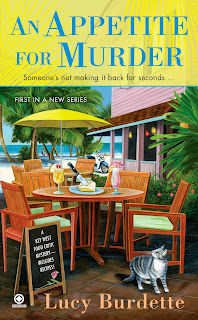
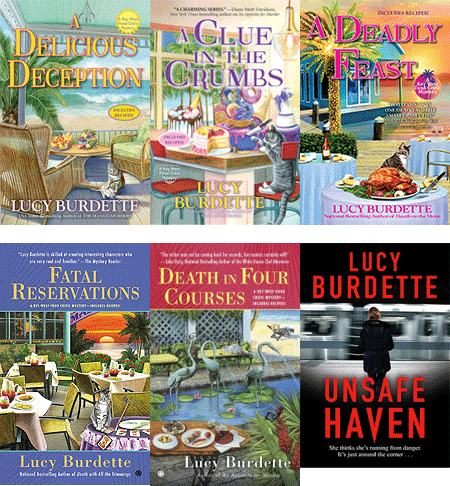
I also realized that my own character Hayley Snow started out on the pathetic side. I’ve heard from a few reviewers and readers that they did not particularly like her at first, because she seemed self-absorbed and uncaring about dear friends. Over the course of 13 books, she’s improved, as my mother-in-law used to say about difficult grandchildren! And like the women’s fiction heroine, I think she needed to start low in order to have a place to grow. So that’s my question for the day, have you run into this in the books you’re writing, and definitely the books you’re reading? Is it a necessary part of a character's growth to start low? Are there books you’ve set aside completely because of this?
HALLIE EPHRON: One of the things I learned early on was to give my character room to grow. Either for things to get worse or better. If you start in the depths of despair you cut off your options. Constant pain makes a reader numb. And yes, I’ve put aside a book because I didn’t like the main character or found them annoying (too many tics, too snarky, not even a teeny bit nice…) But I love a character who’s snarky in interesting, revealing ways. It’s tricky.
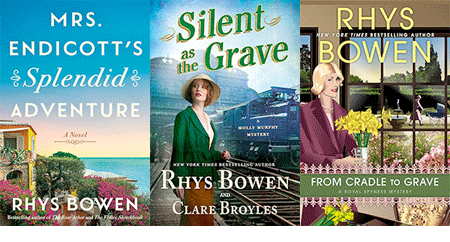
RHYS BOWEN: I have to like the character from the beginning. He or she doesn’t have to be perfect but I need to be rooting for them. I can’t tolerate whiny, self-absorbed characters! But I do appreciate growth throughout a series. I think Molly Murphy has learned to control impulse behavior a little and Lady Georgie has definitely grown up a lot as the series has progressed.
HANK PHILLIPPI RYAN: I have to be interested in the main character from the beginning. What are they wanting, what are they doing to get it, what are the stakes? And it’s a different juggle in a series versus a standalone, because in a series–well, maybe you have a little more time. But re-thinking, no. No matter what, you have to grab the reader.
So– I don’t mind snarky, if they have a goal. (Whiny victims are not my favorite–unless they see their problem, and work to change it.). A person with a plan, that’s what I love. No matter what it is. I think there has to be hope. And determination. And maybe a realization of foibles. Or an intrigue with the plan. Gah. Yeah. I just have to be interested in them.
JULIA SPENCER-FLEMING: I agree with Hank - I’ll keep reading with “interesting.” I remember diving into Laura Lippman’s AND WHEN SHE WAS GOOD and being struck how her protagonist - a suburban madam with a LOT of sharp edges - became compelling through a combination of making it interesting (who doesn’t want to know how a high-end call girl operation works?) and by carefully revealing the character’s rough back story, which transformed her often unlikeable shell into armor against a world that had been cruel to her.
Another thing that will keep me reading when the character is a sad sack? Humor. The great example of this is Bridget Jones, who is completely down on herself and kind of hopeless - but who leaves you laughing on every page. I’ll stick around to see if you can do anything with your miserable life if you tickle my funny bone.
JENN McKINLAY: It’s all so subjective. I’ve had friends recommend books, assuring me that I would love the characters so much. I start to read and discover I loathe the characters and then I have to re-evaluate my friendship with that person. Like Julia, humor will win me over with a difficult character but it’s not necessary. I recently read Lessons in Chemistry (my fave book of 2022 thus far) and the main character was interesting and engaging but not particularly funny or charming. I have discovered that I am not a fan of the angry character. The jilted woman/man who spends the length of the story in a fury over how she/he was mistreated. Hard pass.
DEBORAH CROMBIE: Characters don't necessarily have to be "nice." But I do have to like something about them, or to find their situation interesting enough that I want to like them. Humor will pull me in, and I do like to see an opportunity for growth. But not too whiny, or I won't have the patience to stick with them. As Jenn says, it's all so subjective. I loved Eleanor Oliphant, for instance, who was certainly not likable, but there was something relatable that pulled me in.
How about you reading Reds, what's your take on lovable vs non-starter characters?