Showing posts with label character development. Show all posts

Wednesday, June 12, 2024

Y'all, I'm a 7! by Jenn McKinlay

 JENN McKINLAY: If you read my post yesterday, you know I was recently at a reader author gathering called RAGT. One of the high points was spending time with my long time author friend Lori Wilde. Luckily for me, she is also a writing instructor and she graciously listened to me whine (and wine) about my recent issues in crafting "the same but different" romantic comedies.

We discussed various ways to break through my mental block and one of them was using the Enneagram Personality to test to help inform my characters and give them more natural conflict. She also advised me to take the test because she suspected I was a 7.

Naturally, I took the online test, which our assistant Christie Conlee found for me here: Enneagram Test


There are 9 personality types and the test tells you the strongest to the weakest in a handy pie chart (mine is below).


As you can see, I'm a 7 (Lori was totally right!) 9 and 3 for my strongest traits. Well, I read the descriptions -- enthusiast, peacemaker, achiever -- and thought WOW! That's me, totally me! 

Lori's point was that I could use the Enneagram to flesh out my characters and give them natural conflicts (which I struggle with because I generally like my characters and don't want to torture them) but as I read the descriptions of my personality traits, I realized THIS IS WHY I STRUGGLE WITH CONFLICT FOR MY CHARACTERS!!!  

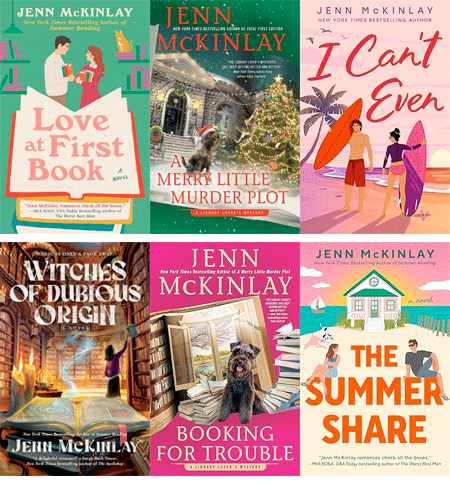
The combo of enthusiast (always striving for positive experiences) followed by the peacemaker (always going with the flow to keep the peace) make it such a challenge for me to torture my characters as one must. This is why LOVE AT FIRST BOOK (aka the book that about killed me) was so difficult to write. I leaned into conflict and pain and, boy howdy, did that feel uncomfortable and difficult! 

So, now that I know this about myself, I feel as if a world of self-awareness has opened up for me and I can approach my writing much more intentionally (thank you, Lori!) and I can use it to craft characters who have authentic conflict. Straight up, I am super excited about this!!!

Your turn, Reds and Readers, have you taken a personality test (hit the link above if you want to) and what did you learn? Reds, do you use personality tests to inform your characters?

Monday, September 26, 2022

The Trouble with Characters

Mykhailo Dorokhov

LUCY BURDETTE
: In addition to crime fiction, I enjoy smart women’s fiction. I bought a book recently from an author I like and started it eagerly. A chapter or two in, I was not enjoying the protagonist. She seemed pathetic in her life, with a recently deceased estranged mother, a dreadful boyfriend who had dumped her long after she should have cut him loose, and a work addiction. I persevered and the book got better. I realized that the way the character started out was an important beginning and launched an arc that allowed her to grow progressively open to love, and understanding of herself and others. But there must be a balance, because if a character is too unlikeable, who wants to read more?


I also realized that my own character Hayley Snow started out on the pathetic side. I’ve heard from a few reviewers and readers that they did not particularly like her at first, because she seemed self-absorbed and uncaring about dear friends. Over the course of 13 books, she’s improved, as my mother-in-law used to say about difficult grandchildren! And like the women’s fiction heroine, I think she needed to start low in order to have a place to grow. So that’s my question for the day, have you run into this in the books you’re writing, and definitely the books you’re reading? Is it a necessary part of a character's growth to start low? Are there books you’ve set aside completely because of this?

HALLIE EPHRON: One of the things I learned early on was to give my character room to grow. Either for things to get worse or better. If you start in the depths of despair you cut off your options. Constant pain makes a reader numb. And yes, I’ve put aside a book because I didn’t like the main character or found them annoying (too many tics, too snarky, not even a teeny bit nice…) But I love a character who’s snarky in interesting, revealing ways. It’s tricky.

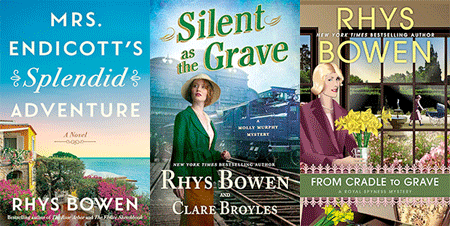
RHYS BOWEN:  I have to like the character from the beginning. He or she doesn’t have to be perfect but I need to be rooting for them. I can’t tolerate whiny, self-absorbed characters!  But I do appreciate growth throughout a series. I think Molly Murphy has learned to control impulse behavior a little and Lady Georgie has definitely grown up a lot as the series has progressed.

HANK PHILLIPPI RYAN: I have to be interested in the main character from the beginning. What are they wanting, what are they doing to get it, what are the stakes? And it’s a different juggle in a series versus a standalone, because in a series–well, maybe you have a little more time. But re-thinking, no.  No matter what, you have to grab the reader.

So– I don’t mind snarky, if they have a goal. (Whiny victims are not my favorite–unless they see their problem, and work to change it.). A person with a plan, that’s what I love. No matter what it is. I think there has to be hope. And determination. And maybe a realization of foibles. Or an intrigue with the plan. Gah. Yeah.  I just have to be interested in them. 

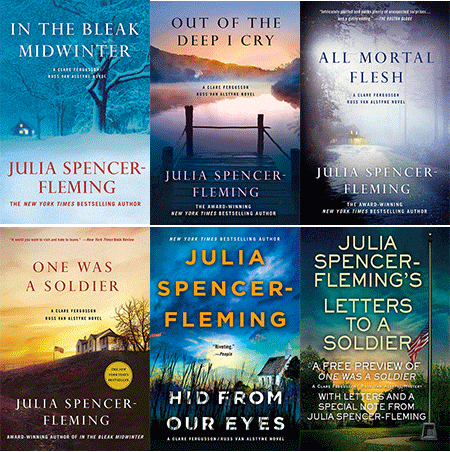
JULIA SPENCER-FLEMING: I agree with Hank - I’ll keep reading with “interesting.” I remember diving into Laura Lippman’s AND WHEN SHE WAS GOOD and being struck how her protagonist - a suburban madam with a LOT of sharp edges - became compelling through a combination of making it interesting (who doesn’t want to know how a high-end call girl operation works?) and by carefully revealing the character’s rough back story, which transformed her often unlikeable shell into armor against a world that had been cruel to her.

Another thing that will keep me reading when the character is a sad sack? Humor. The great example of this is Bridget Jones, who is completely down on herself and kind of hopeless - but who leaves you laughing on every page. I’ll stick around to see if you can do anything with your miserable life if you tickle my funny bone.

JENN McKINLAY: It’s all so subjective. I’ve had friends recommend books, assuring me that I would love the characters so much. I start to read and discover I loathe the characters and then I have to re-evaluate my friendship with that person. Like Julia, humor will win me over with a difficult character but it’s not necessary. I recently read Lessons in Chemistry (my fave book of 2022 thus far) and the main character was interesting and engaging but not particularly funny or charming. I have discovered that I am not a fan of the angry character. The jilted woman/man who spends the length of the story in a fury over how she/he was mistreated. Hard pass. 

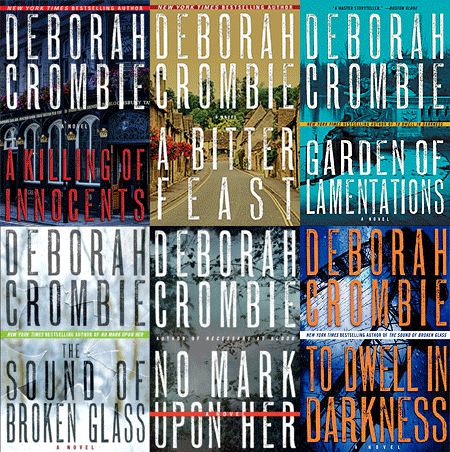
DEBORAH CROMBIE: Characters don't necessarily have to be "nice." But I do have to like something about them, or to find their situation interesting enough that I want to like them. Humor will pull me in, and I do like to see an opportunity for growth. But not too whiny, or I won't have the patience to stick with them.  As Jenn says, it's all so subjective. I loved Eleanor Oliphant, for instance, who was certainly not likable, but there was something relatable that pulled me in.

How about you reading Reds, what's your take on lovable vs non-starter characters?


Thursday, August 17, 2017

Paddington it shall be.

HANK PHILLIPPI RYAN:  Aw. Love you, Mary Feliz.  We are honored to have you here today.
Reds and readers, grab a cup of tea or coffee. Just–take a minute for this.
   

Two men and their bears...
   By Mary Feliz

When I first spotted Michael Bond holding a Paddington Bear who clearly adored him, I gasped. It was the same noise that might result from being punched in the stomach, but I'd been punched in the heart. Or had my heart squozen so hard the sound splurted out.

I couldn't figure out a way to tie my need to write about the death of Paddington Bear author Michael Bond with a blog about Mystery and Thriller writing. But I knew I couldn't write about anything else.

Michael Bond died in June 2017. My own father had died weeks earlier. Born six months apart, they grew up in the Great Depression and served in World War II. And both had bears they loved, with photos to prove it. Both had enormous respect for children and bears and were dispensers of the unconditional love some people connect to only in dogs or stuffed animals.

My own relationship with Paddington is a meandering one. I didn't grow up with him, but the bear wandered into my life several time. At age eleven, inching beyond the age of wonder but with one foot still firmly anchored in childhood, I discovered the Paddington books. I don't remember the text so much as the illustrations, which looked nothing like bears, as far as I was concerned. With his ears covered by a slouchy hat and a nose that was far too pointy, I thought Paddington resembled a porcupine or muskrat more than a refugee bear. I wrote to the author and told him so. I don't remember receiving a response, but Paddington was a refugee in London and as such needed a hat to keep his ears warm and dry. He's also not the sort of bear who worries about keeping his hair coiffed, or who bothers about spilled marmalade.

Eight years later, I embarked for a year at a British university. While I immersed myself in academics I didn't skimp on sightseeing or gastronomic exploration. I made friends and became part of a community. When I left I was given a stuffed Paddington, which had recently taken toy stores by storm. The shopkeeper instructed my friends that his boots were "specially made for him by Dunlop." My housemates were quite taken by Paddington's wellies, and by the idea that "when you have children, they can wear them." At 19, the idea of children was terrifying, but in little more than a decade, both my children stomped around in Paddington's wellingtons. (Paddington was happy to share.)

Paddington now supervises my writing desk. He kept me company in the days following my father's death, when creativity and sleep escaped me. Bond knew similarly difficult days and credited Paddington with pulling him through, “There is something so upright about Paddington. I wouldn’t want to let him down."

Which brings me to my father's bear. I don't know whether he had a favored soft toy as a child, but he certainly honored those my brother, sister, and I chose as companions. He conversed with them and instructed them to watch over us. He solemnly tucked them in at night when he put us to bed. Many years later, when my husband's mother suffered from dementia, my father suggested a stuffed animal might provide comfort. In her case, we chose a snuggly elephant who protected her when she was in the hospital among strangers and surroundings that were stranger still.

A year or two later Dad's memory began drifting. His hallucinations included gang members who lived in his living room and threatened my mother. As his doctor struggled to find a medication that would banish the gangs, I lived a continent away and scrambled for ways to help. In the wee hours one morning, I decided Amazon could provide a bear to protect my Dad from his demons. (My stuffed Paddington supervised while I logged into my Amazon account. Paddington hales from Peru, which is home to the Amazon River. Coincidence? I think not.)

Did my Dad believe the bear I sent him was real? I don't think so. But, partly to entertain me, he spoke to him in "bear language" and made sure he was tucked in at night with a view of the front door he guarded. When I learned my dad thought 24-hour protection service might be too arduous a chore for a single bear, we adopted a friend. The second bear was smaller, fit under my Dad's chin when he slept, and became known as Rusty. On a dark, rainy night when my Dad fell out of bed, we called paramedics to tuck him back in. When they handed him Rusty (with all the respect a proper bear companion deserves), raindrops shed by their turnout gear had dampened Rusty's fur. My dad noticed. "Rusty! You're all wet! What happened to you?" Full of concern, he dried Rusty gently with a corner of the sheet. "He gave the fireman a hug," I told him. "The fireman's coat was wet because it's raining outside."

"Ahhh," said my father. "Well, you're safe now." And they both fell asleep quickly.

Years ago, I learned that many law enforcement officers stash bears in the trunks of their squad cars to give to youngsters in trouble. In comforting the stuffed toys, the children feel stronger. And while a child might not admit her fears to a stranger, she might be willing to reveal the terrors stalking her bear.

And that brings me full circle, back to talking about writing, characters, and the community we all need to feel safe and connected. Community arises spontaneously among humans even in the most dire of situations because we all feel that need to both give and receive comfort. My mysteries look at what happens when that sense community takes a damaging blow, and what members do to restore the balance between good and evil. While my characters aren't based on real people, I strive to make them seem authentic. Michael Bond felt the same way about Paddington,  “Unless an author believes in his character, no one else is going to."

Whether my father or Bond believed their bears were real isn't important. Both respected bears and people, particularly people in danger of being overlooked. In 2014 when tempers erupted in Europe regarding the influx of refugees, Bond said, "Paddington, in a sense, was a refugee, and I do think that there’s no sadder sight than refugees.” 

Bond didn't shy away from Paddington's illegal entry into the UK. In the books, the bear's adopted family is ever aware of his risk of deportation. (Paddington reached London after stowing away on a steamer from Darkest Peru.)

After my father's death, friends, neighbors and former co-workers wrote to my mother. Nearly all of them penned some version of this description, "He was a kind and genuine man who helped me when I needed it most." I think the same could be said of Michael Bond and any man who is beloved by a bear. My Dad and Mr. Bond, had a capacity for unconditional love and an ability to embrace the imaginary world that means they both will live forever.

HANK: As I said. Oh, Mary, you are a treasure. And Paddington, too. We talked about him recently, I know…(and our darling Coralee told me where to find an okapi! Thank you!) 

Do you still give stuffed animals as baby  gifts?  Which ones?

And aren't you glad Mary came to visit?


Mary Feliz writes the Maggie McDonald Mysteries featuring a Silicon Valley professional organizer and her sidekick golden retriever. She's worked for Fortune 500 firms and mom and pop enterprises, competed in whale boat races and done synchronized swimming. She attends organizing conferences in her character's stead, but Maggie's skills leave her in the dust.

Mary's newest:  

Silicon Valley Professional Organizer Maggie McDonald tackles her toughest case yet when a dear friend is falsely accused of murder. Aside from a depressed mastiff with PDSD, the only witness is an undocumented teen. Should he make a statement and risk deportation or stay mum and let the bad guys run amok? Or can Maggie organize a third solution without putting her friends, her family, and her community at risk? 


Sunday, June 11, 2017

What's your spirit animal?

Jenn McKinlay: Years ago,  I was driving to my new part-time gig at the Desert Botanical Garden as their head research librarian. I was nervous. This was my first run at an academic library position and I desperately did not want to screw up. 

Driving my Jeep over the dusty back road that led into the research buildings, while the rising sun was just a sliver of peachy orange on the horizon, I spotted something on the road up ahead. I slammed on my brakes. As the dust settled, I saw two Gambel's quail, herding their babies across the dirt track into the desert. The way they ran back and forth, nudging their young with the doo-dads (yes, technical term) on their heads bobbing, I suddenly felt like they were there to tell me 
that this job was a good move, that everything was going
to be okay, and I was going to be just fine. They were right.
I worked with some amazing scientists and educators over
the next two years in what became one of my most favorite 
jobs.

The quail lived in the garden, so I got to visit them every day and when they ran amidst the cactus and creosote, they always made me smile. It was then that I decided they were my spirit animal. Frankly, as my people tell me, their rather frantic personality is a teeny bit like my own. 

While raising my sons, I observed that they, too seemed to have spirit animals. Having just learned to ride, Hooligan One liked to pedal his bike FASTER on a downhill and then would spread his arms and legs wide, looking like an eagle in flight and making his mom scream (on the inside) in complete and total panic.

Hooligan Two found his spirit animal early on. I believe he was just a year old and on our annual trip to San Diego, he belly crawled toward the ocean like a sea turtle heading back out into the wild. I had to chase him before the big waves rolled him and he bellowed at me when I snatched him up, thwarting his escape. Hub recently had a moment while we were in Hawaii where he and an enormous sea turtle out in the wild bonded, so he shares the sea turtle affinity with our son, although up until then, he always reminded me of a big cat but that could just be because he has a fabulous head of hair. Truly, it's annoying.

While writing my most recent series, the Bluff Point series, I incorporated dogs, cats, and birds (but mostly dogs) into each story -- thus the titles ABOUT A DOG, BARKING UP THE WRONG TREE, and EVERY DOG HAS HIS DAY. (Sorry, I'm a punster. I can't help it.) -- and an interesting thing happened. As I researched the various dog breeds and studied their different personality types, I began to match my characters' personalities to that of their dog or cat or bird. Essentially, using the animal in the story as their spirit animal. It wasn't intentional at first but it became a new method for me to understand my characters, a lot like some authors use astrology charts or personality tests to develop their characters. I liked it so much, I think I'm going to keep using it. 

So, tell me Reds, what is your spirt animal? What tricks do you use to flesh out your character's personality?


Thursday, September 3, 2015

A Journey of Character?

HANK PHILLIPI RYAN:  A writer can change her mind. No question about that. Or...“realize” her mind. No question about that, either. Anyone who’s ever written a character they thought they understood—and then discovered, with a bang or a whimper, that they were wrong wrong worng has experienced the wonderful magic of character growth.

And its not only fictional characters who grow and change, of course. Sometimes the author grows, and then our characters follow.  I’m such a Lynne Raimondo fan. Her “Dante” mysteries—and more about that below—are flat out terrific.

And Lynne’s here today to talk about some inside scoop on her own real life—wow, I did not know this stuff! And how it may connect her to another author. And to you.


On Harper Lee And A Writer’s Journey
                    By Lynne Raimondo

Last month, author Harper Lee set the literary world on fire once more with the publication of Go Set A Watchman, a “rediscovered” sequel to her Pulitzer Prize-winning novel, To Kill a Mockingbird.  I’m not going to delve into all the controversy surrounding Watchman’s publication, or whether, as some have claimed, it would have been better to leave the manuscript in the safe deposit box where it was hidden, a rough draft to be read primarily by future literary scholars.

Still, Watchman has given me food for thought about how a writer’s work grows and changes over time.  The revelation that Lee originally conceived of Atticus Finch as an unapologetic racist has shocked the public, and rightly so.  Learning that this revered icon was a white supremacist is like finding out that Jo March was actually Lizzie Borden.

It all makes sense, though, if you keep in mind that Watchman isn’t really a sequel.  It’s an early draft, or maybe the debut novel Lee would have published if her wise editor, or  Truman Capote, or her own amazing intuitive sense hadn’t sent her back to the drawing board for two more long years.  The Atticus of Watchman isn’t the same man as the Atticus of Mockingbird because, as Lee continued to spend time with him, she changed her mind.

I haven’t read Watchman and I’m not sure I will.  By all accounts its central theme is disillusionment, a young woman’s bitter discovery that the father she revered as a child has gigantic feet of clay.  Like several others have mentioned on Jungle Red, I think I’d rather remember the Atticus of Mockingbird, a book I read over and over as a teenager and that played a major role in my decision to become a lawyer. 

Perhaps Lee’s earliest writing efforts were autobiographical.  “Write what you know” isn’t just good advice, it’s also a lot easier when writers are first starting out.  We feel more comfortable testing our ability with what’s already familiar.  It’s only later, after we’ve gotten a handle on the basics, that we become more confident of ourselves as storytellers, free to abandon the narrow script of our lives for the much broader territory of the imagination.

It’s conceivable that the Jean Louise of Watchman more closely reflects the relationship Lee had with her own father.  I haven’t read Lee’s biography, so I don’t know this for a fact, but it seems likely there was some friction between them.  Perhaps too, as Lee flexed her talent, she grew bolder and more willing to experiment.  The first-hand experiences that originally inspired her weren’t suited to the narrative she eventually settled on, one in which Atticus wasn’t a hateful bigot but a hero.

Then too, the circumstances had changed.  Watchman was reportedly begun in the 1950s when Jim Crow was at its zenith.  By 1960, when Mockingbird was published and Lee was 35, segregation’s grip on the South was beginning to weaken.  I also suspect Lee had changed a bit herself.  What seems hard and fast in our twenties often takes on a different, more nuanced aspect as we age.  Perhaps this growth enabled Lee to better understand the social pressures that shaped her original Atticus, and to find the seeds of humanity that would transform a despicable Klan sympathizer into a champion of equal rights.

These speculations are very much tied to my own path to becoming a writer.  I’m by no means comparing myself to the great Harper Lee, but looking back, I see a similar kind of journey.  When I first started to write, I had just gone through some professional upheavals that were, to say the least, depressing.  For those who don’t know me well, I was a senior lawyer at Arthur Andersen LLP when it was indicted by the Justice Department and then convicted by a Houston jury.  After the firm collapsed, I became its general counsel, helping to wind down the affairs of this once-proud, ninety-year old institution.  A few years later, a unanimous Supreme Court reversed Andersen’s conviction, but by then it was too late:  the firm was already in its grave.

After living through this debacle, I wasn’t just exhausted.  I was angry and disillusioned and close to quitting the practice of law.  But a friend of a friend coaxed me into taking a new job with the State of Illinois, in the administration of Rod Blagojevich.  You may remember him as the Illinois governor who was later convicted of trying to sell a Senate seat.  Suffice it to say that it didn’t take me long to realize that job wasn’t for me either.

It was around this time that I took my first stab at writing a novel.  Given how I was feeling, it’s not surprising that I started out with a protagonist a lot like me:  a middle-aged lawyer fed up with the world and unsure of where to go next, the very personification of the mid-life crisis I was then caught up in.  I had no real plot in mind except that she – because of course she was a she – would eventually find happiness and professional fulfillment.

I made many mistakes with that manuscript, but the biggest was not understanding the difference between writing and therapy.  Like the imaginary Harper Lee I’ve conjured up here, I wasn’t writing first and foremost to create fiction, but to get something off my chest.  I knew how to put a few words together, but that was only the start.  It was only later, with the intervention of time and and a great deal of practice, that I could move out of my autobiographical comfort zone and write something a reader besides me might care about.  In other words, a story.

Even then, Mark Angelotti, the non-lawyer protagonist of Dante’s Wood, my first published novel, had a lot of emotional baggage I might not give him today if I were starting out fresh.  In fact, by book three in the series, Dante’s Dilemma, which released on August 4, he’s grown into someone considerably less bitter.  But that’s the beauty of writing a series.  Unlike Go Set A Watchman, each of my books is a true sequel.  So I’m free to keep modifying the script without shocking anyone, to grow and change my character in ways that make him a more sympathetic, if not always perfect human being. 

How about you?  Have you ever made a major change in a character? And if so, was it because of something that happened to you in your own life?

HANK: Oh, what a fun question! And a hard one. I know good guys in my books have turned out—little had I predicted!—to be bad guys. I do know, also, on days that I get good or encouraging news, like a great review, it’s MUCH easier to write.


 How about you, Reds and readers?

********************************

Lynne Raimondo is the author of Dante’s Wood, a Library Journal Mystery Debut of the Month, Dante’s Poison, and the recently released Dante’s Dilemma, all featuring Mark Angelotti, a blind, psychologically troubled forensic psychiatrist.  Before turning to writing, Lynne was a partner at a major Chicago law firm, the general counsel of Arthur Andersen LLP, and the general counsel of  the Illinois Department of Revenue.


Blind psychiatrist Mark Angelotti is faced with his most troubling case yet when he is asked to evaluate Rachel Lazarus, the wife of a slain University of Chicago professor. 
Months earlier, the professor’s body was found stuffed into one of the exhibits at “Scav,” the school’s world-famous annual scavenger hunt, and – in a feast for the press – missing a vital piece of its anatomy. Though she’s confessed to her husband’s murder, Rachel is mounting a battered woman’s defense.

Forced into helping the prosecution, Mark becomes unsure of his objectivity when his investigation uncovers uncomfortable parallels between Rachel’s history and his own. That concern proves well-founded when his damaging admission at trial all but convicts Rachel. Then a tip connects the case to another suspected murder and evidence that Rachel may not be guilty after all. As he plows ahead during a brutal Chicago winter, Mark soon learns he has far more to worry about than treacherous snow and ice:  someone will do anything to guarantee that Rachel takes the fall.

Reviews of Dante’s Dilemma:

“A must read . . . [The] writing is first class and readers will love having to guess the finale right up until the reveal on the very last page.” – Suspense Magazine