Showing posts with label characters. Show all posts

Monday, May 29, 2023

Characters who surprise us: Bring it on!


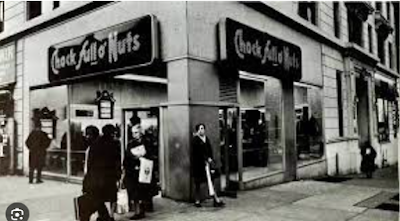
HALLIE EPHRON: Decades ago, I was on the upper west side of Manhattan, sitting in the window of a Chock Full of Nuts (that’s how long ago) on Broadway and 116th St., sipping my coffee and eating a cream cheese on raisin bread sandwich, when a man who was walking by and reading a newspaper walked smack into a pole. 

He dropped the paper and punched the pole, immedately cradling his hand and cursing. Then he froze and looked around. Picked up the paper and scurried on.

His reaction revealed a lot about that poor guy. Oblivious enough to walk down Broadway with his head buried in a newspaper. Ready to go to war with a post… 

So much rage! I wouldn’t want to be his wife. Or kid. Or dog. 

And I imagined how someone else might react to running into a pole (as is so easy today with most of us glued to our cellphones instead of the objects and pedestrians and cars around us.) One person might bounce back and apologize to the pole. Or look around to see if anyone is watching and skulk off, pretending nothing happened. Or… done something else that would have revealed the person's mood or circumstances.

Have you had one of those writing moments, when a character you were writing surprised you with an unexpected reaction that showed you something you didn’t know about them?

RHYS BOWEN: when I was writing Constable Evans he had to go to France and they took the Eurostar through the Chunnel. And he came up the other side green and sweating. Until then I had no idea he was claustrophobic. And of course my next thought was: right, my boy. I’m sending you down a slate mine in the next book!

HALLIE: Reminds me of Michael Connelly who sends Harry Bosch, who was traumatized by tunnels in Vietnam, into dark claustrophobic spaces. Interesting how something unexpected in the FRONT story triggers an idea for something that happened to trigger it in the character’s BACK story.

JULIA SPENCER-FLEMING: I found out something I didn’t use! In my early books, Rev. Clare Fergusson meets a charming and funny banker who spends time in the summer up in her area, which is a popular resort location. They never even kissed, although he was constantly flirting with her and hinting that she ought to visit him in NYC for some “one-on-one” time away from the prying eyes of her congregation.

She was talking about the relationship with one of her vestry, and I’m transcribing the conversation, as it sometimes feels like the author does, and the vestry member says, “My dear, he doesn’t realize that he’s gay, but surely you do.”

I was SHOCKED! I had zero idea. NONE. I sat with it for a while and wound up deciding to leave it out, because at that point, it would have added another subplot in an already over-laden story. So far, he never has come out, but it definitely affected how I wrote that character, and the relationship, going forward.

First time I found out something I didn’t know about one of my characters - and it was another totally fictional person who pointed it out.

JENN McKINLAY: In my latest book SUMMER READING, Emily Allen, the best friend of the main character Samantha Gale, is a librarian and when we meet her in the book, she’s doing research on cancer for a patron. Or so I thought.

It turns out she’s doing the research for herself – except she doesn’t have cancer. I will say no more to prevent spoilers but it sure surprised the heck out of me! Fear not, her story is completed in LOVE AT FIRST BOOK coming in May 2024.

HANK PHILLIPPI RYAN: Ah, every time. Every time. And until it happens, I worry.

BIG shock in TRUST ME. Massive shock in THE MURDER LIST. Even in Prime Time, my first book, I remember it happening, and how surprised I was that my brain was doing something I hadn’t planned or thought of. At one point Charlotte is getting yelled at by her boss for something unfair, and she stands right up to him and defends herself.

Whoa, I thought. Where did that come from? I had thought Charlotte was more conciliatory. But nope.

Even in one scene in my upcoming One Wrong Word, Arden completely goes on a tear, threatening lawsuits and retaliation. It was SO much fun to write, but again, I had not “planned” for that to be her reaction. She came alive, and that was magical. It’s why we write, isn’t it? To be surprised?

DEBORAH CROMBIE: Nothing about writing is more fun than finding out these delicious things about your characters as you're writing. 

I had never even thought about why my detective sergeant, Doug Cullen, is a cop until I was writing a scene in A KILLING OF INNOCENTS where he's telling another character that it was assumed he'd get a law degree and join his father's firm when he saw a recruiting ad for the Metropolitan Police and signed up for an interview. 

It was his act of rebellion and I'd had no idea.

LUCY BURDETTE: Hayley Snow’s neighbor, Miss Gloria. I pulled her into the first book to have someone who could be bonked on the head and left for dead on the dock. She has blossomed into the most amazing character, the one whom people talk about and ask for the most. One reviewer called her “the poster child for senior citizens.” I had no idea!

HALLIE: Wondering if that ever has happened to you in real life: someone you think you know does something that feels so completely out of character that you find yourself wondering what else you don't know about them.

Saturday, December 10, 2022

What We're Writing: Julia Plans Ahead

JULIA SPENCER-FLEMING: So, I took several days this week to work on planning the rest of the holiday season and to figure out next year. What's on my calendar? What are my priorities? What do I want to accomplish, and how will I get there? And if you're thinking, "Gee, Julia, planning ahead is not something you're known for," dear reader, you are correct. I am evermore a work in progress when it comes to rowing upstream against my natural tendencies, which seem to have been set in college, when I only ever thought about Monday's homework at 10pm Sunday.

The growth I have seen, however, is in realizing whenever I do plan, calendar, schedule or pre-load, I'm always happier and less stressed. Not to mention liberated from the guilt that occurs when I've completely forgotten that blurb I was going to write, or don't remember a friend's birthday until  three days after the event.

 One area, however, where I've always planned ahead is in my novels. No, not by outlining - although I always know what the end scene is going to be, I'm usually completely in the dark as to how I'm going to get there. What I do plan ahead for are useful cast members. Plot events that plant a seed for the next book. Actions characters take that are going to pay off or explode in their faces three books down the line.

So for instance, in my first book, I introduced two side characters, the director of the local infirmary and the county MD. I specified the first was gay, but didn't reveal they were partners until the next novel, when that fact threw my heroine into the search for the people who beat up the coroner. In my last book, Kevin Flynn, the young cop now working for a hate-crime task force, is undercover tracking white supremacists. It was very much a third-tier plot in HID FROM OUR EYES, but if you read to the end, you probably have a good idea that the next story up was going to focus on, yep, white supremacist militias. 

Planning ahead for the future in Millers Kill, I'm considering where Kevin is going to go at the end of this current novel, and what is Russ's profession going to be now he's not a cop anymore? Since lawyers and law enforcement often work well together, I thought it might be a good idea to introduce an ambitious young prosecutor - Yíxīn"Joy" Zhào - and then sit back and see what happens. Well, it turns out she's stepping out of her office and getting involved in things she never planned on.

Yíxīn slowly pivoted about, then nodded. “Okay, I'm done.” They stepped outside into the falling snow and waited while Tiny relocked the door. “I thought you said a couple of inches.” The lawyer kicked at where the fluffy white stuff had already covered the grass.

Don't complain. It'll cover up our footsteps.” And just like that, as if cued by a malevolent stage director, Cal's truck drove into sight from the lane.

Oh, shit.” Yíxīn stared as the truck rolled into its parking spot. “What do we do?”

Tiny turned around and moaned. Clare felt like all the breath had left her body, replaced by icy water.

Cal got out of the pickup. He stood there for a moment, as if trying to process what he was seeing. Finally, he said, “What the hell? Tiny?”

He walked toward them, and Clare could see the point where he spotted their footsteps leading to the back door and put the pieces together. “What. The. Hell!” He lunged forward and grabbed Tiny's arm, hauling her towards him. “You been in the downstairs? You brought strangers into my house?” She shuddered, sobbing. He shook her, hard, jerking her back and forth.

Let her go.” Clare stepped forward. “We're only here because she's worried about you. She wants to keep you safe.”

Safe?” He hauled Tiny closer to him. “Bitch, I'm the one who decides what's safe or not! Who the hell do you think you are, getting between a man and his wife?”

Yíxīn held her phone up. “Let her go or I'm calling the cops right now. And we can have a conversation with them when they get here about your previous arrests for domestic violence and your assault and battery conviction.”

Who the hell are you?” He still had Tiny's arm in a vise-like grip.

I'm a lawyer.”

What do you think, dear readers? Might she be a good addition if she relocated to Millers Kill? And do you enjoy seeing seeds dropped in one book sprout in another?

Wednesday, December 15, 2021

What Makes an Unforgettable Character? By Sylvie Perry (aka Keziah Frost)


LUCY BURDETTE: I'm delighted to host Sylvie Perry, author of THE HAWTHORNE SCHOOL. You might remember her as Keziah Frost, who wrote THE RELUCTANT FORTUNETELLER, which so many of enjoyed. But now she's turned to the dark side, where characters still rule. Her new book is spooky, creepy, and thoroughly gothic. And PS, Sylvie and I had a lovely conversation to celebrate her new book, hosted by Madison Street Books. You can watch that here. Welcome Sylvie!


SYLVIE PERRY: If I ask you to name one character from fiction—or two or three—that you will never forget, which names come to mind? 

Do you see these characters alive in your imagination? Do they seem almost—or even actually—like real people?

I would argue that a memorable character trumps a memorable setting or even a memorable plot.  Do you agree?

Let’s see if any of your unforgettable characters are the same as mine. 

Characters I will never forget include: Daphne Du Maurier’s Rebecca—even though she is dead before the story starts and we only hear about her from other characters; Lewis Carroll’s Alice, the girl who made me first connect with fiction, a girl after my own heart who tried to make sense out of a nonsensical world of mad adults; Uriah Heep, the servile, writhing, snake-like creature of Charles Dickens’ who pretended to be so “humble.” And then I hasten to add Dickon, the boy in The Secret Garden who could talk to all animals and birds and really knew their languages, as well as the secrets of plants and trees. And who could ever forget the monster in Mary Shelley’s Frankenstein? Or the idiosyncratic Sherlock Holmes or the insightful Miss Marple? Or how about Rhys Bowen’s Lady Georgiana?

Whom would you add?

As great as the books these characters live in may be, I believe the characters are even greater, and keep us coming back to re-read, and return to our thoughts from time to time our whole lives long. They make an impression on us as much as—or perhaps more than—flesh and blood people we have known.


A good rule for a writer is to put a compelling character into an interesting situation. That is a place to start with a protagonist, but it can also work for any character in the book. Not all the memorable ones are main characters.  Ophelia is unforgettable in Hamlet. Think of all the brilliant characters in The Wizard of Oz.

So what is the special sauce? What is it that makes a character memorable?

I think there has to be something very relatable about them, and also something very surprising. We want to marvel at them—and at the same time feel that they could be expressing ourselves, or a part of ourselves. Is that right? Do we tend to empathize with these book-people, and also admire some special skill they have--or else recoil from something tragic, horrifying or disturbing about them? Maybe there has to be something very realistic in their personalities, so that we can believe in them, and yet they need in some way to be larger than life, unlike any real person we know, so that we will be mesmerized and read until the very end, and then never forget them.

So we have Alice, as puzzled by grown-up ways as any other seven-year-old, but ten times more clever. And we have Shelley’s monster who only wants acceptance and belonging as we all do, but he is gigantic and terrifying to look at. Even the eponymous Rebecca strikes us with awe because that is the effect she has on the book’s protagonist, but we are repelled by her cold black heart.

Who are the characters that live in your mind, and why?

What does a character need in order to make that permanent impression on readers?


About THE HAWTHORNE SCHOOL: Claudia Morgan is overwhelmed. She’s a single parent trying the best that she can, but her four-year-old son, Henry, is a handful–for her and for his preschool. When Claudia hears about a school with an atypical teaching style near her Chicagoland home, she has to visit. The Hawthorne School is beautiful and has everything she dreams of for Henry: time to play outside, music, and art. The head of the school, Zelma, will even let Claudia volunteer to cover the cost of tuition.

The school is good for Henry: his “behavioral problems” disappear, and he comes home subdued instead of rageful. But there’s something a bit off about the school, its cold halls, and its enigmatic headmistress. When Henry brings home stories of ceremonies in the woods and odd rules, Claudia’s instincts tell her that something isn’t quite right, and she begins to realize she’s caught in a web of manipulations and power. 


The author’s work as a psychotherapist, with a focus on narcissistic manipulation and addictive power dynamics, guides this exploration of a young mother wanting to do the best for her child.


Saturday, July 31, 2021

What We're Writing Week: Julia Shows Character

JULIA SPENCER-FLEMING: It will surprise no one to hear I've been distracted from writing the past couple of weeks. On the "difficulties" side of the ledger, my Dad's broken hip and resulting cognitive issues means he's not going to be able to go back to his continuing care one-bedroom apartment; I'm heading to Syracuse next week to visit him, tour a possible nursing home, and help my brother pack up the apartment and put most of it into storage. (Why storage? Because this is a difficult adjustment to make, and knowing we're not giving away all his stuff is important to Dad.)

I've been immersed in the world of care-giving/making decisions for an elderly parent, along with my sister and brother, and I've been making the trip to Central NY every other week since the rehab facility he's currently in got the okay from the NYS Department of Health to open - a little. Visitors are restricted to every other day; even or odd, depending on your loved one's room number. And we're still masked - my sister and I ended our joint visit a few weeks ago by knocking on Dad's window and  waving, so he could see our smiles. It's not ideal, in that Barb and I are both seven and six hours away, respectively, but having Dad stay close to his old home means his friends and neighbors can visit him (on odd days, while wearing masks.) And it is giving me a wide knowledge of Airbnb offerings in the greater Syracuse area!

On the "joys" side of the ledger: I've recently adopted two Shih Tzus! Well, one Shih Tzu and one Shih-we don't know what else. Some sort of small terrier. Kingsley and Rocky are a bonded pair, rescued in Mississippi and  shipped up here to Maine, where we have a high rate of dog adoption. 


Somebody loved this pair a lot, because they are utterly overjoyed to meet everyone, and they are very, very well behaved. Rocky, the smaller of the two, is a total cuddlebug, who loves to lay in the crook of my arm and get belly rubs while I'm watching movies. Kingsley is a bit more typically Shih Tzu like; he wants to be around people but isn't a lap dog. The fostering agency had listed them as 6 year old brothers, but I suspect, after a week of walks, that Kingsley is older and may in fact be Rocky's father. Sire? The Maine Millennial is already planning to get one of those doggy DNA kits.

So what does all this have to do with writing? I'm being reminded, in a visceral way, of how interconnected we all are, and of how many ties we have, with parents, siblings, friends, and yes, our beloved pets. Sometimes, in fiction, it's tempting to simplify these connections, or downplay them, because we don't want to bog the story down or slow up the action. (Jack Reacher is probably the ultimate example of this, and even Reacher had a brother, mother, and old Army friends who pull him into events.) But ultimately we don't read novels to figure out whodunnit or to chills and thrill as the hero survives everything thrown at him - although those are very nice parts of the experience!

We read to connect with the characters - characters who in turn are connected with others in their lives. It is those relationships - Kincaid and his son Kit, Daniel and Molly Sullivan, Nathan Bransford and his dog Ziggy - that make them human, and reading about those fictional people, and identifying with them, makes us, the readers, more human. (I'll add that when Hank and Hallie wrote about writing this week, they wrote about fathers and sisters and husbands.) Everything begins with character, and we reveal our characters when they walk their dogs on a beach and visit their elderly parents.

So, dear readers, am I right? And what are some of your favorite character moments from books you've loved?

Monday, February 4, 2019

The Jungle Reds Talk Diversity

JENN McKINLAY: So, a couple of books back, I introduced a new character to my long running library lover's series. Her name was Paula and she had purple hair, a tattoo of books going up one arm, and she was a lesbian. I didn't think anything of it since my characters pretty much announce themselves in my head fully formed.

Well, one of the very first criticisms the book got was a vitriolic review from a reader, saying how dare I introduce a lesbian, why did I buckle to the pressure to be politically correct, and, she was never going to read a book by me again. I did not consider this a loss.


Photo by RawPixel.com from Pexels.Com

Here's the thing, my world is incredibly diverse. Mostly, I'm sure it's because I worked downtown in a city for twenty years, a real melting pot, but also being a creative sort married to another creative sort, a musician, we tend to mix and mingle with other creative sorts and our world just gets more and more and more diverse. Frankly, I wouldn't have it any other way.

Like I said, I don't consciously choose to have such diverse casts in my books but there is no question that my books have people of every ethnicity, sexual orientation, age, and religion. I can't help it. It's a reflection of my world which is my creative stepping off place but I have come to understand that this isn't true for everyone.

Several years ago an author asked me to co-write an idea with her. When I suggested one of the lead support characters had to be Hispanic as it was set in Phoenix, she blinked. She didn't know how to write a character with a different ethnicity than her own and it completely stymied her. Needless to say, the project was abandoned because we just didn't see the world the same way.

So, Reds, do you write with diversity in mind? 

RHYS BOWEN: Jenn, I got the same response when I created Molly Murphy's lesbian neighbors. Hate letters demanding why I had dared to introduce a lesbian couple. My answer was two fold. One, that I was trying to portray Greenwich Village as it was at the time with Bohemian society, and two that they were the couple I'd want as my neighbors!

I have limited my characters to those I feel I can truly identify with. I don't think I could do justice to an African American or Asian heroine simply because I have not grown up with that community experience and thus wouldn't be authentic. There are so many small nuances of thought and sensibility that I would overlook or get wrong.

JENN: I agree, Rhys. I wouldn't want to misrepresent anyone's culture so I will likely never have a lead that I can't write accurately. Plus, I believe that authors of color and members of the LGBTQ population are the most qualified to write their own experiences.

JULIA SPENCER-FLEMING: I'm the first to admit my books are pretty white, because the area I'm writing about is like a white-rice-and-mayonnaise convention. That being said, I consciously try to add racial diversity when I can - the local ADA is Vietnamese, I've mentioned Cambodians living nearby, and several characters visiting from away have been African American. I try to keep in mind that my mental default is "white", and it's a good thing, as a human being and as an artist, to push against that. 

I've included gay and lesbian characters right from the beginning, because that reflects life as I know it. My second book specifically dealt with homophobia and violence, but in all my other novels, I've been careful to make characters' sexual identity be just an everyday part of who they are, not A Big Deal (or worse, A Fatal Flaw.) 

 I despise the term "political correctness." It's so often used as a way to attack people for including the experiences or viewpoints of someone who is - gasp!- different than the attacker. If you can't handle reading fiction, for God's sake, that raises the idea of people who aren't Just Like You, then hop in the freezer, sweetheart, because you're a special snowflake.

JENN: "special snowflake" -- coffee just came out my nose.

HALLIE EPHRON: My first published book had a male protagonist, a lesbian nurse and an Indian psychiatrist as supporting characters. In today’s prickly world I’m not sure I’d attempt anything like that for fear of being outed as trying to write someone else's story. I think what’s even more important than writing a diverse cast of characters is READING diverse voices. And to be read, they have to be published. That’s where I hope I’m doing my part when I’m at writing conferences and workshops, coaching writers and encouraging them to step up to the plate.


Photo by RawPixel.com from Pexels.Com


DEBORAH CROMBIE: My books have had gay and lesbian characters from the very beginning. I wasn't deliberately trying to be diverse. They popped, as Jenn says, fully formed into my head. That's who they were.  And as two of my primary characters are male, I've never worried too much about writing the other gender. As the series has progressed we've had many characters who are black or Asian--London is so diverse that it would be hard to write a legitimate story WITHOUT diverse characters. Also, Gemma's and Duncan's foster daughter, Charlotte, is mixed race--her father was Pakistani, her mother white. I think one of the points of writing, and reading, fiction, is to put ourselves in the in the minds and shoes of people whose experiences may differ from ours, but are, as are we all, human.

HANK PHILLIPPI RYAN:  I think about this every writing day. How can I make sure my book is "real" and like the real world is?  So I'm very conscious to default to "real" and not white middle class.  Happily my books have juries and court officers and elected officials and judges and cops and reporters so there's a big pool of possibilities.  But I don't want the book to "feel" like I'm just heavy-handedly making them diverse --I want them to be seamlessly diverse. And that sometimes means simply giving someone an ethnic name, and  letting the reader imagine the person for themselves.  But even that may be unfair.  
(I have to balance men and women too--in an early version of my upcoming book, my editor said: "Oh, I love this--all the supporting characters are women. Cool! And I thought-oh, no, I didn't mean to do that. So I changed that.)  Readers, do you notice?

LUCY BURDETTE: In Key West, all kinds of characters abound--and that is reflected in my series. But I would say the diversity has more to do with sexual orientation and economic situation than race, because that's how things are on this island. (Although Cuban-Americans were big in DEATH ON THE MENU. ) That aside, my WIP includes an African American and a Korean woman, Antimony and Linda. They are not main characters, and I've been thinking of them more as people than standard-bearers for diversity. But interesting comment you had Rhys, about making sure you write from the perspective of characters you can identify with. I'm not sure I could do justice to Antimony or Linda in a leading role...

Okay, Readers, chime in. Do you feel authors have a responsibility to portray a wide variety of characters in their work? Is a diverse cast appealing to you? Do you look for it in your fiction or no? 

Monday, July 30, 2018

Birth Order in Fiction and Real Life

LUCY BURDETTE: The other day on Facebook I stumbled across an article about the middle child syndrome, and also how middle children may become extinct as modern families are having one or two children only. I am the second of four, arriving only eleven months after my sister. (Can you imagine? What were they thinking?) Then a brother came two years after me and another sister after that. Actually I seem to have turned out more bossy and overachieving than my older sister, which doesn't fit the stereotype of the middle child as overlooked, under-appreciated, natural mediators. 

This made me think that even though I've had three main characters in my writing life so far, none have been the middle child in their families. Cassie the golfer had one older brother whom she adored but did not see that much. Rebecca Butterman, my psychologist character, had a younger sister whom she also adored though she found her to be un-psychologically-minded. Now Halyey Snow has no siblings at all except for Rory her stepbrother. I’m kind of sad about the lack of siblings in my series, as I had a rich sibling life, if not always perfectly smooth. Makes me wonder why? And ps, Middle Child Day is August 12 and I for one plan to celebrate!

My siblings and I by John Lloyd

HANK PHILIPPI RYAN: Well, hmm. I saw that! SO interesting. I don't notice it in other books, I guess. I do in mine--Charlie McNally is the older sister, (as I am) with the requisite bossy/ambitious/achiever/needy-of-praise-and-attention personality.  Jane Ryland is the younger sister, who feels a bit second-tier, and is envious and annoyed with her as-previously-described  older sister. And I definitely thought about birth order when I chose that!  And in TRUST ME, Mercer Hennessey is an only child--to enhance her aloneness.  


Lord Nelson and the Angels by pellethepoet

INGRID THOFT:  I’ve never thought about this, Lucy, but how interesting!  Fina is the youngest of four, but I have three older sisters, and she has three older brothers.  We are alike in that we are both problem-solvers and take issue with the stereotype that youngest children are spoiled and inept.  Birth order was important, but the most important part of Fina’s family make-up was that she was one of many kids.  Her siblings play a critical role in the series, and I really wanted to show the family dynamics that can emerge among siblings.  The characters in my WIP run the gamut from youngest of two, and eldest of three, to only child.  I wonder if I’ve written any of them to type?  I’ll have to take a closer look!


Siblings by James Dennes


JENN McKINLAY: I'm the youngest of six, and I am the textbook youngest. I am loud, willful, impulsive, and essentially "want what I want when I want it". As for my characters, (let's just go with the heroines and leave the heroes out of it) I have Melanie the youngest of two, Angie the youngest of eight, hmm, Lindsey, the youngest of two, Scarlett, an only child, Mackenzie, an only child, uh oh, Annie, youngest of two with a lot of step siblings, Jessie, an only child, and (EUREKA!), Carly, the fourth of five girls. There's a middle child! And yet, not an oldest anywhere to be found. Huh. Very interesting, Lucy! Excuse me, while I go ponder this. 


Triple trouble by pellethepoet


RHYS BOWEN: I'm a typical eldest child: over-achiever, wants to please. Actually I'm more like an only child as my brother was seven years younger than me, so always a little brat rather than a rival or companion. We get along beautifully now! Molly Murphy has three younger brothers so had to raise when her mother died. They figure occasionally in the stories. Lady Georgie has an older half-brother, but I don't think she behaves like a second child, as he is much older. She is more like an only child. Constable Evans was an only child. What all of these have in common is that irrespective of birth order they are all on their own in the world without family support to rely on. It is only Pamela, one of the daughters in In Farleigh Field, who has the benefit of a family around her. And she is a middle child with two sisters above and two below. But it is the sister below her, Dido, who actually behaves like the middle child. Pamela is the sensible one!

JULIA SPENCER-FLEMING: I am an oldest child, was married to an oldest child, and have most of the typical traits associated with my spot in the family pantheon. My younger sister is the classic middle child (I sent her that article, Lucy!): always out there hustling. She is the communications hub of the family. Our brother Patrick is a true youngest child crossed with The Only Boy: a laid-back, easygoing, affectionate guy who basks in the knowledge that he's pretty much always adored.

My two main characters are oldest children, which I thought was a well-considered decision to make them the type of hyper-responsible people they are. However, seeing how closely many of our characters track our own birth order,  I'm starting to wonder! My secondary hero and heroine are different: always-eager-to-please Kevin Flynn is the smack-dab middle of five boys, while loner Hadley Knox is, you guessed it, an only child.

DEBORAH CROMBIE: Lucy, I have thought about this a good bit. I am the youngest of two, but my brother was almost ten years older so I was in many ways an only child. Duncan is the older of two, and Gemma is the younger of two, both sisters. Did I always want a sister? Duncan has the assurance of an eldest child, while Gemma, growing up in the shadow of her critical, bossy sister, compensates by being very driven. Melody and Doug, their friends and sergeants, are both onlys. I do find I have trouble writing characters who come from really large families, partly because it's so outside my experience, and partly because it really complicates the plot! I LOVE reading about big families, however.

Lucy: Debs, yes I wondered about that--if my lower sibling count has to do with how difficult it would be to keep juggling all those people!

HALLIE EPHRON: I grew up, third of four sisters, with the bossiest, most overachieving oldest sister anyone could have. I've always admired LITTLE WOMEN, because Alcott managed to bring FOUR sisters to the pages of that novel and not confuse the reader, and because Jo is a middle child.

The relationship I most often mirror in my books are between a main character and her sister. YOU'LL NEVER KNOW, DEAR is all about an older sister who, in her forties, gets a chance to find the baby sister she lost when she was seven. Come to think of it, COME AND FIND ME is about a missing sister, too. Hmm.

Here's me (on the left). My sisters Delia and Amy are both focused on Nora (far right), and there's me at the other end, looking at the photographer.


LUCY: Reds, do your characters match your life? Readers, is birth order something you notice in a book?

Tuesday, November 14, 2017

A Multiple Series Mash-Up by Jenn McKinlay

What are the perks to writing multiple series? Oh, there are so many. Over the past eight years, I have written five different mystery series. Two under the pseudonyms Lucy Lawrence and Josie Belle and three under the name Jenn McKinlay, which is my actual name. The three under my name have nothing in common. Nothing. Except somewhere along the line I started putting in crossover mentions or Easter eggs, as they’re called in the trade, for readers to find like an inside secret for those that have read more than one of my series.


The Mash-Up
How did it start? I’m not really sure. One day, I decided to have Scarlett Parker’s parents from the London Hat Shop mysteries buy a house in Briar Creek, the setting for the Library Lover’s mysteries. And in the Cupcake Bakery series, I have them looking at Vegas showgirl hats designed by a London milliner, which of course is Viv, the proprietor of Mim’s Whims, from the Hat Shop mysteries. Theses random mentions were a hoot to write and I got a lot of positive feedback from the readers who’d read all three series.

And now you’re wondering what does this have to do with Death in the Stacks? Well, because my hat shop series ended, I thought it would be hilarious to have the London characters visit the library and its community as a last glimpse at them before they departed for good…maybe. Of course, once I jumped on that train then I had to have the cupcake bakery characters do a walk on as well. It was crazy trying to give all of these characters equal airtime. And in fact, I couldn’t. But they are all there and they are all in the scene for the murder which I had the best time writing. It felt exactly like introducing your best friends and having them all hit it off, you know, over the discovery of a dead body.

   
On Sale TODAY!!!


DEATH IN THE STACKS: 

Lindsey Norris and her staff are gearing up for the Briar Creek Library’s annual Dinner in the Stacks fund-raiser. The night of dinner and dancing is not only a booklover’s dream—it’s the library’s biggest moneymaker of the year. But instead of raising funds, the new library board president is busy raising a stink and making the staff miserable.

Although Olive Boyle acts like a storybook villain, Lindsey is determined to work with her and make the event a success. But when Olive publicly threatens the library’s newest hire, Paula, Lindsey cracks like an old book spine and throws Olive out of the library.


The night of the fund-raiser, Lindsey dreads another altercation with Olive—but instead finds Paula crouched over Olive’s dead body. Paula may have secrets, but Lindsey and the rest of the crafternooners know she’s not the one who took Olive out of circulation. As the plot thickens, Lindsey must catch the real killer before the book closes on Paula’s future . . .

How about you, readers? Do you enjoy having characters from an authors other series do a pop in, or are you a purest and want no crossovers in your fiction?