Well, one of the very first criticisms the book got was a vitriolic review from a reader, saying how dare I introduce a lesbian, why did I buckle to the pressure to be politically correct, and, she was never going to read a book by me again. I did not consider this a loss.
 |
| Photo by RawPixel.com from Pexels.Com |
Like I said, I don't consciously choose to have such diverse casts in my books but there is no question that my books have people of every ethnicity, sexual orientation, age, and religion. I can't help it. It's a reflection of my world which is my creative stepping off place but I have come to understand that this isn't true for everyone.
Several years ago an author asked me to co-write an idea with her. When I suggested one of the lead support characters had to be Hispanic as it was set in Phoenix, she blinked. She didn't know how to write a character with a different ethnicity than her own and it completely stymied her. Needless to say, the project was abandoned because we just didn't see the world the same way.
So, Reds, do you write with diversity in mind?
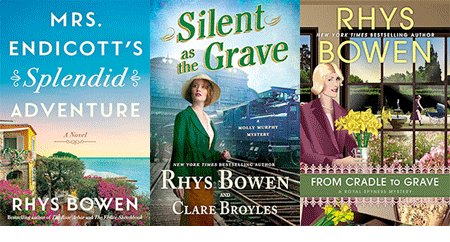
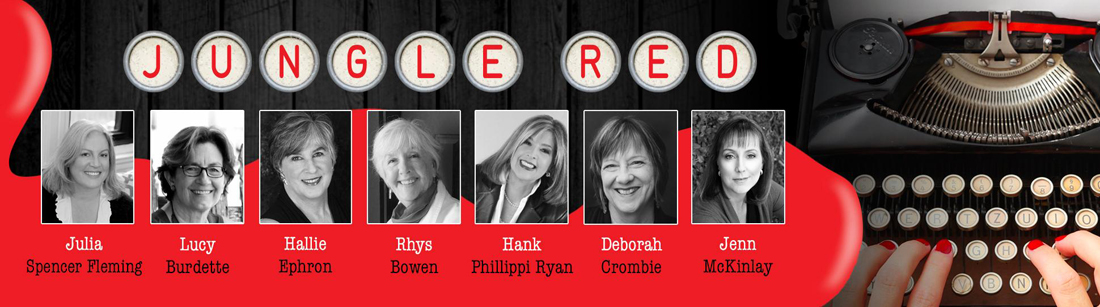
RHYS BOWEN: Jenn, I got the same response when I created Molly Murphy's lesbian neighbors. Hate letters demanding why I had dared to introduce a lesbian couple. My answer was two fold. One, that I was trying to portray Greenwich Village as it was at the time with Bohemian society, and two that they were the couple I'd want as my neighbors!
I have limited my characters to those I feel I can truly identify with. I don't think I could do justice to an African American or Asian heroine simply because I have not grown up with that community experience and thus wouldn't be authentic. There are so many small nuances of thought and sensibility that I would overlook or get wrong.
JENN: I agree, Rhys. I wouldn't want to misrepresent anyone's culture so I will likely never have a lead that I can't write accurately. Plus, I believe that authors of color and members of the LGBTQ population are the most qualified to write their own experiences.
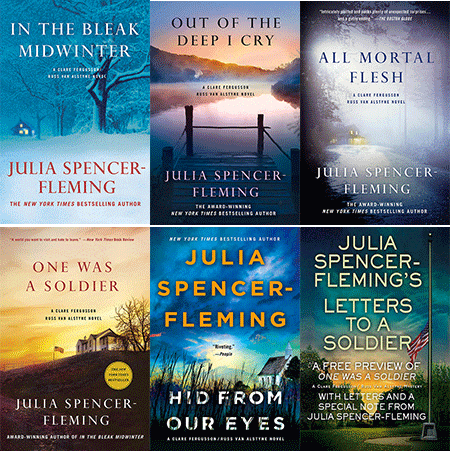
JULIA SPENCER-FLEMING: I'm the first to admit my books are pretty white, because the area I'm writing about is like a white-rice-and-mayonnaise convention. That being said, I consciously try to add racial diversity when I can - the local ADA is Vietnamese, I've mentioned Cambodians living nearby, and several characters visiting from away have been African American. I try to keep in mind that my mental default is "white", and it's a good thing, as a human being and as an artist, to push against that.
I've included gay and lesbian characters right from the beginning, because that reflects life as I know it. My second book specifically dealt with homophobia and violence, but in all my other novels, I've been careful to make characters' sexual identity be just an everyday part of who they are, not A Big Deal (or worse, A Fatal Flaw.)
I despise the term "political correctness." It's so often used as a way to attack people for including the experiences or viewpoints of someone who is - gasp!- different than the attacker. If you can't handle reading fiction, for God's sake, that raises the idea of people who aren't Just Like You, then hop in the freezer, sweetheart, because you're a special snowflake.
JENN: "special snowflake" -- coffee just came out my nose.
HALLIE EPHRON: My first published book had a male protagonist, a lesbian nurse and an Indian psychiatrist as supporting characters. In today’s prickly world I’m not sure I’d attempt anything like that for fear of being outed as trying to write someone else's story. I think what’s even more important than writing a diverse cast of characters is READING diverse voices. And to be read, they have to be published. That’s where I hope I’m doing my part when I’m at writing conferences and workshops, coaching writers and encouraging them to step up to the plate.
 |
| Photo by RawPixel.com from Pexels.Com |
DEBORAH CROMBIE: My books have had gay and lesbian characters from the very beginning. I wasn't deliberately trying to be diverse. They popped, as Jenn says, fully formed into my head. That's who they were. And as two of my primary characters are male, I've never worried too much about writing the other gender. As the series has progressed we've had many characters who are black or Asian--London is so diverse that it would be hard to write a legitimate story WITHOUT diverse characters. Also, Gemma's and Duncan's foster daughter, Charlotte, is mixed race--her father was Pakistani, her mother white. I think one of the points of writing, and reading, fiction, is to put ourselves in the in the minds and shoes of people whose experiences may differ from ours, but are, as are we all, human.
HANK PHILLIPPI RYAN: I think about this every writing day. How can I make sure my book is "real" and like the real world is? So I'm very conscious to default to "real" and not white middle class. Happily my books have juries and court officers and elected officials and judges and cops and reporters so there's a big pool of possibilities. But I don't want the book to "feel" like I'm just heavy-handedly making them diverse --I want them to be seamlessly diverse. And that sometimes means simply giving someone an ethnic name, and letting the reader imagine the person for themselves. But even that may be unfair.
(I have to balance men and women too--in an early version of my upcoming book, my editor said: "Oh, I love this--all the supporting characters are women. Cool! And I thought-oh, no, I didn't mean to do that. So I changed that.) Readers, do you notice?
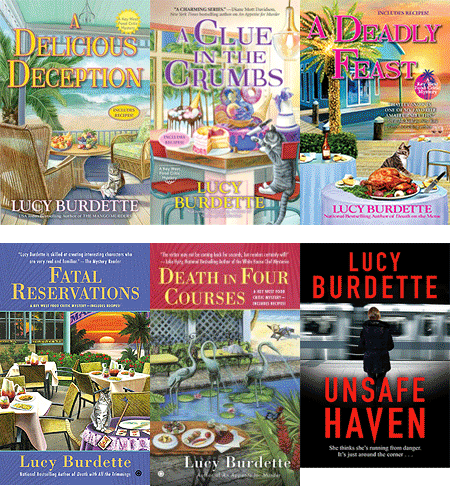
LUCY BURDETTE: In Key West, all kinds of characters abound--and that is reflected in my series. But I would say the diversity has more to do with sexual orientation and economic situation than race, because that's how things are on this island. (Although Cuban-Americans were big in DEATH ON THE MENU. ) That aside, my WIP includes an African American and a Korean woman, Antimony and Linda. They are not main characters, and I've been thinking of them more as people than standard-bearers for diversity. But interesting comment you had Rhys, about making sure you write from the perspective of characters you can identify with. I'm not sure I could do justice to Antimony or Linda in a leading role...
Okay, Readers, chime in. Do you feel authors have a responsibility to portray a wide variety of characters in their work? Is a diverse cast appealing to you? Do you look for it in your fiction or no?