
 JULIA SPENCER-FLEMING: I don't know about you, dear readers, but despite the fact I've lived in the same house for almost thirty years, the real estate conditions over the past three years consumes a HUGE portion of my brain. My sister is a Realtor in Northern Virginia whose business exploded during the lockdown, and who had the unhappy duty to tell her clients they were only getting the house of their dreams if they waived inspection and bid $50,000+ over the asking price.
My daughter, meanwhile, struggled for over six months to find a starter home here in Maine, despite having an excellent credit score and a sizable down payment. Meanwhile, empty-nesting friends are faced with the conundrum that "downsizing" may mean paying more and moving further away from the city.
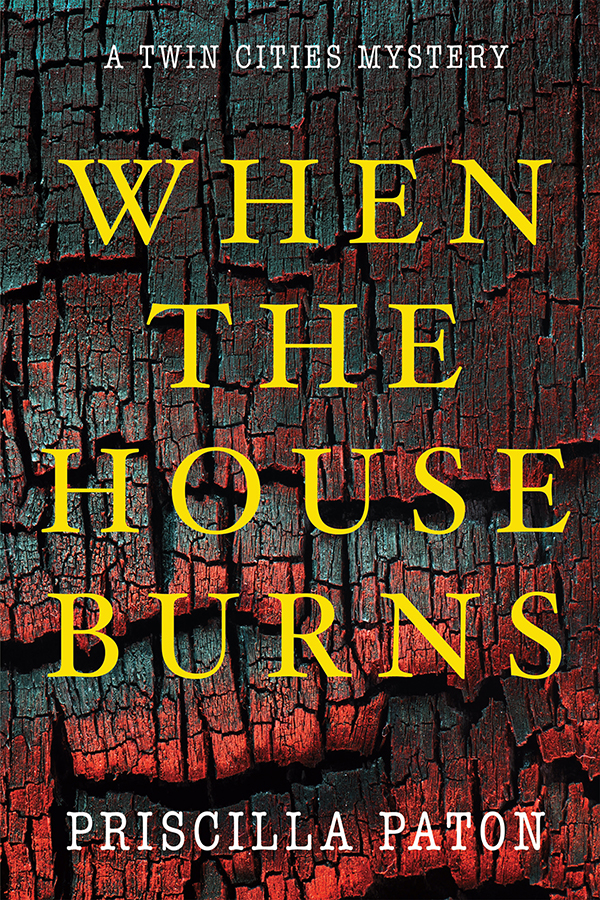
So you can imagine how my eyes lit up when I saw Priscilla Paton's third Twin Cities Mystery was all about the - can we say? - murderously crazy real estate situation in the US. Upscale gentrification, displaced renters, ordinary folks priced out of the market and investors desperate to make a buck: WHEN THE HOUSE BURNS hits them all. (And you have a chance to win a free copy!)
Wise relatives of
mine winter in Florida and summer in Minnesota. Their  summer condo near a
Minneapolis lake has the interior of Rapunzel’s Tower with rounded concrete
walls and tapestry-style hangings. The design, however, was not based on any
castle; the building had been that very Midwest piece of architecture, a grain
silo. Photos in the building foyer depict three cylindrical sileage containers
rising to the clouds, but when people began outnumbering cows in the
neighborhood, the giant cranes arrived.
summer condo near a
Minneapolis lake has the interior of Rapunzel’s Tower with rounded concrete
walls and tapestry-style hangings. The design, however, was not based on any
castle; the building had been that very Midwest piece of architecture, a grain
silo. Photos in the building foyer depict three cylindrical sileage containers
rising to the clouds, but when people began outnumbering cows in the
neighborhood, the giant cranes arrived.
Silos transmogrified into luxury condos—I had to include that in When the House Burns, my latest mystery with sex, death, and real estate seasoned by a soupçon of arson. The opening scenes feature my recurring detectives, Deb Metzger (un-homed and hunting for a place to live) and Erik Jansson, at a house-for-sale examining the corpse of a murdered realtor. Throughout the story, the characters, including the resident of the silo-condo, must confront what makes a place a home because what they’ve called home is threatened or already lost.
 Homeless
encampments have been making the news for years, and I had driven by several.
One along Minneapolis’ Hiawatha Avenue had over seventy tents, and the
occupants were mostly Native Americans. If you’ve been involved with housing
issues, you know the solution is complex, involving availability of affordable
units, local covenants, unemployment, and mental health and addiction. As I’m writing this, the Minneapolis StarTribune’s
lead story reports that the “unsheltered die at three times the rate of other
residents.”
Homeless
encampments have been making the news for years, and I had driven by several.
One along Minneapolis’ Hiawatha Avenue had over seventy tents, and the
occupants were mostly Native Americans. If you’ve been involved with housing
issues, you know the solution is complex, involving availability of affordable
units, local covenants, unemployment, and mental health and addiction. As I’m writing this, the Minneapolis StarTribune’s
lead story reports that the “unsheltered die at three times the rate of other
residents.”
 Shelter is
necessary—a home is more. At one point in When The House Burns, divorced
Erik Jansson, moping in what was supposed to be a temporary residence,
remembers an embroidered sampler that hung in his childhood home, In this
house, Love is the Host, Love is the Child, Love is the Guest.
Shelter is
necessary—a home is more. At one point in When The House Burns, divorced
Erik Jansson, moping in what was supposed to be a temporary residence,
remembers an embroidered sampler that hung in his childhood home, In this
house, Love is the Host, Love is the Child, Love is the Guest.
Love goes wrong,
and homes come with dirty laundry, maintenance snafus, family friction, and a
cable/streaming bill. In 2019, I’d started writing my third mystery on a
different topic. Then in 2020 the Covid Pandemic shutdown forced everyone to
stay home, that is, everyone who had one, and the pandemic exacerbated the
chronic problem of homelessness. The epigraph for When The House Burns
comes from Robert Frost’s “The Death of the Hired Man.” The farm husband states
one definition of home: “when you have to go there, / They have to take you
in.” The wife counters, “I should have called it / Something you somehow
haven’t to deserve.” Two months into the stay-at-home order, the basement of
our houses—I’d complained of a stench—was declared toxic. We had to leave pronto
and fortunately had a place to go.  Meanwhile, young relations in the Twin
Cities eager for a first home bid on several houses to be always outbid. I
couldn’t help but write about housing and home.
Meanwhile, young relations in the Twin
Cities eager for a first home bid on several houses to be always outbid. I
couldn’t help but write about housing and home.
Also, fiction often takes its dark inspirations from broken homes and families. Violence is “domestic” when it begins at home.
Not that my thinking stayed profound. I asked friends to complete the bromide, “Home is where. . . .” The results:
Home is where there’s cat hair.
Home is where the books are piled.
Home is where the freezer’s stocked with ice cream.
Home is where I control the thermostat (my contribution since I’m cold if it’s below 72 degrees).
Home is where the kitchen gadgets live. (At a holiday rental, my husband lamented not having his Therma pen.)
As for my mystery, after the writing, the editing, and the printing, after I received author copies, I figured out what it was about (should have known in writing the synopsis), beyond greed, lust, betrayal, and other yummy stuff. It was about what, or who, gives a home its heart.
 Hint: if not
immediately found elsewhere, check the kitchen. The first time my husband-to-be
met my mother, we walked in on her making doughnuts, the old-fashioned cake
kind. The first batch was draining on paper grocery bags. He took one and sat
by the woodstove to make himself right at home.
Hint: if not
immediately found elsewhere, check the kitchen. The first time my husband-to-be
met my mother, we walked in on her making doughnuts, the old-fashioned cake
kind. The first batch was draining on paper grocery bags. He took one and sat
by the woodstove to make himself right at home.
Here’s a link to a recipe like my mother’s, down to draining the doughnuts on brown paper.
JULIA: What's your definition of "Home," dear readers? And do you have any house-hunting horror stories to share? One lucky commentor will win a FREE copy of WHEN THE HOUSE BURNS!
 When death comes home, is nowhere safe? The quest for love
and home becomes deadly when Detectives Erik Jansson and Deb Metzger
search for the killer of an adulterous real estate agent.
When death comes home, is nowhere safe? The quest for love
and home becomes deadly when Detectives Erik Jansson and Deb Metzger
search for the killer of an adulterous real estate agent.
A volatile real estate market, unrest in a homeless encampment, jealousies among would-be lovers, a case of arson—these circumstances thwart G-Met detectives Erik Jansson and Deb Metzger as they investigate the murder of an adulterous woman. The victim’s estranged husband has holes in his alibi. A property developer grieves too much over the death of the woman while his wife shuts him out. The developer’s assistant resents his boss and suspects that the developer was not only involved with the victim but is being scammed by the arsonist. A sexy young widow, friend of the victim, has past traumas triggered by the case and turns to the developer for protection. A homeless man stalked the dead woman and now stalks the young widow. All may hold secrets about the past burning of an apartment complex and the man who died there.
Before the clues come together, Erik Jansson is trapped in an abandoned house as Deb Metzger hunts for a sharpshooter at a remote construction site. The case will burn down around them unless they can scheme their way out of lethal surroundings.
You can find out more about Priscilla, and read excerpts from her books, at her website. You can also friend her on Facebook, share recommendations on Goodreads, and follow her on Twitter as @priscilla_paton








