Showing posts with label war. Show all posts

Saturday, February 26, 2022

Under Pressure

JULIA SPENCER-FLEMING: So. 


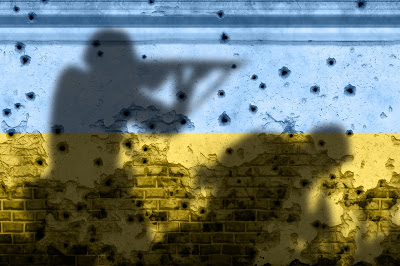
War in Europe.


I have a hard time just tearing my attention away from the news, and I’m sure you do as well. This terrifying situation has flashback potential for all ages: sovereign nations lining up to fight a la WWII for the Greatest Generation, the threat of nukes for the Cold War Boomers, and the messy remains of the Soviet Union exploding into conflict like Gen Z saw in the Balkans. Oh, and the threat of cyberattacks; I guess that covers the millennials.


But still - the dogs need to be walked. Dinner needs to be made, kids need to be picked up, and most importantly, work needs to be done. Which brings me to what I want to talk about - how to keep on being creative when the world around you is scary and stressful? 


Let me be the first to say I’m able to keep a hold on my emotions in part because the Sailor finished his enlistment at the end of December, an event that now has him gnashing his teeth in frustration (because he’s a young man) but which is a GREAT relief to all the women who love him. However, even without skin in the game, so to speak, it’s hard to write during frightening times. Creating - whether in words, or paint, or movement - is an act that requires focus and a commitment to deep work. Creating requires the artist to be both vulnerable and open to their own emotions, while being closed off, at least temporarily, to outside pressures and feelings. It requires, bluntly, a sort of selfishness, which is hard enough in ordinary circumstances when you’ve got a husband who wants to talk or a kid who needs advice. When the circumstances are OHMYGODTHEWORLDISFALLINGAPART, it can seem extra selfish to climb into a temporary ivory tower to escape everything.


So Reds, how do you do it? How do you keep writing, keep creating in times of trouble and strife?


RHYS BOWEN: There is only one thing more frightening than the threat of WWIII and that is the word DEADLINE.  With two and a half deadlines looming each year I know I have had to buckle down and work no matter what.  But trying to stay fresh and creative when the head is pounding and there are knots in the stomach is not easy. I found the first months of Covid particularly hard, because it was a stress that touched me personally: would I touch the wrong surface? Wear the wrong mask? 


Writing at that moment was a saving grace because I was writing THE VENICE SKETCHBOOK and I could spend my days in Venice, at least in my head. I’d pour over my photos, my maps, and find myself smiling: oh, that was where we had that glass of Prosecco and a man sang opera as he walked past. Oh, that was the best frito misto… reliving happy times is a great stress-buster, I’ve found.


But right now I am writing a rather stressful book: bad things happening to characters, one of them about to be dropped as a spy into wartime France, so I’m definitely feeling the pressure: not wanting to watch the news etc.  Two things that help me are swimming in lovely outdoor pool, walking through our very pretty neighborhood. Also talking daily to my daughter Clare about ideas for our next book and laughing a lot with her. We always laugh, which is great. 


Clare is right–we can do nothing about Ukraine, so it’s a waste of energy to worry about it. We can pray for the people and a peaceful outcome and then let it go.


Although learning to let go is hard, isn’t it? 


JENN McKINLAY: I’m a compartmentalizer. Is that a word? The red squiggle didn’t show up, so I’ll assume it is. So much has happened over the past few years on the global, national, and personal fronts that there are days where it feels like I need to pencil in “breathe”. Fortunately, having grown up in a rather turbulent home, I am very good at slamming the lid and turning the key on turmoil so that I can function. 
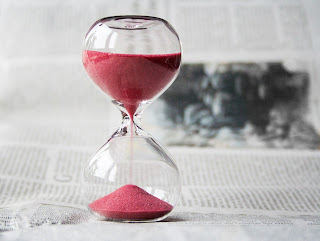
 

My trick is to set time limits. Need to cry? I set the clock on my phone for fifteen minutes and wallow in a weepfest. Compelled to look at the news? Same thing. Set the clock for ten minutes, read the news and get back to work. If I didn’t set limits, I would get sucked into the quicksand of despair and never crawl out. 


LUCY BURDETTE: Jenn, that’s very wise and a perfectly good idea that I will borrow. I remember those first weeks of the pandemic so well–we were in such a panic and such disbelief. After writing nothing for a month, I had a stern talk with myself. I could either let this event ruin my life as I knew it, or I could get to work. Which I did. (Though I sure wish I’d written something like Kim Fay’s LOVE AND SAFFRON.)


Between the war news and the politics and the particularly horrid decisions that are happening in Florida, it would be quite possible to lose my mind. I’m trying to treat all that the same way–do what I can to let leaders know what i think, and otherwise, stick to my lane.


HANK PHILLIPPI RYAN: At the first of the pandemic, I was a mess. I could not write, and kept thinking–I have to watch the NEWS! I have to buy aluminum foil! (or whatever.) But I remember, very clearly, thinking: I chose to be a writer, a writer of suspenseful entertaining immersive stories, and if we don’t need those now, when do we need them? And I have a very clear memory of thinking ”It’s always safe inside a book.” And “It’s always safe inside my manuscript.”  And that has been my mantra ever since. It’s a respite and a comfort. To be in a completely different world facing someone else’s problems.
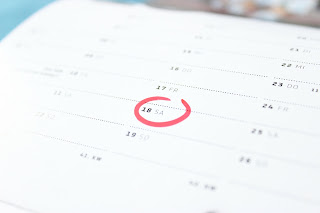

Jenn, I do a similar thing. But with worrying. If something is stressful that’s coming in two months, for instance, I’ll  tell myself, okay, it’s not gonna matter what I think now, I can’t do anything about it, so I’ll worry about that on, say, April 12. And set a worry date. And then, every time I start to worry, I remind myself, nope, not til April 12. It really works, and by April 12, everything is different anyway. 


And I turn off CNN. I say to Jonathan--no more death news. One hour, then change the channel or do something else. There’s no need to fill our heads with it every second. We can be interested, and engaged, and aware, and we can truly care, but we don’t need to be constantly pummeled with repetition and speculation.


HALLIE EPHRON: I can barely write on a good-news day. If I try to follow the news I am overwhelmed by how powerless we all are to make even the slightest difference. Haven’t felt anything quite like this since the 60’s. I’m just grateful that the US is not the aggressor, and that it’s not my job to figure out what happens next. It’s so much easier when you’re plotting fiction.


DEBORAH CROMBIE: I was so horribly distracted the first year, and more, of the pandemic, that I just could not write. Which is how I’ve ended up in my way-past-deadline panic. I finally got to the point where I can’t wait to be in my story, and I can’t let anything take away my focus. So I can read the headlines, but that’s about it. It makes me feel selfish, but me not finishing my book doesn’t do anything for the international mess. And finishing it might actually give other people a welcome escape when THEY are feeling overwhelmed.


But it doesn’t help that Rick is following the news 24/7…


JULIA: I really like Jenn's approach - set the timer, feel the emotion (or doomscroll through Twitter, and then when the alarm dings, back to work. How about you, dear readers? How do you manage, and stay creative, when the world feels like it might crack under pressure? 

Thursday, July 4, 2019

Considering the Fourth of July


LUCY BURDETTE: I had the choice today of posting a photo of a flag and wishing us all happy birthday. But it felt hard to settle for that after our last two weeks in Ireland and Scotland. For me, a good reason for traveling is to get lifted out of my own small version of the world and see things as others see them. 

The histories of Scotland and Ireland are rife with conflict and loss and rivalry. One small castle in the neck of Scotland witnessed power sawing back and forth over centuries between warring factions with many lives cruelly lost in the process. In Ireland, we heard about the violence of the Troubles, the conflicts between Protestants and Catholics. In both countries we witnessed the pain of countries ripped into pieces. This is a war song written and sung by Colin Urwin of Haste to the Wedding that we heard in the storytelling barn. (Recording of the band's music will be coming soon...)


We also heard news stories about what might happen if Brexit is adopted--many Scots we met believe that if Brexit goes through, Scotland will vote to become independent. Though this might result in a recession and many difficult adjustments in their relationship with the UK, some believe this is the better path. (The American Psychological Association Monitor published a recent article describing how people are suffering from anxiety and depression after the Brexit vote--regardless of which side they voted for.) Change will come hard...

Also while we were away, we read stories about the police shooting in South Bend, Indiana, and watched videos of the angry response from African Americans in South Bend. And heard more terrible stories about the growing border crisis. I've pasted another song below from Colin about the losses that come from segregation...


  Does all change have to come through human suffering? Have we not learned anything from history? I was encouraged by our visit to Liz Weir's barn--she was invited to work with the team attempting to make peace in Ireland--through storytelling. I can't say exactly how that might have worked, though I imagine it involved a lot of listening, and learning from history, and setting smaller egos aside in the service of a greater good. 

In fact she has said: “When we started off the Troubles were at their height, and somebody would get up and tell a story about an Orange Lodge dinner, and somebody else would tell a story about going to Mass. The fact was we were all listening to each other’s stories, and respecting each other’s stories, and I think that’s very important. If you listen to someone’s story, you’re giving the utmost respect.” 


My wish for our country’s birthday—that we listen to each other and find a peaceful way to move past the contentiousness we are mired in these days....how about you?

Diannekc, you are the winner of the Wicked prize package. Please email Barbaraannross at gmail dot com to arrange delivery--congrats!

Saturday, May 30, 2015

John Connoll on Ruins of War


Today JRW welcomes John Connell, who provides a bookend to Memorial Day week. His first novel RUINS OF WAR features Chief Warrant Officer Mason Collins—former Chicago homicide detective, U.S. soldier, prisoner of war, and now U.S. Army criminal investigator in the American Zone of Occupation in Munich. At a time when the worst horrors of the war are coming to light, there is another horror that is running rampant in the street. Welcome John!

JOHN CONNELL: I can be counted in the first wave of baby boomers. When I was a young boy, World War II was still a recent event. Fathers and mothers were veterans. During the war, one of my uncles was in the OSS, the precursor to the CIA, another flew B-24s as a bombardier, an uncle on my mother’s side was marine in the Pacific, and my father was a Navy pilot. I salute all war veterans, but because of my uncles’ and father’s involvement, I have a deep emotional attachment to World War II.

I’ve read war memoirs and watched every WWII movie that has hit the big and small screen. I felt I knew quite a bit about the years leading to war and the war itself, but while I was researching the backstory of a villain in an earlier—now defunct—novel, I discovered the startling and dramatic history of the war’s aftermath. Germany was devastated by three years of constant bombings. Every city and most towns, bridges, railroads and factories were all in ruins. A majority of German men between 18 and 50 were either wounded, killed or in allied POW camps. It was the women who had to clear the rubble and scrounge for food for their families by any means necessary. The Allied occupiers had no idea how to deal with a country in such chaos and deprivation. Most wanted revenge, to reduce Germany to nothing but farmland. A typical American or British soldier could barter for almost anything with a single pack of cigarettes. The black market thrived, and gangs of deserted allied soldiers, former POWs and corrupt DPs roamed the countryside. I just had to create a story during that turbulent time, and what came out of that idea is “Ruins of War.”

I imagined a war veteran in that post-war cauldron of chaos and deprivation. U.S. Army criminal investigator Mason Collins not only experienced the brutal fighting on the front lines, but also suffered as a prisoner of war at the hands of the Nazis. He is of German birth and bitter towards the German people for supporting an evil regime. But when a psychotic killer begins butchering innocent civilians, Mason now feels compelled to protect these same people from another kind of evil, one spawned from the horrors of war. I wanted to watch him squirm when he has to work with the German police, or when he steps into the gates of a former Nazi concentration camp to coax information from Nazi doctors who conducted inhuman medical experiments on camp inmates. I wanted to push him to his limits and see if comes out intact at the end. I kept a Hemingway quote in mind for inspiration: “The world breaks everyone, and afterward many are strong in the broken places. But those that will not break it kills.”

Just as the allied armies struggled with peace, I wanted Mason to go through a similar transformation. To be forced to question his prejudice, to recover from the mental wounds of war, to struggle to find a way to survive in peace as much as he survived in war. Warriors must become citizens once the fighting has ceased, but many times that transition is difficult. My father and uncles made it home, but one did not survive the transition. And Mason won’t and shouldn’t resolve all his mental wounds—what we know as PSTD today—in the short span that occurs in this story, but he will, at least, have been shown a path to recovery.

May all veterans find their way home and survive in peace as they did in war.

QUESTION for readers:


What book, fiction or non-fiction, have you found that best illustrates a veteran’s struggle to transition from warrior to citizen?

John A. Connell is the author of the historical fiction thriller “Ruins of War” published by Berkley/Penguin Books. He
has worked as a cameraman on films such as Jurassic Park and Thelma & Louise and on TV shows including The Practice and NYPD Blue. He now lives with his wife in Paris, France, where he is at work on his second Mason Collins novel. Read more at his website.

Monday, May 25, 2015

WAR STORIES: Memorial Day Made Personal


LUCY BURDETTE: I hate war and I won't watch war movies and I cannot imagine psychologically surviving the horror of any of it. 
But I used to make myself watch the honor roll of soldiers that the PBS Newshour ran at the end of their program every week during the heyday of the wars in Iraq and Afghanistan--so I wouldn't forget that the deaths we were hearing  about were real people with real families. And so too we shouldn't let Memorial Day pass by without thinking of the folks who sacrificed for us.

My father was a WWII veteran. (That's him, above, in Wales.) We have paperwork that documents how he went down to the recruiting station in New Jersey and signed up. But then his mother (a VERY strong personality), marched him back down to rescind his application. He signed up again the following year (1943?) and served in the Army corps of engineers in England and France. 


Although in ordinary life he was a kindhearted, peace-loving guy, I am certain that serving in the Army was one of the most powerful experiences of his life. He always felt connected to his fellow soldiers--they had yearly reunions until they got too old to travel. 
One of them hobbled up to visit him in the nursing facility just months before he died. 

When he sat down to hand write his memoirs, most of the vignettes were about the war and his friends from those years--so much for our childlike perspective that we kids took top honors in his life.
 

HANK PHILLIPPI RYAN: We try not to be too political here, so let's not argue wars or where which troops are fighting which other troops.

But on Memorial Day, how can we not think about it?
I think about my father, at age 18 or so, being sent from high school in Indiana overseas to fight in World War II. You have to know my Dad is the most thoughtful, artistic, tolerant, poetic, gentle person you could ever met. A musician. A writer. I simply cannot picture him with a weapon, a member of the army infantry fighting in the Battle of the Bulge and taken prisoner and marched barefoot through the snow and put in a Nazi prison camp. But that's what happened.
He got a purple heart. My little dad.

If I've told you this story, forgive me. But on Memorial Day, the goal is to remember. So it's important to tell and re-tell and make sure the memories aren't lost.

A few years ago, Dad and his wife Juliet (now both retired from the foreign service) rented a house, as usual, in western Massachusetts (near Tanglewood) for part of the summer. Jonathan and I went to visit for awhile. And in the library of the house they rented, Dad found a tattered and worn book of poetry, one of those paperback Untermeyer anthologies.

He pulled it out of the shelf, and tears came to his eyes.

"What's wrong?" I asked.
"This is the same edition I carried with me throughout the war," he said. (He NEVER talks about the war. Won't.)


"You carried a book of poetry in the war?" I was trying to figure that out.
"Yes," he said. "To remind myself there is beauty in the world."


RHYS BOWEN: My dad was in World War II, in the desert fighting Rommel. He fought at El Alamein, but from what he told us, he actually enjoyed some things about it--the camaraderie of men together. He was a great athlete and played cricket for his battalion. He also picked up a lot of Arabic and years later he and my mother went on holiday to Tunisia and the hotel staff were amazed he could speak to them. They got wonderful service.

My brother was in a very different sort of war. In the RAF he was sent to Aden, South Yemen. Very like Iraq today. They'd go out on patrol and a sniper would kill the man in front of him. Not good for the nerves. Both he and my dad are gentle people. My brother is about to be ordained an Anglican priest!

War is so stupid. As the song says "When will they ever learn?"

DEBORAH CROMBIE: What lovely stories, Lucy and Hank. And Rhys, there always seemed something slightly glamorous about the British campaign in North Africa--maybe it was the movies...

My father was in his mid-thirties when the US entered WWII, with a business and a toddler (my older brother) so wasn't called up. And he was such a gentle man--I think the experience would have destroyed him if he'd survived.

HANK: Debs, there's a line for a book...
    
DEBS: I had two uncles who served in the Navy. One was stationed in New Zealand for at least part of the war, and could never afterwards bear the smell of lamb. Neither of them ever talked about their wars.

I've been fascinated since I was a child (Anglophile that I am) by the British experiences in WWI and WWII, particularly as they affected the British at home. One of my books centers around children who were evacuated from London during the Blitz, another around a Jewish couple who come to London as refugees from Nazi Germany.

HALLIE EPHRON: These are wonderful stories. My dad never

served -- I think it was because he'd had rheumatic fever as a kid, or maybe it was his flat feet. I wish he was around to ask. Instead he and my mom wrote their first screenplay in 1944, "Bride by Mistake," a frothy romantic comedy with a rich woman looking for a soldier who doesn't want to marry her for her money.

My husband's father worked in a Providence shipyard for his service, and came away with no fond memories of Providence and a lifelong aversion to cold.


JULIA SPENCER-FLEMING: Lucy, I am a member of "one of those families" you mentioned. My father, Lt. Melvin Spencer, served during a different conflict - the Cold War. He was an Air Force pilot, assigned to a Strategic Air Command bomber wing at Plattsburgh AFB when he met and married my mother, who was a coed at the State University there.


Tensions between the USSR and the United States were at a peak in the early 60's, and the USAF was at the front line of defense. Bombers stood fueled and ready on the flight line apron round the clock, with crews rotating in and out of specially connected staging areas so that the enormous planes could be airborne and on their way to Russia within a matter of minutes. The day I was born my father was in "the bullpen." His replacement pilot arrived in time for him to get to the base hospital, but he was still in full fight gear the first time he held his baby girl.


The crews trained constantly over the huge, sparsely populated reaches of the Adirondack mountains, making practice bombing runs. About six months after I was born, my father suited up and left for a pre-dawn training flight. He never returned. One of the B-48's systems - radio? Electrical? - malfunctioned. Flying in the dark, in a snowstorm, the four-man crew never realized they were below altitude. The remains of the ship were found strewn across the face of Mount Wright, the second highest peak in the Adirondacks. This is the memorial placed at the crash site.

I think it's enormously important to be aware to the cost of war to those who pay the ultimate price. But it's also important to remember that for every name on the casualty list, there are a score of others whose lives will never be the same - parents and siblings, husbands or wives, children and friends.

HANK: Julia. I am speechless. And So grateful to know you all.  So what about you, Reds? War stories? This is the day to tell them...and to say thank you.

Friday, March 20, 2009

On Book Clubs


JAN: I joined a book club about ten years ago in hopes of getting greater insight into the way different readers respond to different books.

But the funny thing about book clubs is they get to be about a lot more than just books.

Our group is all women. About twelve of us now, and at least half of us have been together for ten years. We’ve given each other advice on hair dressers, yoga teachers, ski lodges, and the best New York hotels. We’ve supported each other over miscarriages, divorces, parents' deaths, and trouble with our children. We’ve celebrated birthdays and book launches and major promotions.

Last summer, one of our members, Beth was promoted from commander to captain in the Navy Reserves. We all attended a military ceremony on the USS Constitution in Boston. It was an emotional and beautiful event, illuminating service and dedication. We were all blown away with pride. Afterwards, we got a private tour of the historical battleship, and toasted Beth's promotion with champagne cocktails at brunch aboard the cruise ship Odyssey.

Last week, our book club got together for a different kind of party. This one was to say goodbye. Beth was assigned to a command post in Iraq. She’ll be gone for at least a year.

Because of Beth's attitude about the assignment – that it was an exciting opportunity – we treated it as a celebration. Rose hosted, we all brought food and wine, and even spouses were invited. Beth arrived in a terrific black cocktail dress accessorized with Navy issue desert boots.

We did not cry. At least not at the party. We gave Beth a gift certificate for her new Kindle so she could keep up with the books we were reading. We were quite bossy about expecting her opinion of each month’s choice by email.

We will be thinking about what we can send her, and what we can do for her family left behind. But mostly, we’ll be reading all news out of Iraq with a new intensity. We'll start seeing the war a lot closer up, holding our breath after each new terrorist attack, and praying hard until the day she comes home.
What are we reading for next month? I can't remember.