Showing posts with label winter solstice. Show all posts

Wednesday, December 10, 2025

Paula Munier--The Snow Lies Deep

DEBORAH CROMBIE: I adore Paula Munier's Mercy Carr books when they are set any time of the year, but Christmas, and Christmas in snowy Vermont, is the icing on the Buche de Noel!! And if a new adventure featuring Mercy and Troy with their search and rescue dogs Elvis and Susie doesn't get you in the mood to curl up by the fire with a cup of hot chocolate, Paula has a few more suggestions to get you in the mood!


Winter Solstice

Paula Munier

“You can’t get too much winter in the winter.”

 — Robert Frost

Winter is my favorite season. I love everything about it: the snow, the soup, and most important, reading and writing snuggled up with a cat and a dog (or two or three or four) by the fire. That’s why, for me, the Winter Solstice is a very important holiday.

So important that in my latest Mercy Carr mystery, THE SNOW LIES DEEP, the Winter Solstice plays a big role, as do the Druids who observe the longest night of the year in a grand way in this story. And while I’m no Druid—fond as I am of trees—I do honor the solstice in my own way. I thought I’d share some of those ways with you.

Some of these may seem surprisingly familiar to you, since the winter solstice was the precursor to many of our modern-day holiday traditions. Pagan peoples of old welcomed the turning point that was the winter solstice, with its promise of longer, warmer, more sunlit days to come. They celebrated the return of the sun by burning Yule logs, lighting bonfires, decorating with evergreens and mistletoe, singing and drumming and feasting. I know, very familiar, right? 

Perhaps we are all pagans at heart. But no matter what your tradition or how you typically celebrate this time of year—Christmas, Hanukkah, Kwanzaa, New Year’s, etc.—you might enjoy incorporating some of these Winter Solstice customs into your holiday season this year (if you don’t already):

        Go for the Light. The winter solstice is all about the light in the darkness, so anything that represents that light is apropos:

                 --Yule log. Burn a Yule log in your fireplace or outdoor fire pit for the twelve days between the Winter Solstice and New Year’s as is the tradition—or whenever you wish. The kind of log is up to you: The English Druids use oak, the Scottish Druids prefer birch, and the French Druids like cherry, with a little wine sprinkled on top because, well, they’re French.

                 --Bonfire. Traditionally, bonfires were lit from sunset to sunrise on the night of the Winter Solstice to welcome the sun. you can burn yours—safely—any time. All you need is wood, family and friends, and maybe a guitar. I’m just saying.

                --Ice Lantern. Lanterns of any kind are good ways to honor the solstice, but if you’re looking for a fun crafty activity to do with your kids or grandkids, making ice lanterns fits the bill. There are a number of how-tos on YouTube; researching different methods is half the fun. Note: If you live where it’s warm in the winter, you can freeze the water in your freezer in plastic tubs. Let there be light!

                --Candles. Advent candles, Menorah candles, Kinara candles…whatever warms your heart and soul. Any and all candles brighten the gloom on a winter’s day. Enjoy!


        Mistletoe. If you’ve never hung mistletoe, now’s the time. Mistletoe has always been sacred to the Druids because it grows on trees—and even while trees go dormant in the winter, mistletoe does not. Its host trees are “dead,” but the parasitic plant grows on, despite the cold and lack of sunlight. We’re talking a symbol of fertility here. Which leads us to kissing. Kissing is good.

        Evergreen. Wreaths, garlands, centerpieces—however you decorate with pine or spruce or fir, you’re participating in an age-old tradition that honors the trees that survive the winter with strength and resilience and vibrancy. Go for it! 

        Nature Tree. Adorn a living pine or spruce or fir in your garden or the nearby woods with unsalted popcorn, fresh cranberries, and dried fruit. Be sure to use sturdy string, and do not use fishing line, which can harm birds. Note: If you live in bear country, skip this—and stick to planting native plants that attract birds and other pollinators.

        Bûche De Noël. This is the traditional Yule log dessert. Mercy Carr’s grandmother Patience bakes one in THE SNOW LIES DEEP—a homemade chocolate sponge cake with cocoa hazelnut whipped cream rolled it into a log, with a chocolate ganache icing topped with fresh sprigs of rosemary and sugared cranberries. Not exactly easy, but here’s a recipe from the kitchn that tries to streamline the process.

What are your holiday traditions that echo back to the Winter Solstice? Let’s chat about it here on Jungle Reds! Here’s to a lovely holiday season for us all—and the coming of the light!


The seventh Mercy Carr Mystery in which Mercy and Elvis must track down who’s killing the Santas of Northshire’s Solstice Soirée before another St. Nick goes up in the flames of a burning Yule log….

It’s December in Vermont—and Mercy is determined to give her baby Felicity the very best first Christmas ever. Starting with a visit to see Santa at Northshire’s annual Solstice Soirée. But when Santa abandons his post and runs into the woods, Mercy and Elvis go after him—and the shepherd finds the jolly old elf flat on his back in a small clearing, dead, a Yule log ablaze on his belly.


Mercy wants nothing more than to stay at home at Grackle Tree Farm taking care of Felicity, but as this St. Nick is really “Uncle” Lazlo, her family presses her to help solve their old friend’s murder and save the Solstice Soirée. She demures, but when another Santa ends up dead and the bones of a long-missing trapper turn up in the woods, Mercy and Troy and the dogs team up with Thrasher and Harrington to rid Northshire of the bad elements ruining the holidays for their town and their family.


Together they chase down clues leading to poachers and endangered lynx, evangelical zealots and Russian emigrés, and the terrible secrets haunting the village, past, present, and future. It’s not just Santa at risk, it’s everyone in town—including baby Felicity. It’s up to Mercy and Troy and the dogs capture The Yuletide Killer before he strikes again, this time far closer to home.


PAULA MUNIER is the Senior Agent and Director of Storytelling for Talcott Notch Literary and the  USA TODAY bestselling author of the Mercy Carr mysteries. A Borrowing of Bones, the first in the series, was nominated for the Mary Higgins Clark Award and named the Dogwise Book of the Year. Blind Search also won a Dogwise Award. The Hiding Place and The Wedding Plot both appeared on several “Best Of” lists. Home at Night was named Library Journal’s Mystery Pick of the Month. The Night Woods, the sixth book in the series, earned a starred Library Journal review among other acclaim. THE SNOW LIES DEEP debuts in December 2025. Along with her love of nature, Paula credits the hero dogs of Mission K9 Rescue, her own rescue animals, and a deep affection for New England as her series’ major influences. She’s also written three popular books on writing: Plot Perfect, The Writer’s Guide to Beginnings, and Writing with Quiet Hands, as well as Happier Every Day and the memoir Fixing Freddie: The True Story of a Boy, a Mom, and a Very, Very Bad Beagle. She lives in New England with her family and four rescue dogs and Ursula The Cat, a rescue torbie tabby who does not think much of the dogs. For more, check out www.paulamunier.com.


DEBS: Paula, I thought you might get a kick out my daughter's Instagram post on Monday!


Because of course she is a big fan, too!


Tuesday, December 21, 2021

Celebrating the Solstice

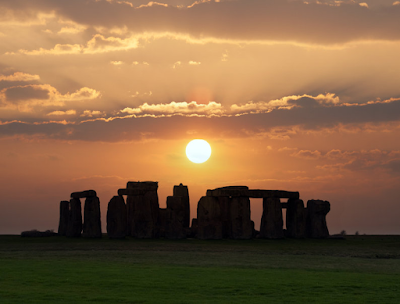
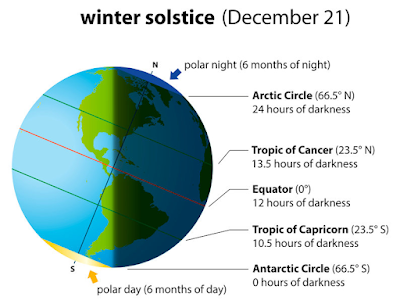
DEBORAH CROMBIE: For those of us in the northern hemisphere today, December 21st, is the Winter Solstice, the day when the North Pole is tilted farthest away from the sun. (In the southern hemisphere, December 21st is the Summer Solstice.) It is the turning point of the winter, after which the days begin to get longer, and has been celebrated in every culture as far back as Neolithic times. (Stonehenge, check!)

Every religion, too, seems to have some version of a rebirth myth tied to the shortest days. Don't you wonder, though, how these prehistoric people began to calculate that incremental increase, just a few seconds a day? Was it instinctual, the way our dogs somehow know that it's Friday and we're going to get takeout, before I've done anything differently?? (Seriously, how do they do that? One of our now departed dogs knew when it was Christmas--she LOVED Christmas.) The birds certainly know the year is turning--they've begun to sing the last couple of days, as they always do this time of year.

Although we may not have to worry about starvation in the coming long winter days, as older cultures did, but I know many people who struggle with the shorter days and rejoice in the longer daylight, even in tiny fractions. 

I'm not one of them. I've always liked the coziness of the early darkness. But then I live in a temperate climate and I'm not (at least most of the time) freezing or plowing through snowdrifts. Here in Texas, I cheer on the Summer Solstice because the days getting shorter means fewer hours of heat!

When I lived in Edinburgh I have to admit I felt differently about those winter days, however. Less than six hours of daylight when it is overcast, damp, and very cold requires some serious comfort, which I didn't have in our old, unheated flat.

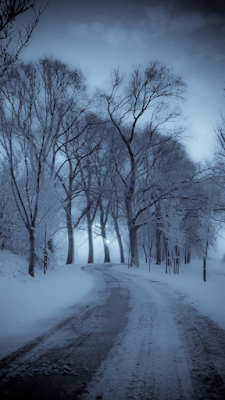
Although I don't officially celebrate the Solstice, I always feel it deserves some quiet time, a pause for meditation. I'd love to put this photo in my journal and spend a few moments writing, taking stock of the year and the season.

Unfortunately, the Winter Solstice coincides with what is usually a very busy week leading up to Christmas and I seldom manage to make that time.

What about you, REDs and readers? Do you mark the Solstice? Are you happy to see the days getting longer?


Saturday, November 11, 2017

A Modest Proposal

JULIA SPENCER-FLEMING

We live in dark times. No, I'm not talking about politics, or North Korean nuclear missiles, or the fact that every single man in a position of power seems to be a lecherous creep. I'm talking about the return of my nemesis, Standard Time. It's been a week since we "fell back"- how are you feeling about it? Me, I hate it.

In southern Maine, where I reside, the sun sets today at 4:22 p.m. Of course, when you live in a land completely covered by a) trees and b) hills, sunset is a pretty fluid concept. The last I usually see of the Helios' chariot (Look, Mom, my liberal arts degree at work!) is four-ish, with blinkered darkness swallowing up everything about ten minutes after the listed sunset. Yes, I know that "Civil Twilight" doesn't end for another hour. I'm pretty sure whoever comes up with those civil twilight designations is taking measurements at the flattest part of the Great Plains, where the tallest thing obscuring the setting sun is a gopher. Or ground hog. Whatever they are out in the golden west.

One of the worst aspects of Standard Time is knowing that the days are getting squeezed from both ends, like a dish towel being wrung dry. Right now we're down to nine hours fifty-one minutes of daylight (keeping in mind those trees and hills blocking the view) and it's all downhill from there. We won't be back to this length of day until February 1st, and at that point, we in New England will likely be entombed with snow and ice. It's difficult to kick back with a cocktail and celebrate the lengthening days when you're trying to make sure the pipes don't freeze in the walls. 

Yes, our friends and neighbors have it worse in Alaska. They count down to five and half hours of daylight at the winter solstice, and I'm pretty sure the giant mountains all over the place means they're actually seeing half of that, in a way not dissimilar to the sun creeping into the cell of the Man in the Iron Mask for a brief interlude. However, Alaskans do have the benefit of a) crazy long days in summer b) the sweet, sweet checks from the Permanent Fund and c) Dana Stabenow.

I have a proposed solution of this unfortunate state of affairs; one now within reach due to the March of Progress. I move we set the official time of sunset at 6pm every evening from October through March. It's true that in the past, our reliance on analog clocks meant that everyone in every time zone had to have their watches set in lockstep, so that, for instance, Lucy and I can look out our windows at five o'clock exactly, but I will see grim leafless darkness and she will see palm trees and sunshine (because her sunset today isn't until 5:42.) But let's be real. How many of us use clocks with hands to tell time anymore? We're all on our phones/tablets/computers, digital devices hooked up to the internet. Correcting two or three or four minutes a day in order to keep sunset always at six is child's play for our tech overlords.

Speaking of children, I can hear your objections. "But Julia," you say. "Think of the kids waiting for the school bus in morning! In the darkness!" In the first place, kids love the dark. You practically have to get them into bed by gunpoint every evening. Think how much they'll enjoy the thrill of being outside beneath the stars during morning recess! Secondly, I'm pretty sure the number of kids who get knocked over by cars while waiting for the school bus is greatly exaggerated. The sun doesn't rise until 10 a.m. in Anchorage in December, and the papers aren't full of stories of Alaskan students getting run over all winter long. To assuage parental fears, I will gladly donate to a fund to equip all students K through 12 with appropriate safety gear. After all, as the proverb says, it's better to light a single LL Bean head lamp than to curse the darkness.


Let us rise up, peoples of the north, and take back our evenings! We have nothing to lose but our seasonally adjusted depression!


Sunday, December 21, 2014

The Turning of the Year

DEBORAH CROMBIE:  The first sign of the turning of the year for me is usually around the beginning of January. I hear birdsong in the morning, and it is only then that I realize how I've missed it for the last few months. This year the birds were ahead of the game. Last Tuesday I heard a cardinal, on Wednesday, a wren, clear on the cold and still air, harbingers of spring. 

Today we celebrate the winter solstice, whether in a religious sense, or just as human beings, thankful for the lengthening of days and the promise of warmth and growth. And that is our accustomed perception--relief at the vanishing of night. 

So I was intrigued to read  yesterday's op-ed article in the New York Times by Clark Strand, Bring on the Dark: Why We Need the Winter Solstice.  Strand argues that with the advent of electricity, we have lost, both individually and culturally, the creativity and vision that come with the experience of long, deep nights. Do read, it's fascinating, and I'm going to add his book to my teetering TBR pile.

In the meantime, I'm going to turn out the lights tonight and have a look at the stars. 

Happy Solstice to you all!