Tuesday, March 24, 2009

Jacqueline Winspear comes for Tea


Today I've invited my fellow Brit, Jackie Winspear for tea at the Jungle Red Cafe. We're serving scones and clotted cream and strawberry jam. Do join us:


RHYS: My good friend Jacqueline Winspear needs no introduction. She burst onto the literary scene a few years ago with her first novel Maisie Dobbs, which a combination of great writing and good luck thrust into the national spotlight, when First Lady Laura Bush endorsed it during a TV interview.
Since then her Maisie Dobbs novels have appeared regularly on the NYT list and she has developed a strong and loyal following that crosses genre lines. In fact it's hard to describe the books as mysteries, even though there is a mystery at the heart of each of them. They are, to quote a typical British response, just "rattling good stories" which have made the bestseller lists with no violence, gore or explicit sex. A unique achievement indeed.
Jackie and I have led paraellel lives in so many ways. We both escaped from England to America. We both live in California (where we are neighbors for part of the year). We both write about feisty female sleuths at the beginning of the Twentieth Century. We are both fascinated with the class system in Britain in the Thirties, and we seem to go for remarkably similar plots. Maybe we even channel each other. Jackie's new book is called Among the Mad, and my last Molly book ended in an insane assylum.

So Jackie, how did a typically English rose like you wind up in California? (of course, I> could ask myself the same question!)

JACKIE: I came here in 1990 on what you might call a "sabbatical" - I just wanted some time away to figure out what I was going to do with the rest of mylife. I'd been to the USA many times as a visitor, and thought it would be agood place to spend a few months - I had friends here and my brother hadmade his home here, so there was a starting place. Within a short time Iwas approached about a job with some people I'd worked with in the past -they were breaking away from the company we'd all worked for (I was in theUK office) and had started a new company. So I said "yes" - and the rest,as they say, is history.
RHYS: Where did Maisie Dobbs come from? to what extent is she you?
JACKIE: Maisie Dobbs came to me in a daydream while I was stuck in traffic - what I call my moment of "artistic grace." That moment was probably inspired by myinterest in the era of the Great War and its aftermath, and especially theimpact it had on the lives of the women of that generation - the firstgeneration of women to go to war in modern times. And I have to say, she isnot like me at all. Of course, I am sure there are various traits that comeout, but she is far more serious, in her way. I'd be inclined to tell herto go to a few more parties.

RHYS: Tell us about this latest book, Among the Mad, and the inspiration for it in> your own life.


JACKIE: In essence, Among The Mad is about the madnesses encountered in life -whether that madness is to be found in a psychologically damaged person (in this case a veteran of the Great War), or simply the everyday madness thatwe find on a busy street.

There are three main points of inspiration for this novel. The first is anexperience I had when I was in the final two years of school - from 16-18. I attended a school where, in those years, you were expected to undertake some sort of community service. Mine was in what was then called a mental hospital.
When it was built, in the mid-1800's, it was known as a lunatic asylum (and today it's probably a "Psychiatric Support Center" or something like that). I was at a very impressionable age, and the experience of volunteering in such a hospital made quite an impact on me. There was always that question - what happens to someone's mind so that a line is crossed and they end up in such a hospital?
The second experience happened in the early 1980's in London, when I was close enough to a terrorist bomb to hear it explode, and to hear the aftermath.

The third inspiration was a more personal understanding of the lives of men shell-shocked in the Great War. "Shell shock" was one of those terms picked up by the press of the day, but did not begin to illustrate the range of war neuroses experienced by soldiers psychologically damaged by the conflict.
There were issues of eligibility for pensions, and a great number of those"wounded" in such a way - wounds with no outward sign of physical injury -were sent home to "just get on with it." My grandfather was wounded both physically and psychologically by that war, and my childhood memories of him inspired my interest in how the veterans were treated - and they inspired my desire to touch on the tragedy of men who came home with psychological wounds.

RHYS: So the question we all want to know is who is that dark and handsome gentleman you are embracing?


Jackie will talk about him and about the diva in her life tomorrow, as well as answering the Jungle Red Questions on sex, chocolate and life....>

Sunday, March 22, 2009

Good Golly, Miss Molly


RHYS:
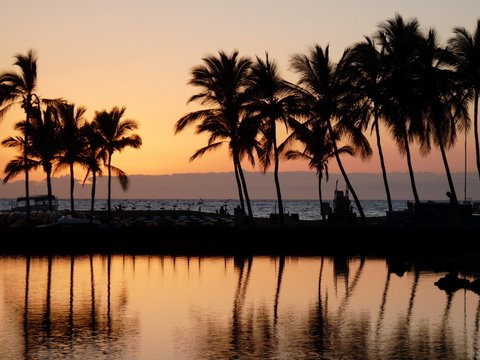
It's been a whirlwind March for me so far. First I was being feted in Hawaii as guest of honor at Left Coast Crime. That was a surreal experience, being treated like royalty while the blue waters lapped the shores and the palm trees swayed in the wind. Of course I've always dreamed of being a celeb--what writer hasn't? But so many people wanted to have their photo taken with me and I am still overcome with embarrassment when people tell me they love my books. I never know what to say. I believe Agatha Christie had the same problem, so I'm in good company!


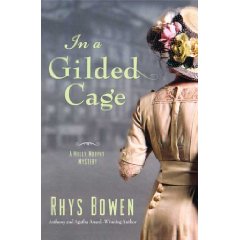
So I spent almost a week being queen of the convention, along with co-Guest of Honor Barry Eisler (and let me tell you that wasn't one of the harder tasks of my life) then I arrived home just in time for the release of my new Molly Murphy mystery, called IN A GILDED CAGE.
This story focuses on the role of women in the early Twentieth Century. Molly joins a suffragists march and gets involved with a group of Vassar grads. They all left college with visions of doing great things with their education, only to find themselves confined by convention to be mindless accessories to their husband's life and career once they marry. Molly is affected by this observation as she is considering getting married herself in the near future. Can a woman be her own person and be married, she wonders? Could any woman at that time?
Of course the answer was yes: Marie Curie was experimenting with radium beside her husband. Nelly Bly, who appears in my last Molly book, traveled the world as an investigative reporter while her husband stayed home. So all things were possible for exceptional women, but most were forced to abandon their own dreams when they said "I do."
And I think that was true until fairly recently. Even when I left college most women stayed home once they had children. My mother was an exception--she had always been a school teacher and later principal but even in the sixties when I graduated, women were assigned certain roles in life: teacher, nurse,or secretary were the usual expectations. Some girls went to medical school, some into research, but not many. So I was lucky to go straight into the BBC and learn all the aspects of broadcasting, finally settling down in the drama department where I started writing my own plays. Doubly lucky because I'd have made a rotten secretary or nurse!


So do we think that discrimination is now completely a thing of the past? Is any door open to our daughters today? Here in the Western world I'm sure the answer is yes, but we have to remind ourselves that there are still countries where women have no rights at all--where a woman can be forced to marry a man chosen by her family or killed by her family for not obeying them. And one of the places this is happening is not Afghanistan, but in Britain. Girls of Pakistani descent are being lured back to Pakistan and then married against their wishes. This has become so common that a special branch of the British secret service has been formed to rescue them. But after that they are never free, of course. Their families will hunt them down and they live in fear of their lives.I wrote about this in my last Constable Evans book, called Evanly Bodies. My editor didn't want to publish because it was too inflamatory, but I sent her a wad of newspaper cuttings to show how often it was happening.

I like to write about themes of social relevence as well as telling a good mystery story. I suspect I'm an activist at heart. Certainly a feminist! So what about my fellow JRRs. Did you ever find your job was made harder because you were a woman?
Do you think we've finally come a long way, baby?
HALLIE: First off, congratulAAAAtions on the new book. Can't wait to read it!! And I was so impressed by your singing at Left Coast...is there anything in your past you haven't told us about?

Yeah, I think we've come a very long way, baby. When I was a kid there were virtually no school sports programs for girls, and the choices career counselors talked about for us were your basic nurse, teacher, librarian, and maybe social worker. It's great that about half the crime novels that cross my desk are written by women. And both my daughters never hesitated about considering the widest array of career options. However, I also realize I was being naive to think, "if only women were in charge..." there'd be less self-serving policy making, general dishonesty and mean-spiritedness in politics. Sadly, we've come a long way in that department, too.
HANK: My life worked the other way. I applied for my very first job in broadcasting, at a radio station, in 1971 or so.
Short version: I said to the news director: NO, I've never been a reporter. NO, I've never worked in radio. NO, I didn't go to journalism school. But I've just left a job as assistant press secretary to a gubernatorial candidate. I know how reporters work, and what they need. I've written a million press releases and I know this city inside out.

Then I paused. Then I said, as I smiled sweetly: And your station's license is up for renewal right now at the FCC and you don't have any women working here.
I got the job!
Could it happen that way today? Nope. Because in my profession, at least, there are as many women as men, and getting equal pay, even in management jobs. I know we're not the norm.
ROBERTA: Yes, we've come a long way. I too regret the lack of women's sports teams when I was a kid. However, my thwarted ambitions were funneled into the Cassie Burdette golf mysteries so all was not lost:). But we still have a long way to go. Even in our own field, I believe women are still getting smaller advances and having more books published as paperback originals, which means fewer marketing dollars and reviews. And in general, not even counting the terrible things that go on in less progressive countries, women bear more of the burden of feeling they must make uncomfortable choices between career and motherhood.


JAN: First of all, congrats on the new book, Rhys. But having recently raised a teenage daughter -- and having done all the research on cyberporn for Teaser, I guess I don't think women have come that far. Yes, we've made progress in the career and equal pay front, but I see a tremendous amount of slippage from the 60s. The exploitation of young girls sexually is huge. And I've actually thrown shoes at the television images that make young girls think that they have to weigh 90 pounds and have size D-cup breasts.

The Internet and the insatiable US demand for pornography (and I'm not talking about Playboy or even Hustler-type porn, I'm talking about really sick stuff) has made for a brisk sex slave trade. In someways, I think we've actually gone backwards.
RHYS: One of the statistics that bothers me is the teen pregnancy rate. We are not winning this battle, expecially among the disadvantaged youth who see having a baby as one of the few accomplishments within their reach. These girls can only picture themselves of people of worth by becoming mothers.

So it seems we still have a way to go. It was interesting to see the reaction of certain men when Hilary Clinton ran for president. Pretty much the same things were said as the insults shouted during a suffragists' march in my new book. I think we're hard wired for gender in many ways. Let me know what you think of the new book.


Rhys

Friday, March 20, 2009

On Book Clubs


JAN: I joined a book club about ten years ago in hopes of getting greater insight into the way different readers respond to different books.

But the funny thing about book clubs is they get to be about a lot more than just books.

Our group is all women. About twelve of us now, and at least half of us have been together for ten years. We’ve given each other advice on hair dressers, yoga teachers, ski lodges, and the best New York hotels. We’ve supported each other over miscarriages, divorces, parents' deaths, and trouble with our children. We’ve celebrated birthdays and book launches and major promotions.

Last summer, one of our members, Beth was promoted from commander to captain in the Navy Reserves. We all attended a military ceremony on the USS Constitution in Boston. It was an emotional and beautiful event, illuminating service and dedication. We were all blown away with pride. Afterwards, we got a private tour of the historical battleship, and toasted Beth's promotion with champagne cocktails at brunch aboard the cruise ship Odyssey.

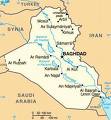
Last week, our book club got together for a different kind of party. This one was to say goodbye. Beth was assigned to a command post in Iraq. She’ll be gone for at least a year.

Because of Beth's attitude about the assignment – that it was an exciting opportunity – we treated it as a celebration. Rose hosted, we all brought food and wine, and even spouses were invited. Beth arrived in a terrific black cocktail dress accessorized with Navy issue desert boots.

We did not cry. At least not at the party. We gave Beth a gift certificate for her new Kindle so she could keep up with the books we were reading. We were quite bossy about expecting her opinion of each month’s choice by email.

We will be thinking about what we can send her, and what we can do for her family left behind. But mostly, we’ll be reading all news out of Iraq with a new intensity. We'll start seeing the war a lot closer up, holding our breath after each new terrorist attack, and praying hard until the day she comes home.
What are we reading for next month? I can't remember.