Saturday, September 13, 2014

Literary Agents — "Everything to Everbody"


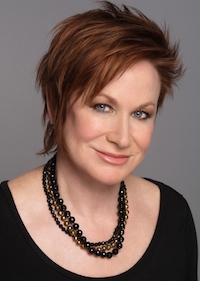
SUSAN ELIA MACNEAL: Victoria Skurnick of LGR Literary  (and my own beloved agent) was on Jungle Reds a few months ago, talking about no-nos when approaching literary agents with your book proposal.

But what do literary agents themselves actually do all day? Drape themselves artfully on silk settées and read manuscripts 
while eating bon-bons? (OK, I can hear Victoria laughing now....)

The truth is that literary agents don't have a set job description and every day brings a different challenge. The great literary agents are adaptable, proactive, relentless, positive. They love books and champion their authors.


Read on and learn one agent's perspective of the other side of the desk…..


VICTORIA SKURNICK: You can’t be everything to everybody. That’s what my mother would tell me when she felt I was spreading myself too thin.  Well, turns out, what I get paid for is exactly that: being everything to everybody.

It’s about the only description of what an agent actually does that is at all true.  We get to be greedy nags (at least, that’s how an editor might describe us), editors (God forbid a manuscript not be perfect before we submit it to publishers), mommies cum psychoanalysts to anxious writers [ahem—trying not to take this personally—ed.], accountants to harder-headed clients, literary critics, beggars, wheedlers, gypsys and thieves. 

Okay, forget the gypsy part.  Even when we manage to leave our offices, we’re lugging mountains of papers with us, which makes it hard to move around very far (I wasn’t that fond of the Kindle even before the Big A started acting up).

What we also get to be is busy and fascinated.  A day in the life of an agent might consist of many hours of reading, or it might be running around town trying to work of enthusiasm for a project, or preventing a publisher from going out with thousands of copies of books containing huge mistakes, or arguing with clients about plot points, or reworking proposals.  

On any given day, we might go from feeling like geniuses to considering ourselves horrible, stupid failures.  I know of no agent – not one – who does not spend some hours every month thinking, what if I never sell another book!?!   And that goes, I assure you, for the biggest names in the business.

I became an agent seven years ago, after several different paths, most of them in publishing.  But my last job was as editor-in-chief of what was then a powerful book club.  When you’re the editor-in-chief of a powerful book club, not only do people return your calls, but they actually call you – voluntarily.  

When you’re an agent, you’re the one making the calls, and the one whose emails do not necessarily get answered.  When, after three or four (or eight or ten) months, you’re sending the third or eighth polite email or making the fifth or twentieth call, asking an editor a question like, “Gee, I wondered if you’d had time to read  Book X yet,” and getting no response for the third, fourth, eighth or tenth time, you get to know what it’s like on the other side.  You get to internalize words like abject and powerless. 

But, when you’re at your desk and you pick up a novel that reads beautifully, then it’s all worth it.  The sense of excitement, of discovery, is remarkable. The wonderful knowledge that you are in a position to do everything possible to bring this to the attention of hundreds or thousands or millions of people.  This is the payoff; this is what we live for.

That, and the learning.  I just sold a book on the presidency of Chester Arthur, and the subject turns out to be incredibly interesting.  Who knew?  I’ve learned more about England in World War Two from Susan’s Maggie Hope novels than I ever thought possible.  A friend of mine who’s now a publisher, but who was an editor for decades, describes herself as “a talking book.”  And that pretty much sums it up.  Writers are smart people. 

Publishers are smart people – except when they turn down my clients’ books, that is.  


SUSAN ELIA MACNEAL: Thank you, Victoria! 

Reds and lovely readers, do you think you would make a good literary agent? Why or why not? (I'd be TERRIBLE — too many people…..) 

Does Victoria's perspective give you and sympathy for those on the other side of the desk? 

Please share in the comments!

Friday, September 12, 2014

Christina Dodd, Culture Shock, and VIRTUE FALLS


SUSAN ELIA MACNEAL: Delighted to introduce Christina Dodd, New York Times-bestselling author of the newly released VIRTUE FALLS, her—get this—fiftieth novel! 
Here's the description:

Twenty-three years ago, in the isolated coastal town of Virtue Falls, Washington, four year old Elizabeth Banner witnessed her mother’s brutal murder. Elizabeth’s father was convicted of killing Misty and sentenced to prison. Elizabeth was sent to live with relatives, and grew from a solitary child to a beautiful woman with a cool scientific mind and an instinctive distrust of love. Now Elizabeth is back in Virtue Falls, a geologist like her father, living cautiously, her life guided by logic and facts. But nothing can help her through the emotional chaos that follows the return of her ex-husband, Garik Jacobsen, an FBI agent on probation and tortured by the guilt of his past deeds. Nor can it help her deal with her father, now stricken with Alzheimer’s and haunted by Misty’s ghost. When a massive earthquake reveals long-concealed secrets, Elizabeth soon discovers her father is innocent. Is the killer still at large, stalking ever closer to the one witness to Misty’s murder? To Elizabeth herself? Elizabeth and Garik investigate, stirring old dark and deadly resentments that could provoke another bloody murder— Elizabeth’s own.


Happy (50th) pub week, Christina!


CHRISTINA DODD: Ten years ago, my husband and I moved from Houston, Texas — conservative, cosmopolitan, friendly, high temperatures — to a small town in NW Washington state — liberal, wild and wooded, peopled with eccentrics. And there's this white stuff … it falls from the sky … it's cold…

We have five and a half acres on a mountain side. Our view includes the town, a lake, a mountain range and, if we walk to the end of the road, the Pacific Ocean. I literally can see Canada from my front door. We're surrounded by forest, fight herds of deer for the right to let our roses bloom, and our dogs treed a bobcat in the backyard. From the very top of the bookshelves in my office, I have a view of a volcano. (We built me a spot up there to write. Yes, I am spoiled.)

I love Houston, but it is so flat you can stand on a box in the middle of downtown and see for fifty miles in any direction. Here, in this corner of Western Washington, the mountains leap out of Puget Sound and everywhere you look, it is beyond belief gorgeous.


You get it, right? Those two parts of the US could not be more different, and moving here involved some culture shock.

But when you're a writer, dealing with culture shock consists of saying to yourself, "What is going on here, and how can I use this in a book?" It took a challenge from my editor before I could put it together.

She said, "Create a town that is in itself a character."

I said, "I'll build Virtue Falls, a small town on the isolated Olympic Peninsula where the investigation of an old unsolved murder raises the specter of a serial killer!"

She said, "Great idea!"

And I said, "I'll start the book with an earthquake!"

To say my editor was dismayed is an understatement. She was horrified.

But the first thing my husband and I realized when we moved to Washington was that the scale of possible disasters changed. Not that Houston doesn't have disasters. In the twenty-one years we lived there, we survived a hurricane, a tornado and far too many tropical storms. 

But in Washington, what lurks the breathtaking beauty is the seething possible of major disaster. In 1980, Mt. St. Helens blew its top. In 2001, the largest earthquake in Washington history registered 6.8 on the Richter Scale. When you drive the coastal highway, low areas have tsunami warning signs. We watched with fascination the footage of the Japanese earthquake and resulting tsunami (think deer in the headlights.) I have actually said to my husband, "If I'm ever in Pike Place Market (in Seattle) and an earthquake occurs, I'm running uphill as fast as I can."

It sounds dramatic, but the Washington population (and on the whole west coast) live with the knowledge earthquakes could happen at any time, tsunamis could quickly follow, and being in the wrong place at the wrong time could be fatal. We don't brood about it (at least, I don't), but we're aware.

After I presented my ideas for the town of Virtue Falls, peopled with eccentrics, tourists and long-buried secrets, my editor agreed an earthquake and tsunami could work, plot-wise, as long as I didn't get too technical. Which is a good thing, because I'm at best an armchair geologist.

You're probably wondering how, after ten years in Washington, we're fitting into this land of grand landscapes where proud eccentrics live off the grid? Turns out we fit in here pretty well. One day about six years ago I looked out our bedroom window at our side yard and suggested we build a stone circle. And…


CHRISTINA DODD: I was born and raised in California. I've lived in Idaho, Oregon, Minnesota (for a summer), Texas and now Washington. Reds and readers, where have you lived?


ABOUT CHRISTINA DODD:


Christina_Dodd_FavoriteSmReaders become writers, and Christina Dodd has always been a reader. She reads everything, but because she loves humor, she likes romance best.
A woman wants things like world peace, a clean house, and a deep and meaningful relationship based on mutual understanding and love. A man wants things like a Craftsman router with attachments, undisputed control of the TV remote, and a red Corvette which will miraculously make his bald spot disappear. So when Christina’s first daughter was born, she told her husband she was going to quit work and write a book. It was a good time to start a new career, because how much trouble could one little infant be?
Christina_Dodd_Crossword
Ha! It took ten years, two children and three completed manuscripts before her first novel, CANDLE IN THE WINDOW, was published. In the twenty-two years since, her novels have been translated into 25 languages, won Romance Writers of America’s prestigious Golden Heart and RITA Awards and been called the year’s best by Library Journal. Christina Dodd herself has been a clue in the Los Angeles Times crossword puzzle (11/18/05, # 13 Down: Romance Novelist named Christina.) With more than 15 million of her books in print, Publishers Weekly praises her style that ‘showcases Dodd’s easy, addictive charm and steamy storytelling.’
LadyinBlack6 copyChristina’s most recent releases in e-book include four full-length romantic suspenses, the Lost Hearts series:
— JUST THE WAY YOU ARE Enhanced
— ALMOST LIKE BEING IN LOVE Enhanced
— CLOSE TO YOU Enhancedand a stand-alone romantic suspense,
— LADY IN BLACK.
In July, Christina and her publisher, St. Martins Press, launched her all-new suspense series, Virtue Falls, with an e-short story, THE LISTENER. On September 9, a full-length novel, VIRTUE FALLS follows. In September 2015, a second full-length Virtue Falls novel will continue the story of this small tourist town on the wild Washington coast.
Christina is currently working on Caitlin MacLean’s story, a full-length original historical which will be a new book in her beloved series, The Governess Brides, coming late 2014.  Please join her free mailing list for book sales, book news, and entertainment brought right to your inbox! Simply fill out the form in the upper right corner with your name and email (Christina pledges to keep your information private), and you’ll always know about the best in romance and suspense. Join now!
Christina Dodd is married to a man with all his hair and no Corvette, but many Craftsman tools.

Thursday, September 11, 2014

Detectives Beyond Borders' Peter Rozovsky and "Crime During Wartime"


SUSAN ELIA MACNEAL: I'm delighted to introduce Detectives Beyond Borders' Peter Rozovsky, writing about "Crime During Wartime," a panel he moderated at Bouchercon 2013 in Albany.

Enjoy!

PETER ROZOVSKY: I changed the name of a Bouchercon panel because of Susan Elia MacNeal. The panel, at Bouchercon 2013 in Albany, spotlighted crime fiction set during World War II and its aftermath conflicts, and I had called it “World War II and Sons.”

“What about daughters?” Susan asked, and I explained that the “sons” in this case were not people, but rather the Cold War and the Korean War, personified as male.  Susan accepted my explanation with good grace. But she had got me thinking about the books our panel would discuss, and I realized these were at least as much about people as they were about fighting. 

When I welcomed the audience, I told them the panel was now called “World War II and Its Offspring” because the stories that Susan told, and those of her fellow panelist/authors James R. Benn, J. Robert Janes, John Lawton, and Martin Limón, were more about persons than about personification, and those persons were, of course, women as well as men.  

Sure, Benn’s Billy Boyle is an aide to Gen. Eisenhower, but he’s also a brash kid from South Boston thrust into a world far bigger than anything he had encountered before, and the passages where he realizes this are some of the most affecting in Benn's books. (MacNeal's Maggie Hope, though brilliant, college-educated, and heiress to an English home, is, like Billy, something of a fish out of water, and a more interesting character for it.)

I told the audience in my (brief) introduction that war was like a magnifying glass, multiplying the real or imagined significance of any action, including “ordinary’ murder, arson, and embezzlement. But it’s really more like a raindrop or a tear. It will magnify a scene, but the lightest touch to the surface on which it rests will set the lens vibrating and hopelessly distort the view.

Among the members of that wartime crime panel, that sense of unease, of the distortions and diffractions war works on the way people see the world and are themselves seen, is strongest in J. Robert Janes and Martin Limón. Janes pairs a German Gestapo and a French Sûreté inspector investigating crimes in occupied France during World War II. Limón’s novels and stories have two American G.I.s in South Korea looking into crimes that involve the U.S. military—two outsiders, that is, poised uneasily between two divided cultures. 

Amid a military hierarchy often more interested in protecting its own brass than in justice, amid a Korean culture sometimes mysterious to Limón's American investigator-protagonists, and always in the face of the looming military menace of North Korea, it is no wonder that the most "ordinary" crime acquires deep and menacing dimensions. And, though a disclaimer that prefaces Janes' Kohler and Sr. Cyr novels claims Janes merely inquires after the way "ordinary" crimes were solved in occupied France, his moral universe is the darkest of any noir I have ever read. Here, too, there are no "ordinary" crimes.

And how about this brilliant dissection of England's national character (and characters) in John Lawton's Second Violin?  Read the passage, then reflect that Lawton sets the scene in an English internment camp for aliens from enemy countries, notwithstanding that some had escaped the terror of what seemed about to happen in those very countries:

"`And I'm Rod Troy ... of Hampstead.'

"`It helps," said Drax, `and it will not detain us long, if we state for the record our city of origin. ... Arthur Kornfeld, of Vienna, keeps records for us. We all feel it helps to know where we all come from. To have something written down by us rather than by the British. Helps us not to ... not to lose touch. A matter of identity. No small matter you will agree.'

"Rod did agree. It was a matter of identity that had brought him here in the first place.

"`In that case,' he said, perfectly willing to play the game, "`I'm Rodyon Troy, also of Vienna. Indeed, I think you'll find more than a few of us are.'

"Drax stuck out both hands to shake one of Rod's, beaming at him as though he'd found a long-lost son. Behind him Rod heard Jacks plonk his gladstone bag on the table and say, `Billy Jacks, Stepney Green.'

"Kornfeld said, `It won't hurt, you know. And we're all in the same boat.'

"Billy shot a surly glance in Rod's direction, looked back at Kornfeld.

"`OK, OK, whatever `Ampstead says. Abel Jakobson, Danzig. Now, where's me bleedin' tea?'"

(Lawton's principal characters are English, but his novel Bluffing Mr. Churchill offers an entertaining version of the American innocent abroad, a young embassy staffer plunged into London in 1941, puzzled by Cockney rhyming slang and staggered by the sight of solitary houses left standing after German air raids.  Are stories about civilians in wartime particularly fascinating to we North Americans, the majority of whom have been mercifully free of such experiences in real life?)

The wars need not be long past. Some of my favorite crime fiction in recent years has come out of Northern Ireland, from authors grappling with the effects and after-effects of a kind of war – the sectarian Troubles – on daily lives.   See Anthony Quinn's Disappeared, for example, or Stuart Neville's Ghosts of Belfast.  I'll leave it to one such author to sum up the appeal of crime fiction set during wartime, of the terror, the exhilaration, and the sheer wonderment that something like ordinary life sometimes goes on amid hellish circumstances.

"I wanted to set a book in this claustrophobic atmosphere," writes Adrian McKinty in an afterword to his novel The Cold Cold Ground, "attempting to recapture the sense that civilization was breaking down to its basest levels. I also wanted to remember the craic, the music, the bombastic politicians, the apocalyptic street preachers, the sinister gunmen and a lost generation of kids for whom all of this was normal."


SUSAN ELIA MACNEAL: Reds and lovely readers, do you read historical fiction? Who are some of your favorite authors? Do you believe, as Peter does (and I do), that "war [is] like a magnifying glass, multiplying the real or imagined significance of any action, including “ordinary’ murder, arson, and embezzlement"?


Peter Rozovsky writes the Detectives Beyond Borders blog. His reviews and essays have appeared in Following the Detectives: Real Locations in Crime Fiction; The Cultural Detective; Nordic Noir: The Pocket Essential Guide to Scandinavian Crime Fiction, Film & TV; Words Without Borders; the Philadelphia Inquirer; and elsewhere. Read Detectives Beyond Borders at http://detectivesbeyondborders.blogspot.com/