Saturday, February 5, 2022

Do Have a Spot of Tea

 RHYS BOWEN:

This wasn't the post I planned for today. But I was cutting vegetables earlier today and I  neatly sliced a bit off my finger, so typing isn't my favorite occupation at the moment.  Hence I'll put up the post I had planned for Sunday.

Yesterday's post was about food--weird and wonderful food, including Marmite and chicken livers.

Today it's all about the most civilized of food: the British tea party. I grew up on tea. IN England when I was a young person a cup of tea solved everything. If you were cold you had a cup of tea. If you were sad, you had cup of tea. If you were in shock, had had a baby or an operation a cup of tea was offered before anything else. I still have to have my tea first thing in the morning and at tea time. It's another thing that's in the genes. 

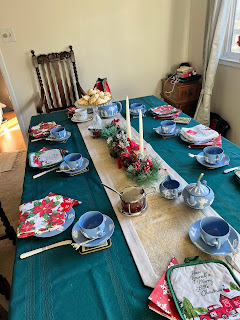
But the formal tea party is something I still love to do: it's a perfect way to entertain, everything on the table, no need to get up and serve, only to pour a few cups. I once did a TV program on the British tea party. A crew came to my house to film me having tea with my friends. It was nerve-wracking to have a camera on close up while I poured cups of tea (do not spill. Do not spill....)

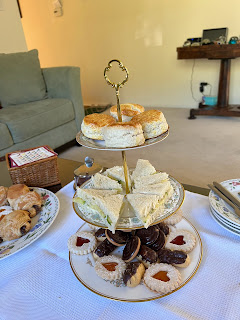
I was smart enough to have my two little granddaughters at a separate small table, looking adorable with miniature china cups. I figured it all else went wrong you couldn't beat two sweet little girls having tea! Luckily nothing did go wrong and I have served many tea parties since, including one this Christmas, and then one for my neighbors only last week. The former celebrated my Wedgwood China set, left to me by a very dear friend and the latter a Christmas present from daughter Anne: an antique three tier serving stand!

The classic tea should have finger sandwiches: I usually serve cucumber, smoked salmon with cream cheese, and sometimes egg salad. Then freshly baked scones with cream and jam and finally little cakes and biscuits. And people just help themselves.

I should explain that high tea is something quite different. It is a meal instead of dinner or supper, traditionally served when the servants had a night off. It is heartier than a usual tea, containing a boiled egg, scrambled eggs, sliced ham or something more nourishing.

When I am traveling I treat myself  to tea, in London, in Victoria BC at the Empress, in Banff at the Banff Springs Hotel and at smaller venues too. Banff Springs did not win my favorites award when they served grated carrot sandwiches. Yuck.

So who has had the perfect British tea? Recommendations in London? Anywhere else? Most memorable tea party?


Friday, February 4, 2022

Ode to Marmite

 RHYS BOWEN: I’m going to say something controversial today:  I love Marmite.

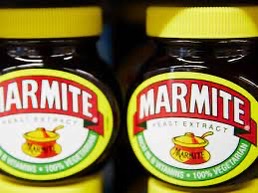
Do you all know what Marmite is? It’s a brown, gooey stuff that tastes … well…strong and salty. I can’t really describe it. You spread it on toast. You use it to enhance soups and gravies. It’s actually a yeast byproduct, invented over a hundred years ago when brewers wanted to come up with something to do with their left-over yeast after the beer was fermented.


But I think, seriously, that one has to have been born with the Marmite gene. I don’t know of any non-Brits who like it. And yet my children, all born in America, all eat it all the time. I’m not sure about my grandchildren.  When we first got to the States I tried serving it to new friends. One of my favorite things is to toast a marmite sandwich and then to grill one side of it with cheese on top. The result is heaven to me. To my friends not so much. I watched their faces as they tried to struggle through it, occasionally daring to ask, “What exactly is this?”

John and I often have it for breakfast, after the obligatory sardines (another acquired taste). But I’ve yet to come across the Yank who exclaims “Marmite? I tried it in London and now I can’t get enough of it.”

I’m also a big fan of liver. John adores kidneys. We also tried serving these to American friends and got looks of horror. I have to say that after my daughter majored in biology I became less keen on kidneys. Now I know exactly what they do.

I’m sure there are plenty of foods that other people love but I hate. Candied yams, for example. Yuck. I’ve never tried tripe but Mexicans adore menudo. I do like sweetbreads but I’m never cooking them myself. It’s so fiddly and time consuming.   So I’d love to know if there is a food you adore but nobody else does.

HALLIE EPHRON: So interesting! Yes, marmite tastes to me the way the inside of a tin can smells. 

I love freshly made chopped chicken liver. Essential ingredient: chicken fat. I save chicken fat trimmings in the freezer until I have enough. Then try to find fresh chicken liver in the supermarket – often unavailable. My chopped chicken liver has lots of onion and hard boiled egg in it, and I hand chop it in with a chopper I inherited from my mother-in-law and in a bowl my grandmother used. It’s SO delicious! And I confess I’ve never had a decent version from a deli or restaurant. Theirs always taste…old.

LUCY BURDETTE: I’m sure we must have eaten Marmite in Australia, but I don’t remember loving or hating it. But chicken livers, no thank you. That and lamb–everyone says “oh but you haven’t tasted my recipe.” But I don’t care for either one, doesn’t matter how much onion and rosemary you tuck around the edges. On the other hand, not everyone loves my favorite, candied jalapenos. 

JULIA SPENCER-FLEMING: Lucy, I’ve come to believe lamb is like licorice - you either love it or hate it, no inbetween. (I love the former and can’t eat or drink anything flavored with anise.)

The only singular thing I seem to eat is peanut butter and pickle open-faced sandwiches. Not pickle as in Branston Pickle (although I do love that.) I mean toast, smeared with natural peanut butter, and topped with slices of dill or kosher pickle. Spare me the pregnancy jokes; I’ve heard them all.

HANK PHILLIPPI RYAN: Marmite. I have never tasted it, and I have to say it sounds pre-tty horrible. I do love chopped liver, though, SO yummy. With onion and eggs, yes. YUM.

I love licorice candy, red and black. Lamb? Lamb? Rack of lamb is the best thing in the world. Truly. 

But I have never and will never have baked beans. Ah. How could anyone eat those? Or lima beans. Gah. Or poached eggs. I cannot even think about poached eggs. 

I do sometimes eat matzo when it’s not Passover. It’s delicious, even with nothing on it. Does that count?

DEBORAH CROMBIE: Marmite, Rhys! I have to confess that even having lived in Scotland and England, and having been married to a Scot for almost fifteen years, I never developed a taste for Marmite. To me it tastes the way B vitamins smell–not appealing at all. I think you might be right about it being a taste that has to be acquired early. 

I do love chicken livers and sometimes will saute them until they are crispy on the outside but still pink on the inside, and eat them on toast with butter and salt. Poor man's pate–yum. And I adore sweetbreads, but never cook them because no one else will eat them.

RHYS: I think lamb is also an acquired taste. It's a staple of Sunday lunch in England so I grew up liking it. But I also love chicken livers. I saute in butter then add sherry and flambe. Spread them on toast. Yum

Also like baked beans but not lima. And my poached eggs have to have firm white and slightly gooey yolk

Thursday, February 3, 2022

Killing Your Darlings

 RHYS BOWEN

Anyone who knows me knows that I am a big softie. I can’t watch horror movies. I can’t read really noir novels. Take someone down in the cellar and I close the book. I even hate killing spiders (of which I’m mortally afraid). Instead I try to put a glass over it, slide a sheet of paper between us and carry it outside. I once did this with a brown recluse (I only found out what it was later).  So I hate killing things. 

This applies to my books. Sometimes I have a victim who is so obnoxious that I am quite happy to bump them off. But more frequently I am sorry they have to die. When I was writing young adult novels, back in the time of stone tablets, I had to write a mini-series in which each book had a different telling of the life of a high school boy who ends up killing himself. During those four books I grew very fond of him and I didn’t want him to die. I put off those last chapters until the publisher was yelling at me.
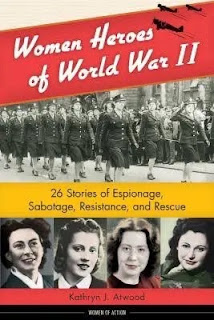
I’m going through the same thing now. I’m in the throes of a new stand-alone, part of which involves a woman parachuted into Nazi-occupied France during WWII. I know bad things have to happen. The life expectancy of a female operative undercover in France was three months. I have read all the personal accounts and biographies of the female spies and I know what awful things Nazis did to captured women. Some of them I can’t get out of my head. But I can’t bring myself to write the worst of them.  I simply can’t make my character suffer that much. And yet a brave rescue wouldn’t be realistic. She’s got to survive, but to survive a great cost and with a passionate hatred for her captor.

And so I am hesitating, procrastinating. Also I am aware of my fan-base. They like my books because they can handle my stories. So I can’t shock them too much. Any torture will have to be off-page or more psychological than physical. I simply can’t pull out her fingernails one by one.  I once got a piece of wood under one fingernail. I tiny sliver of wood. It was excruciating. So I can’t do that.  I’ll get her through it somehow but I don’t want to have to write that scene.

I’m curious, Reds, do you have problems inflicting pain, writing violence, killing someone on the page? Maybe I should have stuck to children’s books. “There was once a happy little duckling who lived in the farmyard pond….  Until the fox came one night and… Oh right

JULIA SPENCER-FLEMING: I deeply dislike violence  p@rn - books with lavish descriptions of terrible things that enable readers to say, “Oh, how dreadful” while also being titillated. So when violence happens in my novels, I use misdirection and suggestion, which, really, I think is more effective than gruesome details. Thinking of pulling out fingernails: in one book the medical examiner is looking at a body found in situ, dead after being tortured for information. I didn’t say anything about the body’s appearance, but the reaction of the cops on the scene tell the reader it’s distressing and totally out of the norm. The M.E. picks up the victim’s hand and says, “After the second finger, he would have told them anything they wanted.”

That’s it. I think it makes the reader shudder in horror and sympathy, without ever resorting to a description of the violence or it’s effects. 

Jenn McKinlay: Rhys, I adore your posts. Ducklings..fox. LOL! 

Well, I think we all know that I’m no good at torture and grisly killings as I’m always looking for the joke and it’s hard to find the humor when someone’s head gets lopped off or their private bits are being electrocuted in a torture scene. 

I try to craft victims that I can’t abide (I have a running list of potential victims based on real people who severely annoy me – don’t judge, it’s therapy), and hopefully the reader can’t stand them either, so that when they do die it’s not terribly surprising or sad but justice is still served and the murderer is caught at the end. I can admit it. I like things tidy, even my murders.

HALLIE EPHRON: I’m with you, Rhys, on eschewing pain and violence. But I don’t write about female operatives parachuting into Nazi territory, either. It’s easier to avoid in domestic suspense, since the angst is usually mental. In real life I save spiders, too. And right now I’m torn over a mouse (or two) that I think is visiting my kitchen nightly. Trap or kill? Huge ick factor. 

HANK PHILLIPPI RYAN: I don’t like killing people in the first place, which I know is odd for a murder mystery author. That’s why I go for violence of the mind—how much people can hurt and mislead each other emotionally and psychologically. Selfishness and manipulation and gaslighting. Jeffery Deaver once had a scene where a truly bad guy plugged in an iron. And that was the end of the chapter. We never saw anything specific that happened after that about the iron, we just had to imagine. Which I did. And still do. 

And yes, I’d rather have it be in the reaction.   And the only thing I can kill with only a brief regret is a clothes moth.
DEBORAH CROMBIE: I'm with you, Rhys! I am such a softie. I hate for bad things to happen to people (or animals) in books or movies. But if nothing bad happens, you don't have much of a plot for a murder mystery, and I think if you only kill off unlikeable characters, your readers will not be very invested in the outcome.  So I have made myself do in characters that I absolutely loved, and have probably needed therapy–or at least a restorative retreat– afterwards.  A former editor once told me that I was "too nice to be a mystery writer." Probably true.

LUCY BURDETTE: You are awfully nice Debs! I too can’t take a lot of violence, and certainly no torture. Luckily, writing cozies, I’m off the hook for that. Someone does have to die–it’s expected–but I don’t have to show it in my pages. If I should forget and happen to shade into something a bit too graphic, my editor nudges me back on track. I try very hard to work on finding a reasonable motive, and have the bad guy not be too much of a cardboard character. It feels important to take something as intense and extreme as killing another person very seriously.

RHYS: You see--we're a bunch of softies. I knew it. But since we've all chosen to write mysteries then occasionally bad things have to happen.  How about you, dear readers? Can you handle on page violence? Or do you prefer anything awful to take place off screen?