
Tuesday, July 29, 2008

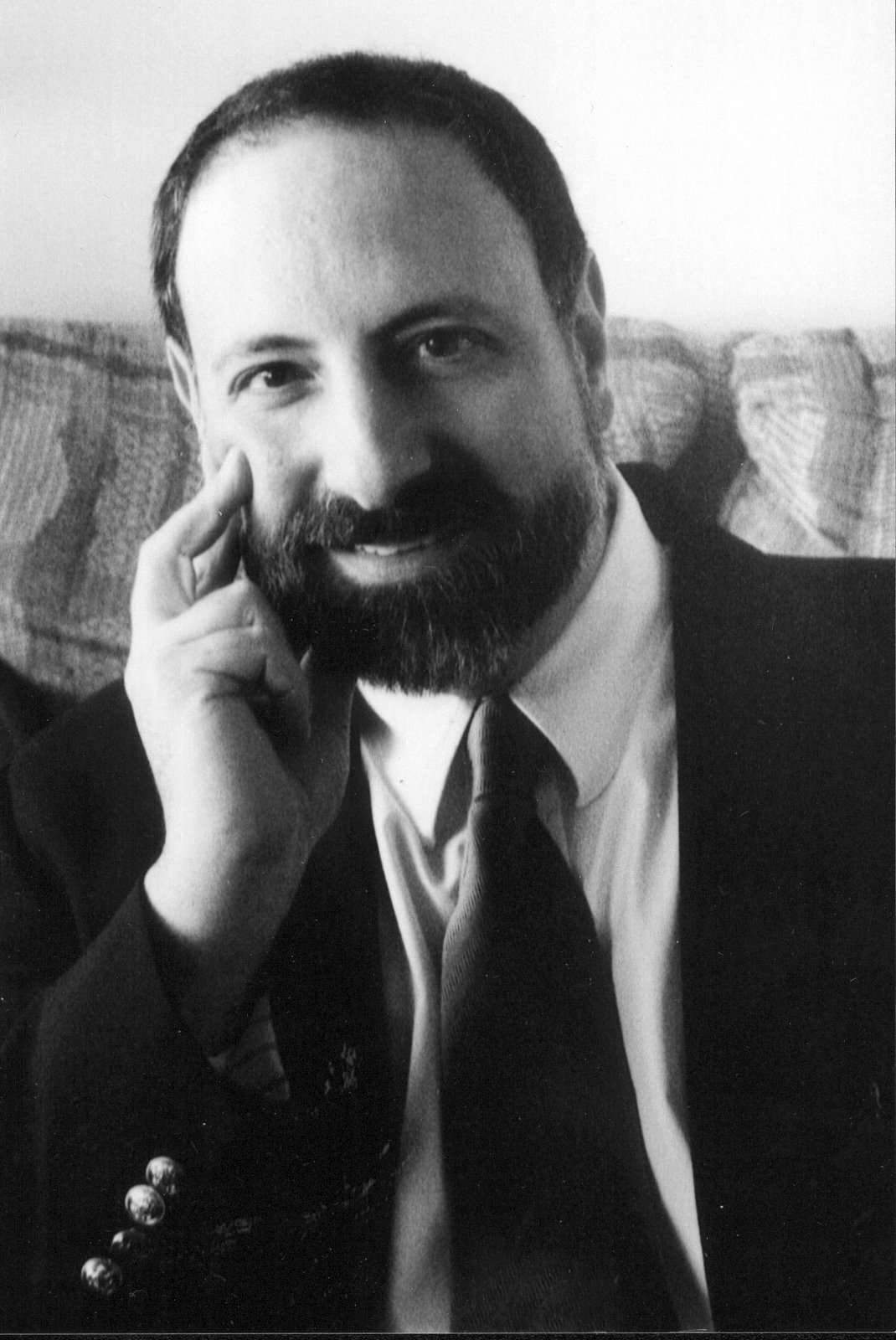
On Dennis Palumbo

"I assumed the burden of the profession, which is to write even when you don't want to, don't much like what you are writing, and aren't writing particularly well."—Agatha Christie

ROBERTA: Jungle Red Writers and readers, do we have a special guest for you today!

Dennis Palumbo is a writer and licensed psychotherapist in private practice, specializing in creative issues. He’s the author of Writing From the Inside Out (John Wiley), as well as a new collection of mystery short stories, From Crime to Crime (Tallfellow Press).

Formerly a Hollywood screenwriter, his credits include the feature film My Favorite Year, for which he was nominated for a WGA Award for Best Screenplay. He was also a staff writer for the ABC-TV series Welcome Back, Kotter, and has written numerous series episodes and pilots.

His short fiction and articles have appeared in Ellery Queen’s Mystery Magazine, The Strand, the New York Times, the Los Angeles Times, EMMY Magazine, and many others. His column, “The Writer’s Life,” appeared monthly for six years in Written By, the magazine of the Writers Guild of America. Currently, he’s a contributing writer to The Lancet, Britain’s leading medical journal, and does commentary for NPR’s “All Things Considered.”

I’m especially interested in Dennis’s career path, as it’s the opposite of mine—he started out as a writer and now works as a psychotherapist. Welcome Dennis! Since we have a lot of writers who visit the blog, could you start out by talking about writers’ block? Who gets it and why, and what can we do about it?

DENNIS: What does it mean if you get writer’s block? It means you’re a writer...and that’s all it means.

Unlike most people who talk about writer’s block, I happen to think it’s good news for writers! Why? Well, let’s look at the conventional view of a block...it’s a wall, or some other kind of unpassable space or obstacle. That’s why writers feel like they’re banging their heads against it.

However, I conceptualize writer’s block differently. If you look at the biographies of writers (and other artists) you admire, you’ll notice at least four or five major “blocked” periods, in which they either didn’t work, or else their work became stale and repetitive. And then, suddenly, a new, exciting phase of work began.

Simply put, I believe writer’s block is a natural, necessary developmental stage in the growth of a writer, similar to the developmental stages we all go through as we mature. Just as a toddler stumbles and falls repeatedly before learning how to walk, I believe writers must navigate and master similar developmental “steps” if they’re to mature as writers.

For example, maybe the writer is blocked (struggling with a character, or stuck at a point in the work) because what’s coming next represents a real growth spurt in the writing (i.e., maybe the writer is trying to structure a difficult plot for the first time, or is risking writing about personal or sexual issues for the first time, etc.).

This “block” then must be navigated, worked through, so that the writer’s work can grow in craft and personal relevancy. But do I have any proof that writer’s block is good news for a writer, and is actually a necessary part of a writer’s growth in craft? I think I do.

Just ask yourself: have you ever worked through a difficult block without thinking that you were a better writer for having gone through it? Almost every writer I’ve worked with who struggled to navigate a block has stated that he or she felt they were better writers on the other side of it!

ROBERTA: How does therapy with “creative types” differ from traditional therapy? At what point would one of us know we need to see you?

DENNIS: Doing therapy with creative people is both different and the same as doing therapy with non-creative types. (How’s that for a wishy-washy answer?)

Seriously, regardless of what issue a creative person—--let’s say, a writer---comes into treatment for (say, writer’s block or procrastination or fear of rejection), we usually find that these issues are inextricably bound up in the same personal issues that hamper other parts of their lives.

So, for example, if we explore procrastination, which is often due to a fear of shameful self-exposure, we might discover how the writer felt criticized and judged as a child, so that finally finishing a piece of writing now
as an adult leaves it open to criticism and possible rejection. Invariably, in such cases, I often find that the adult writer is likewise fearful of criticism and rejection in his or her personal relationships.

What makes my practice unique, I think, is that as a writer myself, I’ve struggled with and worked through many of the same issues my writer patients with. For instance, if a writer is anxious about pitching an idea to an executive at NBC, I can relate, having done so myself hundreds of times. Because even though some of the writer’s fears may have their roots in early childhood experiences, there are also plenty of non-psychological, pragmatic reasons to be anxious about pitching to a network (or editor or agent), and I feel I can help with both aspects of his or her dilemma.

Make no mistake, writing---and every other art form---is hard. The life is uncertain, the rewards often more personal than public, the financial realities sometimes pretty bleak. As Robert Frost said, “The one thing all nations of the earth share is a fear that a member of your family will want to be an artist.”

When will you know that you need to see a therapist? When the issues you’re confronting, personal or professional, interfere with your social, familial or professional functioning. When you not only are blocked, but begin beating yourself up for being blocked. When not only are you afraid of rejection, but you begin berating yourself for having such a fear.

Remember, feelings themselves aren’t the problem---it’s what you think those feelings “mean,” what you think they “say about you” that causes real misery and paralysis. If you’re experiencing anything like the above, it might be a good idea to consider seeing a therapist.

ROBERTA: Since your Jungle Red hosts are all mystery writers, we’re dying to hear about FROM CRIME TO CRIME. Why did you turn to crime?
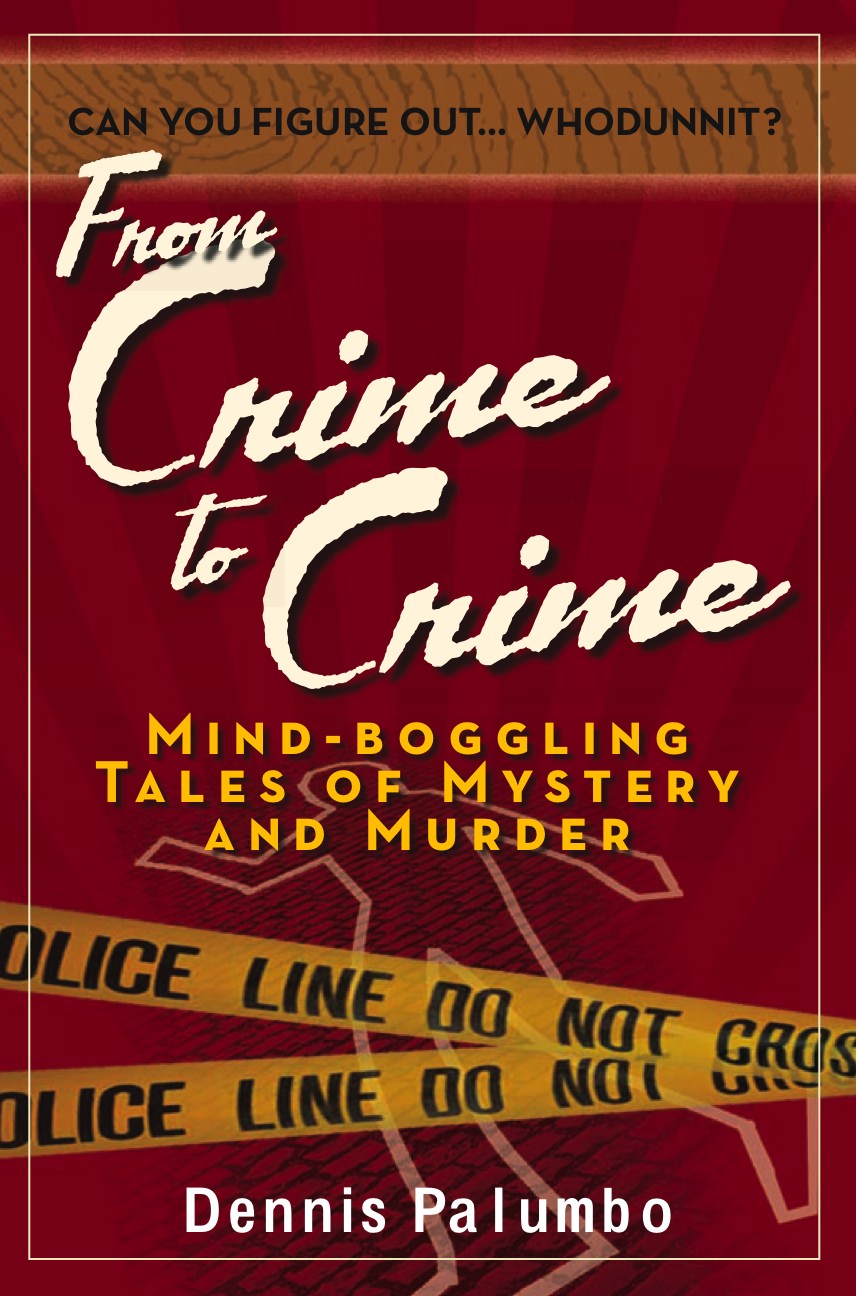
DENNIS: I’m afraid it’s a life-long love, which started when my parents bought me a beautiful hard-bound version of The Adventure of Sherlock Holmes when I was 12. I’ve been hooked on the genre ever since.

Actually, the very first thing I wrote that got published was a crime story, “Many A Slip,” that appeared in 1978 in Ellery Queen’s Mystery Magazine. This was even before I was a writer on TV sitcoms like Welcome Back, Kotter, and before My Favorite Year. Then, throughout my career as a screenwriter, I enjoyed mysteries and thrillers.

Then, many years later, after retiring from film and TV writing to become a licensed psychotherapist, I returned to my life of crime by writing more whodunnits for EQMM, as well as The Strand and elsewhere.

What makes my new collection of short stories, From Crime to Crime, so unique is that most of the tales feature a group of hapless amateur sleuths based on real people---a therapist (me) and three of my friends. Like the Smart Guys in the stories, my friends Mark, Bill, Fred and I met every Sunday afternoon for deli and beer, to argue and debate and rant about the issues of the day.

In the fictional Smart Guys stories in my new book, I merely grafted this truth about us and our rowdy get-togethers onto the classic “armchair mystery” format---borrowing heavily from Agatha Christie’s Tuesday Night Club and Isaac Asimov’s Black Widowers tales.

(Incidentally, it might amuse your readers to know that the real-life members of our old group have since enjoyed seeing themselves immortalized in print. The only complaint came from Mark, who felt I didn’t emphasize enough his great success with women. Poor deluded boy.)

Anyway, I’ve been gratified by the response to the Smart Guys stories, as well as the three stand-alone stories that complete the collection. Though even two of these stories also feature amateur sleuths: one, a female police psychologist whose session with a patient threatens to turn deadly; and the other, about a penniless patent clerk named Albert Einstein who gets caught up in the search for a turn-of-the-century serial killer.

Thanks for opportunity to answer your questions. I hope I’ve done a decent job. I also hope your readers will check out my new book, From Crime to Crime (Tallfellow Press). If they do so, I’d love to hear their comments about it.

They can contact me, or get more information about me and my work, by visiting my website, conveniently named www.dennispalumbo.com. Thanks again!

ROBERTA: And now the doctor is in, ready to take your questions....

Sunday, July 27, 2008

On the Wedding Season

“Going to the chapel and we’re gonna’ get married…” The Dixie Cups

“Long-distance chats with Jeanine about the gowns had begun just after she and Rick made the formal announcement of their engagement. Recently they’d mounted into a daily blitz. Should she choose the purple, which she called “aubergine,” (appropriate for a fall wedding and guaranteed to burnish the bridesmaids’ complexions to glowing) or the forest green (best suited as a background for the golf theme tableware and centerpieces)? The aubergine, Jeanine informed me, would open the door to the lily family. The green, on the other hand, might call for white or yellow roses. And the roses would lend themselves to an elegant but more formal arrangement. She had been frozen. She obviously preferred the purple, but was unable to surrender the golf-theme tie-in. My best friend, Laura, hypothesized that brides frequently focused on this sort of detail in order to avoid confronting the enormity of the leap they were about to make.” Cassie Burdette in FAIRWAY TO HEAVEN.


ROBERTA: Ah the wedding season—how many are you invited to this summer? We’re up to four, including a destination event in Homer, Alaska. Things are a little different from the old days—it seems to be de rigueur to have a wedding website, chronicling every personal detail from “the proposal” to bios of the bridesmaids. And never mind the one night out on the town for the “boys”—the bride has a bachelorette party, too, which can involve a separate destination weekend. One of my nephews attended a bachelor party that called for a week of surfing in Fiji. (OK, that’s tough duty for a surfer!) And did you see the Style section of the NYT last Thursday about brides who're insisting on botox or boob enhancement for the bridesmaids?

Not that I didn’t have obsessions too: after all, I’d been through a divorce and was marrying a man with two young children who were none too happy about the addition of a wicked stepmother. But they were low-budget obsessions. I sewed the flower girl’s dress myself, along with a matching ring-bearer’s pillow. And we decided to throw the reception in our backyard and do most of the cooking. When I ran out of all those projects, I spent hours hemming 150 cloth napkins in various blue and pink flowered cotton fabrics. Honestly John began to think he was marrying a fruitcake.

Now it’s your turn, JRW, how did you manage your wedding jitters?

HALLIE: I don't remember why, but I do remember walking down the aisle in tears. My wedding was at my parents Manhattan apartment. Simple, low key--I sent the invites, my mother did the flowers, and people who came still remember the food which came from the Rainbow Grill (they were a client of my then brother-in-law). My dress was white crocheted cotton lace from Fred Leighton’s in Greenwich Village. I was so oblivious that I didn’t even have a slip to put under it or anything to wear on my head.

My father got a record of the bridal march from the library and played it on the phonograph, and I marched from the bedroom into the living room.

The rabbi from Columbia University officiated, and he’d just been fired for advocating for rioting students (it was ’69). He wore purple robes and cowboy boots, and went on and on and on while we waited to break the glass and be declared man and wife. He was probably more than a little drunk. In the middle of his speech or sermon or whatever the heck he was going on about, my father, not so sotto voce, asks, “Is he trying to marry them or talk them out of it?”

RO: That's a great line...but why am I surprised..?
I remember wanting to BE married, but not so much GET married. Early in the process someone asked me if I wanted little sprigs of rosemary stuck in the napkins. I thought she was insane (although now it seems like a nice touch..) After that, my husband's assistant - now a vice-president at Random House - planned most (all) of my wedding. I've often thought of it as a trial run for her own wedding ten years later.

We got married at the Central Park boathouse and gondoliers ferried guests around all evening. I pretty much just bought the dress, chose the flowers and showed up. I asked my bridesmaids to wear any long, dark blue dresses they liked. (I still have one asparagus fern and lots of baskets from that night.)

Showing up was a little harder since my husband and I went to a Knicks playoff game that afternoon - this was back in the day when they still had a good team. The Cleveland Cavaliers were in town and had lost badly in the first game of the series so they had something to prove. We were worried the game would go into overtime..and so was my (gorgeous) maid of honor and bridesmaid who were nervously waiting for me at the Plaza hotel. I finally got there, but hadn't had time to get hair done so my MOH rubbed a little Kiehl's Silk groom in my hair, gave me some bubbly and fluffed up my big white dress. It was like that scene in Miss Congeniality where Sandra Bullock looks frumpy at the beauty pageant and all of the other contestants help her look good.

In the lobby we bumped into the Cavs who were also staying at the hotel. BTW, they beat the Knicks 90-84.

HANK: I was 46. Jonathan 56. So I decided to go for it with the dress. My mother said, "You can't wear that! It's a Barbie dress!" But I loved it and still do.

My wedding jitters? Turned out to be lovely. We got married at the Four Seasons, just family, then had a big big big party at a wonderful restaurant called Salamander. The rabbi was half an hour late--he got caught in the traffic of a road race--so we had the champagne first. And talked and hung out and played Grieg's Wedding Day at Trollhagen, which still makes me happy when I hear it.

But the hour or so before the wedding, I was almost all dressed, and suddenly, I began to panic. Not about marrying my wonderful Jonathan, but about the production. What if--the food was bad? What if--the band was terrible? What if--the relatives didn't like each other? What if--no one had fun?

And then I thought--hey, every bride feels like this. Every bride in the history of the planet has had a moment when they have the jitters over something or other--the cake, the food, her dress, the flowers, the weird relatives, dancing the first dance, runny mascara. (Having no slip, or being late, or wanting to hem all the cloth napkins). And I was just filled with joy--to be so cosmically connected to all those other almost-brides--that I almost burst into tears.

And then I was fine.

JAN: I was the youngest and only girl. Plus, I put off my original engagement to my husband and made my parents wait an additional four years before I got married. They wanted to throw this party in the worst way. Although, I didn't know I was doing it at the time, I made a very strategic decision: I agreed to get married on my parents anniversary and wear my mother's wedding gown. My mother then took over the planning -- which was great because I was busy working at a paper in Worcester and the wedding was in Jersey. She picked a great location, a very classy country club with excellent food, hand wrote all the invitations and over-rode my instincts of frugality. The only thing I did was pick the band - which was Dixieland Jazz.

Probably the best part was at the ceremony when the priest made us take a moment and remember my brother who had passed away. My brother had set me up with my husband, who had been his college roommate. This moment made me feel like my brother was there with us, the missing best man. So, just like Hank and Hallie, I had tears running down my face. Really good tears.

ROBERTA: oh my gosh, every one of you is gorgeous, adorable, stunning...hope all the couples getting married this season will have the same kind of lovely memories ...

Thursday, July 24, 2008

On the Name Game


Yes, it's silly. Yes, it's a waste of time. And we dare you to resist.


"Billy Billy Bo Billie Bananafanna fo filly, fee fi mo filly, Billy. The Name Game."

**Shirley Ellis

Names of book characters--how do you think of them?

HANK's here today: In my books, two things happen. One type of character appears with a name already in place. Charlotte McNally. It arrived, and I had not one more thought about it. Franklin was Franklin Brooks Parrish instantly. Names are so fascinating things to me, because a name has to work, and be the essence of the character, without being heavy handed.

So some I struggle with a bit. Penny, for instance. Was instantly Penny. Then I thought no, maybe that’s not a hip enough name for an eight-year-old with contemporary parents. So I changed her name in the manuscript to Emma. Then Annie. Then Ella. And all the while every time she showed up in the story, I kept typing Penny. Because, apparently, that’s what her name is—Penny. And so she stayed.

Anyway—the naming of Josh Gelston, the Atticus Finch looking college professor Charlotte is so interest in—was truly hilarious. My first boyfriend ever, I think when I was about seven years old? Was named Phillip Gelston. So I wanted a non-ethnic, sort of strong last name that wouldn’t instantly telegraph anything. Gelston worked.

But he couldn’t be Phillip, because of my own last name. So I started thinking about names that were one syllable, masculine, strong, traditional not trendy, very simple and that someone who is about 50 would logically have been named. So I thought: Ben. Luke. Jake. Max. Sam. Josh. Yes, Josh. Then Joshua Ives Gelston just came out of my brain. Which I loved.

So guess how I came up with the name of June Ridgedale? She's going to be--what else, a lovely and gentle prep school teacher or counselor in DRIVE TIME. I mean--you can tell by her name, she's not going to be a cop, right?

I found her via the fab Lorraine Bartlett. Because Lorraine's mother's middle name plus the name of the street where she first lived is June Ridgedale. The moment I heard it, I pounced.

And, because the fabulous Guppies had a completely hilarous discussion about it--I know a whole bunch of nom de Moms. Sheila Connolly has a good one. And Pat Remick. And many more.

Mine is Miriam Ritter. A thirties movie star if I ever heard it.

What's yours?






