Showing posts with label Michelle Gagnon. Show all posts

Tuesday, April 18, 2017

Reader, I got it wrong.

HANK PHILLIPPI RYAN: I was describing a book to someone the other day, and realized I was actually describing the movie. It might have been To Kill A Mockingbird. Or Silence of the Lambs. Anyway, the reality of the book vanished, replaced by the easier-to-remember movie. And I was so surprised, reading Mockingbird again, that the movie is only a tiny bit of the book.

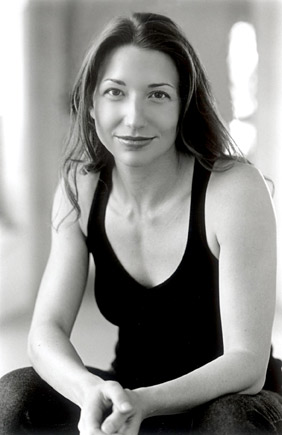
I was reassured, then, to hear from the amazing Michelle Gagnon that I’m not the only victim of misremembering.

ooh, Orson Welles!
Her new book, by the way, is a newly imagined version of Jane Eyre. Brilliant.

Misremembering Jane Eyre


“Little girl, a memory without blot or contamination must be an exquisite treasure—an inexhaustible source of pure refreshment; is it not?”
                    Charlotte Bronte, Jane Eyre


I first read Jane Eyre in high school, and dove into it again after college. Since it’s one of the few books that I’ve ever re-read, when I decided to write a modernized, deconstructed version, I was confident that I remembered the story.

And then I read it again.

Memory is a funny thing, I quickly realized. It turns out that I mainly recalled about the romance between Jane and the tempestuous Mr. Rochester (I chalk that up to being a teen when I first encountered it). Although in truth, I hadn’t even remembered their relationship entirely correctly.

There’s a phenomenon called “The Mandela Effect,” a situation where you might think something happened in a particular way, but it turns out you’re mistaken. According to Buzzfeed, “The name of the theory comes from many people feeling certain they could remember Nelson Mandela dying while he was still in prison back in the ’80s. Contrary to what many thought, Mandela’s actual death was on Dec. 5, 2013, despite some people claiming to remember seeing clips of his funeral on TV.”

Bizarre, right? And yet it applied directly to my mistaken memory of the plot of Jane Eyre. For example:

·      I remembered Jane’s time at Thornfield Hall taking up the bulk of the book, while in fact the lengthy outset of the novel relates her childhood and time at the Lowood Institution; and then there’s an equally long chunk at the end where she becomes acquainted with the Rivers (who turn out to be long lost relatives, a coincidence I’ve always had trouble forgiving Bronte for).

·      Rochester. In retrospect, not as great a guy as I thought. He quickly becomes weirdly possessive. Re-reading the book twenty years later, I couldn’t help but think, “Stalker much?” as he rattled off lines like, “But listen-whisper-it is your time, now, little tyrant but it will be mine presently; and when once I have fairly seized you, to have and to hold, I’ll just-figuratively speaking-attach you to a chain like this,” touching his watch guard. “Yes, bonny wee thing, I’ll wear you in my bosom, lest my jewel I should tyne.”

I mean, dude. Simmer down. Part of what I loved about Jane Eyre was how revolutionary a strong, independent heroine was for that time period. Yet in the chapters leading up to their aborted marriage, it turns out that Rochester doesn’t really seem to get her at all. Mind you, I’m still Team Rochester, but his character wasn’t exactly how I’d remembered (although maybe I just found his full-throttle courtship more romantic as a fourteen-year-old).

·      Elements of the supernatural. Because of the pervasive Gothic atmosphere, I’d thought that Jane Eyre incorporated many supernatural elements. In fact, there are only two truly strange occurrences in the entire novel. The first is when, as a child, Jane sees a glowing light glide across the room; as she puts it, “I thought the swift darting beam was a herald of some coming vision from another world.” 
       Reflecting as an adult, however, she chalks it up to a childish fit of nerves. (Mind you, the light never returns, which was a bit disappointing; why introduce a fantastic McGuffin like that if doesn’t factor into the story later? Unless it was meant to be a foreshadowing of future fires…) 

     The second supernatural occurrence (and, at least according to Jane, only true one) is when Jane hears Rochester calling for her at a pivotal decision making moment, despite the fact that in actuality, he’s miles away. Tres romantic, yes? But that’s the only truly unexplained supernatural element in the story.

·      >The fire. Perhaps because Wide Sargasso Sea is another favorite of mine, I mistakenly thought that we actually saw Thornfield Hall burn in Jane Eyre: alas, not so much. The reader only finds out about the tragic fire afterward, when Jane returns to discover nothing but blackened ruins. So my vivid recollection of those events must be due to Jean Rhys’s fine work.

So I’m curious: Did any of you suffer from the same “Mandela Effect” in your memory of Jane Eyre? Or perhaps with another book?

(My favorite non-literary example, by the way, is this: in the film version of Silence of the Lambs, one of the top quoted lines is “Hello, Clarice.” But guess what—Hannibal Lecter never said that. Here’s a link to more if you’re curious) 

HANK PHILLIPPI RYAN: And politicos, Woodward and Bernstein have said no one ever admonished them to “follow the money.” That’s only in the movie. 

But hey.  I remember the fire too.  Definitely. 

So let’s do a giveaway.  When did you read Jane Eyre?  Or did you? Did you just see the movie?  What do you remember? And are there other books you get mixed up with the movie? Or where the movie got it wrong?
Every comment is entered to win Michelle’s Unearthly Things.


Charlotte Brontë's Jane Eyre retold against the backdrop of San Francisco's most fabulous—and dangerous—elites.

After losing her parents in a tragic accident, surfer girl Janie Mason trades the sunny beaches of Hawaii for the cold fog of San Francisco and new guardians—the Rochesters—she’s never even met. Janie feels hopelessly out of place in their world of Napa weekends, fancy cotillions, and chauffeurs. The only person she can relate to is Daniel, a fellow surfer. Meeting him makes Janie feel like things might be looking up.

Still, something isn’t right in the Rochester mansion. There are noises—screams—coming from the attic that everyone else claims they can’t hear. Then John, the black sheep of the family, returns after getting kicked out of yet another boarding school. Soon Janie finds herself torn between devil-may-care John and fiercely loyal Daniel. Just when she thinks her life can’t get any more complicated, she learns the truth about why the Rochesters took her in. They want something from Janie, and she’s about to see just how far they’ll go to get it.

"Effortlessly paced, full of heart, humor and horror, Gagnon revives the spirit of a classic while putting her own unique spin on the story…addictive, fast-paced and haunting."
—Madeleine Roux, New York Times bestselling author of the Asylum series


Michelle Gagnon (www.michellegagnon.com) is the bestselling author of thrillers for teens and adults. Her young adult PERSEF0NE trilogy (Don’t Turn Around, Don’t Look Now, Don’t Let Go) was nominated for a Thriller Award, and was selected as a top read by Entertainment Weekly, Kirkus, Voya, and YALSA. Her standalone thriller Strangelets was a Junior Library Guild pick. She lives in Los Angeles with her family.

-->

Friday, October 26, 2012

MICHELLE GAGNON--DON'T TURN AROUND

DEBORAH CROMBIE: One of the perks of being a mystery writer is the friends you make along the way. Michelle Gagnon is one of those for me.  We met when we were both guest authors at the Book Passage Mystery Writer's Conference in Corte Madera, California, a few years ago. (Our own Hallie Ephron was a guest author that year, along with half a dozen other writers who have since become good friends.)

I've followed Michelle's career with delight, and am thrilled with the success of her latest book, a young adult thriller called DON'T TURN AROUND.

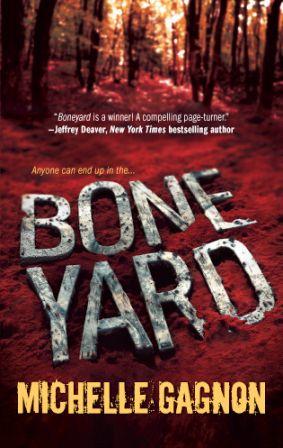
Michelle's adult mysteries, THE TUNNELS, BONEYARD, THE GATEKEEPER, and KIDNAP AND RANSOM, have been described as utterly gripping, addictively readable thrillers, by the Chicago Tribune. Her latest book, the first in her PERSEF0NE young adult trilogy, has  received starred reviews from both Kirkus and VOYA, and the first installment, DON'T TURN AROUND, was selected for the Autumn 2012 Kids IndieNext list. 

Sixteen-year-old Noa has been a victim of the system ever since her parents died. Now living off the grid and trusting no one, she uses her computer-hacking skills to stay safely anonymous and alone. But when she wakes up on a table in an empty warehouse with an IV in her arm and no memory of how she got there, Noa starts to wish she had someone on her side.

Enter Peter Gregory. A rich kid and the leader of a hacker alliance, Peter needs people with Noa's talents on his team. Especially after a shady corporation threatens his life. But what Noa and Peter don't realize is that Noa holds the key to a terrible secret, and there are those who'd stop at nothing to silence her for good. 

When I saw Michelle at Bouchercon a few weeks ago we did a lot of catching up, but here are the questions I didn't get to ask about her new venture into YA fiction:


DEBS: What inspired you to write a young adult book? Was it something you’d always wanted to do?
 
MICHELLE GAGNON: One of the reasons I switched to YA for this series was that a friend pointed out that I’ve had a strong teen character in nearly all of my adult thrillers, and he suggested I try writing an entire thriller from that point of view.  And it was really liberating-I ended up writing the rough draft in a little over eight weeks, research and all. It hadn’t occurred to me to tackle YA before, but now I’m really happy that I did. I am continuing to write “adult” thrillers too, though (that always sounds dirty to me now).

DEBS: How was it different from writing an adult thriller? Was it easier or harder? 

MICHELLE: This one in particular was easier, but I’m not sure if that was because it was YA. Sometimes the books write themselves, and sometimes it’s like wrestling a giant, vicious alligator into submission. I just finished the second book in the trilogy, and that one was a bit more of a struggle.

DEBS: Are there certain constraints in writing for a younger audience? 

MICHELLE: I did hit a few stumbling blocks, because in my other series the main characters were an FBI agent and security consultant, adults with resources and training at their disposal, and the authority to back up their actions.  Teenagers don’t have those advantages. I also initially wrote a few scenes from the POV of an adult character, which is apparently a big no-no; I revised them to show the teen’s perspective. And I toned down the language a bit during the editing process. I don’t generally incorporate a lot of sex scenes into my work, so that wasn’t an issue. And in terms of the content, it’s just as dark as anything I’ve written previously.

DEBS: What kind of response do you get from your readers?

MICHELLE: It’s been so thrilling to receive fan mail from teens- they’re so lovely and enthusiastic! Plus, they take pictures at events and immediately tweet them, which took some getting used to…

DEBS: I’ve always felt that good YA fiction is simply good fiction, and can contain themes and ideas as meaningful as any in adult fiction. It can not only turn teenagers and young adults into lifelong readers, but shape their perception of the world. Did you—and do you—feel  a sense of responsibility to your readers?

MICHELLE: For me, the pivotal theme in this story is the fact that mainly former foster kids are being victimized. I did a considerable amount of research on the US foster care system (and its many failures), and was alarmed by much of what I read. Consequently, I’ve affiliated with an amazing non-profit called Rising Tides (http://rising-tides.org/), that provides financial assistance for education and other life needs to teens who are ageing out of the system, and have no other resources at their disposal. I feel really passionate about that. Without help, a disproportionate percentage of former foster kids end up homeless, in prison, or worse. They really need a support network, and instead, they’re basically pushed out the door once they turn eighteen. I find that unconscionable. Rising Tides is a crowdfunding organization that helps allocate funds to specific teens to help them escape the cycle.

DEBS: I have to mention the super trailer on your website! Did you have any input on that?

MICHELLE: I didn’t, but isn’t it amazing? I was completely blown away by it. I can’t sing HarperTeen’s praises enough, they’ve really championed this book.

DEBS: In 2013, Michelle's YA dystopian thriller STRANGELETS will be published by SoHo TEEN Press. She splits her time between San Francisco and Los Angeles. You can find her at www.michellegagnon.com, or on Facebook  and Twitter. Michelle will be giving away a copy of DON'T TURN AROUND to a commenter, so be sure to drop in and say "hi." And don't forget to watch the trailer!

(Oh, and our lucky winner of Anna Lee Huber's THE ANATOMIST'S WIFE is Reine! Reine, you can email Anna at info at annaleehuber dot com with your mailing address.)

Thursday, November 4, 2010

The Real-Life kidnapping that....

When the world's foremost kidnap and ransom negotiator is snatched by a ruthless drug cartel, Jake Riley becomes ensnared in the effort to save him. But he's up against Los Zetas, an elite paramilitary organization renowned for its ferocity and skill. Now he and his colleagues must navigate the dark underbelly of Mexico, from raging street wars to perilous jungles, in an effort to rescue him before time runs out.

After nearly losing her life on her last case, FBI Agent Kelly Jones may never do fieldwork again. Determined to regain her confidence, she joins Jake on his mission—and quickly realizes she's in over her head. Then in the slums of Mexico City, she encounters a former nemesis who's enacting a nightmarish ritual on the weak and vulnerable. Now she has one last, desperate shot to prove herself—by taking down a killer.
**about KIDNAP AND RANSOM by Michelle Gagnon


HANK: You know, here at JRW, we usually we have true crime Tuesday. But Michelle Gagnon's book KIDNAP and RANSOM inspired us to expand--this week at least--to True Crime Thursday.

Michelle explores a dangerous place and a dangerous group, and introduces us to a powerful character, to bring us an important message. (And an amazing story.)

The Real-life kidnapping that inspired KIDNAP & RANSOM
Michelle Gagnon

The initial idea for my latest thriller, KIDNAP & RANSOM, stemmed from a true story.

While researching border issues for THE GATEKEEPER in December of 2008, I stumbled across an article on the kidnapping of Felix Batista. Batista was a security consultant for ASI Global (if you saw the film PROOF OF LIFE, this was the same job held by Russell Crowe’s character).

Batista personally negotiated the release of more than a hundred hostages over the course of his career. That December he was in Saltillo, Mexico, offering advice on how to handle the uptick in abductions for ransom. While dining with local businessmen one evening, Batista excused himself from the table to take a phone call. On his way out of the restaurant to get better reception, he handed his laptop and a list of phone numbers to his companions in case he didn’t return (this was a man who clearly knew you can never be too careful).

Moments later, an SUV pulled up to the curb and forced Batista was forced inside. He hasn’t been seen or heard from since.

The irony of the story grabbed me—the hero becoming the victim, an expert suddenly forced into the position he’d saved so many people from. Stranger still, his kidnapping wasn’t proceeding normally—there was no ransom demand, and no one claimed responsibility for seizing him. It was a true mystery. (And over the next two years, kidnappings and cartel violence in Mexico became increasingly rampant, spilling over the border to such an extent that related articles appeared in the U.S. media nearly every day.)

So I set off to find out more about narcocartels south of the border, and about kidnappings in general. I fixed on Los Zetas, mainly because their backstory was fascinating.


Los Zetas is a gang comprised mainly of former Mexican Army soldiers. They were part of an elite brigade, comparable to the Army Rangers, trained in special operations techniques at Fort Benning. Upon returning to Mexico, they promptly left the Army and went to work for the Gulf Cartel.

Eventually, they branched off on their own, wresting control of drug trafficking operations from rival cartels. In recent years Los Zetas have become increasingly involved in kidnappings, murder-for-hire, extortion, money laundering, human smuggling, and oil siphoning. They’re suspected of killing the 72 migrants found in a mass grave in Tamaulipas last August, and of the murder of American David Hartley on Falcon Lake last September. The DEA considers Los Zetas to be the most violent paramilitary enforcement group in Mexico.

So when it came to villains, the choice was easy.

Last May, I attended the wedding of a friend from Mexico City who had helped tremendously with my research. At the reception, I was seated with some of his relatives. When they found out that my latest novel was set in their hometown, they were enthusiastic…until they heard the title.

“Oh, no,” one uncle said. “You cannot write about that. Mexico City is very safe.”

“Really?” I asked (in all sincerity, might I add). “I heard that most locals know at least one person who has been kidnapped.”

“Well, of course,” they all agreed. Every single person at the table knew someone who had been kidnapped. But as they explained, it’s much worse up north by the border with Texas. There, it’s really a problem.

Mexico is rapidly supplanting Iraq and Colombia as the kidnapping capital of the world. In the past decade, drug cartels and terror groups have seized upon kidnappings as a relatively low-risk source of financing. During a recent election in Russia, one political party’s entire campaign was funded covertly by ransom money.

Many kidnapping victims are held for months, or years. Some continue to be held even though their ransom has been paid. Many never make it home again.

I dedicated KIDNAP & RANSOM to them, and to people like Felix Batista who devote their lives to freeing them.

************************************
Michelle Gagnon is a former modern dancer, bartender, dog walker, model, personal trainer, and Russian supper club performer. Her bestselling novels have been published in North America, France, Spain, Denmark, Norway, Sweden, Finland, and Australia. Michelle lives in San Francisco, where in her spare time she runs errands and indulges a weakness for Scrabble, stale cinema popcorn, and Hollywood blockbusters. Read more at http://www.michellegagnon.com/

Monday, June 30, 2008

Digging Bones and Dishing Flicks


"Starts scary and only gets better."
...John Lescroart on Michelle Gagnon's "Boneyard"
Our guest today is Michelle Gagnon, a fresh voice in crime fiction. She mines our darkest fears, and a critic called "The Tunnels," her bestselling first novel: "'Silence of the Lambs' meets 'Wicker Man.'" It tells a tale of ritualized murder set in an abandoned network of tunnels underneath a university. Creepy, creepy, creepy.

In her new novel, "Boneyard," a mass gravesite is unearthed on the bucolic Appalachian Trail, and FBI Agent Kelly Jones finds herself trying to track down dueling serial killers.

This former dogwalker and modern dancer comes to us from San Francisco where she's in the middle of a slam-bang book tour for "Boneyard."

(Tune in tomorrow for Roberta Isleib and our take on the names that burden (and unburden) us; then guest blogger the talented and smart writer and editor Elizabeth Lyon on Wednesday.)

Michelle Gagnon

Sure, writing crime fiction is a gas, but what I really want to do is direct.

Kidding. Actually, my dream job would be film critic. I would love to take over Ebert's seat for a day. I guest blogged on First Offender's last week about what I consider to be the biggest blockbuster flops I've ever seen (if you missed it, the comments were hilarious). Today, we turn to happier things: films I've recently enjoyed.

This is a much shorter list, partly due to the fact that sadly, I don't get out much these days, and partly due to my glass-half-full world view. I'm a vicious critic when it comes to film just ask M. Night Shyamalan), so for a movie to pass my muster is rare. But these lucky few made the cut:
Ironman:

This film officially kicked off the summer blockbuster season and man, it did not disappoint. Great special effects, a decent (if somewhat predictable) comic book storyline, directed with a light touch by Jon Favreau. There were some real gems in here. The casting of Robert Downey Jr. was a master stroke--who ever would have figured him for an action hero?--but the success of Ironman should salvage him from a lifetime of roles as a junkie (if he can stay sober, that is). He was brilliant here: witty, charming, likeable and completely believable. I absolutely loved the little touches, like the scene in his workroom with the robot and the fire extinguisher. In my opinion, the best superhero flick to hit the screens in years. (note: stay through the credits, they're long but there's a brief bonus scene at the end).

Sex in the City:
I loved the show, and went to see this warily, especially since the trailer appeared to give away most of the storyline. But whoa, Nelly--not in the least. The movie version manages to recapture the sleek look of the series, set in a largely idealized version of New York City.

I lived in Manhattan for four years, but for some odd reason never possessed fabulous clothes and accessories, or went to any bars or nightclubs like the ones these four ladies treat as their personal playground. In fact, my memory of New York City bars at night elicits the odor of stale vomit, cigarette smoke, and the close press of bodies (not in a good way). And none of ladies, not even the struggling writer, lived in a fifth floor walkup with a loft bed, which is odd to say the least. Ah well, I bought into the fantasy regardless.

But I digress. What I really enjoyed about the film is that it presented Carrie, Miranda, Charlotte, and Samantha all grappling with the issues women face in the forties (and earlier), namely: Is this really it, in terms of what life has to offer? Who can you trust? And how much of yourself do you sacrifice to share a life with another person? Interesting questions all, especially the last one. And for three of the women, I found the portrayal realistic and satisfying. But the grand finale really let me down. It felt contrived, hokey, and contrary to how any sane person would behave. But then, they were never all that sane, were they? I still had a lot of fun watching.

The Incredible Hulk:
It wasn't as good as "Ironman," but compared to the Ang Lee film of a few years ago, this was Citizen Kane. Again, brilliant casting of Edward Norton. He's not as hunky as Eric Bana, but in some ways that's a good thing (who among us believed that Bana could ever be considered an unlucky-in-love nerd?) Liv Tyler is no Jennifer Connelly, but she was sufficient in her role as love interest. Honestly, if this was the only Hulk film ever made, I would probably have been disappointed by it. But after viewing the first one (and I'm generally a huge Ang Lee fan, Ice Storm was one of my absolute favorites) it was great to see the story handled onscreen the way it was meant to be. Comic book heroes do not lend themselves to arty drama. The trick is to have some fun with the story, not try to turn it into Shakespeare, and director Louis Leterrier succeeded in that.

On the horizon I'm eagerly anticipating the next Batman film (especially since it will be Katie Holmes-free; she almost managed to sink the last one, in my opinion). Hancock also looks like a lot of fun, I always find Will Smith entertaining even when the rest of the movie disappoints. I'm also feeling cautiously optimistic about the new X files and the Mummy (but then, I'm admittedly biased, being a member of "The Society for the Prevention of Cruelty to David Duchovny.")

Ah, the promise of early summer. All of those appealing trailers, whose final product so frequently disappoints. So what have you seen lately that you enjoyed? Let's hear it, the good, the bad, and the ugly--best comment garners a signed first edition of "The Tunnels" (not yet a film, sadly). And if you don't win, console yourself by signing up for my newsletter at www.michellegagnon.com, which will get you entered in a drawing for fabulous prizes such as an Amazon Kindle, iPod shuffle, Starbucks gift certificates.many wonderful things.

JRW: Thanks, Michelle! Now, just a few questions from us at JRW, because curious minds need to know… How did you learn about Quantico--parts of the novel take place there?

MG: Honestly, mostly online via the FBI website, and also by reading some non-fiction by former agents. I also double-checked the descriptions with an FBI agent who once worked in that building.

JRW: Your books deal with dark subject matter, but you seem pretty upbeat. How do you "go there" in order to write?

MG: I have no idea. My mother insists that when I'm asked this question I seize the opportunity to state that I had a happy, relatively uneventful childhood. But I've always been one of those worst case scenario people-my husband knows better than to book a romantic weekend at a cabin in the woods, because I'll spend the whole night wide awake wondering if there's an ax murderer outside the window.

JRW: You were a modern dancer, bartender, model, and Russian supper club performer? Come on, tell more, especially about the Russian supper club.

MG: Ah, Club Versailles. The funny thing is, in the end that turned out to be the most fun I ever had onstage. Up until that point I'd worked with a lot of very dramatic modern dance companies, and most of my performances involved rolling around the stage in a black leotard in what was supposed to be a portrayal of the situation in Rwanda. But the Russian supper club was pure fun. There was a spaceship coming out of the ceiling, lots of fake smoke, foot-high powdered wigs, and at the end we gathered up mobsters from the audience to do the Macarena with us. Someday I'm going to have to write up the full story.

JRW: When people as you now what you do for a living, what do you say?

MG: I say writer, and if I'm feeling particularly cheeky I tell them I lie for a living.

JRW: How does this second book feel different from your first?

MG: I feel like in many ways writing The Tunnels was a learning process for me, especially since I had never written any crime fiction before and initially had no idea what I was doing. With Boneyard, I'm hoping I managed to take a leap forward as a writer. In my opinion that's all any of us can hope for, really, to improve with each book.

JRW: And finally our JRW quiz... Stephanie Plum or Kay Scarpetta?

MG: Stephanie, definitely.

JRW: Sex or violence?

MG: What, not both? Ok, if I must, I choose sex.

JRW. Pizza or chocolate?

MG: Oh god, chocolate, no question.

JRW: Daniel Craig or Pierce Brosnan?

MG: If Sean's not an option, then Daniel (when is the next Bond film coming out? I loved Casino Royale).

JRW: First person or Third Person?

MG: I prefer third, personally. I don't enjoy getting too bogged down in the mind of a single character. JRW: Prologue or no prologue? MG: That's a good one. I have prologues in both of my books, but not intentionally. My editor changed my first chapter to "prologue" in each, I still have no idea why.