Showing posts with label Sarah Stewart Taylor. Show all posts

Monday, October 6, 2025

AND... the Reds are Reading!


LUCY BURDETTE: Hurray, it’s what we’re reading day so I’ll dive right in! Apostle’s Cove is another great entry in Kent Krueger's long-running Cork O'Connor series. The characters are deeply drawn, the family bonds realistic, and the action nonstop. This entry was a little different, reaching back into a murder case that Cork prosecuted when he was sheriff. Twenty-five years later, questions have arisen about whether the jailed murderer really committed the crime. Start from the beginning and read the entire series! I also adored Sarah Stewart Taylor’s second in her Vermont series,  Hunter’s Heart Ridge. You’ll feel cold and claustrophobic in this book, locked into a hunting lodge during a blizzard with a group of people, one of whom is a murderer.

While on vacation in Ireland last week, I discovered the new Jimmy Perez novel, The Killing Stones at the Dobray Books in Galway. Even though I had no room for it in my suitcase and also had a copy on order from RJ Julia at home in Connecticut. I could not resist getting an early look. It’s wonderful, of course bringing back Jimmy and his wife Willow, and the scenery on the Orkney Islands. Highly recommend!

Lucy with pal Pat Kennedy

Another book I read in preparation for the trip to Ireland was my first Clair Keegan, which Ann Cleeves had recommended to me last February. Small Things Like These is a small book, but every word is gorgeous, and brings to life a small Irish town controlled by the Catholic church on a cold and dark Christmas. I will read it again to savor the words, the mood, the characters.

Finally, The Road to Tender Hearts by Annie Hartnett is such an astonishing book, one that I was so sad to finish, even though I couldn’t read fast enough to find out what happened. It’s a wacky story about family tragedies, a road trip, a yellow tiger cat that can predict who will die next, and more! It’s funny and silly and touching and I just loved it. 

(As you can see on the pile, I haven't gotten to everything yet!)

HANK PHILLIPPI RYAN:  Cannot wait to read the Sarah StewartTaylor–she is always so wonderful! I just finished DEAD HUSBAND COOKBOOK by Danielle Valentine it is hilarious! Next up is GUILTY BY DEFINITION  by Susie Dent, which looks amazing, and THE MAD WIFE by Megan Church. You all did read the new Lisa Jewell, right? DON’T LET HIM IN? So good! Oh, and I am about to interview Walter Mosley, so I am reading GRAY DAWN. (Lucky me!)

HALLIE EPHRON: I’m reading Lori Rader-Day’s The Death of Us. I love her books and this new one is  all about families and guilt and buried secrets. In this one, she’s especially good at writing about a mother/son relationship and small town. I’m looking forward to seeing her at the New England Crime Bake.

JENN McKINLAY: I’m in a read for possible endorsement cycle. I just finished Libby Page’s THIS BOOK MADE ME THINK OF YOU (a woman’s recently deceased husband has gifted her with one book per month to help her get through her first year without him). It comes out in February - HIGHLY recommend! Next up are GALENTINE’S DAY by Rebecca Anderson and DARLING DAFFODILS FARM by Britanee Nicole. I’ll keep you posted!

JULIA SPENCER-FLEMING: I just read Brad Park’s upcoming thriller, THE FLACK (out this February) and it is SO good. The story speed along bullet-fast and even though I had way too much to do to prep for Maine Crme Wave, I couldn’t stop turning pages.

I’m also loving an opposite-style book, one that rambles along slowly and has me rereading parts just for the joy of it: NOBODY’S FOOL by Richard Russo. Yes, despite the fact we’re from the same area and his famous North Bath trilogy is set less than 50 miles from Millers Kill, I’ve never read the books before. 

What I’m reading as soon as they land tomorrow: my absolute fave author Martha Wells (Murderbot)’s DEMON QUEEN, the sequel to WITCH KING. Last year, Wells was battling cancer and obviously not working, so it’s great to see her have a new book out. And, ALL THAT WE SEE OR SEEM by Ken Liu, the award-winning writer (and translator of THREE BODY PROBLEM.) His new book is a departure from the “silkpunk fantasy” he’s been doing recently; this instead is  cyberthriller/mystery SF. Looking forward to both of these!

RHYS BOWEN:  I haven’t had much time for reading recently with deadline, edits, proposal and injured arms from a fall making typing hard. But I did real my pal Jane Healey’s Women of Arlington Hall.  Intriguing! And now I’m absolutely loving Barbara O’Neal’s THE LAST LETTER OF RACHEL ELLSWORTH.  Great character studies, travel settings and peeling back layers of secrets.  It’s about a young woman, wanting to finish her dead mother’s cook book, who hires a companion to go from England to Paris to India with her and the stories/relationship of the two women. So far it’s brilliant!

I’m also just starting a book of non fiction called BEST FOOT FORWARD about a women who decides to walk across France. I love books where people do things I’d like to in theory but never would!

DEBORAH CROMBIE: Julia, I haven’t read Martha Well’s WITCH KING, but have bought it on your recommendation, and because I adore the MURDERBOT books. I was going to get the audio version but I listened to the sample and decided I’d never be able to figure out the names!

Lucy, I also loved Sarah Stewart Taylor’s HUNTER’S HEART RIDGE. This series is right on the mark with the 60s setting and the interesting characters. A lot of my “reads” are actually “listens”, including the new Robert Galbraith Cormoran Strike novel, THE HALLMARKED MAN, which is thirty-something hours. (This I didn’t mind as Robert Glennister does such a fabulous job narrating.) Also, THE FROZEN PEOPLE, the debut of a new series by Elly Griffiths. This is a departure for her, with a time-travel element, so part of the book is set in present day London and part in Victorian London. I loved it, and the new cast of characters.

I just finished listening to Ann Cleeves’ new Jimmy Perez novel, THE KILLING STONES, and was so sorry for this one to end. I love Jimmy and Willow, and the new setting in the Orkneys, and hope she writes more of these.

Last but certainly not least, I LOVED our Hank’s ALL THIS COULD BE YOURS!! If you haven’t bought this one, do it now!

Oh, one more–thoroughly enjoying an ARC of Paula Munier’s new Mercy Carr, coming in December, I think, called THE SNOW LIES DEEP, set at Christmas and just in time for the Christmas season.

LUCY AGAIN: So jealous about Paula Munier’s arc Debs! Reds, what are you reading??


Wednesday, September 17, 2025

Making ours MURDER with Lucy Burdette, Sarah Stewart Taylor, and Elise Hart Kipness

HALLIE EPHRON: A few months ago, I heard that three authors whose work I adore (our own Lucy Burdette, Sarah Stewart Taylor, and Elise Hart Kipness), all have new books coming out. (Sarah: Hunter's Heart Lodge; Elise: Close Call; and Lucy: The Mango Murders). 

Wouldn't it be great, I thought, to bring them to my very own Milton Library.

So I proposed an author panel (I'd get to moderate!) to the president of the Friends of the Milton Library and to the wonderful librarians, and got an enthusiastic thumbs-up! 

Lucy made up the description of the event with the enticing title, MAKE MINE MURDER and invited patrons to come for a "look behind the scenes of bestselling whodunits, edge-of-your-seat thrillers, and literary mysteries to discover how these authors craft suspense, plot their twists, and bring their unforgettable characters to life."
It worked! We had a full house. The wonderful library Friends supplied drinks and cake and cookies, not to mention lined up the chairs. The pre-event publicity was spectacular. And we couldn't have had more fun.

By the way, we have a brand new local independent bookstore (Next Chapter Books & More in Quincy, MA) that sold a very nice amount of books.


Irresistible, right? I am so pleased to be able to share with you a video of the event... credit to videographer Alyssa Flori.


When you're finished, please share any questions that popped into your head while you were watching and we'll do our best to answer.

Sunday, July 28, 2024

Sarah Stewart Taylor--Agony Hill

DEBORAH CROMBIE: Sarah Stewart Taylor's Maggie D'Arcy novels, set in Ireland and Long Island, have been huge favorites of all of us here at JRW, and now we have a brand new series to look forward to from Sarah, this one set in small town Vermont! Here she introduces us to fictional Bethany, Vermont, in the 1960s, and contemplates the contradictions of small town life. Welcome, Sarah!


SARAH STEWART TAYLOR:  Small towns loom large in crime fiction — and indeed in literature. I think it’s because they are such ripe territory for exploration of the human condition. When everyone around you has known you since the day you were born, it’s hard to hide, well, anything. And it’s all the more transgressive when you do. The idea of a murderer hiding in plain sight in a small town is fascinating to us as readers because we think of small towns as versions of the many kinds of communities we build in our lives.

St. Mary Mead, Three Pines, Cabot Cove, Midsomer, Miller’s Kill — these places feel real despite being fictional because they contain all of the colorful personalities and hidden and not-so-hidden histories of their inhabitants. And, they provide a special pleasure for crime fiction series readers, a chance to return home to a place you’ve come to know and love every time you open the book.

We have lots of positive associations with small towns. When everyone knows you, it’s hard to fall through the cracks or escape notice when you’re in crisis. There’s a comfort to a place that never seems to change.

But small towns can be suffocating too and that never changing thing can be dangerous for marginalized people. Small towns can make newcomers feel unwelcome or scrutinized to an uncomfortable degree. Vermont, like the other New England states, is engaged in a statewide discussion right now about how  to be more welcoming to the new Vermonters we need to prop up our schools and town governments and help provide more tax dollars to fix our roads and bridges. It’s sparked sometimes difficult but very important conversations about how we may need to change and adapt to attract these new residents.

My own small town (pop. 3,483) is experiencing all of these growing pains. Our town listserv contains daily postings about loose cows in the road, runaway dogs, items for sale, reminders that the food shelf is open, library programs, offers of help with stacking firewood, or free items that might be useful to someone in need. But it also contains arguments over land use and development and, though we’re not supposed to post about political subjects, sometimes bitter debates about hot button topics like book banning, the presidential election, and school funding. Raising my kids in our town, where my husband grew up but I did not, I feel so good about providing them with a community that truly cares about them and will always be there for them. I also really, really hope they’ll go off and explore other parts of the world (and then, yes, move in down the street from us. A mother can hope . . .) 

In so many ways, the small towns near where I live in Vermont, each with their own history and particular makeup and personality, were the inspiration for my novel, Agony Hill, the first in a new series set in Vermont in the 1960s. The fictional Bethany, Vermont has a town green, a general store, a library, two churches, four lawyers, and a widow named Alice Bellows who in many ways keeps the town running. Alice grew up in Bethany and has returned after the death of her husband, who, as they say, “worked in intelligence.” She spent years living abroad and even helped out with some intelligence gathering from time to time. Now she’s back in Bethany and makes it her business to know everything that’s going on, not only because she’s nosy, but because she can help out anyone who might need it. I love Alice and I love the way that she cares for those in her community (even if she sometimes has an ulterior motive!)

She’s committed to her work with the Ladies Aid Society and the town’s library but perhaps feeling a bit bored when a young homicide detective from Boston named Franklin Warren moves in next door. He’s there to take a job with the Vermont State Police and, after a tragedy that Alice will learn more about, is ready to start over in Vermont. He’s barely unpacked when he’s called out to his first case and as he investigates the death of a farmer who no one in town seemed to like, Warren realizes that his new neighbor is an asset in more ways than one.

I’ve loved exploring the experiences of a newcomer to a small town alongside a longtime resident who knows everyone’s secrets. And as I write the second Bethany mystery, I’ve loved revisiting the personalities and places and rituals that make up my fictional small town. I tried to capture this feeling in Agony Hill. Standing in line at Coller’s Store on the Green in Bethany, Alice thinks, “When she’d been away and returned home, she never felt she’d really landed until she’d been in to get the papers and hear the news.”

What are your favorite small towns, real or fictional?


DEBS: What a great question from Sarah! Readers, tell us about your favorite small towns!

SARAH STEWART TAYLOR is the author of the Sweeney St. George series, set in New England, the Maggie D’arcy mysteries, set in Ireland and on Long Island, and Agony Hill, the first in a new series set in rural Vermont in the 1960s.


Sarah has been nominated for an Agatha Award, the Dashiell Hammett Prize, and the MWA Sue Grafton Memorial Award and her mysteries have appeared on numerous Best of the Year lists. A former journalist and teacher, she writes and lives with her family on a farm in Vermont where they raise sheep and grow blueberries. 


Set in rural Vermont in the volatile 1960s, Agony Hill is the first novel in a new historical series full of vivid New England atmosphere and the deeply drawn characters that are Sarah Stewart Taylor's trademark.

In the hot summer of 1965, Bostonian Franklin Warren arrives in Bethany, Vermont, to take a position as a detective with the state police. Warren's new home is on the verge of monumental change; the interstates under construction will bring new people, new opportunities, and new problems to Vermont, and the Cold War and protests against the war in Vietnam have finally reached the dirt roads and rolling pastures of Bethany.

Warren has barely unpacked when he's called up to a remote farm on Agony Hill. Former New Yorker and Back-to-the-Lander Hugh Weber seems to have set fire to his barn and himself, with the door barred from the inside, but things aren’t adding up for Warren. The people of Bethany—from Weber’s enigmatic wife to Warren's neighbor, widow and amateur detective Alice Bellows — clearly have secrets they’d like to keep, but Warren can’t tell if the truth about Weber’s death is one of them. As he gets to know his new home and grapples with the tragedy that brought him there, Warren is drawn to the people and traditions of small town Vermont, even as he finds darkness amidst the beauty.

Tuesday, June 27, 2023

Sarah Stewart Taylor's Strangest Job Ever

**Late breaking news! Jay Roberts is the winner of Jeri Westerson's The Isolated Seance! Lucy D is the winner of Alicia Bessett's Murder on Mustang Beach! The winner of Barbara Ross's Hidden Beneath is Deborah Ortega!

Now back to our regularly scheduled program...

DEBORAH CROMBIE: I am such a huge fan of Sarah Stewart Taylor's books, and as I was fortunate enough to read an advanced copy of her latest Maggie D'arcy novel, A STOLEN CHILD, I can personally vouch for it being a terrific read and I'm thrilled to have her as our guest today.


What a great topic, too. This came up recently at a writers' conference and hearing about everyone's weird jobs was fascinating.

Here's Sarah to share some of hers!

In my new Maggie D’arcy mystery, A Stolen Child, Maggie has just started a new job as a patrol officer in Dublin, Ireland when she and her partner are first on the scene of the murder of a young model and reality TV star. As Maggie realizes that the woman’s toddler daughter is missing and starts to unravel the threads of the investigation, she feels an extra level of pressure to do well in her new job, and to prove herself so that she can make it onto a homicide team. Focusing on Maggie’s mindset while I was writing got me thinking about jobs, the ones we hate, the ones we love, the great ones and the weird ones.

If you don’t count getting paid a nickel each to pluck slugs and snails off of the plants in my grandparent’s garden, I got my first job when I was ten years old and was hired by a Mary Kay saleswoman in my suburban neighborhood. I would walk over to her house after school and she would pay me to put shiny gold stickers on the pink boxes of Mary Kay products stacked against the wall in her guestroom. She had a very pink and pristinely clean house and I loved sitting on the bed in her floral-scented guestroom, peeling off the labels and placing them carefully on the boxes. She didn’t yet have a pink Cadillac, but she was working toward that goal, something she talked about all the time, and I remember feeling proud that I was somehow part of it.

Between the ages of eleven and fifteen, I was a babysitter. I babysat often, for all different kinds of kids and families, and managed to save quite a lot of money by watching movies in other people’s houses and eating their snacks after the kids went to bed. I loved seeing different houses and getting a window into all those different family dynamics.

And then, I got a job in a bookstore. That was my high school job, and in many ways it was the best job I ever had. The bookstore was a beloved, independent fixture in my Long Island town and enjoyed enthusiastic support from the community. I stocked the shelves, recommended books, and learned a lot about literature and about the world. I met a lot of real-life authors too and I think that my bookstore job made writing books seem possible. And since it came with a discount, it also served as the gateway to my lifelong book-buying addiction . . .

During high school and college, I had a whole variety of jobs. I worked as a receptionist and constituent services assistant in my congressman’s district office and as a sandwich delivery person in my college town. I waited tables at an extremely fancy French restaurant, where I had to speak in a soft voice, and clear the tables in one graceful, confident take, balancing all of the heavy china plates on one arm so that the guests wouldn’t have to look at dirty dishes for a moment longer than necessary.

After college, I moved to Ireland and worked in pubs, and then eventually as a nanny. I went to graduate school there, and when I returned to the States, it felt like it was time to get a “real job.” 

I worked in publishing for a while — an invaluable experience for someone who wanted to write books. I am grateful every day for the experience of seeing how the sausage gets made — but what I really wanted to do was to write and while I was getting my journalism career going, I got a part-time job teaching writing and literature at a men’s prison. It was another one of my favorite jobs, illuminating in so many different ways. It provided me with a look at our imperfect and inequitable justice system and at the terrible things humans do to one another, as well as at the transcendent humanity that can be found in even dismal places. 

I loved being a daily news reporter and spent the next few years writing new stories during the workday, and fictional ones at night and early in the morning. When my husband and I moved to Washington, DC for a few years, I felt like I was close to finishing my first novel and got a job as a dog walker to allow myself more time to write and revise.

Every day, between eleven and two, I would walk all over the city with my furry charges, picking up dog poop, greeting the regulars at the dog park, breaking up scuffles, and giving out treats. My husband had a prestigious job with the Clinton administration and I secretly loved going to his fancy work events and to cocktail parties and seeing people’s faces when they asked what I did and I told them I was a dog walker. The job offered me time to plot and think about my writing while I wandered all over the city and it gave me lots of ideas for future novels. Every day, I got to go into my clients’ houses when they weren’t home. I saw their photographs and personal belongings. I could tell when a spouse had moved out, or when someone was sick. Those glimpses of strangers’ houses gave me endless fodder for novel writing. 

For the last twenty years, since my first book was published, I have described my profession as “writer” or “novelist” wherever it needed to be described, but like most fiction writers I have had to do other things to make money as well: teaching, journalism, P.R. writing, farming, and the most wonderful and demanding — and unpaid and undervalued — work of parenting.

What is the strangest work you’ve ever done? What’s the best job you ever had? 


Sarah Stewart Taylor is the author of the Sweeney St. George series and the Maggie D'arcy series. The first Maggie D'arcy mystery, The Mountains Wild, was on numerous Best of the Year lists and was a Library Journal Pick of the Month. The fourth Maggie D'arcy mystery, A Stolen Child, is out now.

Sarah grew up on Long Island, and was educated at Middlebury College in Vermont and Trinity College, Dublin, where she studied Irish Literature. She has worked as a journalist and writing teacher and now lives with her family on a farm in Vermont where they raise sheep and grow blueberries. Sarah spends as much time in Ireland as she can. 

DEBS: Dog walkers are like real estate agents and house cleaners, they get to see everything--so perfect for the perpetually nosy writer!

I highly recommend following Sarah on Instagram to see fun updates on her farming life. The lambs!

REDs and readers, share your strangest job!


Wednesday, June 15, 2022

Ancestor Mysteries, a guest post by Sarah Stewart Taylor

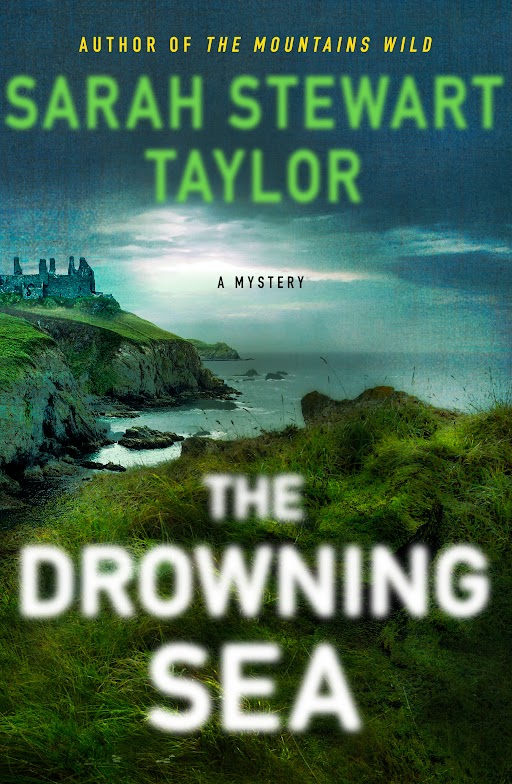
JULIA SPENCER-FLEMING:  When reviewers talk about Sarah Stewart Taylor's Maggie D'arcy series, they use words like, "lyrical," "tender," "atmospheric," and "intricately plotted." And there have been a lot of reviewers - the first in the series, THE MOUNTAINS WILD, appeared on almost every Best Of list in 2020. They're calling the third in the series, THE DROWNING SEA, "rich and gothic," "gorgeous" and "heartfelt."

I'd describe the Maggie D'arcy books as novels with mysteries in them, which isn't to detract from the cunning twists and turns that unfold organically throughout the story! Rather, I read them as much for the characters, and for what the books say about love, family, difficult relationships, and coming to terms with the past.

Which brings us to today's topic! Sarah has been thinking and researching and digging into the past, and has discovered some of the most compelling questions arise from our own family histories. Who were you? Where did we come from? And how did we get from there to here?


In my new Maggie D’arcy mystery, The Drowning Sea, Maggie, an American homicide detective who is spending the summer in Ireland with her daughter and her Irish boyfriend and his son on a remote West Cork peninsula, goes to see the place where her grandmother once lived before emigrating to America. She thinks about ancestors and legacies and mysteries and wonders why it was so important to her to stand on the piece of ground where one branch of her family tree began to grow.


Maggie’s experience mirrors my own visit to the spot in West Cork where my great-great grandfather and his family lived before he emigrated to Boston. My own visit was the reward at the end of a lot of genealogical sleuthing. I knew that my mother’s maternal ancestors were named McCarthy, and that her great-grandfather Michael had emigrated from Ireland, as a young child at the height of the Great Famine, I’d been told. But most of the details of his early life had been lost to the years. 


I discovered through newspaper archive research that Michael served in the Union Army in the Civil War, trained as a doctor, and married a Boston woman whose family had also immigrated from Ireland. He died young, only a few months after his only child, my great-grandfather Charles, was born. (Charles would go on to attend Harvard College and Harvard Law School and become Chief Justice of the Idaho Supreme Court. Another family mystery is how his widowed mother, a seamstress, marshaled the resources for his education.)


We didn’t know where in Ireland Michael came from or how he’d traveled to America. I spent almost a year following clues in documents on Ancestry.com, plugging in birth and death dates and one night, deep down a genealogy rabbit hole, I found a baptism record for Michael in the tiny townland of Shanacashel, Kilmichael Parish, West Cork. Eventually I was able to track down birth records for seven brothers and sisters. And I was able to find his naturalization records, which showed he actually arrived in Boston when he was twelve years old, in 1855, and not when he was four, as I’d been told.


I’ve tracked down threads of the family story on genealogical websites and in archives in Ireland and the U.S. But still hanging out there is the mystery of how he got to Boston and with whom. Ship records for the years he would have arrived are missing and the years between his arrival in Boston and his discharge from the Union Army after the Civil War are a complete mystery. I’m also fascinated by the idea of all of those brothers and sisters back in Ireland. Did any of them travel with Michael? Where are they now? While I’ve been able to locate some family members with whom I share DNA through the Ancestry.com and 23 and Me, I haven’t had any luck tracing McCarthy relatives in Ireland. But my visit to Shanacashel a couple of years ago was satisfaction of a sort. It was surprisingly meaningful to stand on the piece of Planet Earth where my great-great grandfather was born, but it also raised many new questions for me, as it does for Maggie in The Drowning Sea.


Speaking of DNA, chances are there are at least a couple of DNA mysteries lurking in my family tree, though I haven’t found them yet. With the sheer numbers of people contributing DNA to these databases, it makes sense that a growing number of crime novels center on genetic revelations. I’ve heard so many stories from friends about family mysteries uncovered through these sites, some with sad outcomes and some with happy ones. (I love SC Perkins’s genealogical mysteries and there are some other series that also take on secrets amongst the branches of family trees.)


As I’ve gotten older, I’ve found I’ve only become more and more interested in family history. I’ve also become more and more aware of my own privilege in being able to find and put together at least some of the pieces of the puzzle. For adoptees in closed adoptions, researching family trees can be difficult and can open up difficult family history or lead to joyful reunions. Many Americans can’t explore these family mysteries because their ancestors were brought here enslaved or came as refugees or seeking asylum. Records were left behind or have gone missing. So many stories have been lost to trauma. When we explore one half of my husband’s family tree, we run up against many lost threads representing his Lithuanian and German Jewish ancestors who came here fleeing discrimination, pogroms and the Holocaust.


One of the most interesting mysteries in my family involves my ancestor Mary Perkins Bradbury, who was tried and convicted as a witch during the Salem Witch Trials. She was sentenced to death but somehow escaped (this is where the mystery comes in, though there was likely an exchange of money for her freedom) and, according to some accounts, traveled to Maine with her husband, where she remained until the worst of the fervor had passed in Massachusetts. This summer I’m planning on traveling to Salisbury, Massachusetts, near Salem, to see the site of the Bradbury home.  


I’m looking forward to continuing to try to solve some of my family puzzles. What are the mysteries in your own family that you’ve been able to solve or are still exploring? 

JULIA:  I think Michael McCarthy's story would make a gripping historical novel, don't you, dear readers? Oh, and Sarah is giving away not one, not two, but THREE books - a signed copy of each of the Maggie D'arcy mysteries to three lucky commentors!


SARAH STEWART TAYLOR is the author of the Sweeney St. George series and the Maggie D'arcy series. Her most recent book, THE DROWNING SEA, will be out June 21st. Taylor grew up on Long Island in New York and was educated at Middlebury College in Vermont and Trinity College in Dublin. She lives with her family on a farm in Vermont where they raise sheep and grow blueberries. Visit her online at www.SarahStewartTaylor.com.


For the first time in her adult life, former Long Island homicide detective Maggie D’arcy is unemployed. No cases to focus on, no leads to investigate, just a whole summer on a remote West Cork peninsula with her teenage daughter Lilly and her boyfriend, Conor and his son. The plan is to prepare Lilly for a move to Ireland. But their calm vacation takes a dangerous turn when human remains wash up below the steep cliffs of Ross Head.

When construction worker Lukas Adamik disappeared months ago, everyone assumed he had gone home to Poland. Now that his body has been found, the guards, including Maggie's friends Roly Byrne and Katya Grzeskiewicz, seem to think he threw himself from the cliffs. But as Maggie gets to know the residents of the nearby village and learns about the history of the peninsula and its abandoned Anglo Irish manor house, once home to a famous Irish painter who died under mysterious circumstances, she starts to think there's something else going on. Something deadly. And when Lilly starts dating one of the dead man's friends, Maggie grows worried about her daughter being so close to another investigation and about what the investigation will uncover.

Old secrets, hidden relationships, crime, and village politics are woven throughout this small seaside community, and as the summer progresses, Maggie is pulled deeper into the web of lies, further from those she loves, and closer to the truth.

Friday, May 7, 2021

Sarah Stewart Taylor: A Long Island Girl on the Farm


LUCY BURDETTE: Recently a friend from early writer days, Sarah Stewart Taylor, has been posting amazing photos of lambing on her Vermont farm. But she's also writing wonderful books--a fascinating combination. I asked her to share that story here, along with news of her forthcoming book! Welcome Sarah, so glad to have you back...


SARAH STEWART TAYLOR: Recently, someone who’s known me since I was a child remarked that she found it amazing that I’d gone from a fairly typical suburban childhood on Long Island to being a sheep farmer in Vermont. I’d been telling her about lambing season at our place, the two or three weeks during which all of our pregnant ewes give birth. It’s a busy, sleepless time as I wake up every few hours during the night to check the barn and help deliver lambs if I need to. Our whole family has to pitch in and at the end of it, we are tired, the house is a mess (well, let’s be honest, the house is always a mess) . . . and there are lots of cute lambs running around. “It’s amazing,” the friend said. “It just seems so far from where you grew up.”

The truth is that my journey from suburban mall rat to rural dwelling sheep farmer was not as long or strange as it might seem. My father grew up in rural New Hampshire, on a sheep and dairy farm, and I have many relatives who make or who have made their lives farming. My mother grew up in Los Angeles but her father grew up on a small farm in rural Iowa. My parents were both teachers and we would rent out our house on Long Island and spend the whole summer vacation in my father’s New Hampshire hometown. I grew up visiting relatives’ farms and hearing lots of stories about farming and animals. As a child and adolescent, some of my favorite books were James Herriot’s tales about his life as a Yorkshire vet in the first half of the twentieth century. (If you haven’t watched the new BBC series based on the books, I highly recommend it!) 


When I met my husband, he was living on his family’s Vermont hobby farm. When he was younger they had overwintered and bred sheep and cows, but by the time I met him they were in the practice of buying a few lambs each spring to pasture over the summer. They had humanely-raised, locally-produced meat for the winter and didn’t have to go out to the barn on frigid winter mornings to break the ice or throw bales of hay to a shivering flock. After we married and moved to the farm and started having babies, we kept up this routine, raising a few lambs for meat each year and adding a flock of chickens to the mix. 

It was a good system. 

Then I decided to mess with it. 

I’d long been interested in breeding sheep, building up our flock for fiber as well as meat, and having new lambs born on the farm. But doing this would mean that we would keep sheep over the winter. As our three children got a little older, I finally felt like I had the bandwidth to learn about shepherding. My husband, who traveled frequently for work, reminded me that it would likely be me who would need to go out to the barn at 2 a.m. to intervene in a troubled birth or to brave below zero temperatures in January to care for the sheep. He had grown up doing that work. He knew what it was like. 

I was undeterred. 


That first year, we borrowed a ram from a neighbor and put him in with our two ewes, Caitlin and Mary. We had him for three weeks, to cover a full sheep reproductive cycle, but I think he earned his keep within the first two minutes. I waited anxiously for the lambs to come, watching Caitlin and Mary’s growing middles and trying to guess how many lambs were in there. They each had a set of twins and I quickly learned that if the births are uncomplicated, sheep can still throw you a curveball by rejecting one or both of their lambs. If the lamb doesn’t nurse from its mother within the first twenty four hours of life, the mother won’t recognize it as her own (through smell, a fascinating process to watch) and won’t feed it. Without human help, the lamb will die. That first year, perhaps because of my anxious helicopter shepherding, we ended up with two rejected lambs that had to be bottle fed. 


It was hard work, but I loved every second of my first lambing season: watching and being involved in the miracle of birth, seeing how the genetics played out, marveling at the exuberance of three-day-old lambs leaping and hopping in the spring sunshine. The next year, we had more lambs, including a hypothermic one who moved into the house with us and wore a diaper and a sweater. (Her name, chosen by a friend, is Ruth Baaahder Ginsburg and she’s now had two sets of twins of her own!) 

I’ve since become much better at knowing when to step in to put the lambs on their mother’s udders to establish that bond immediately; this year, we had seventeen lambs born and not a single one was rejected. 

Shepherds will tell you that sheep are really good at finding ways to die. We’ve been lucky for the most part, though we’ve had a few tragedies, mostly around lambing. This year I had to help deliver a gigantic single lamb stuck in the birth canal of one of our smaller ewes and also deliver a twin lamb that had one front leg back behind its shoulders. Mothers and babies are all doing well. 


I find farming both intensely physical and intensely intellectual. It’s also a great match with novel writing. When I need a break from the computer screen and the convoluted worlds of my characters, going outside to feed the sheep or to shovel actual manure (as opposed to the figurative stuff I shovel on the page!) helps my brain work in a different way and often gives me just the perspective I needed. It also keeps me from spending the day in my desk chair and makes me exercise my creativity in new ways. I don’t have a sheepdog, so how am I going to move these sheep, but not these ones, over to a new field? Or how am I going to set up the temporary fencing in the most efficient way? 

I’ve also loved becoming part of a community of shepherds here in New England and around the world. Shepherds are so generous with their time and knowledge and I’ve learned so much from the sheep people I know, many of them women. I’ve also loved connecting with sheep farmers in Ireland, where my series is set. I’ve made my main character Maggie’s love interest the son of Irish sheep farmers and I even snuck a lambing scene into my new novel, out in June. 


We have been steadily growing the size of our flock over the past five or six years and I think we’re now at a good size. We shear our sheep every spring before lambing and I’m learning about all the different ways to use the fiber. (Here’s a picture of a felted teddy bear my daughter made.) We also sell lambs to other farms and we reserve a few each year for meat. This is the hardest part of farming. Ironically, my family eats far less meat than we did before we raised our own and we now only buy from other small, local farms that meet our very high standards for both treatment of animals and farming practices that take care of the earth. 


We raise chickens for meat and eggs as well and I have come to appreciate my laying hens and even my extremely annoying but magnificent rooster. Fresh eggs are a beautiful thing and I love when our customers remark on the bright orange color of the yolks and how they never knew eggs were supposed to look and taste like that. 

I’m not sure where our farm is going. Pigs might be next. My kids are in their prime years of being both big and strong enough to be helpful and not yet out of the house. Once they’ve all flown the nest my husband and I will have to figure out how much we can – and want to – handle on our own. But this Long Island girl is hooked on farming and I hope that we’ll always have lambs in the spring. 

LUCY: See, what did I tell you? I knew her story would be amazing! Comments and questions anyone?


SARAH STEWART TAYLOR is the author of the Sweeney St. George series and the Maggie D'arcy series. The Mountains Wild was one of Library Journal, Aunt Agatha’s and the South Florida Sun Sentinel’s best of 2020 mystery picks and has been nominated for the Dashiell Hammett Prize. A Distant Grave, the second Maggie D’arcy mystery, will be published in June, 2021. Taylor grew up on Long Island in New York and was educated at Middlebury College in Vermont and Trinity College in Dublin. She lived in Dublin, Ireland in the mid-90s and she now lives with her family on a farm in Vermont where they raise sheep and grow blueberries. You can find her online at www.SarahStewartTaylor.com


In the follow up to the critically acclaimed The Mountains Wild, Detective Maggie D'arcy tackles another intricate case that bridges Long Island and Ireland in A Distant Grave.

Long Island homicide detective Maggie D'arcy and her teenage daughter, Lilly, are still recovering from the events of last fall when a strange new case demands Maggie's attention. The body of an unidentified Irish national turns up in a wealthy Long Island beach community and with little to go on but the scars on his back, Maggie once again teams up with Garda detectives in Ireland to find out who the man was and what he was doing on Long Island. The strands of the mystery take Maggie to a quiet village in rural County Clare that's full of secrets and introduce her to the world of humanitarian aid workers half a world away. And as she gets closer to the truth about the murder, what she learns leads her back to her home turf and into range of a dangerous and determined killer who will do anything to keep the victim's story hidden forever.

With the lyrical prose, deeply drawn characters, and atmospheric setting that put The Mountains Wild on multiple best of the year lists, Sarah Stewart Taylor delivers another gripping mystery novel about family, survival, and the meaning of home.