Showing posts with label Sheila Weller. Show all posts

Tuesday, November 24, 2020

Sheila Weller, on her complex portrait of Carrie Fisher

HALLIE EPHRON: It is my great pleasure to welcme New York Times bestselling author and journalist Sheila Weller to Jungle Red. She's here to celebrate the paperback release of her biography CARRIE FISHER: A LIFE ON THE EDGE.

The reviews have been... astonishing. Just for example...

"Engrossing, gracefully written....Carrie Fisher: A Life on the Edge reads as definitive." - The Washington Post.

"Bestseller author Weller shares a hearteflt tribute to the late Carrie Fisher -- a complex portrait of the actress, her struggles, and her extraordinary singularity... A fitting and beautiful homage." - Newsweek

"Riveting...Mesmerizing...": O, the Oprah Magazine

"A sympathetic and terrifically moving biography.": The Forward

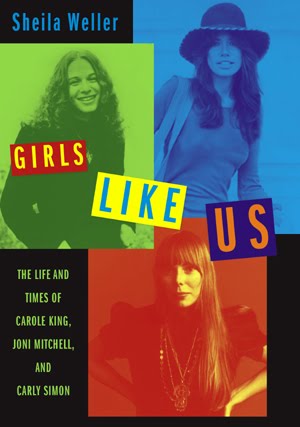
This is not Sheila's first celebrity biography. Her Girls Like Us: Carole King, Joni Mitchell, Carly Simon and the Journey of a Generation was a New York Times best seller. As well as The News Sorority: Diane Sawyer, Katie Couric, Christiane Amanpour and the Triumph of Women in TV News.

She's here to talk about how she decides who to write about, and why Carrie Fisher (My all-time favorite smart, cheeky actress/writer) in particular.(This essay was originally published in Graydon Carter's Air Mail)

SHEILA WELLER: I love writing about brilliant, risk-taking, complicated women, and Carrie Fisher had those qualities—plus bracing honesty—in profusion.

Few celebrities have confessed with as much witty, ferocious candor their self-acknowledged imperfections and serious challenges—in her case: the effects of bipolar disorder and inherited drug addiction. (And in the process of writing about them with such honesty, Carrie was a significant force in de-stigmatizing them.)

But it is one thing to be amused by a woman’s proudly overshared rule-breaking (Carrie went off her medications and defied drug sobriety many times, and admitted it in highly amusing writings and interviews); it’s quite another to learn, as I did, how deeply vulnerable she could be.

As one of her longtime friends put it, behind the charisma that lit up every room she entered “Carrie was as fragile as a butterfly.”

In her 20s, before she was diagnosed with bipolar disorder, her mania-quelling use of Percoset (a balm typical of those with the disorder) once left her so weak that a male friend accompanying her to a movie had to carry her the whole way to the theater by piggyback. During the 1987 book tour of her highly praised Postcards from the Edge, the flinty wit, then freshly considered the Dorothy Parker of her time, spent many days in hotel rooms, nauseous with stage fright. That deep insecurity would never have been guessed by the fans who watched her speak with wry aplomb each evening.

I knew that Carrie prided herself on being a good friend. Indeed, she probably held a record for having more eminences who considered her one of their best friends than just about anyone else in the entertainment and arts communities did. But I learned that her caring for people extended well beyond elites. She’d deeply nurtured, in her home, some friends’ and exes’ sons and daughters.

With the words “I am mentally ill; I can say that” uttered to Diane Sawyer in a widely watched 2000 television interview, Carrie removed the shame from that self-description; after that, many a similarly diagnosed fan at a Star Wars convention merely had to introduce her or himself that way for Carrie to spend much time absorbing and opining on that fan’s personal issues.

When younger industry people below Carrie’s fame and status level were with her, several told me, they were happily surprised that she dove into their lives. At the height of her fame, she took a meeting with young, on-the-rise show-runner Wendy Kuot, who had hoped to get Carrie to star in her TV pilot. But after Carrie said no (those were the years when—hilariously, in the Netflix present—television was the lesser screen), she initiated an hour-and-a-half conversation about Wendy’s life. “I had expected her wit and lack of sentimentality, but not her attention and wisdom,” Wendy told me. “It’s one thing to have an acerbic tongue, but you don’t encounter too many people who give you deep life advice that stays with you. Carrie did.”

Many people said Carrie was the smartest person they knew (although she seemed vexingly insecure because she hadn’t finished high school or drama school), and they spoke endlessly of her generosity. Some was material generosity—if you admired a piece of art in her house, she might send it to you the next day. Some was deeper: When her friend, former Saturday Night Live music producer Julian Ford, was in the last stages of AIDS, she flew him from New York to Los Angeles and cared for him until his death. All that—and she was the proudly frank bad girl who ditched her meds and practiced drug sobriety very imperfectly.

Toward the end of her life, Carrie Fisher was known for her tough, snarky tweets, whacking back at the men who had age- and weight-shamed her. But on at least one occasion she shed tears over these insults.

“Kindness”—not a typical-seeming Fisher noun—was a word she used during that last month of her life. “Be kind. Don’t hurt other people,” she told an interviewer. She had new appreciation for “all the sort of Christian ethics stuff I thought was bullshit when I was a kid. It turns out it’s not bullshit … ” Again: “Be kind.” For one to whom tart sarcasm seemed her stock-in-trade, that these values were emerging as virtues might be surprising. But in my research on what, over the decades, Carrie had survived (severe mental challenges) and accomplished (becoming a virtual guardian to two very different Hollywood-royalty parents), combining kindness with tough-dame bravado seemed both naturally and weatheredly acquired.

HALLIE: Carrie Fisher was one of those celebrities who, even in her Princess Leia getup or reclining in a gold metal bikini, seemed thoroughly real. Sheila's book is a fascinating read--so many mysteries and insights revealed.

I'd love to know what would Sheila have wanted to ask Carrie Fisher if she'd been researching this biograhy during Carrie Fisher's lifetime? What would you like to know?


Sheila Weller is the author of the beloved New York Times bestseller Girls Like Us: Carole King, Joni Mitchell, Carly Simon and the Journey of a Generation, and of the acclaimed family memoir Dancing at Ciro's: A Family's Love, Loss and Scandal on the Sunset Strip, as well as The News Sorority: Diane Sawyer, Katie Couric, Christiane Amanpour and the Triumph of Women in TV News -- and of three policy-affecting feminist accounts of crimes against women in upscale communities: Raging Heart ( the #2 NYT bestseller about the relationship of O.J. and Nicole Brown Simpson, Marrying the Hangman, and Saint of Circumstance. Her in-depth profiles, investigative articles on women's issues and cultural history --for Vanity Fair, Glamour, the New York Times, and many other publications -- have won her nine major magazine awards. She has been a columnist for the Washington Post's "She The People" and had her own column, "Second Opinion," for the New York Observer, has sat on the board of directors of Sanctuary for Families (New York state's largest anti-domestic violence organization) and currently sits on the board of Next Tribe, the digital magazine and community for women over forty, and contributes to Graydon Carter's AirMail. She lives in New York City with her husband, history author John Kelly.

Thursday, July 22, 2010

On "Girls Like Us" The Music

HALLIE: Almost exactly a year ago Jungle Red hosted Sheila Weller, author of Girls Like Us: Carole King, Joni Mitchell, Carly Simon -- and the Journey of a Generation. It's the inside stories of the three singer/songwriters who shaped and shaded a generation of women and beyond.

Now we get this update from Sheila:

SHEILA: A lovely thing has happened: Jodie Wright, who was formerly Carly's manager and is currently her archivist, took it upon herself (!) to painstakingly create this amazing website, GIRLS LIKE US THE MUSIC. No, no, it's not what you think -- it goes beyond the music these iconic artists created and gets at (and digs up, and lets you listen to) all the music that actually affected and influenced them, in their childhoods, on their journeys...and on ours. She did it because...she's terrific and generous...and also is perfecting her already-ample website-building chops. Mainly the former reason. Take a look and see how cool it is: http://www.girlslikeusthemusic.com/

HALLIE: I just spent some time grazing the site. It's still a work in progress, but such fun. Did you know Joni Mitchell's favorite song from high school (and for decades to come) was the Shirelles hit Will You Love Me Tomorrow. (This song was written by Carole King and Gerry Goffin.) Or that The Anderson family (Joni Mitchell's real last name) entertained itself by listening to the Andrews Sisters' and the McGuire Sisters' mellifluous close-harmonies piped through the console radio in the mid-40's. (The site has the clips of the Andrews Sisters singing "Sleepy Serenade" and "Begin the Beguine" and more.)

What a great way to take a break and take walk back through memory lane...

Wednesday, August 19, 2009

"Girls Like Us" -- Carole, Joni, and Carly

Sheila Weller is an unabashed feminist and her book, “Girls Like Us”, tells the stories of three singer/songwriters who shaped and shaded a generation of women and beyond. Sheila wrote for MS magazine when it was in its infancy, and has since authored six books including two New York Times bestsellers, won of numerous awards for journalism, and is a writer for Vanity Fair, Senior Contributing Editor at Glamour, and she blogs for the Huffington Post.

Welcome to Jungle Red, Sheila! I loved your book...it really sings to my generation of women who stormed the bastions of academe, frolicked at Woodstock, and wore flowers in the Haight. Joni and Carole and Carly...and Joan Baez and Judy Collins and Ronnie Gilbert and Holly Near and Buffy Sainte Marie...were our role models. We could not have made it through college without those women, and most of us can still sing every lyric of every song.

JRW: How did you pick Joni, Carole, and Carly?

SHEILA WELLER: For years I had been wanting to write a history of the women of my generation -- those of us middle class girls who were born in the 1940s and came of age in the late 1960s. It's almost worth getting older to have lived through such exciting times -- we were little girls when the image of American women was more stultifying and repressive and corny than it had been in decades (I mean: women in petticoated shirtwaists kissing refrigerators in TV commercials; the song "How Much Is That Doggie in the Window?" as a hit??) and we had no choice but to break the mold and transform the very idea of what a young American woman was.

We made young women into adventurers. In our childhood we acquired the first tools -- rock 'n' roll and r&b music; the civil rights movement. Then, coming into adolescence, the next tool -- the birth control pill. And finally, when we were becoming college-aged, the psychedelic movement, radical politics,the antiwar movement, and all the rest.

Then, as the '60s turned to the '70s, as both an extension and a corrective of all the exquisite madness, we came up with feminism, which changed everything. I could never think of that journey of ours without thinking of three singer-songwriters who wrote the soundtrack and lived it with us -- Carole King, Joni Mitchell, and Carly Simon.

Carole's "Will You Love Me Tomorrow?" was the first pop song in which a young woman contemplates sex, risks and all; her "Up On The Roof," "Natural Woman" and others were part of the love affair with urban life and soulfulness that was a pop-music ride-along to the Civil Rights Movement; and "Tapestry" defined a whole era -- the early '70s -- in which young adults lived in families-of-friends and prized authenticity, loyalty, a new kind of hominess.

Joni's long-thrift-shop-gowned bohemian artiste embodied the new kind of single woman of the (gentle) psychedelic era -- a mysterious, winsome, independent spirit who made a magical home ("Chelsea Morning") and took lovers at will but kept the upper hand with them ("Cactus Tree") and who had a "deep," wistful belief in the power of life experience ("Both Sides Now," "Circle Game") and who had a charismatic earthiness and spirituality ("Ladies of The Canyon"). She was who we were -- or desperately wanted to be -- from 1966 to 1969. And Carly?

Carly was the New Woman of the Early '70s: witty, urban, intellectual, Seven Sisters-educated (like fellow influential women Erica Jong, Jane Fonda, Ali MacGraw, etc.), analytic, and so "classy" she could be wildly sexy without feeling it brought her down a peg or compromised her or gave her "a reputation." She was the embodiment of early-Ms.-era, "sell-it-to-America" feminism. Her "That's The Way I've Always Heard It Should Be" was the first ballad in which a woman thought marriage would hem in her adventures; and "You're So Vain" was a jubilant feminist kick-ass rock song -- full of self-confident wit and mockery. We wanted to be her -- and many were indeed very close to that archetype she embodied.

JRW: Were they really "girls like us"?

SHEILA WELLER: Yes. They went through what we went through -- Carole, as a pregnant teenager in love at the cusp of the '60s, had a panicked shotgun wedding. Joni, in a fiercely proprietary place (central Canada) in the proprietary early-mid-'60 (where birth control was not widely used and abortion, illegal) was afraid to tell her proper parents that she was pregnant and unmarried -- she hid her pregnancy from them and was treated to contempt by moralistic nurses and nuns at the hospital where she gave birth, before giving up her baby for adoption. Carly fell in love with a sexy, brooding, soulful, educated drug addict (James Taylor) and struggled to try to get him off drugs through the ten years of their marriage during a time (the '70s) just before the concepts of "co-dependency" and "enabling" -- and a whole repertoire of family help -- taught families and loved ones how to deal with drug abuse.

In these and dozens of other ways, they were "like us": leaving marriages and love affairs that were unsatisfying and risking falling into subsequent ones which, while solving one interpersonal or romantic problem, only presented another. We were the first generation of serial-relationship-having women, and the risks and joys and conundrums of that life are written all over their songs, from Joni's "River" and "All I Want" to Carole's "Only Love Is Real" to Carly's "Coming Around Again" and "The Stuff That Dreams Are Made Of."

I chose middle-class women to write about because the identifiability was so strong. Janis Joplin and Grace Slick were too edgy and out there, each in her own different way. Carole, Joni and Carly were women you could run into in a department store fitting room.

JRW: How much harder did rock 'n' rolling women have it in the liberated ‘60s ‘70s?

SHEILA WELLER: Harder than their counterpart men? Or harder than now? I'll answer both. Harder than their counterpart men in every way.

Joni example: While Bob Dylan was forgiven for being much less interesting and edgy and "romantic" than he pretended to be (he was a middle-class fraternity boy who got his -- wonderful - folk songs from sitting in the NY Public Library and looking at old newspapers), Joni so had to hide her secret dramatic, heroically brave past (being a pregnant, unmarried, penniless fledgling folk singer in a rooming house), she was virtually blackmailed over it.

Carole example: There was no day care, there were no lightweight strollers, there were no "working mothers" -- no maternity leave, no work-life balance, no ANY of that -- in the very early '60s; so Carole shlepped her newborn baby (in a heavy, made-to-not-go-up-stairs pram) on the subway to the hit-factory where she cranked out # 1 songs. Carole's best friend and fellow songwriter, with whom she competed for hits, was delighted when Carole gave birth to her second child because during labor and delivery -- and ONLY then -- Carole COULDN'T sit down at the piano.

Carly example: After desultory years of being scoffed at as a "rich little girl" (male songwriters from wealthy homes didn't get that disdain), Carly finally got a break: Bob Dylan's manager had Dylan write a song for her and she recorded with the (just under the radar) new Dylan-championed group The Band. But the album was never mixed and released because the sound engineer told Carly: "I won't mix your album unless you sleep with me," and she refused to. None of these things would or could happen to guy rockers.

And harder than young women singer-songwriters today? Much harder. Today these women are businesswomen -- Alicia, Beyonce, Alannis, et al -- they have assistants, they have support teams, they have manages and publicists and stylists (Carole, Joni and Carly dressed themselves -- and each of them pioneered a distinct fashion look, with no outside help), they know how to produce and hold onto the rights to their music and parlay their careers. The natural, innocent, funky, anti-commercial '60s and '70s had an innocence and anti-careerism that could hurt both male and female artists, but, especially, females.

JRW: Were these women happy? Did they love their lives at the time? Did they know how much we all listened to their music and loved it, how pivotal it was?

SHEILA WELLER: Good questions. I happen to think they lived (and are still living such rich, big lives, why wouldn't they look back on those years and happily think, No regrets! But an amazing amount of people who read the book thought they were unhappy because, for one thing, they had so many different relationships. Well, stable monogamy does not a great rock-love-song-writer; and, at the risk of being '60s-babe-centric, I think to err on the side of "more" life experience than less is a happy choice.

Still, I don't want to be too rosy-glasses about it. They did feel pain in their time. Joni's masterpiece BLUE is all about pain. And though Carole -- the most tuneful (and gospel-y) but the least self-revealing writer of the three -- always wrote optimistic songs with sometimes slightly sappy lyrics (her early '70s collaborator-lyricist Toni Stern -- their masterpiece was "It's Too Late" -- beautifully de-sap'd her, she did suffer pain. She was married four times and her third husband, whom she deeply loved at the time, died of a heroin overdose; she spent a winter living ascetically and reflectively in the snowbound deep wilderness, mourning him. And Carly's emotions were all over her skin, and her music. She loved very deeply -- James and others. And she never made a secret of her bouts of melancholy and depression.

Finally, did they know much we loved them? All three but Joni know. Joni seems to be bitter that some of her fans abandoned her when she -- courageously, in a very Joni way -- switched from her very winning confessionalism to inaccessible, risky jazz in the mid '70s and she seems to feel she has been underappreciated. Tragically, this couldn't be further from the truth. Joni is widely regarded as one of THE best songwriters and musical artists of the era, right up there with Dylan.

Hopefully, in their heart of hearts, all three of them know not only how much their music is beloved, but how HEALING and resonant it has been for so many women and men of many generations.

JRW: Find Sheila Weller's "Girls Like Us" at your local bookstore or library and take it to the beach one of these last fine summer days.

Please, join our conversation -- what does their music mean to you?