LUCY BURDETTE: Yesterday you heard a bit about our trip to Portugal and Spain. Today is reserved for food. First I should admit that I will never be able to make it as a Spaniard or Portuguese person. The dining hours alone would do me in: lunch between two and 3 o’clock? Dinner after 9 PM? Not a chance I could follow that schedule. (Photo was taken in Lisbon around 7 pm--notice there is NO ONE ELSE eating.:)
I should also admit that, although I am a foodie, I don’t always try things that I think I won’t like. On this trip I did. Here are a few unusual highlights.
Spanish and Portuguese people seem to be obsessed with topping dishes with a fried egg. Artichoke hearts, calamari, mushrooms, all garnished with an egg.
Vegetables are definitely not the stars of the show. Instead, it’s ham, pork, cod, cheese, and repeat. I try not to eat pork products because of the intelligence of pigs, and the way many of them are treated. On this trip, while feeling guilty, I probably ate an entire pig by myself.
Olives, glorious olives are served with most drinks. And not the kind of jarred green Pimento stuffed olives that we are used to in the US.
Churros dipped in thick chocolate are a favorite for breakfast or midmorning snack. I am talking thick!
Sardines are served on everything! Hallie would have been proud of me for trying and enjoying this whitefish on potato chips, which was actually quite delicious.
I also tried the fried calamari, which I never eat for the same reasons I try not to eat pork. Squid are smart, and honestly rather rubbery...
And here was my favorite food of the trip: homemade, crusty sourdough rolls, stuffed with chorizo sausage. That’s one I’ll be dreaming about forever.
What’s the most unusual food that you have tried either inside or out of your own house? (If you find yourself in Madrid, we highly recommend a Devour food tour. Isabel was fantastic!)
LUCY BURDETTE: As you might have seen on Facebook or Instagram, John and I had a lovely trip to Portugal and Spain in October. I was going to write up the highlights for you, but John beat me to it--and agreed to share it here...(ps if you're not interested in those retirement communities below, feel free to skip right over--I couldn't figure out how to delete!)
JOHN BRADY OF TOP RETIREMENTS: Spain and or Portugal retirements are very popular, as they are for tourism. Americans and Europeans are checking out these two countries, not only as great places for a retirement trip, but for where to retire too. Your editor recently spent 2 happy weeks touring some of the best tourist spots on the Iberian Peninsula, the home of Spain and Portugal. Our hope is that this experience might help you plan a potential trip to the region. And, it might help you learn what it might be like to retire in one of these amazing countries.
Portugal RetirementTrip
This beautiful, dry country has a long western coastline on the Atlantic Ocean that in the south curves eastward past Gibraltar to the Mediterranean. Lisbon, near the coast, is the capital and largest city. Portugal’s cost of living is one of the lowest in Europe (65th highest in the world – the U.S. is 12th), the country is safe, and the food and wine are excellent. The country has a complicated history – Celts, Phoenicians, Roman, Visigoths, the Moors (Arabs), and its eventual retaking by the Crusaders. Towns and buildings reflect that heritage within their walled cities, Roman ruins, and Christian cathedrals what were often Muslim mosques.
The cities and towns we visited here in Portugal and Spain are some that are especially popular with tourists, although there are dozens more worth checking out. While there we stayed or visited many posadas (inns), paradores (a network of 97 state-run hotels in restored Castles, Monasteries, Convents, Fortresses, Palaces), and alcazars (Moorish castles).
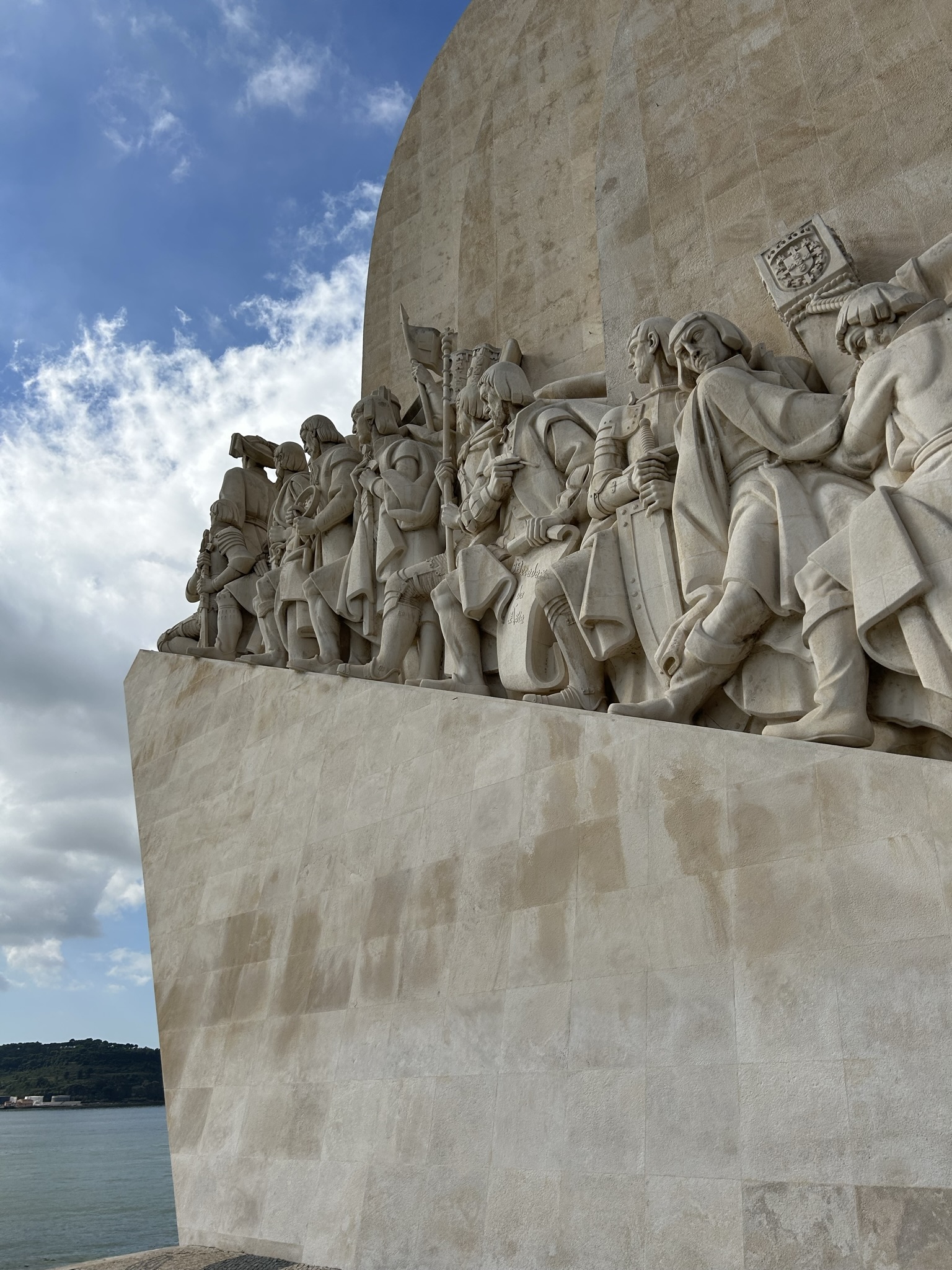
Monument to the Discoveries honors Portugal’s seafaring exploits
Lisbon. This city of hills is a mix of old and (relatively) new, thanks to a massive earthquake that occurred in 1755. Many of the great buildings and parks in the city were built after that event. One of its top attractions is the Monastery of Jeronimos, a huge and grand former convent located near the port where Columbus left Portugal to discover America.
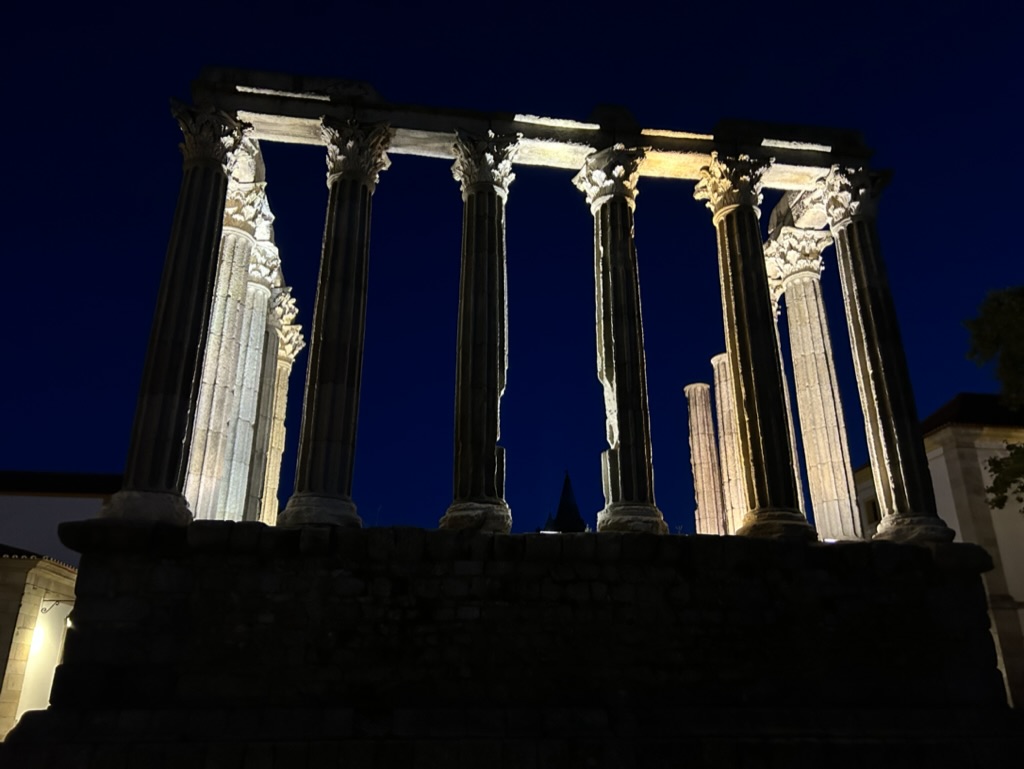
Roman temple in Evora
Evora, a university town with thousands of students, is possibly the prettiest city in this beautiful country. Most of its original walls still exist. A preserved Roman temple is a highlight, along with the enormous Cathedral of St. Francis and its amazing chapel built entirely of human bones. It would make a great place to retire.
What some other best places to retire in Portugal?
North of Lisbon along the coast towns like Cascais are popular with retirees from Europe and America. They offer old charm as well as access to great beaches. The Algarve, which is located in the south coast near Gibraltar, has a collection of villages and is one of the first places that most people think of when they consider a Portuguese retirement.
A Spain Retirement:Another great trip
This country has a small strip of Atlantic Coast above Portugal, and a much longer coastline running southward from France along the Mediterranean. It also has plenty of mountains and towns that provide an enormous choice of great places to retire or visit. Spain has become a very prosperous county with a modern infrastructure that makes America look like a second world country. Bullet trains and modern highways crisscross the nation, and healthcare is free to everyone. Most cities restrict private cars, so traffic moves and pedestrians can safely navigate city streets. Cost of living in lower than in the U.S. (57th in the world).
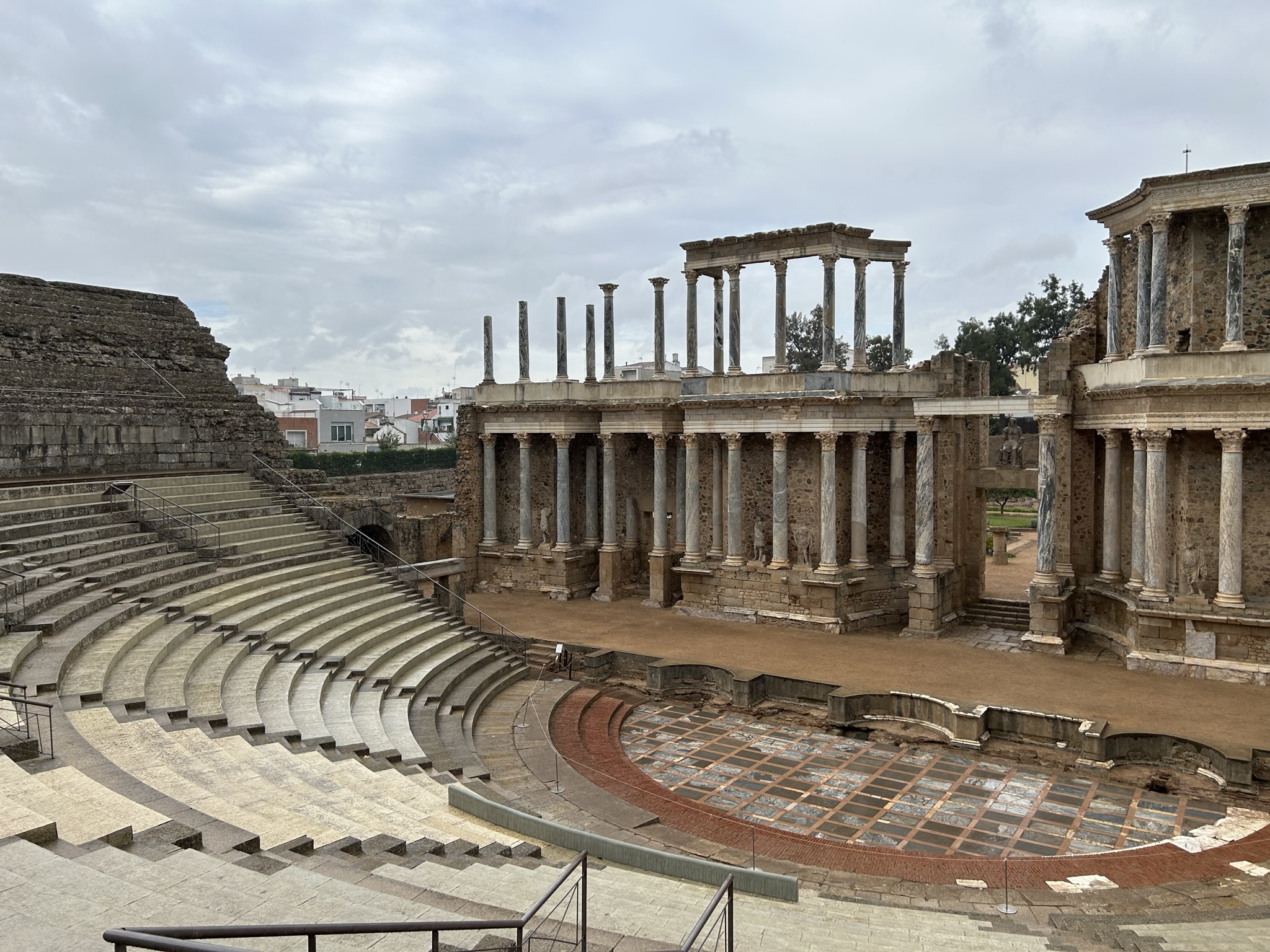
Teatro Romano
Merida. Another town with some of the most extensive Roman ruins in the country. The coliseum and theatre were discovered in recent times and provide great insight into Roman times. Note: Gladiator battles weren’t quite like in the movies. The owners of the fighters didn’t want them getting killed in their first fight after investing in their training, so in many cases it was like TV wrestling.
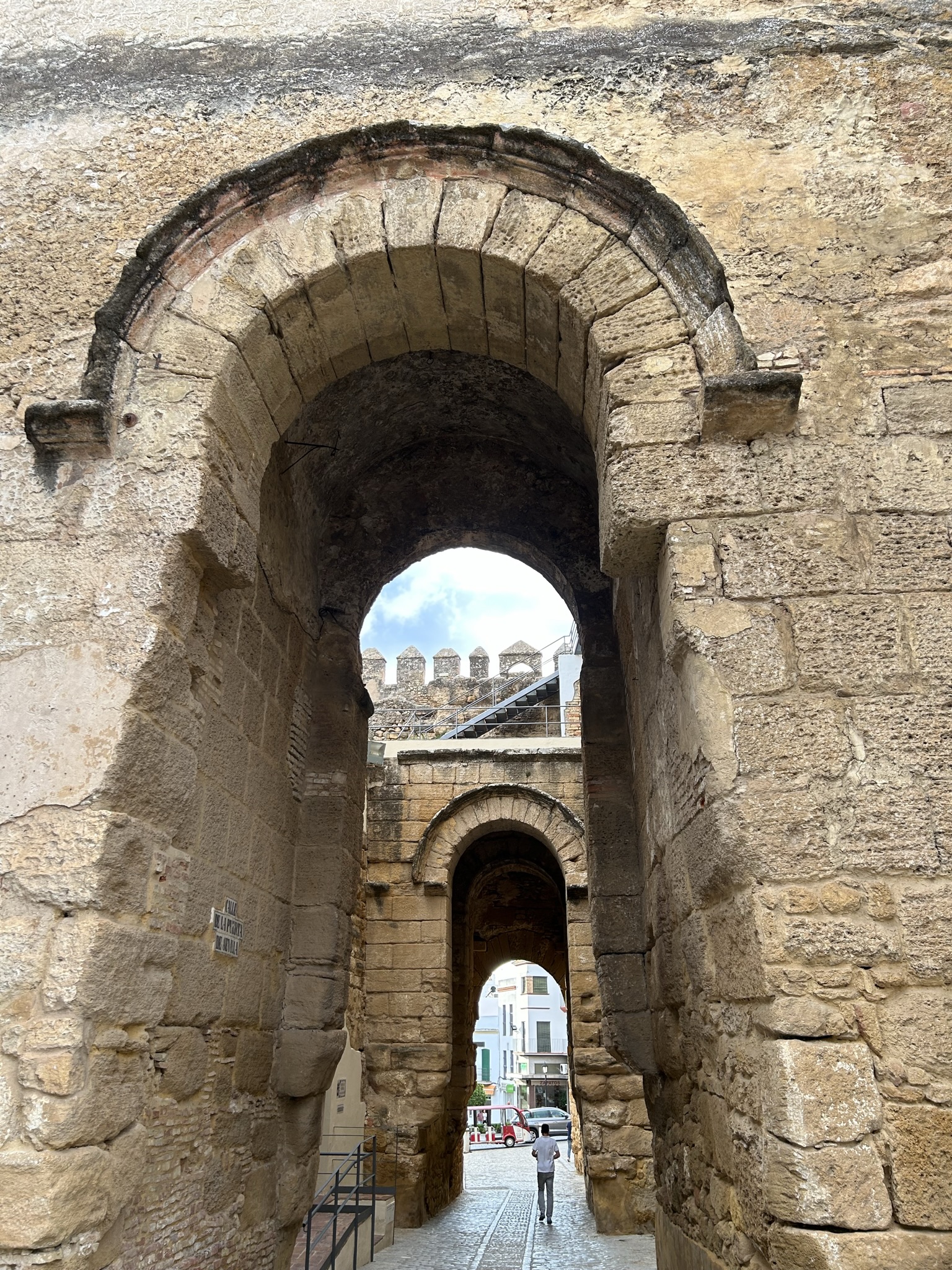
Entrance to the old city of Cormona – the stones in the walls reveal changing empires
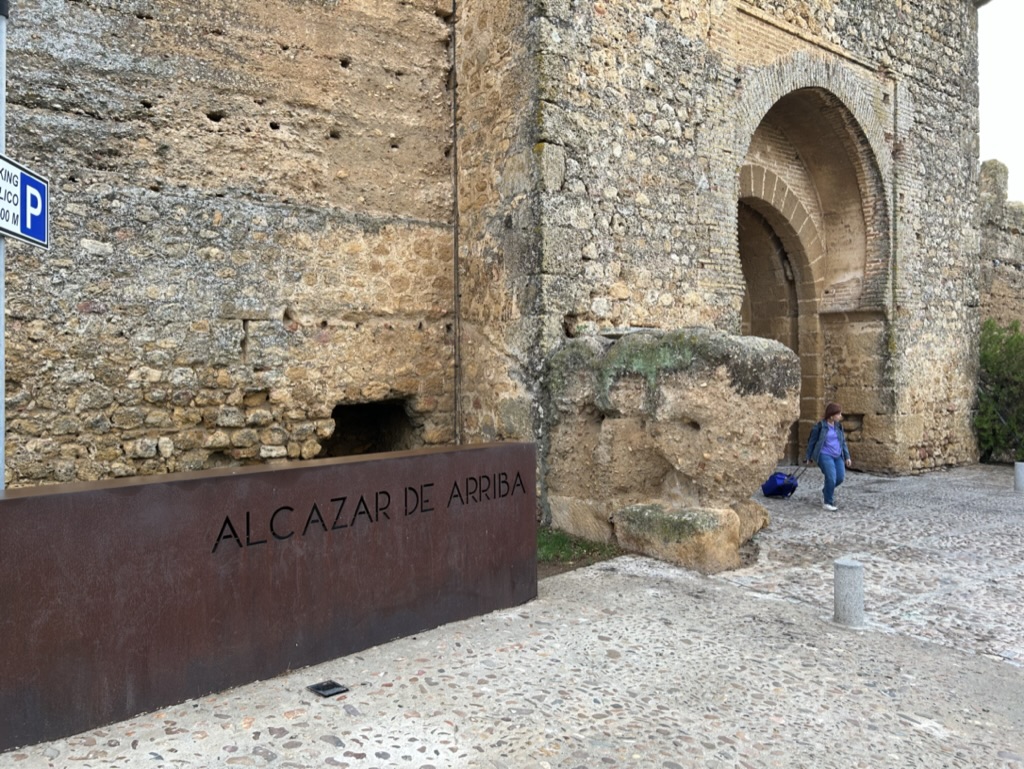
Carmona. Like most others in this southern part of the country, it has Roman and Moorish origins. Perched on a commanding hill high above the surrounding plains, the stones in its towering walls and main gates reflect centuries of conquests and reconquests. The site of its old coliseum in the center of town is a busy town square (actually a circle). There is a also a newer town outside of the old walls, which would be a quiet inland place to retire.
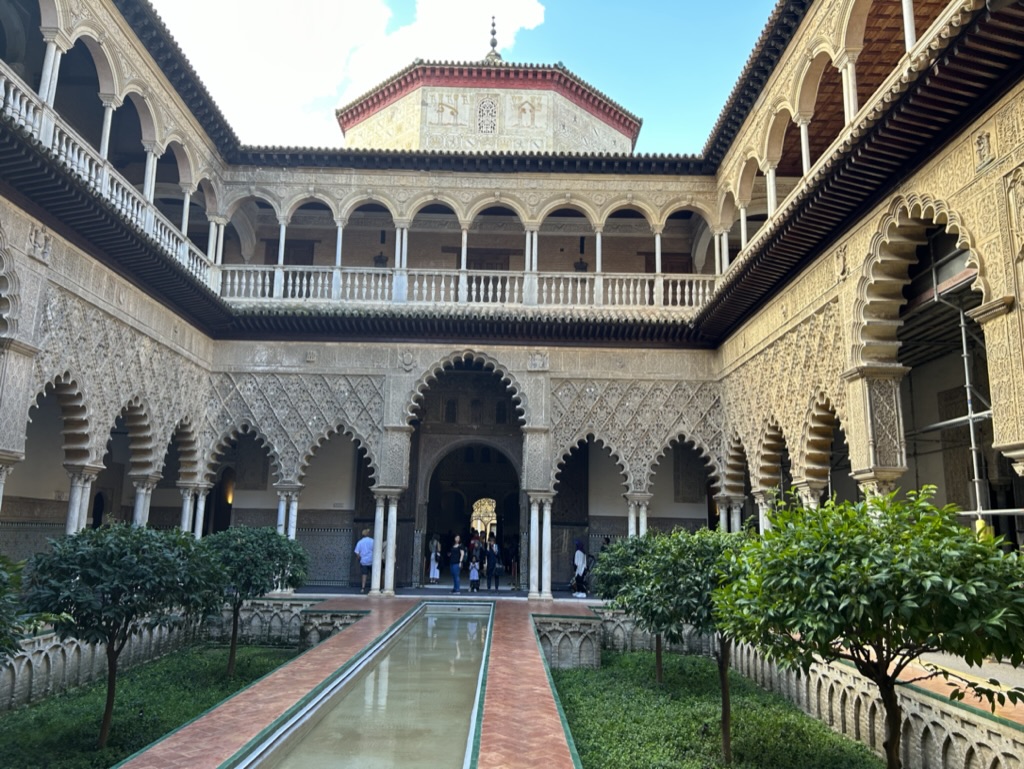
We stayed in this alcazar (castle) in Carmona, now a ParadorThe Real Alcazar in Seville is still used by the King and Queen
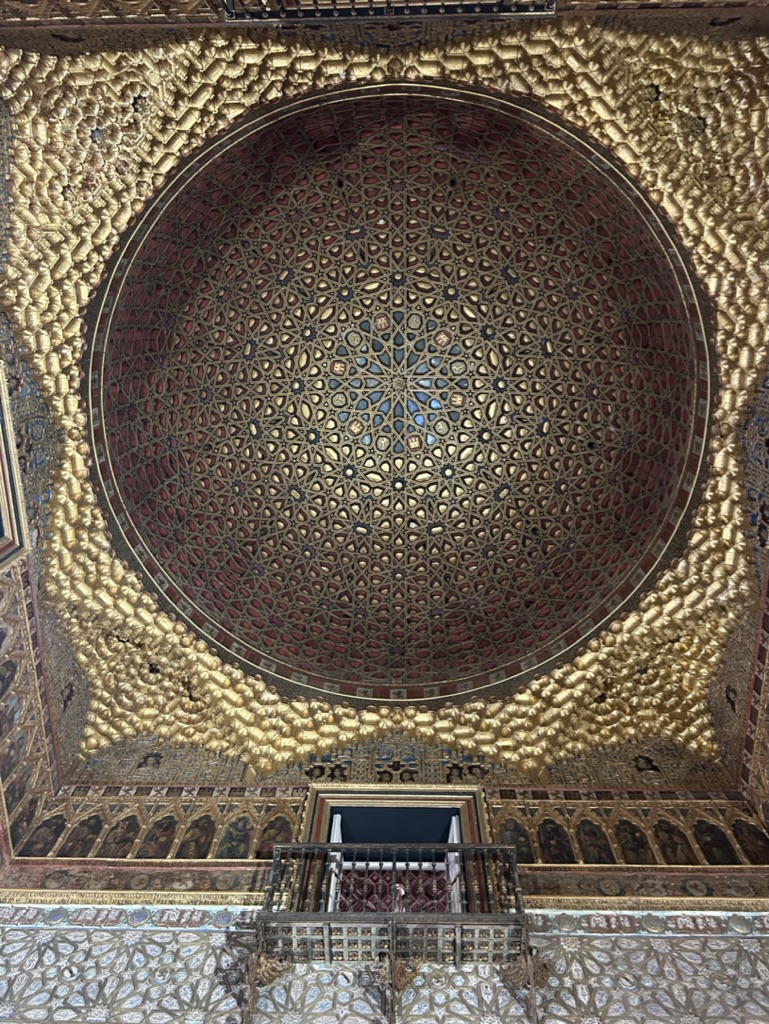
Seville. No visitor to Spain should miss this livable city. Along its main avenue amazing buildings built for the Ibero-American Exposition of 1929 dazzle the eye. The huge Place de Spana was built to highlight the wonders of the host country for that exposition. Most of these buildings have been repurposed as government or cultural buildings, while others still serve as embassies. The highlight of the city is the gigantic cathedral, the 3rd largest in the world, along with the Real Alcazar, a gigantic Moorish castle. The winding streets and big plazas of the old city make this a great place to visit.
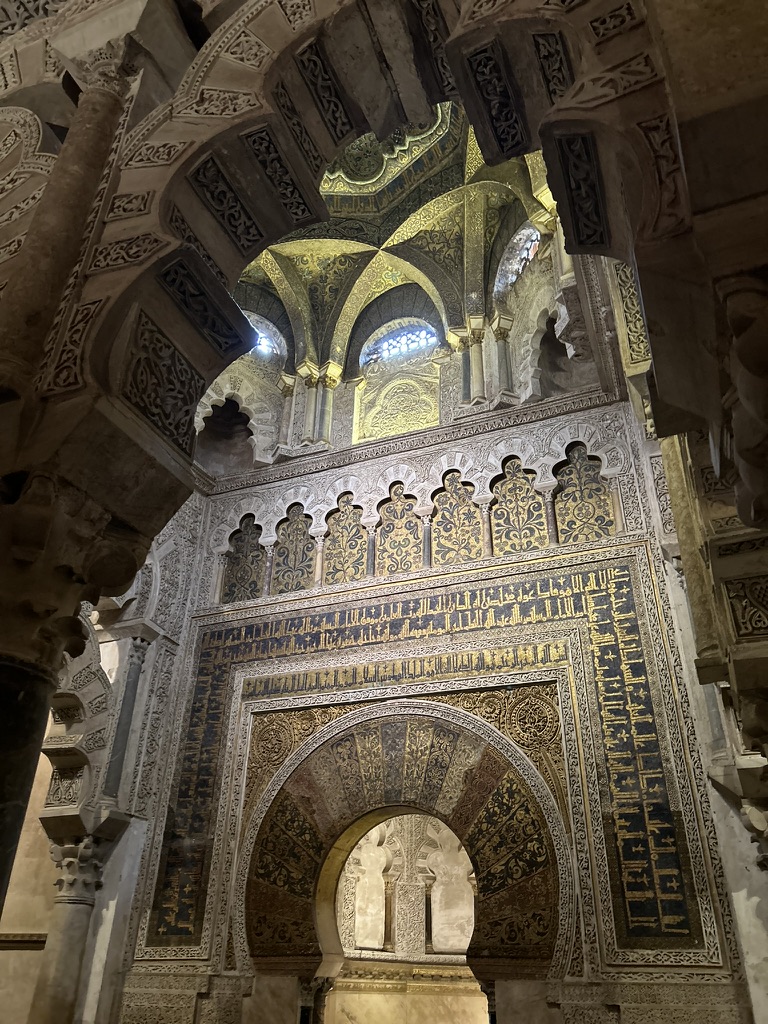
Ceiling detail in the Real AlcazarInside the Mosque/Cathedral of Cordoba
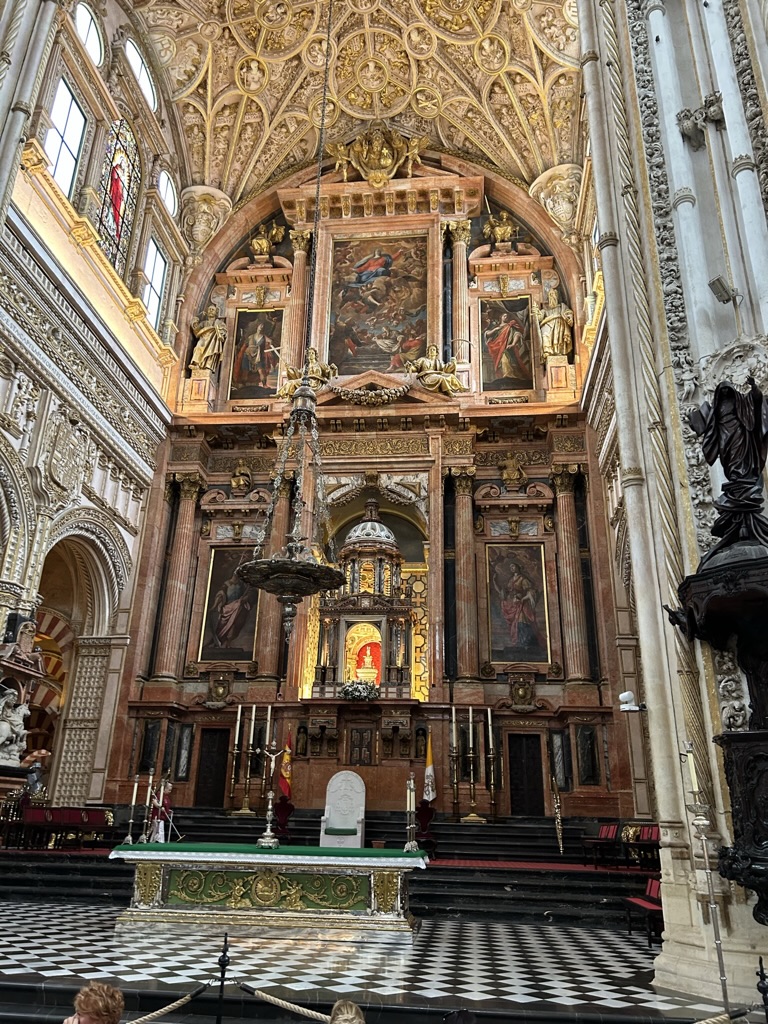
Cordoba. The color cordovan gets its name from the building stones used in this ancient city. The mosque/cathedral of Cordoba is a stunning example of the country’s complicated history. Originally built as a vast mosque, after the Christian conquest it was repurposed into a gigantic cathedral. Moorish and Christian building details merge in various parts, and there is actually a church within a church in one section.
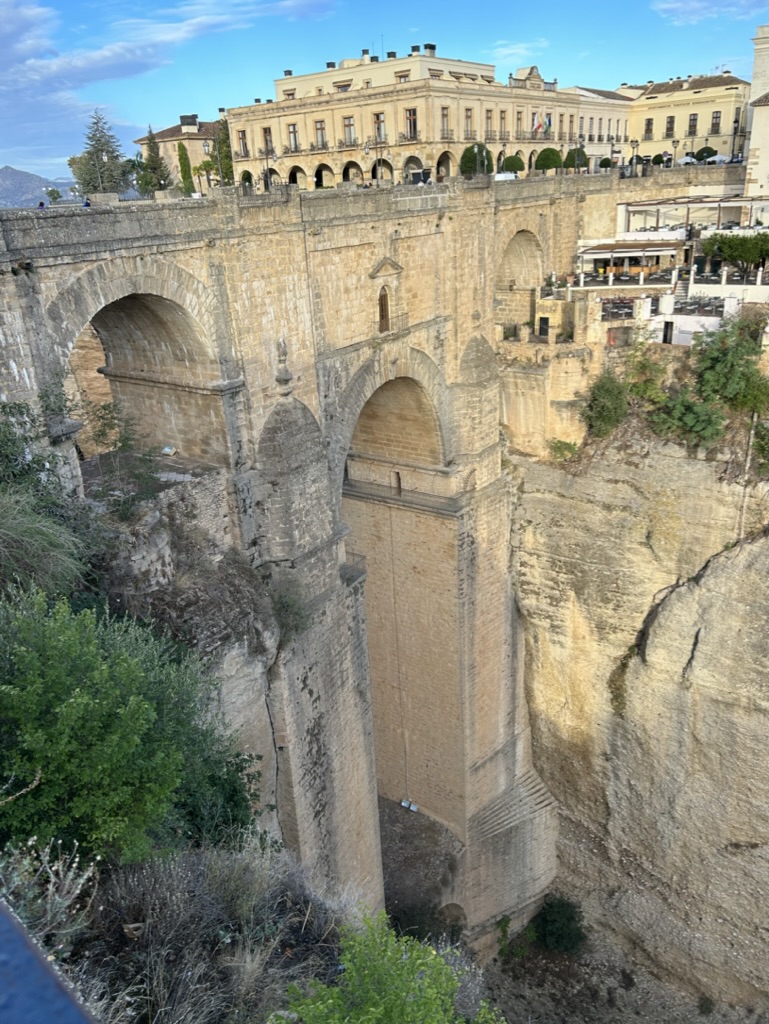
The catholic church within the Cordoba mosqueThe “New” bridge in Ronda (completed 1793)
Ronda is many people’s favorite town in all of Spain. Part of the attraction is that it was a built atop a huge gorge on a high hill. The two oldest sections of the town are spanned by the “New Bridge” (1793). Winding streets give way to stunning views of the countryside and the chasm below. St. Mary’s is a fabulous old cathedral, and there is an equally interesting alcazar as well as the preserved ruins of Arab baths. Families, many of them nobility or very wealthy, have huge compounds hidden by old facades.
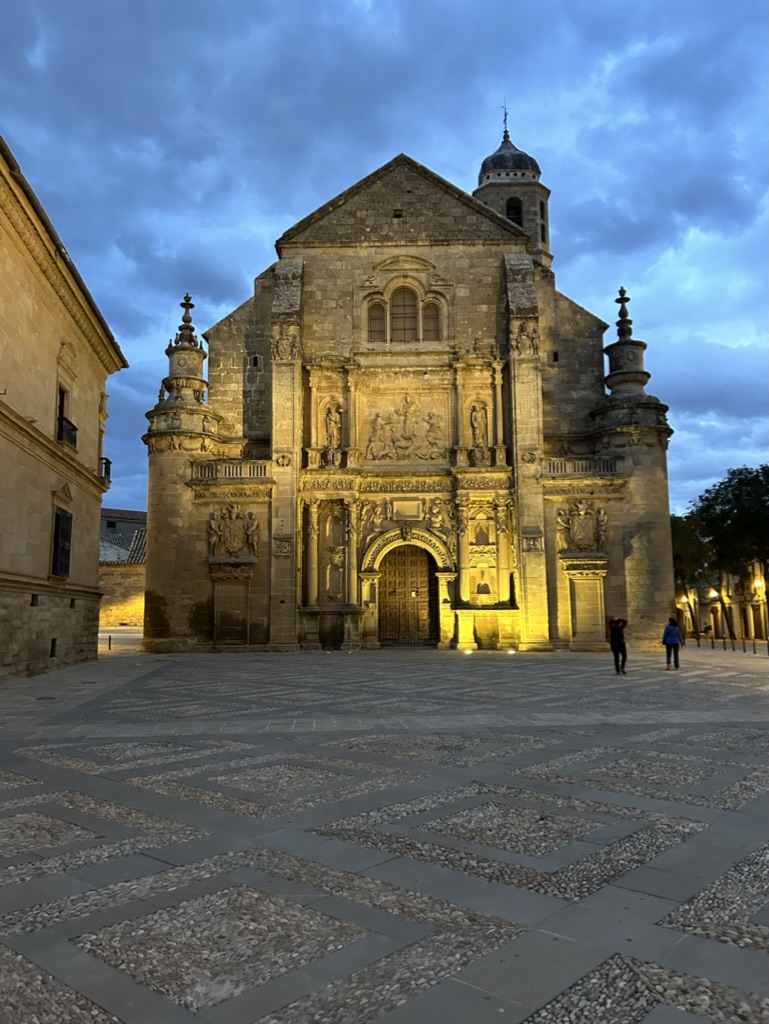
Church and square in Ubeda
Ubeda. Another walled small town on a hill, Ubeda is a bit off the beaten path and less visited than some other places. Its parador sits on a large square near one of several impressive churches. On the main square children play soccer and old people gossip and sip coffee or wine. Private mansions line the streets hidden behind gigantic old wooden doors.
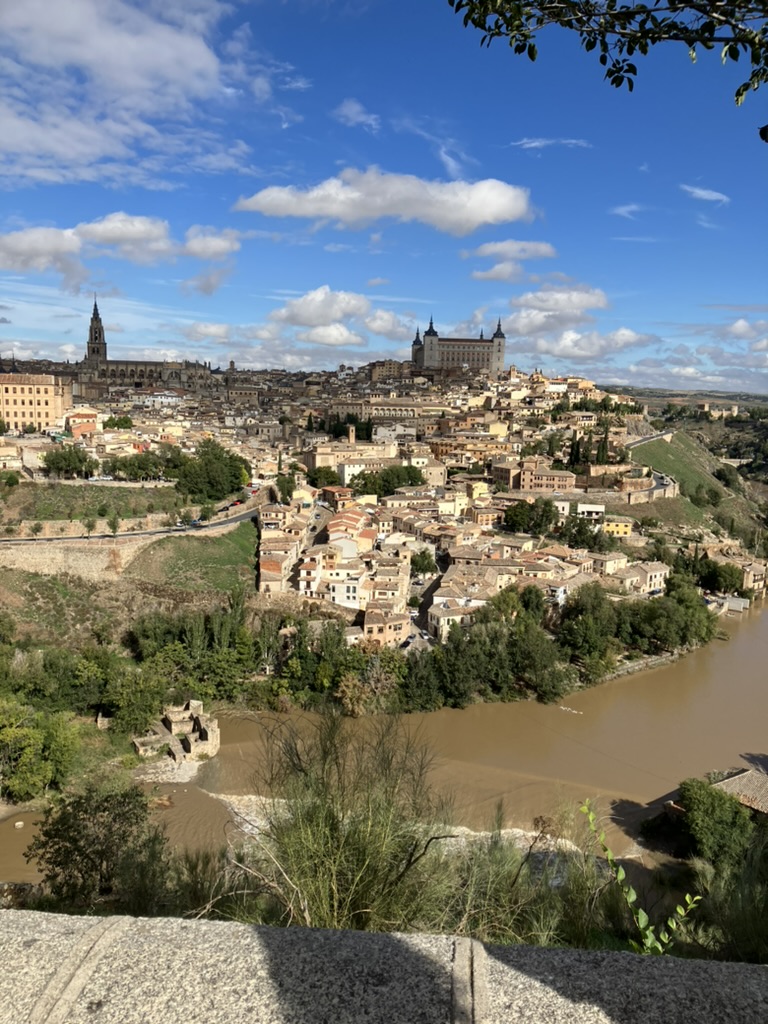
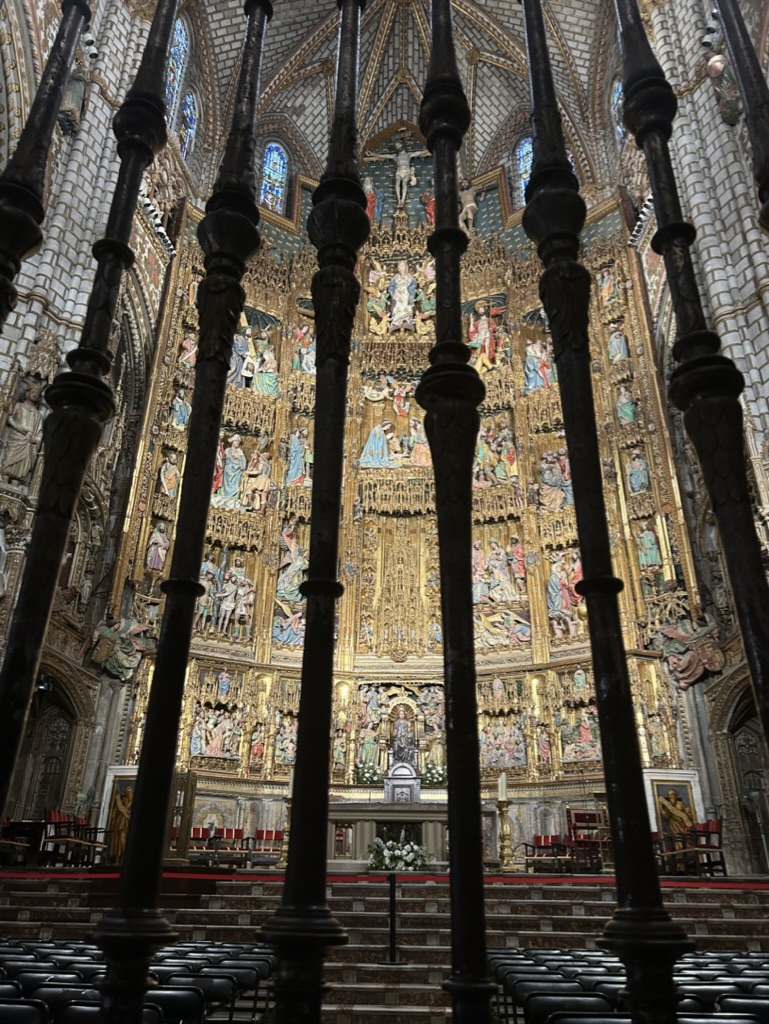
Toledo from across the riverInside St. Mary’s Cathedral in Toledo
Toledo. The view of Toledo on a hill from the opposite side of the River is all you need to see to believe this a beautiful city. Its main attraction is St. Mary’s Cathedral, one of the largest and flamboyant in the world.
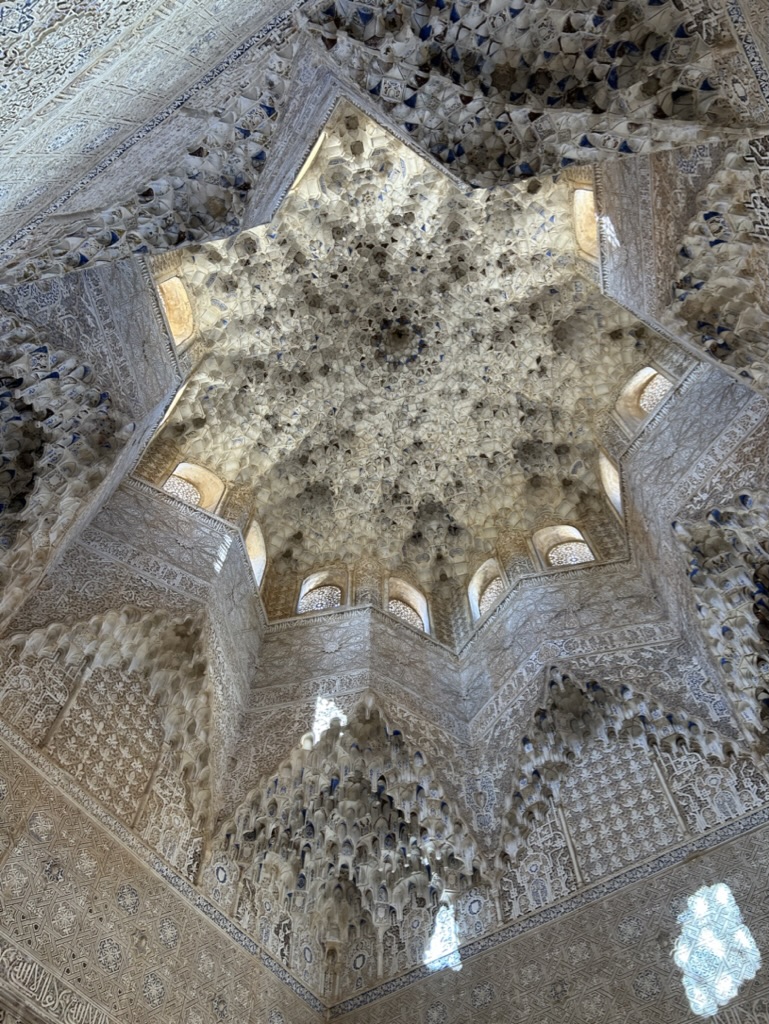
A ceiling in the Alhambra
Granada. Alhambra, a colossal castle build by the Moors and later added on by Spanish royalty with a huge castle of their own (and never lived in), is a high point of a Granada visit. The mosaics, tile work, intricate wooden ceilings in this World Heritage site make it one of the top tourist sites in the world (tickets to see it are limited and many visitors are disappointed).
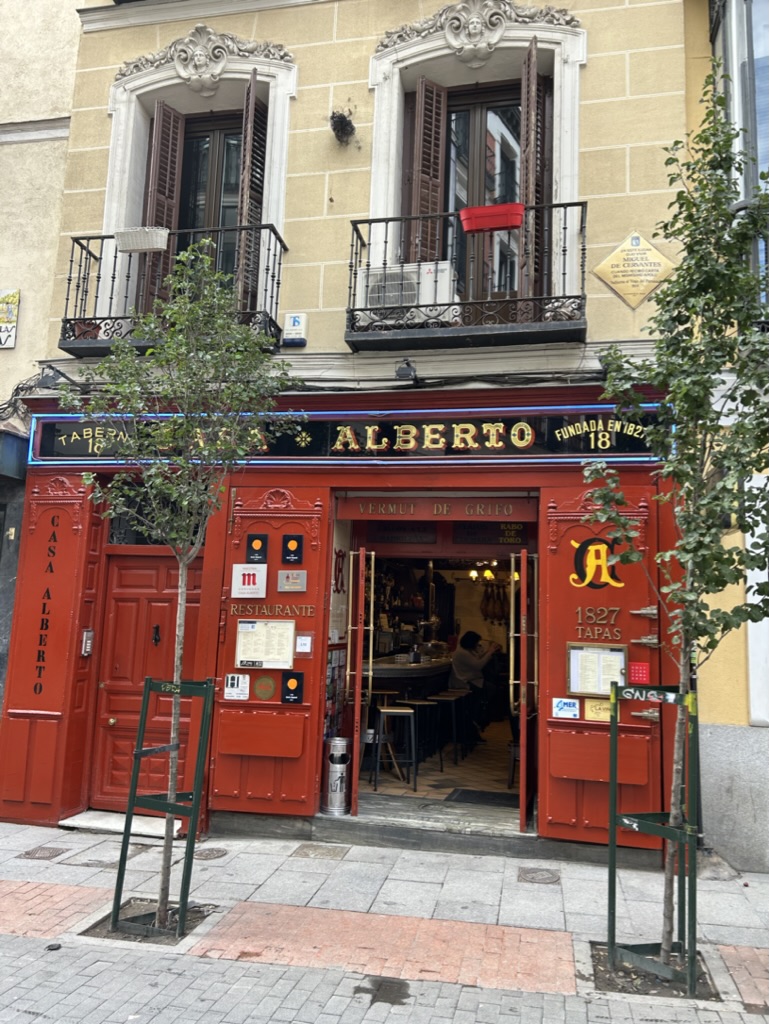
An old tavern in Madrid (red color mean they specialized in red wines)
Madrid. We were blown away with what a beautiful, safe, and livable city this is. It certainly rivals Paris in that regard. It has many areas, old and new. The older parts have narrow streets lined with old shops and restaurants offering local specialties like fried calamari or hot chocolate and churros. There are castles, cathedrals, and some of the world’s top museums to visit (the Prado and the Queen Sofia are just two). The streets are pedestrian friendly as only local residents can drive in certain parts of the city.
What are some other best places to retire in Spain?
The Costa del Sol on the Mediterranean has been home to countless retirees for a long time. People come for the warm winters, good food and wine, beautiful beaches, and low cost of living. Other parts of the country attract retirees as well, and those include Sebastian and big cities like Barcelona, Seville, Toledo, and Madrid. Almeria is an old Moorish town in the Southeast near the coast. Ronda is especially beautiful. Whether you choose a place on the coast, a city, or a town in the hills or mountains, there is a huge range of affordable places to live with a relaxed, healthy lifestyle. The country is safe and available healthcare is excellent.
Can an American retire to Spain or Portugal? The short answer is yes, but unless you are a resident of the European Union, it might be possible for only 3 months at a time without an additional visa. You can own property in these countries as a foreigner. Portugal’s popular Golden Passport program, which allow investors and purchasers of real estate a way into residency, was modified this year. Apparently so many foreigners were buying real estate it disrupted the market.
USA citizens can reside in Spain longer than 90 days (out of every 180), by applying for a “Non-working residence visa”, provided they can justify they have the financial means to do so. However, if they live in Spain more than 180 days a year, they become fiscal residents there. As many other countries, Spain has a tax treaty with the USA, so that one does not have to pay taxes in both countries. However, one still has to file a tax report every year in each country. Uncle Sam is, together with Eritrea (!), the only country whose citizens have to declare taxes every year, no matter where they live.
For more information on each country see our Mini-Retirement Guides: Portugal and Spain.
Spain and Portugal Retirement
Finally
Both Spain and Portugal can be ideal countries to retire in. They offer a great, relaxing lifestyle and a lower cost of living. Would you ever consider retiring abroad?
Note: Our excellent trip was made through Princeton Alumni tours capably led by Joy Allen. (alumni tours like these are great because the groups are congenial and there are usually interesting lectures on the area by one of the professors). Odyssey Adventures handled the trip details.
Jungle Red Writers has been named one of the top 101 Best Websites for Writers by Writers Digest, one of the top 50 mystery blogs by CourtReporter, and one of the top 100 creative writing blogs by Best Colleges Online