Showing posts with label Edgar Award. Show all posts

Thursday, June 1, 2017

Hooray for James Ziskin and Ellie Stone!

INGRID THOFT

It would require a separate blog entry to list the accolades garnered by James Ziskin's Ellie Stone series, but let's start with nominations for Edgar, Barry, Anthony, and Lefty Awards.  The latest installment, Cast the First Stone, will be released next week and is receiving rave reviews (including my own).  I'm thrilled that Jim could stop by to tell us about Ellie's latest adventure and answer your questions.


INGRID: Let's talk about your main character, Ellie Stone.  What inspired you to write a female character based in the 1960’s?

JIM: Through the first five novels, Ellie is a twenty-something woman in 1960-62. She was born in 1937 into a cultured, academic family in Manhattan. A series of family tragedies has left her the last Stone standing. She now works for a small-town daily newspaper in upstate New Holland, New York, where she must use her guile to do a man’s job while wearing a skirt. She’s not consciously aware of blazing any trails for women; she just wants a career that doesn’t come with a boss’s hand on the rear.

I wanted to make things as interesting and as tough as I could for my fictional newspaper reporter. Constant, regular challenges and conflict. That's part of the reason why I chose to write a female character set in the not-too-distant past. The early 1960s interested me because of the moment in history. We were entering a new decade that would bring political upheaval, war, the women’s movement, and the sexual revolution. But the Ellie Stone books predate those cultural seisms by a few years. Ellie’s both a witness and a catalyst in a changing world, one drink and one man at a time.

IPT: What do readers think about Ellie? 

JWZ: People seem to react to her better and better as the series progresses, perhaps because they’re getting to know her. It’s always a challenge when you introduce new characters. It takes some time for readers to feel comfortable with them, especially if you take some chances. Sometimes writers overreach and try to cram too much personality or backstory or description into the first pages of a new series.  Of course, in the best of all worlds, the writer achieves the perfect balance, and character and reader hit it off instantly.

But the most consistent feedback I get from readers about Ellie is that they love her spirit. She’s tough without being harsh. Wickedly funny and passionately empathetic at the same time. And they worry about her. She has some “bad” habits—drinking, smoking, putting herself at risk. And, of course, men. Readers often wish she’d be more careful. I think that’s great. It means they care about her. But I like to ask readers, “Do you wish Jack Reacher would take fewer chances?”

IPT: Bravo to that question!  Can you tell me about your time working in the film industry?  Has that played a role in your writing?

JWZ: My time in Hollywood was on the post-production side, specifically subtitling, translation, and visual effects. We translated and subtitled thousands of films and television shows (from Citizen Kane to Duck Dynasty) into as many as fifty languages. All of it contributed to my understanding of storytelling. One thing I realized early on was to appreciate the work screenwriters did, even on a bad movie. The screenplay made sense of the story.

I confess, however, that I did not learn about scriptwriting in any traditional sense. At least not the three-act structure people talk about. For my purposes, I call that “beginning, middle, and end.” It’s something I feel intuitively when telling a story, and I try not overthink it.

Translation, too, teaches valuable lessons about narration. Finding the right words, telling the story succinctly, reducing to the bare minimum without losing the essentials of the plot and the characters. And that goes for visual effects as well. There’s a visual lexicon in film that can be applied to description and action in fiction as well. Visualizing a scene helps me construct my narrative.

IPT: What has surprised you most about becoming a published author?

JWZ: How quickly one book turns into five with a sixth in progress. If you take it professionally, you’ll be surprised how productive you can be.

And a couple of other things. One, how generous mystery writers are. I love meeting and talking to writers and readers, and worry that too many writers miss out on this perk. At conferences and readings, they might see someone who intimidates them, who looks too shy, and they avoid that person. I want to search out people like that. I’ve met some great friends in this industry that way, readers and writers. I’ve learned a lot from them. Received invaluable feedback and support. And thanks to the generosity of the “big” writers, you can approach them. Even the biggest names give generously of their time.

And two, I am appreciative and so impressed by the work publishers do. Editing, cover design, and publicity. Of course, I knew there were people who did those things. But when you actually witness it up close, it’s remarkable how good the final product turns out.

IPT: Is there a wannabe book lurking in the back of your brain?  Something you would write if you didn’t have to consider agents, editors, and fans?  A romance? Sci-fi?

JWZ: Well, actually, the Ellie Stone books were those wannabe books once upon a time. I didn’t know if anyone would want to read a 1960, twenty-something female newspaper scribbler written by a man of certain age. But I fell so hard for Ellie, I sensed others might too. She’s just so fun to write.

But I also have other ideas brewing. Lots of them. A couple of thrillers in particular. Not modern-day thrillers, but throwbacks to the 1970s. The Cold War provided a fantastic backdrop for stories, don’t you think? I particularly love Frederick Forsyth. And Graham Greene. I’d like to write like them. How’s that for aiming high?

Jim is giving away a copy of Cast the First Stone.  Just comment to enter!


CAST THE FIRST STONE
February 1962: Tony Eberle has just scored his first role in a Hollywood movie, and the publisher of his hometown newspaper in upstate New York wants a profile of the local boy who’s made good. Reporter Ellie Stone is dispatched to Los Angeles for the story. But when she arrives on set to meet her subject, Tony has vanished. His agent is stumped, the director is apoplectic, and the producer is dead. Murdered.

Ellie is on the story, diving headfirst into a treacherous demimonde of Hollywood wannabes, beautiful young men, desperately ambitious ingĂ©nues, panderers, and pornography hobbyists. Then there are some real movie stars with reputations to protect. To find the killer, Ellie must separate the lies from the truth, unearthing secrets no one wants revealed along the way. But before she can solve Bertram Wallis’s murder, she must locate Tony Eberle.


James Ziskin (Jim to his friends) is the author of the Edgar-, Anthony-, Barry-, and Lefty-nominated Ellie Stone Mysteries. A linguist by training, James studied Romance Languages and Literature at the University of Pennsylvania. After completing his graduate degree, he worked in New York as a photo-news producer and writer, and then as Director of NYU’s Casa Italiana. He spent fifteen years in the Hollywood post production industry, running large international operations in the subtitling/localization and visual effects fields. His international experience includes two years working and studying in France, extensive time in Italy, and more than three years in India. He speaks Italian and French. James lives in Seattle. He’s represented by William Reiss of John Hawkins and Associates, Inc.


Wednesday, January 7, 2015

Aunt Agatha's Robin Agnew — and a Day in the Life of the Kerrytown BookFest


SUSAN ELIA MACNEAL: Today I'm delighted to introduce Robin Agnew and Jamie Agnew of Aunt Agatha's New and Used Mysteries, Detection, & True Crime, an absolutely wonderful bookshop (not to mention the 2014 Raven Award winner) in Ann Arbor, Michigan. I was privileged to meet Robin and Jamie at the KerryTown Book Festival this past fall, an annual gathering of book aficionados, which Robin plans and runs in her role as president.

As an author speaking on a panel and signing with fellow authors and meeting readers, everything at the KerryTown Book Fest was absolutely perfect. Only Robin and Jamie know what really goes on behind the scenes to make such a large and complex (not to mention fun!) event run so smoothly, and I thought it would be interesting to peek behind the scenes with Robin — take it away!


ROBIN AGNEW: Along with running Aunt Agatha’s, I have been involved in running and planning Ann Arbor’s annual Kerrytown BookFest, since 2004.  Through the years of the bookfest I have served as “author wrangler” (my original job), secretary, operations chair, vice president, and I have now served as president for the past couple of years.  

As we are a small, hands on board, and we share duties including obtaining permits from the city, renting equipment, finding a hotel with available rooms during busy football weekends, PR, fundraising, grant writing, finding volunteers, signing up 100 or so vendors each year, poster commission and distribution, programming, set up, tear down, and making sure all parties involved are pleased.  Authors, exhibitors, bookfest visitors - we want everyone to have a great day.

Luckily, a capable board means that while I am part of the discussion of all these things I am not part of the nuts and bolts for all of them.  My central focus is on author programming.  Each year I start with a “seed” – an author I’ve spoken with or met, often at a book signing at the store or at a conference – and from there, the planning begins to grow organically.

Last year my “seed” author was Simone St. James.  I had moderated a panel with her at Bouchercon and was delighted by her.   We actually had two seeds last year, as the year before we had hoped to book Chris Raschka, a two time Caldecott medalist with ties to Ann Arbor, and he was unavailable.  In 2014 he was available so our marquis panel became a panel with 3 Caldecott medalists - Chris, Brian Floca, who won in 2014; and Erin Stead and her husband, Philip.  Erin won in 2011.  

Moderating is tricky, as tricky, I’ve discovered, as the rest of the panel.  For this one I turned to Debbie Diesen, author of the “Pout Pout Fish” books, and asked her.  She’s presented at many of our bookfests in our Children’s area, she’s adorable, and she said yes right away.

And what of Simone’s panel?  I asked her at Bouchercon and she agreed, and then it took a couple more months to hear back as she figured out her schedule.  Meanwhile, I went to the board and said I *really* wanted Susan Elia MacNeal.

Who else?  I asked Tasha Alexander, who lives in Chicago, is beloved by readers, and who has been to he bookfest and the store many times.   She said yes.  And then I read The Ashford Affair by Lauren Willig and loved it so much I asked her.  She said yes in an eyeblink and was possibly the lowest maintenance author of the entire day.  

Who to moderate?  I wanted Anna Lee Huber, who lives close-ish, but knew she had a baby on the way.  To my surprise she also agreed and one of the joys of bookfest last year was that many of these women, while fans of each other’s, hadn’t met.  

OK, easy panel out of the way.  What next?  I often do a  
“guy” and a “girl” panel as far as mysteries go (sexist but true) and  the basis for the guy panel was Michael Harvey.  He’d been to the store  and I was so entranced by him I asked him on the spot.  He agreed and I built the panel around him, which eventually included Edgar winner Theresa Schwegel; newbie and local author Elizabeth Heiter, and frequent bookfest speaker and buddy, Loren D. Estleman.  I asked an old friend and mystery fan to moderate and he was on board immediately.  He couldn’t believe all those writers were going to be in the same place, and I have to say, that’s my programming goal in general. So mystery panels set.  

What else?  We often use the Michigan Notable Book Winners list as a template and one of the first people off the list all of us wanted was Matt Phelan, whose book, Bluffton. was a Notable winner.  We built a graphic novel panel around him, eventually including Jim Ottaviani, Dave Coverly of Speedbump fame (Dave and Jim are both local and had been with us before). At the last minute I substituted in Matt Faulkner when another author had to cancel.  As it happened, I had heard Matt on NPR talking about his book Gaijin: American Prisoner of War, and had dreamed of booking him.

Moderator? Knowing he was a comic book geek,  I asked local NPR talent Michael Jewett. Luckily I know his wife, a former bookseller and a mystery fan - she made him agree, and he was fabulous.

The rest of the festival - ten panels, a children’s area, and a book arts specific area - are programmed in a similar way, using the expertise and connections of my fellow programmers; Lynn Riehl, an events coordinator at a large independent bookstore in town (Nicola’s) and my buddy. PR maven Bill Castanier, who has connections all over the state.

Each of us get wild hairs, are approached by authors we know with ARCs, run into people at parties or conferences, and before we know it we’ve programmed the day.  I was happy to include newbie mystery author Sam Thomas as a moderator on an historical biography panel, for example.  Another example: having drinks with Tim O’Mara after the Edgars in May, he suggested being a “writer in residence” at the store for the day.  We transferred his idea to the bookfest and Tim was booked all day talking to would be writers.

The day of the festival (this coming year September 13, 2015) we welcome about 4,000 visitors with our panels being vigorously attended.  For me the day passes in a flash as I run around trying to make sure everything goes smoothly, along with selling books.  Thankfully we divide bookselling duties - several stores share out the panels.

Then I go home exhausted at the end of the day and somehow, start to think about the next year.  This coming year my “seed” is Denise Swanson.  Tune in and see who joins her!


SUSAN ELIA MACNEAL: Robin, thank you so much for giving us a look backstage! What else can you tell us about the 2015 KerryTown Book Fest? 

Readers, have you ever been to a book festival? Are you surprised by how much work goes on behind the scenes to pull such a complicated event off? Please let us know in the comments!


Aunt Agatha’s

213 South Fourth Avenue

Ann Arbor, Michigan 48104

734.769.1114
Hours of Business:
Monday - Thursday 11-7

Friday & Saturday 11-8

Sunday 12-5


Sunday, May 25, 2014

Michael Sears: "No Such Thing as a Bad Nap"


SUSAN ELIA MACNEAL: I had the privilege of meeting Shamus Award-winner Michael Sears when we were both nominated for the Edgar Award for Best First Novel in 2012. Because it's a small world, we spoke on a panel Hank Phillipi Ryan (aka Miss Scarlett) moderated. Michael was just so calm, collected, and gracious I was always thrilled to meet up with him at other events — Bouchercon, Sleuthfest, really anywhere.


And so I'm thrilled to introduce Michael now, speaking on a topic that's also near and dear to my own heart — napping.


An Ode to the Lowly Nap


When in disgrace with fortune and men’s eyes,
When the words cease to flow and plagiarism proffers a false salvation,
When you’ve researched the derivation of the word ‘gimbal’ just to avoid placing another
desultory phrase upon the page,
When your head has bobbed for the third time in as many minutes —
Take to heart the words of my Great Aunt Nancylyn:
“There’s no such thing as a bad nap.”


MICHAEL SEARS: Winston Churchill was a famous napper.  He refused, however, to simply flop down on the divan with a clean handkerchief unfolded over his face, and his cigar near at hand in a convenient ashtray.  The man knew how to take naps.  He stripped down and got underneath the covers and slept.  Napping was serious business.  He won wars, planned the reconstruction of Europe, wrote the history of the English-speaking people, and imbibed vast amounts of non-medicinal spirits, all with the help of daily naps.

I grew up in a home where napping was allowed rather than encouraged.  My father napped before dinner most nights -- a habit he no doubt developed working shifts -- but never on a weekend.  He was always much too busy on weekends, either fixing broken pieces of house or car, cursing and grumbling throughout, or playing on his sailboat, which broke more often than anything else and yet he never cursed while repairing it.  Judging by his startle response upon being called to dinner, his naps must have been not entirely stress-free.  He napped out of necessity, not to recharge, but to prevent terminal shutdown.  (He did once fall asleep at the wheel and run off the road while coming home from working a night shift at the lab – he was a nuclear engineer – and this experience may have marked his napping dreams from then on.)  

We three older sons were in terror of being assigned the task of “getting your father up for dinner” and devised tricks, trades, and evasions to pass the chore along.  At the first querulous whisper of “Dad?” he would sit up violently and call out, “What?  What?  What?” while staring about wild-eyed like Macbeth watching Banquo at the feast.  Delivering the next single word line of our part of the script – “Dinner” – was always an anticlimax, as though we should have responded to his intensity with something worthy of it, like “The police are here!” or “The reactor blew up!” or, if not quite that dramatic, then at least the most oft-heard phrase of my childhood, “We’ve run aground.”

Wall Street, where I worked for twenty years, does not encourage napping.  Neither does my wife. I married a non-napper. So my next forays to Naplandia were stolen, feral weekend interludes with all the risks of an illicit affair (and is there any other kind?) complete with the shame of discovery.  A typical nap might be: the family arrives back at the house after cavorting in the ocean all day.  My lovely wife takes the two boys, sandy and sunburnt – better known as Jesse and Sean – and hauls them off for a quick shower and into fresh shorts and T-shirts.  I volunteer to hang the beach towels on the line and sweep the sand out of the backseat, two chores that I will, eventually, perform admirably, if not expediently.  

First, I put the seatback all the way flat, leave the driver’s side door open to capture a bit of late afternoon breeze, and close my eyes.  I am “resting.”  The sounds that are emanating from my throat and sinuses are vocal exercises that I learned as a young actor.  I am not sleeping.  As my favorite author, Patrick O’Brian, pointed out, no man born admits to having been asleep.

But in the years since I left the twenty-four/seven rule of the markets – calls from Tokyo or London broke into my sleep cycle three or four nights a week for fifteen years – I have finally learned to take a nap.

A friend recently posted to me an article which made great claims of increased productivity by nappers, but when I went online to find it, I saw that these claims are not new.  

The New York Times seems to report on the wonders of napping on a seven-year cycle, each time with the immediacy of recent discovery and announced with the kind of eye-grabbing lede usually reserved for the fall of the ruling party in England, or the discovery of a tenth planet.  I imagine that these headline writers are direct descendants of that journalist, four thousand years ago, who put pen to papyrus and informed the world, “NILE FLOODS BANK!”

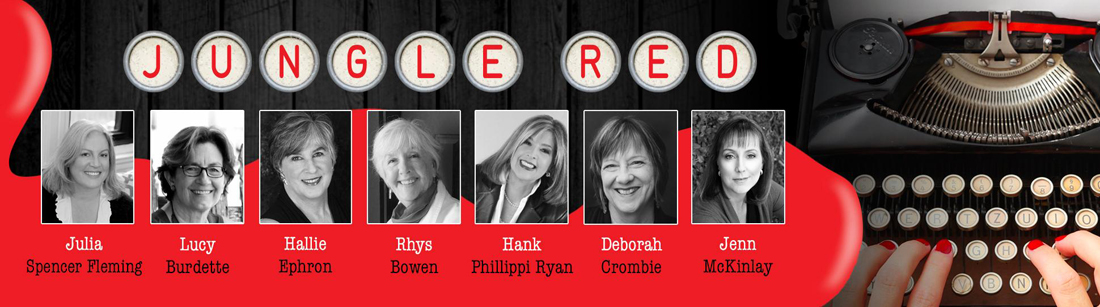
Hank Phillippi Ryan, one of the illustrious authors here at Jungle Red, and a woman I now claim as a friend, gives a talk on productivity for writers, arguing that the opportunity to do what we do is so dear that the very idea of “writers block” must not be allowed.  I heard her deliver this speech earlier this year, and I took her words to heart.  I have completed three Jason Stafford novels, and am working on number four, and if the stars are very kind to me, I will continue to do this for years to come.  It is a blessing to be where I am – never a chore. 

But napping is not a retreat from this dedication, rather it is an enabler, an enhancer.  I will be productive when I am fully empowered.  And I will nap when I am not.  Churchill argued that napping for even just an hour so breaks up the day as to increase one day’s productivity to the level of two days, or at least one-and-a-half.  Winston was not a mathematician.  Yet, who would disagree?

Susan Elia MacNeal, a great fan of Winston Churchill herself, invited me to speak to the world through Jungle Red, though she may not have expected me to go on so long, or to address such a topic.  I thank her for the opportunity and dearly hope that I am invited back some day when I am better rested.


SUSAN ELIA MACNEAL: Michael, you're very welcome! Please come back soon.

Reds and readers, do you nap?

Or are you, like Michael's wife, a non-napper? 

Do you think, like Winston Churchill, naps help with creativity and productivity?

Please tell us in the comments.


Michael Sears is the Edgar-nominated, and Shamus-winning author of BLACK FRIDAYS, which introduced to the world the characters of Jason Stafford, Wall Street investigator, and his autistic son, Kid.  

His latest book is MORTAL BONDS, which explores the fallout from a massive Ponzi scheme, missing funds, and the people who will kill to recover them. 

Once he rises from his nap, Michael will finish the last round of copy edits for book #3 in the series, LONG WAY DOWN.