Showing posts with label Shamus award. Show all posts

Tuesday, January 10, 2017

Happy pub day to DUPLICITY!

RHYS BOWEN: By now you all know that we have two wonderful new Reds. Last week we celebrated the release of Jenn's latest book and today I'm delighted to announce the release of Ingrid's fouth book in the Fina Ludlow private investigator series. I should add, because I'm sure Ingrid won't, that this series has won the Shamus Award for best private eye novel and is being turned into a TV series by ABC. And Booklist has said, "“Thoft’s fourth Fina Ludlow outing (after Brutality, 2015) finds the tenacious Fina in fighting form, juggling personal and professional demands to attain justice despite the cost. A winning addition to an entertaining series.”—Booklist  

So we're hoping for good things for this new book, Ingrid. The stage is yours for your first Jungle Red post!

INGRID THOFT:

I'm thrilled that DUPLICITY, the fourth book in my Fina Ludlow series, hits the shelves today! 


Fina is a private investigator in Boston who gets most of her jobs from the Ludlow family firm of personal injury attorneys.  DUPLICITY features a slightly different kind of case for Fina:  Her father has asked her to investigate an evangelical church as a favor to an old friend, Ceci Renard.  Lead by a charismatic pastor and his wife, the church seems to have tremendous influence over its congregants, one of whom is Ceci’s daughter. 

Fina tries to dig into the church’s practices and finances, only to be thwarted at every turn, and the situation grows more serious when a congregant turns up dead.  The investigation raises questions about faith and power, and Fina is forced to contemplate these concepts within the context of her own life and complicated family.

A top-notch investigator, Fina relies on her intuition to steer her in right direction throughout the case.  When her gut clenches or the hairs stand up on the back of her neck, she pays attention.  Everybody has intuition (not just investigators,) but some are better than others at heeding it.


Listening to one’s intuition is a critical skill for investigators, both fictional and real.  Talk to cops who have been on the job for a few years, and they’ll tell you that sometimes something will pique their interest, even when they can’t explain exactly what it is. 
Not convinced?  You need to read “The Gift of Fear” by Gavin De Becker.  One of this security expert's most important points is that we value logic over intuition, and we shouldn’t.  Our erroneous assumption is that intuition isn’t based on data when, in fact, it is.  The problem is that our bodies and unconscious have evolved to signal danger in the blink of an eye, but our rational brains don’t want to accept the conclusion without the proof.  De Becker writes “Intuition is the journey from A to Z without stopping at any other letter along the way.  It is knowing without knowing why.”

So, how’s my intuition?  I think it’s pretty good, but you tell me.


Many years ago, my mom and I were in Colorado Springs to attend a memorial service.  The last night of our stay we were moving from a friend’s house to a Holiday Inn.  I like Holiday Inns and have stayed in them all over the world—from Kansas to Sydney, Australia.  But when we drove up to this particular Holiday Inn, my gut kicked in.  There was nothing overtly wrong, but I didn’t like the feel of it.  My mom didn’t object when I balked at spending the night there, although there was a little teasing that perhaps I was being persnickety. 


Some weeks later, I looked at the news online and a particular item jumped out at me.  I called my mom immediately. 

“Still think I’m persnickety?” I asked.

It seemed that two members of a group of dangerous prison escapees—known as the Texas Seven—had holed up in the very same Holiday Inn.  Apparently, the criminals’ guts had told them that it was the perfect place to evade capture from federal law enforcement! 

What got my Spidey senses tingling that day at the Holiday Inn?  Why had I sensed that it was a great place for murderous felons, but not for me and my mom?  I can’t explain it, but I know I didn’t imagine it.  And charges of being too particular about my accommodations?  Those have been laid to rest. 

So tell me readers: Do you follow your intuition?  Is there a time when listening to your gut kept you safe or influenced a decision?


I have a signed copy of DUPLICITY for one lucky commentator!


Tuesday, October 14, 2014

Michael Nethercott Talks #Whodunit #Giveaway #mystery


LUCY BURDETTE: Some people just look and act as though they should be mystery writers--or that's what I thought when I first met Michal Nethercott in a small mystery bookstore in Brattleboro, Vermont. (SEE BELOW--doesn't he have the coolest author photo ever?) Turns out he doesn't only look the part, he writes it too. And we're delighted to host him today on the occasion of his second mystery, THE HAUNTED BALLAD.


MICHAEL NETHERCOTT: In my teenaged years I read a lot of Agatha Christie. A lot. Ever since my first encounter with Ten Little Indians, it was the whodunit aspect of her books that always kept me coming back. I won’t say that I never guessed the culprit, but, more often than not, I picked the wrong horse… and was happy to do so. Now, firmly into my post-teen years—very firmly—I myself have become a writer of mystery stories and novels. As such, I readily acknowledge Dame Agatha as a literary godmother of sorts. I take the whodunit-ness pretty seriously and like to offer the reader a heap of suspects with shadowy backgrounds and secret motives. 


In my latest 1950s era novel The Haunting Ballad I’ve attempted to do just that. The death of a Greenwich Village “songcatcher” (folk song collector) leads my detectives Plunkett and O’Nelligan into a very deep suspect pool. The possible perpetrators include a sultry Beat poet, a blues-belting ex-con, a family of Irish balladeers (who may be IRA),  a hundred-and-five-year-old Civil War drummer boy, and a prickly “ghost chanter” who sings ballads that she receives from the dead. And just to stir things up a bit, one suspect is a handsome, persuasive young folk singer who Plunkett's fiancée Audrey is enthralled by.


So, why do I—and a legion of other mystery readers—care so much about the who of the dunit? Well, perhaps there’s something about finding one’s self in the midst of a group of people who may or may not be what they seem. Or perhaps there’s something about knowing that, beneath a seemingly benign exterior, one (or more) of this crowd is concealing a figurative dagger (or maybe an actual one.) For me, there’s always been the additional interest in who didn’t do it. That is, I’ve always been sort of comforted at a mystery novel’s end to discover that Mrs. Pumbleshum or Colonel Winterwink was, after all, not a homicidal slayer. Even if one of their friends/family/colleagues was.   

Besides the characters, of course, plot and setting have their place in the realms of suspense. A zesty, zigzagging plotline, replete with puzzling leads, desperate situations, and plentiful twists and turns, always makes for a good tale. Christie certainly delivered in this, even if, on occasion, her plot arcs left plausibility in the dust. As for setting, while not always central to a mystery’s storyline, it can certainly spice things up. Tony Hillerman’s Navajo West, Dashiell Hammett’s San Francisco, and Sara Paretsky’s Chicago are all fine examples of this. For The Haunting Ballad, I chose Manhattan’s Greenwich Village. In the 50s, the twin whirlwinds of the folk music revival and the Beat scene were converging and the Village was at the heart of it all. It was a swirling, quirky, dynamic world.

And where do you fall in the spectrum? Is it the who, the where, or the why that most beckons you in a tale of mystery and mayhem? And why? (I know, I know, that’s two whys, but don’t be over-influenced!)
 

Michael Nethercott will be part of or conversation today, and one lucky commenter will win a copy of his new book, "The Haunting Ballad."

Michael Nethercott is the author of the O’Nelligan/Plunkett mystery series. His debut novel The Séance Society (Minotaur/Thomas Dunne) is followed by the newly released The Haunting Ballad. Nethercott has won The Black Orchid Novella Award (for traditional mysteries), the Vermont Playwrights Award, the Nor’easter Play Writing Contest, the Vermont Writers’ Award, and the Clauder Competition (Best Vermont Play.) He has also been a Shamus Award finalist. His tales of mystery and the supernatural have appeared in numerous periodicals and anthologies including Alfred Hitchcock Mystery Magazine, Best Crime and Mystery Stories of the Year, Thin Ice: Crime Stories by New England Writers, and the Crimestalkers Casebook.

Also find Michael on Facebook

Sunday, May 25, 2014

Michael Sears: "No Such Thing as a Bad Nap"


SUSAN ELIA MACNEAL: I had the privilege of meeting Shamus Award-winner Michael Sears when we were both nominated for the Edgar Award for Best First Novel in 2012. Because it's a small world, we spoke on a panel Hank Phillipi Ryan (aka Miss Scarlett) moderated. Michael was just so calm, collected, and gracious I was always thrilled to meet up with him at other events — Bouchercon, Sleuthfest, really anywhere.


And so I'm thrilled to introduce Michael now, speaking on a topic that's also near and dear to my own heart — napping.


An Ode to the Lowly Nap


When in disgrace with fortune and men’s eyes,
When the words cease to flow and plagiarism proffers a false salvation,
When you’ve researched the derivation of the word ‘gimbal’ just to avoid placing another
desultory phrase upon the page,
When your head has bobbed for the third time in as many minutes —
Take to heart the words of my Great Aunt Nancylyn:
“There’s no such thing as a bad nap.”


MICHAEL SEARS: Winston Churchill was a famous napper.  He refused, however, to simply flop down on the divan with a clean handkerchief unfolded over his face, and his cigar near at hand in a convenient ashtray.  The man knew how to take naps.  He stripped down and got underneath the covers and slept.  Napping was serious business.  He won wars, planned the reconstruction of Europe, wrote the history of the English-speaking people, and imbibed vast amounts of non-medicinal spirits, all with the help of daily naps.

I grew up in a home where napping was allowed rather than encouraged.  My father napped before dinner most nights -- a habit he no doubt developed working shifts -- but never on a weekend.  He was always much too busy on weekends, either fixing broken pieces of house or car, cursing and grumbling throughout, or playing on his sailboat, which broke more often than anything else and yet he never cursed while repairing it.  Judging by his startle response upon being called to dinner, his naps must have been not entirely stress-free.  He napped out of necessity, not to recharge, but to prevent terminal shutdown.  (He did once fall asleep at the wheel and run off the road while coming home from working a night shift at the lab – he was a nuclear engineer – and this experience may have marked his napping dreams from then on.)  

We three older sons were in terror of being assigned the task of “getting your father up for dinner” and devised tricks, trades, and evasions to pass the chore along.  At the first querulous whisper of “Dad?” he would sit up violently and call out, “What?  What?  What?” while staring about wild-eyed like Macbeth watching Banquo at the feast.  Delivering the next single word line of our part of the script – “Dinner” – was always an anticlimax, as though we should have responded to his intensity with something worthy of it, like “The police are here!” or “The reactor blew up!” or, if not quite that dramatic, then at least the most oft-heard phrase of my childhood, “We’ve run aground.”

Wall Street, where I worked for twenty years, does not encourage napping.  Neither does my wife. I married a non-napper. So my next forays to Naplandia were stolen, feral weekend interludes with all the risks of an illicit affair (and is there any other kind?) complete with the shame of discovery.  A typical nap might be: the family arrives back at the house after cavorting in the ocean all day.  My lovely wife takes the two boys, sandy and sunburnt – better known as Jesse and Sean – and hauls them off for a quick shower and into fresh shorts and T-shirts.  I volunteer to hang the beach towels on the line and sweep the sand out of the backseat, two chores that I will, eventually, perform admirably, if not expediently.  

First, I put the seatback all the way flat, leave the driver’s side door open to capture a bit of late afternoon breeze, and close my eyes.  I am “resting.”  The sounds that are emanating from my throat and sinuses are vocal exercises that I learned as a young actor.  I am not sleeping.  As my favorite author, Patrick O’Brian, pointed out, no man born admits to having been asleep.

But in the years since I left the twenty-four/seven rule of the markets – calls from Tokyo or London broke into my sleep cycle three or four nights a week for fifteen years – I have finally learned to take a nap.

A friend recently posted to me an article which made great claims of increased productivity by nappers, but when I went online to find it, I saw that these claims are not new.  

The New York Times seems to report on the wonders of napping on a seven-year cycle, each time with the immediacy of recent discovery and announced with the kind of eye-grabbing lede usually reserved for the fall of the ruling party in England, or the discovery of a tenth planet.  I imagine that these headline writers are direct descendants of that journalist, four thousand years ago, who put pen to papyrus and informed the world, “NILE FLOODS BANK!”

Hank Phillippi Ryan, one of the illustrious authors here at Jungle Red, and a woman I now claim as a friend, gives a talk on productivity for writers, arguing that the opportunity to do what we do is so dear that the very idea of “writers block” must not be allowed.  I heard her deliver this speech earlier this year, and I took her words to heart.  I have completed three Jason Stafford novels, and am working on number four, and if the stars are very kind to me, I will continue to do this for years to come.  It is a blessing to be where I am – never a chore. 

But napping is not a retreat from this dedication, rather it is an enabler, an enhancer.  I will be productive when I am fully empowered.  And I will nap when I am not.  Churchill argued that napping for even just an hour so breaks up the day as to increase one day’s productivity to the level of two days, or at least one-and-a-half.  Winston was not a mathematician.  Yet, who would disagree?

Susan Elia MacNeal, a great fan of Winston Churchill herself, invited me to speak to the world through Jungle Red, though she may not have expected me to go on so long, or to address such a topic.  I thank her for the opportunity and dearly hope that I am invited back some day when I am better rested.


SUSAN ELIA MACNEAL: Michael, you're very welcome! Please come back soon.

Reds and readers, do you nap?

Or are you, like Michael's wife, a non-napper? 

Do you think, like Winston Churchill, naps help with creativity and productivity?

Please tell us in the comments.


Michael Sears is the Edgar-nominated, and Shamus-winning author of BLACK FRIDAYS, which introduced to the world the characters of Jason Stafford, Wall Street investigator, and his autistic son, Kid.  

His latest book is MORTAL BONDS, which explores the fallout from a massive Ponzi scheme, missing funds, and the people who will kill to recover them. 

Once he rises from his nap, Michael will finish the last round of copy edits for book #3 in the series, LONG WAY DOWN.

Tuesday, July 2, 2013

Good news, fabulous awards, and TWO irresistible contests!


Deborah Crombie: Lots of news this week! Yesterday, you heard about my daughter’s engagement, and Rhys’s son… (not to each other!) and thank you for all your advice. More Jungle Red news this week, the paperback of Red Hank’s much-lauded (Mary Higgins Clark winner! Anthony, Agatha, Daphne and Shamus nominee!) THE OTHER WOMAN is out!

 Hank: Thank you Debs! Yes, and you know one of the Red’s credos is “celebrate everything.” This is such a big one for me…I am so thrilled I am brazenly telling everyone about it. (Funny about paperbacks…you get to make changes from the hardcover if you want...I made ONE. But I’m not telling what it is. If you discover it, Reds, okay then, you’ll get a prize. But really—it’s no biggie.) 

Debs: Speaking of prizes… 

 Hank: Well, yeah. To celebrate summer reading, I couldn’t resist coming up with some irresistible (!) contests not only for the arrival of THE OTHER WOMAN in paperback, but the brand new THE WRONG GIRL, which is coming out in hardcover this fall! So here’s the scoop…and then see below for one more contest—just for you, Reds readers!


Did we mention:n
THE OTHER WOMAN—now in paperback
Good news, fabulous awards, and TWO irresistible contests!


The Other Woman
    
GOOD NEWS
The paperback version of THE OTHER WOMAN is here! But wait, there's more—it includes the first three chapters of THE WRONG GIRL. (Tess Gerritsen says: "Riveting!" And Linwood Barclay says: THE WRONG GIRL has all the right stuff!") Keep reading for the irresistible contests!
    
FABULOUS AWARDS
Yes, this is the iconic Mary Higgins Clark—she presented THE OTHER WOMAN and me with the incredibly prestigious MHC award during Edgar Week.
Hank and Mary Higgins Clark
THE OTHER WOMAN is also an Anthony, Agatha, Shamus and Daphne nominee—the only book to be nominated for all four.

    
IRRESISTIBLE CONTEST NUMBER ONE! Just send me proof you bought THE OTHER WOMAN in paperback...and you'll be entered to win your choice of a Kindle Paperwhite, a Nook Simpletouch, or a $100 gift certificate to the bookstore of your choice! (Oh, okay, three winners!) And hey, if you already have the hard cover of THE OTHER WOMAN, you could use your paperback for the beach or vacation or a gift for a friend.
ORDER THE OTHER WOMAN:
Indiebound Amazon Barnes & Noble Books-A-Million

#HANKONTOUR!
Hope to see you this summer and fall—watch for Facebook and Twitter invitations to meet me and THE OTHER WOMAN and THE WRONG GIRL at a bookstore or library near you.

Check the entire schedule here.

SAVE THE DATE
And mark your calendars—save the date September 10! That's when THE WRONG GIRL goes public at Brookline Booksmith! Come celebrate with delicious treats and special loot. Hope to see you there.

The Wrong Girl

WATCH THIS
Here's a fun video from BookBliss taped at BEA—with all the scoop on THE WRONG GIRL.

Hank is interviewed at BEA

    
IRRESISTIBLE CONTEST NUMBER TWO!
Can you pre-order THE WRONG GIRL right now? Well, of course! And proof of pre-order (print book or Macmillan audiobook version) enters you in a very special drawing—to have a character named after you in the next Jane Ryland adventure! (Told you it was irresistible!) It's a fun (and legal) way to put yourself in the middle of a murder mystery.

ORDER THE WRONG GIRL:
Indiebound Amazon Barnes & Noble Books-A-Million


Debs: Thanks, Hank.   Sounds terrific...and we wish you all the best.

Hank: Aw. Thank you. 

Debs:  So you said: one more contest?

Hank: Yes, indeed! One lucky Reds commenter will win an ARC of THE WRONG GIRL!  So let’s see--tell us:  are you taking any wonderful vacations his summer? Or happily staying home? 

And thank you again, dear Reds, for everything…

Sunday, October 14, 2012

SILAS CADE SMOKES 'EM by Mike Cooper


LUCY BURDETTE: I loved visiting with thriller writer Mike Cooper at Bouchercon. Somehow we always gravitate to talking about food. So I thought you'd enjoy his take on something culinary. Welcome Mike!


MIKE COOPER:  My protagonist Silas Cade in CLAWBACK is no gourmand -- he's too busy hunting down armed riffraff along the Greenwich-Wall Street axis.  Here he is at a nice restaurant:


"I sawed away at my fish, which seemed not to have been cooked enough.  Maybe it was supposed to be that way."


Because I'm the at-home parent, on the other hand, I do a lot of cooking.  One place that my interests and Silas's intersect is barbecue.  The grill here runs pretty much all year, and not just the Weber; a few years ago I built a little smokehouse.


The hope was to reproduce my grandmother's kielbasa.  Most years she and my grandfather kept a hog, butchering it in the fall for sausage, bacon, ham and everything else.  I copied her recipe from the scrawled scrap of paper she'd written it on about fifty years ago.


KIELBASA
Grind 45-50 lb pork.  Leave fat in, but you don't have to add more if it's a good shoulder cut.  I use a cast-iron crank grinder.  (BTW, adjust all these amounts down for more typical family-sized volumes; my grandmother was cooking for multitudes.)

Mix in well:

1 cup + 2 tsp salt
2 garlic heads, crushed and soaked in 1-1/2 cup water
1 whiskey glass coarse pepper
3/4 whiskey glass paprika

Stuff the casings (I use the same hand grinder with a stuffing funnel).  1" casings seem best for kielbasa. Twist them off and hang overnight, not touching, in the refrigerator.  I have a cut-open plastic bin for this purpose that just fits into the bottom of the refrigerator.  This is an important step -- to dry the sausage slightly, and make sure the exterior is not at all damp.


Next morning, hang them in the smokebox, get a fire going, and hot-smoke them at around 160 degrees until the interior temperature is also 160. It can take hours, which is a lot of fussing around with the fire to maintain a level burn.


Note that grandma's recipe does not include a "cure" -- the sodium nitrite.  The USDA, along with the rest of the free world, insists that you should put this in to prevent botulism, which certainly seems like a good idea.


As you can see from the photo, the smokebox hasn't seen much use this year (though the morning glory vines will all die off at first frost, quite possibly this weekend).  You will also notice that we live surrounded by neighbors, including upstairs.  October is the best time for smoking not just because crisp cool air is pleasant to work in, but because most people have closed their windows for the season and will be less annoyed by the smoke.


Really good kielbasa is available in the Polish markets in South Boston, but homemade sausage is always a bit better -- even if I've never quite matched my grandmother's.

___________________

Mike Cooper is the pseudonym of a former jack-of-all-trades. Under a different name his work has received wide recognition, including a Shamus Award, a Thriller nomination, and inclusion in BEST AMERICAN MYSTERY STORIES. The sequel to his novel CLAWBACK will be published by Viking in 2013. Mike lives outside Boston with his family. Read more at his website.

Thursday, January 13, 2011

"Reverend" Brad Explains It All


HANK: Okay, yes, he's trouble and does nuthin' but create chaos and mayhem wherever he goes. But we can't help it, he's irresistible. Is it the show tunes he'll sing at the drop of a hat? Or even without dropping a hat? Is it the way he'll tease ANYONE, whether he knows them or not? Is it his stable of hilariously rambunctious interns (you can meet them on his website)--maybe. It might just be, however, that he's a genuinely good guy--who's a genuinely terrific writer.


But don't tell him we said so or it'll just make things worse.


THE POWER OF A THOUSAND WORDS

A SERMON OFFERED BY THE NOT-SO-VERY RIGHT REVEREND BRAD PARKS

Brethren and sistren, children of the great story, writers published and unpublished alike, I come to the pulpit of The Church of A Thousand Words to give you my testimony, and to admit to you that I have been a sinner.

(Well-educated CONGREGATION stirs uncomfortably, because unlike BRAD, it knows “sistren” is not really a word).

Yes, a sinner! You see, oh ye shepherds of the written utterance, before I found The Church of A Thousand Words, I was lost. Aimless. Adrift. I would write when I had the time. I would write when I wasn’t too busy at work. I would write when, when – I can barely even bring myself to admit it – when “inspiration” struck me.

(CHOIR members shift in their seats, some shaking their heads).

And you know where that leads, don’t you? That’s right. Nowhere. Nowhere! Sometimes I’d write. Sometimes I wouldn’t. I’d get sidetracked by one excuse or another, and then weeks or months would pass. Sound familiar?

And then came that day, that most blessed and wonderful day, when I found The Church of A Thousand Words.

(CONGREGATION murmurs. ORGANIST strikes a minor chord, barely audible).

Now my friends, in most aspects of life, I’m a typical open-minded postmodern intellectual, drowning in wishy-washy relativism. I don’t believe in much. What I do believe, I don’t believe very firmly. I’m roughly a half-step removed from those people who get all their news from the Daily Show.

But let me tell you about the one thing I have come to believe in with more conviction than anything in this world: A writer needs to produce a thousand words a day.

I say it loud, I say it proud: I write a thousand words a day!

(CHOIR hums softly. A few members of the CONGREGATION begin fanning themselves).

Now, maybe that sounds like a lot to you. And maybe it doesn’t. But I can tell you about the power of writing a thousand words a day, because I’ve seen it in my own life. Before I found the Church of A Thousand Words, do you know how long it once took me to finish a manuscript? Well, do you? Even now, it’s hard to say it. But I’ll tell you now, because I have been a sinner, and I have seen the deepest of the depths, and so I have to admit it:

Three years.

Yes, it once took me three years to complete a manuscript!

(ORGANIST strikes and holds a mournful chord, crescendos to a mezzo piano).

Now, that I have found you, all ye who toil over your Microsoft Word alongside me? Now that I am a dues-paying member of The Church of A Thousand Words, do you know how long it takes me?

Three months.

(A man in the CONGREGATION shouts “Hallelujah” while a woman extols, “Preach it! Preach it!” A member of the CHOIR faints. ORGANIST plays a series of joyful glissandos).

That’s right! Three months. As I prepare for the Feb. 1 launch of EYES OF THE INNOCENT, the second novel in the Carter Ross series, I testify before you that I already have the third and fourth installments completed. Plus I have a Young Adult manuscript my agent in shopping.

That’s not magic, people. It’s not voodoo. It’s not an act of faith. That’s simple math. If you write a thousand words a day, every day – with no excuses, no trespasses, no trespasses against – you too will have a completed manuscript in 90 days.

And you know what? It’ll be good. That’s part of the power of a thousand words a day. It’s not too fast, not too slow. It doesn’t give you time for writer’s block. But you also don’t end up with one of those crappy NaNoWriMo novels that reads like it was written by an amphetamine-addled hamster. You end up with something you can be proud of, something that approximates your best work.

And, yes, good parishioners, unless you are blessed to be independently wealthy – or have a tremendously supportive spouse – it takes sacrifices to write a thousand words and keep a day job. Maybe you’ll have to get up three hours earlier than you ever did before to squeeze it in. Maybe you’ll have to give up late-night television. Maybe you won’t have time to pore over US Weekly and learn who Shakira was seen nuzzling on the beach in San Tropez.

But I am here to say you can make it happen. It happened for me. It happened for my dear friend, Sarah. Can I tell you about Sarah?

(CONGREGATION is boisterous now, offering encouraging shouts of “Yes!” and “Tell me!” and “Make it quick, this blog post is getting a little long-winded”).

This is a true story, oh gentle readers. Now Sarah, we’ve known each other a long time, since high school. And I am telling you, brethren and sistren, she was always a lot smarter than me. Better grades. Better SAT scores. Better writer.

(CONGREGATION has already figured that out, since BRAD has hauled out “sistren” again).

But she was lost in the great unpublished wilderness. She had been writing for years but was wracked with self-doubt and uncertainty. She had no structure, people! She had no discipline!

Then, in September, we shared coffee at the Boston Public Library and she heard the good news of The Church of A Thousand Words. The next day, she set aside all the transgressions of her writing past – all those almost-finished 75,000-word manuscripts, all those half-considered outlines, all those character Bibles cluttering up her hard drive – and she dedicated her life to a thousand words a day.

And you know what? By November, she had completed her novel.

(CONGREGATION shouts “Amen.” ORGANIST stops the random improvisation and begins playing a jazzy version of “Amazing Grace” in a thunderous forte).

But more than that, brethren and…

(CONGREGATION grimaces in anticipation of the malapropism, which BRAD finally notices).

… Uh, ladies and gentlemen… more than that, she has new belief in herself. She’s going to start shopping that novel to agents soon. And that can be hard on a lot of folks, facing the wrath of those fallen angels. But no matter what they say, Sarah has found the power of a thousand words. Even if the rejection letters pile up higher than the great wall of Jericho, she knows she’s never more than three months away from her next completed manuscript. All she has to do is keep believing in a thousand words a day.

She believes! I believe! Let us all believe!

Now go forth, and sing it to the multitudes!


*******************************************************************************

In 2010, Brad Parks became the first author to win the Shamus Award and the Nero Award in the same year. His next book, EYES OF THE INNOCENT (St. Martin’s Press/Minotaur Books) releases February 1.


Library Journal gave it a starred review, saying, “Parks’s sequel to his acclaimed debut, FACES OF THE GONE, is as good if not better.”

You can follow @Brad_Parks on Twitter www.twitter.com/Brad_Parks


or just visit him at http://www.bradparksbooks.com/
and send him a note.

Wednesday, October 14, 2009

Mark Arsenault

JAN: Our guest blogger today is Mark Arsenault, a terrific writer I met through the Providence Journal, where we both worked as reporters, but at different times.

I knew he was a Shamus-nominated mystery writer. I might have guessed that he is a runner, hiker, and political junkie. But it came as a surprise that he's also an eBay fanatic who collects memorabilia from the 1939 New York World’s Fair.

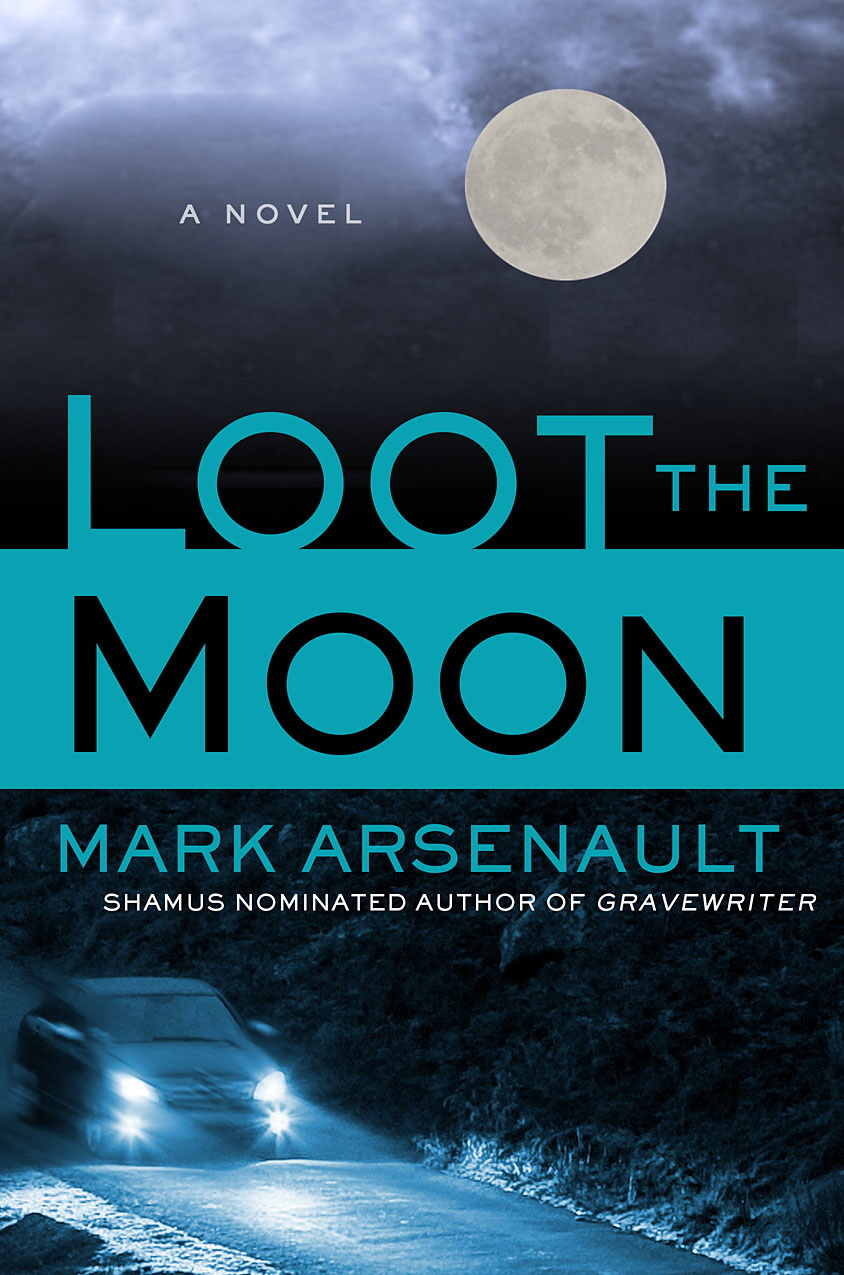
His new novel is LOOT THE MOON, the second book in the Billy Povich series that began with GRAVEWRITER, a noir thriller that intrigued me with rich characters and kept me on the edge of my seat It's also been praised for a fusion of suspense, humor and human tenderness.

He used to write a terrific column on writing for the ProJo and we are lucky to get some of his insight here.


Writing on Faith


Writing is one of the hardest things in the world to start, especially if nobody cares if you finish.

When I began my first mystery, I had no idea if I could even write a novel, much less get it published. But we have to find the faith to write, even if there’s no guarantee the project will ever sell.

After four books and 20 years working for newspapers, now I write mainly to meet deadline, but it wasn’t always that way. I used to write on faith. And recently, I’ve been doing it again.

My wife, Jennifer, has an estranged brother she hasn’t seen or heard from in nearly 20 years. For many of those years, the family didn’t know where he was, or even if he was alive.
But the Internet makes it hard to hide, and several years ago we bird-dogged his on-line footprint and tracked him down to a city on the West coast.

We found where he had posted condolences on a memorial page for a friend who had died. He had made a few political donations, bought some real estate, and had apparently gotten married. We couldn’t manage to make contact, but we were cheered that he was alive and living what seemed a normal and healthy life, which we followed from 3,000 miles away through the tiny impressions he left in a living, growing Web that sees all and never forgets.

Then a few months ago, seemingly from nowhere, the wife of the brother-in-law I have never met reached out to the rest of the family by email.

This shocking, generous gesture, and the possibility of reconciliation, left my mother-in-law in tears. More emails, with pictures attached, zipped back and forth across the country for several days. My mother-in-law saw a digital photo of a grandson she never knew she had.

But this story is not a Hallmark card.

After a few days, my brother-in-law’s wife confessed she had contacted us in secret. The brother who had vanished nearly two decades ago didn’t know. She promised to get some advice from her clergy, and then break the news to her husband.

We never got another email from her.

This is where writing on faith is important. She doesn’t email us, but we still email her.


Every few weeks, I dash off a personal note to share with her the exciting things in our lives and to bore her with the mundane parts, as you’re supposed to do with family. I never mention the estrangement, the lack of contact—none of that. My emails read like Facebook notes between old friends, even though the notes only go one way.

I sent our Las Vegas wedding picture and a funny story about the pastor we hired sight-unseen off the Internet. A few weeks ago, I sent a full report on my brother’s nuptials in Ireland this summer, including pictures of pubs and green fields dotted with sheep. Most recently, I sent a copy of the cover art for my new novel. (A 20-year estrangement is no excuse not to support your family and buy a copy.)

I don’t expect a reply. I just fire these notes into the ether. The emails don’t bounce back, so maybe they’re reading them. Maybe they’re keeping tabs on us over the Internet, as we did with them.

When you write even when you can’t be sure anything good will come of it, you’re writing for love. That’s the second-best reason to write, just behind writing for deadline.
So has anybody else tried something unique to reach somebody who didn’t want to be reached?

With 20 years of experience as a print reporter, Arsenault is one of those weird cranks who still prefers to read the news on paper. His Web site is: http://markarsenault.net/

JAN: Come back tomorrow when I get Hallie to tell us how she put together her new book, THE BIBLIOPHILE'S DEVOTIONAL.

Tuesday, August 5, 2008

dave white


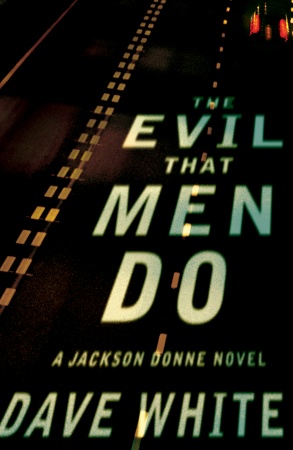
He was just nominated for a Shamus award for this first book, When One Man Dies (2007) and we were able get Dave to come to Jungle Red to talk about his new book, The Evil That Men Do. He is among the youngest winners of the Derringer Award, and has contributed to many anthologies and collections, including The Adventure of the Missing Detective and Damn Near Dead. Dave lives in my hometown in New Jersey, and has the courage to teach middle-school English.

JAN: Tell us about your protagonist, Jackson Donne, how you dreamt him up and how he has evolved through your two books? He seems to be a reluctant investigator, which for me makes him more interesting. Why did you develop him that way?

DAVE: Jackson Donne was born when I was in college. I was trying to do things a little different, show that Jackson was younger. So--thinking I was REALLY clever--I had him have a dead fianceé instead of dead wife.

I liked writing stories about him in a college setting and, since I went to Rutgers, it was easy to research. That's how he started, at least.

Donne's evolved since then, through the short stories, and then through the two novels. By the end of When One Man Dies, he's been stripped of his PI license, so he can't really work. Something has to draw him into a case.

So, yes, he's very reluctant in The Evil That men Do--even more so than he is in my first book. And there are lots of reasons for that. My guess is that if you're a PI, and you've been involved in as many deaths and shootings that Donne had been in the short stories, you're going to get some press. And not good press. The people that knock on your door are going to be looking for someone to help with the dirty and violent stuff. Not something you want to be involved in on a regular basis.

And since the last case he gets into before The Evil That Men Do basically destroys whatever shreds of life he has left, I don't think he'd be willing to do that sort of thing again. He's learning from his cases. He's learning that they only screw him up.There are three things I'm looking to explore with Jackson Donne. His family's past, his relationship to the cops he put away, and his mental state. The first two novels do both of those things. Fortunately, I feel there are still more of those aspects I can explore. So, Donne will keep evolving.

JAN: Dave and I are almost related, in that his uncle was one of my brother’s best friends and helped me clean up after wild parties when my parents went away. When I read Dave’s first novel, I was transported back home. Tell us how you exploit New Jersey as a backdrop.

DAVE: New Jersey is a GREAT place to set a crime novel. First of you have everything -- big cities (Philly and NYC) nearby, farms and forests to the south, (we are the Garden state) and bustling suburbia --which is what I like to write about. You can almost set anything in this state. And NJ is wonderfully corrupt in certain areas, so a crime novel is not a stretch of the imagination. That said, I'd love to be able to push some images about NJ across that show it's better than what people say about it. Which I believe it is. I love NJ and wouldn't want my stories to take place anywhere else.

JAN: Since you are an English teacher, did you toy around with Shakespearean plays or other writing first? Or did you always know you wanted to write mysteries? Also, since you started with short stories, tell us the pluses and minuses of the two forms of storytelling.

DAVE: Ha! I never tried my hand any plays or poems or anything of that nature. Every once in a while I'd sit down and say "Okay, this is going to be my coming of age love story. Not a crime story." And then ten pages later, I have a dead body. It just keeps happening. I love the crime genre. The first story I ever had published was a Sherlock Holmes story I wrote in fourth grade. It got published in the school literary magazine, and I dug it up 3 years ago and published it on my blog. If you want to read it, get ready to cringe, but here's the link (http://jacksondonne.blogspot.com/2005/03/fourth-grade-fiction.html)

The plusses of short stories are two fold. I wrote them first and to be honest, they got me some attention. It was a way to attract readers, build somewhat of a buzz. (Not a huge buzz, but hey every little bit helps.) Plus, when you do one well, you get some nearly instant feedback. But novels, man, novels are so much more fun to me right now. I love following characters along for a year or so. And I love getting to that point where the novel climaxes and you can put some wacky twists in there, really try to surprise the readers.


Both short stories and novels are difficult, and rewarding, but in their own ways.

JAN: Do you write during the summer months when you’ve got a break from middle schoolers or do you write all year long? How do you produce a novel a year?

DAVE: I write whenever I can. It's a yearlong process. I try to get a lot done in the summer, but it's still the 1,000 words a day thing. I just don't feel as much pressure in the summer. During the school year I have to treat it as a second job. Get out of school at 3:30, go running, sit at home and write for two hours. I'm trying to write fast, but I would much rather write well. Having both would be key.

JAN: Well, I think all the awards and nominations you’ve been receiving would attest to the writing well part. I’m wondering, what do your students think about having a teacher who writes mysteries. Are they impressed? Do you include it in the curriculum? Or use mystery to help their writing??

DAVE: It's tough to tell. My students are a sarcastic, fun bunch (8th graders? Sarcastic?), but they don't really give a lot away about what they think about the writing stuff. I hope they think it's cool. I know a few of them went out and bought it. I do use mystery to help their writing and reading. We compare short stories in the genre. I use it to show the form of writing a story. There are lots of things I use it for.

JAN: Your blog (http://www.jacksondonneblogspot.com/) is hysterical, and if I remember correctly, you had a blog long before you had a novel. Did it help you develop an audience or find a publisher? Any advice for writers trying to break in?

DAVE: To be honest, I don't know how much the blog helped. It must have helped somewhat. It was definitely a way to get my name out there. I mean, I've had my share of blog stalkers. Two people impersonating Abe Vigoda (including on who started a blog "100 Reasons I Hate Dave White") and PlotBabyPlot (plotbabyplot.blogspot.com) who apparently are out to get me. I have no idea who they are, but I find it hilarious. I love that sort of stuff.

It also helps me because it puts the real me out there. The books are dark and at parts very humorless.That's not me. I'm a total goofball, and I want a way to put that out there too. And what's interesting is, publishers, agents, fans see that sort of thing, that people are reading and I'm sure that helps.

But my advice for up and coming writers is to forget the blog. Don't make that your first thing. The first thing to do is write. Write and finish some short stores, get them out there. Publish them where ever you can. Webzines, Magazines, anthologies. Whatever you can do. Then blog The writing is the most important part. You can attract agents and publishers with the quality of your writing. The rest is fun.The rest is hoopdedoodle. The hoopdedoodle comes last. Being a writer means sitting down, doing it, and most importantly FINISHING IT. You'll never get half a novel published. So, the key--obviously--is to write it.

JAN: Thanks Dave, for visiting Jungle Red and more importantly, for teaching me the word hoopdedoodle. (it's a great word)

And to show what a good sport, he is, Dave agreed to take the Jungle Red Quiz!

Miss Marple or Hercule Poirot?
It’s always been Poirot for me. Pretty much because he’s the French version of the Penguin. Instead of “awk awk”-ing, he say “haw haw.” And he’s smart.

Sex or violence?

Heh. In books or in real life? I mean… the answer’s kind of obvious isn’t it? In terms of real life. However, in books, since I write noir-ish/hardboiled crime fiction, I like me some violence.

Pizza or chocolate?

Thin crust pizza from any Jersey thin crust pizza place. (The Emerson Hotel gets my nod.)

Daniel Craig or Pierce Brosnan?

As Bond? Daniel Craig. As a sex symbol… er… I don’t really have a choice, though in the later Bond movies, Pierce was starting to get a martini gut.

Katherine Hepburn or Audrey Hepburn?

Considering the only movie with either of them I’ve seen all the way through is Charade, I’m going with Audrey. Plus she’s hotter… and when she talks, she doesn’t sound like a car struggling to start.

First person or Third Person?

Originally first, lately third.

Prologue or no prologue?

No prologue. Unless you’re a writer who can pull it off. AKA, Dave hedges his bets. Your favorite non-mystery book?Well my two favorite novels are THE GREAT GATSBY and THE SUN ALSO RISES—both of which you can probably argue are some sort of hardboiled story in a way.

Making dinner or making reservations?

I like to grill… bratwurst, burgers, steak, chicken, turkey burgers. But I also like to go out. Man at this point, I’m just really bad at picking one thing, aren’t I? I’ll go summer time—make dinner—winter time, go out to eat.

And now, the part everyone was waiting for:

Tell us four things about you that no one knows. Only three can be true. We'll search for the fraud.
1. I’ve been banned from entering Canada
2. I really stink at beer pong.
3. I like the movie You’ve Got Mail.
4. I spent the night in jail for breaking a business shop’s window.